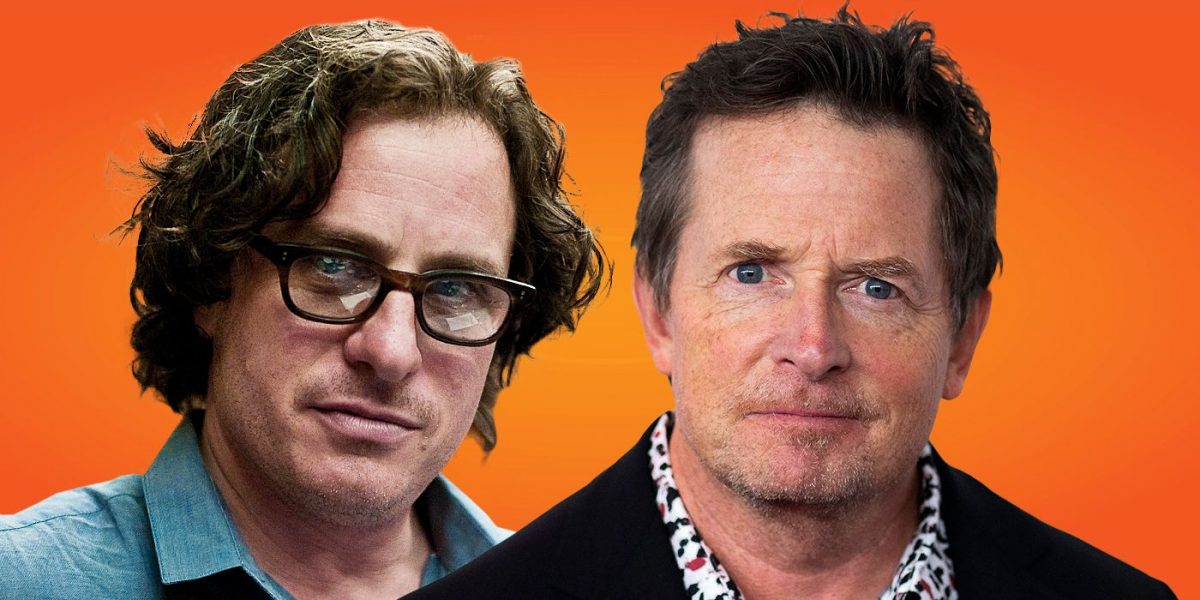
A Michael J. Fox Movie’ and Life with Parkinson’s
May 13, 2023
From director Davis Guggenheim, the documentary Still: A Michael J. Fox Movie (available to stream at Apple TV+) uses a blend of archival footage, scripted elements, and interviews to recount the story of Michael J. Fox, from being a kid in Canada and finding stardom in Hollywood in the 1980s to his Parkinson’s diagnosis at 29 and the effects of that disease on his life since, in his own words. His personal tribulations are often shocking, but his life is also full of triumphs and laughter, alongside a family that clearly loves him deeply.
During this press conference to discuss the documentary, Fox and Guggenheim talked about why now was the right time to tell this story in this way, what made them decide to approach it how they did, showing the truth and reality of Parkinson’s, incorporating the humor, revisiting the important and painful moments in life, what Guggenheim learned from this process of working with Fox, and the time in his life that Fox would go back to, if he could.
COLLIDER VIDEO OF THE DAYSCROLL TO CONTINUE WITH CONTENT
Question: Michael, why are you telling your story now?
MICHAEL J. FOX: With all that I’ve experienced the last few years, the avenues I have with which to express my creativity or to just get my feelings out, have diminished. I can’t do certain things that I used to do, but I can tell stories, and stories that are the best are my own stories. I found that, as I told them to people, they related to them and understood them on other levels that, in turn, informed me in ways that I wasn’t aware of and hadn’t experienced. It just became this communal storytelling cycle that involved people outside my world. It was really exciting. That’s the definition of creativity, and that’s what I do.
Image via Apple TV+
Davis, what made you decide to cut between re-enactments and footage from Michael’s movies and TV shows, creating that link between the person and the characters he’s played?
DAVIS GUGGENHEIM: We used a lot of footage from Michael’s movies to portray moments in his life, like when he meets Tracy Pollan, his wife, and many other scenes like that. A lot of that came from my editor, Michael Harte. He’s a genius and his editing is extraordinary. I was really excited to try this idea of making a documentary that feels like an ’80s movie that’s big and fun with a lot of laughs and big music, and part of that was to put ’80s and ’90s movies in it. It’s just a different kind of documentary. It’s a wild ride in, in the way that those movies felt like, at the time.
Michael, this film looks back on your life and career from early childhood onwards. How do you approach this period of reflection, putting yourself back in the shoes of your 20-year-old self, for example?
FOX: One of the things that’s great about the movie, for me, is that a lot of it was done in the sense that I’d written these books and told these stories. I had a lot of time to think about these stories and to fool around with how best to tell. So, when we started talking about what we were gonna do, and Davis attached himself to that early stuff, that was really the beginning of it. It didn’t start for me when I was 18 and I dropped out of school. It started when I was a little kid and had no sense of boundaries, modulation, or parameters. I would just go out and inflict myself on the world, and that continued through the rest of my life, with different degrees of energy.
Davis, what was the message you wanted to convey with this film? What did you learn from Michael?
GUGGENHEIM: I don’t like to talk about the message of the movie. I feel like everyone who watches a movie decides what it means to them. When I first talked to Michael about this, he’s totally an open book and nothing was off the table, but the one thing he said was important to him was no violins. There are a lot of movies about people who have struggles, and sometimes those movies lean on pity, but that’s not Michael. That’s not the tone of how he lives, that’s not the message of his books, and it certainly isn’t the message of this movie. There’s a lot of joy in this movie. So, I’ll leave the message to the viewers.
Image via Apple TV+
Michael, you’ve always been public about your struggles with Parkinson’s, but was there anything in this film you were more hesitant to reveal, when it came to living with your condition?
FOX: When I saw it, it was shocking to me, but I wasn’t hesitant to reveal it. I understand the idea of my face going blank or the lack of expression, but I don’t know what I look like. It’s not that it bothers me, but it’s a shock when you see it. People say, “So, you stumbled into the room and fell over. Were you shocked?” I didn’t expect to fall over the furniture. Davis shot it so beautifully. It could have been confrontational, but it was cathartic. The camera was running all that time and people were like, “I can’t believe you collected all those images,” but I thought it was great. I didn’t want to censor Davis and say, “Don’t do this and don’t do that.” In order for this to be the film that it is, I had to let Davis be the filmmaker that he is and get the stuff that he was getting. This isn’t something that I’m making up. It’s my life. And he got that.
GUGGENHEIM: A lot of people are very guarded about what they share, and Michael is a total open book, which says a lot about him, I think.
FOX: I wrote the book.
Davis, the movie never loses its humor, even when the subject matter gets sad or serious. How did you manage to find the balance of humor in this movie?
GUGGENHEIM: That had everything to do with Michael. Michael is funny, and it’s fun to laugh. When I read his book during the pandemic, I was low, like a lot of people. My family was fine, but I was feeling low and depressed. I needed a movie like this and a story like this, and I needed to laugh a little bit. We did six or seven interview days, over a year, and those conversations were fun and there was a lot of laughter, which is throughout the movie. I also think laughter reveals something deeper. You think laughter is frivolous, but sometimes laughter reveals something deeper.
FOX: I always look for what’s funny, in any situation. You can always find the part that’s tragic, and something that’s sad, and something that can bring you down and bring you low, but it’s a little more of a challenge and much more rewarding to find what’s universally human. I find that what’s universally human is usually universally funny.
GUGGENHEIM: Some people mistake funny for just silly, meaningless, or empty, or that it’s just a joke, but some of the laughs in the movie say something you couldn’t say, if it was serious.
FOX: Funny is about making people laugh and discovering the joy of making people laugh. I realized that, while we were making the movie. When I was younger and I started to do comedy, people would laugh and I was like, “What is laughing? What is that? I made people make a noise that they didn’t wanna make and they didn’t know they were gonna make that noise.” That’s powerful. Laughter is an involuntary noise. You just make it. And anything that’s that powerful is important. It just so happens that, when you make that noise, you smile and it makes you feel good.
Michael, this documentary is a really personal journey, where you revisit a lot of important, but also painful, moments in your life. How was that experience?
FOX: The thing about the film that most affects me when I watch it is not all the tragedy, the struggle and the conflict. It’s my family. My family was who I thought they were. They’re beautiful, funny people that keep me alive and keep me connected. They’re so smart and so grounded, and my wife is a miracle. That was a big thing for me, just seeing that. When my wife is giving me shit about me not getting my texting act together, that’s my life. It’s so real. I know how much I count on those people, how much they deliver for me, and how much my relationship with them is from the honesty of dealing with all the stuff that I deal with. I’ve always been honest with them.
GUGGENHEIM: They don’t pity you. They’re laughing with you.
Image via Apple TV+
Davis, how much of the structure of the film was written prior to the shoot and how much of it was written during the editing process?
GUGGENHEIM: A lot of documentaries start with absolutely nothing, but we started with Michael’s four books, two of which were especially relevant to what we were doing. We had these incredible scenes from Michael’s life that were already beautifully written, like the beginning of the movie when he wakes up in the hotel room in Florida and his pinky is shaking. His books are incredible. The stories are really well told, but they’re also incredibly revealing. So, we had those scenes that Michael had written, and we put them out on index cards and mapped out a version of the movie. I would say that the movie is about 70 or 80% of the incredible map that Michael gave us, but it all changed. Each scene was re-edited and a lot of things were stripped away. And then, for the scenes with his family, with his therapist, and with his doctor, we didn’t know what was gonna happen. But the map was handed to us.
FOX: Davis is a genius, and Michael Harte is a genius. I spread everything out on the table, but Davis and Michael had the ability to selectively take stuff away and move stuff around without ever messing with the integrity of it, but choosing a path through it. They were very astute in the paths they chose. That’s really where his genius lies. The film is much more than my books. It’s a whole journey of its own. It’s informed by the books, but not bound by the books.
Michael, you’ve accomplished so much during your life. When you look back on the work part of it, what moment or project are you the most proud of having been a part of?
FOX: That’s so tough. Specifically, you don’t do Back to the Future and not recognize that as a huge seminal moment in my life and a huge turning point in my work. But I think it’s the people that I’ve worked with, because they’re just incredible. With some people that I’ve worked with, I didn’t realize it, at the time, but I’ll watch a film later and see John Leguizamo in Casualties of War. When I watch that movie now, he was great in it. It’s the cinematography in certain films I did, or the casting of these amazing theater actors in Doc Hollywood. It’s those moments of filmmaking. I was just a worker in a film, and I got to work with these amazing people.
Davis, what’s the most important life lesson you’ve learned from Michael?
GUGGENHEIM: That’s a good question. There are so many. Michael is full of optimism, which is in the movie. He has a lot of falls and he’s in a lot of pain, but his attitude is to see the brighter side of things, and that part is infectious. It’s also not to take myself too seriously and to really value the moment. When you have a story that’s this special, you have to just really enjoy it.
Image via Apple TV+
Davis, why do you think Michael J. Fox is so loved, all over the world?
GUGGENHEIM: I have no idea. It should not need to be explained. I remember, I was a sophomore in college and this guy said, “We’re gonna watch this time travel movie.” And we went to see Back to the Future and were like, “Damn, that’s a good movie.” When you watch the movie, it’s so essential that it’s Michael because he could have been any of us. He’s not as tall as the next guy. He’s not big and bulky. He’s an everyman. You can project yourself onto him. He has a humility about him, and he’s funny. He’s a little good-looking. When you watch movies, you can tell what the people are really life, and Michael is just a lovely guy. He’s just a guy that you like.
Davis, what was the filming schedule like for this?
GUGGENHEIM: A lot of documentaries shoot every single day, for many, many days. We didn’t do that. Most of the shooting took place in his office. There’s an office downstairs from where Michael and Tracy live. The core of this movie is just him and I talking, and we did that for maybe six or seven days, over a year period. And then, there were those physical therapy sessions. There were very targeted moments, like a doctor’s visit, or making quesadillas with his family, or he and Tracy responding to text messages. So, it wasn’t a lot of time, but it was really, really good time and really focused. Sometimes, you start a movie and you don’t know anything, but Michael had those incredible books. A lot of the story frankly is retrospective and happened before, so a lot of the movie was shooting the recreations, and also doing the archival work, and then using the interviews in a very targeted way to fold around that.
Michael, throughout your career, you’ve played a variety of characters that have inspired generations of audiences. In the documentary, you talk about how actors want to escape themselves by being someone else for a while. Has being this people and playing these parts contributed to your strength and tenacity, in dealing with everything that you are?
FOX: I think so. I do think they do that. In playing a character, it requires a certain willingness to take everything and give it equal weight, and just say, “I have nothing to serve here, but the truth of this character.” In doing that, you go through a lot of your own stuff and you go, “No, that’s not him, that’s me. I don’t wanna put that in there. I wanna put his stuff in there.” So then, I’ve identified a bunch of stuff about me that I’m not necessarily gonna use, but it is now part of my catalog. And then, I find new stuff about the character to use, that’s informed by what I didn’t use. It’s all very confusing, but it makes you do a lot of work, when it comes to who you are and who you aren’t. Sometimes it’s important not to overcomplicate it and to just play the character.
Image via Apple TV+
Michael, if you could go back to any time in your life, what would that moment be?
FOX: There’s no answer to that. I don’t have that written down somewhere. But the moment my dad said, “Okay, I’ll take you down to find an agent” is what pops into my head. I was this crazy kid who wanted to leave high school and move to California to be an actor. That’s insane. It’s crazy. No one does that. And the fact was that my father, with his practical skepticism said, “Okay,” and he signed off on it. That was the moment my life changed. He could have said no and shut it down. He could have blocked all paths to that and made me miserable. But he said, “Okay, we’ll give it a shot.” He died young, just a couple years after all the good things happen to me, so the fact that he got to see it was just great.
GUGGENHEIM: You’re a movie star and all these amazing things happened to, but the thing you want to go back to see is your father.
FOX: That’s real stuff.
GUGGENHEIM: Yeah, that’s beautiful.
Still: A Michael J. Fox Movie is available to stream at Apple TV+.
Publisher: Source link





One of CBS’ Longest-Running & Highest Rated TV Shows Is Coming To End After 30 Years
Along with countless scripted dramas, comedies, and action shows, CBS is well known for its impressive run of unscripted programs over the last 50 years. More recent years have included major competition shows like Survivor and The Amazing Race, along…
Sep 17, 2026

Prime Video Officially Launches New Deal That Changes the Streaming Game Forever
It seems like streamers raise their prices every day. At the end of August, Apple TV raised the subscription service price by $2, bringing it to $14.99 a month. Netflix, Disney+, HBO Max, Paramount+, and Peacock have all raised prices…
Sep 16, 2026
Netflix’s 10/10 Thriller Series Returns After 3 Year Absence With Explosive New Trailer
Over the last five years, Netflix has expanded heavily into non-English content, with international series taking an even bigger focus for the streaming giant. One of the biggest driving forces in that effort is the French thriller series Lupin, led…
Sep 15, 2026
Original ‘Yellowstone’ Dutton Favorite Officially Confirms ‘Marshals’ Return Interest
Yellowstone jump-started a generation-spanning story that has so far spawned four spin-offs that are all interconnected by the Dutton bloodline. While creator Taylor Sheridan has since branched outside that saga with Tulsa King, Landman, Mayor of Kingstown, The Madison, and…
Sep 14, 2026