‘Jauja’ Filmmaker Lisandro Alonso Returns With Viggo Mortensen & Chiara Mastroianni For An Inconsistent Triptych [Cannes]
May 23, 2023
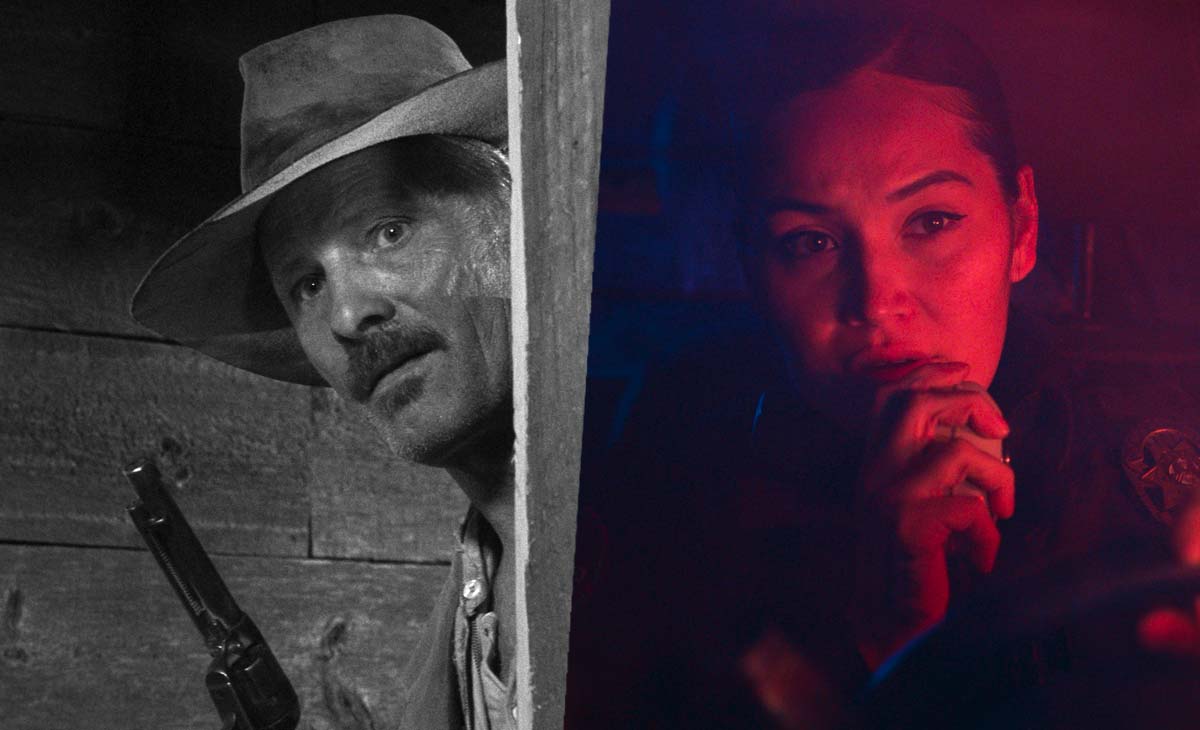
“Eureka” seems somewhat deceitfully simple: a man called Murphy (Viggo Mortensen) searches for his abducted daughter with the help of the mysterious El Coronel (Chiara Mastroianni), even if he has to shoot everyone who stands in his way. A black and white, sleek vision of a western where the key lighting is mesmerizingly subdued, rounded square frame, boxed aspect ratio—did “slow cinema” veteran Lisandro Alonso really make a classical western today? The answer is both yes and no. If you come across a similar plot description with these big European names, you most certainly will start to form expectations on what kind of film “Eureka” can be. Truth be told, it is all that and more, and that’s precisely the problem: there’s too much to make it really work.
READ MORE: 2023 Cannes Film Festival: 21 Must-See Movies To Watch
Alonso (“Liverpool,” “The Dead“) wrote the script together with two renowned Argentinian authors, Martin Camaño, and Fabian Casas, the latter also attached to Alsono’s breakout hit “Jauja.” As a result, the film does have a literary feeling to it, where words try to overpower the primacy of images in time—Alonso’s staple—and its tripartite structure makes it feel even more novelistic. The western, Mortensen, and Mastroianni make up the first—quite long—part and the immersive nature of these highly stylized images and their acting makes it hard to believe when we’re told this gorgeous black and white tale is only a film playing on someone’s TV. Suddenly, we’re in present day South Dakota, where police officer Alaina (Alaina Clifford) is getting ready for another day of patrolling in the Pine Ridge Reservation. She has a quick chat over coffee with Sadie (Sadie Lapointe) before heading off. Her shift begins in a blizzard and under a sky so dark one cannot discern whether it’s day or night.
Alaina and Sadie are the subject of the film’s engrossing second act. Here, Alonso is at his best, while being innovative: contemplating a day of work steeped in the political context of the Reservation, the way people live there, and the kind of accidents Alaina has to attend to, seemingly all alone since backup is nowhere to be found. Working with non-professional actors in their own environment has always been the Argentinian director’s forte and his films have a free-flowing quality to them which paradoxically, in some way, tames them. They are self-regulated and, therefore, polished, without seeming so. Clifford and Lapointe play distinct, complementary characters, whose laconic way of being in the world reinvents the way one can conceptualize nostalgia in film. Their presence draws attention to the absences which the indigenous people have been forced to become accustomed to, but it does so in a very subtle, yet assertive way. The resolute way in which they speak, the brisk interactions they allow for each other, and Alaina’s snappiness: these are all powered by nostalgia for something we don’t get to see, the Reservation itself.
As the middle part segways into the film’s third act—taking place in Oaxaca, among the Chatino community— “Eureka” finds its most arresting, imaginative scenes. A static long take, a slow, protracted pan, diminishing dialogue, and full command of the frame’s captivating power, are all tools in Alonso’s arsenal that feel authentic and earned. One can only wish that this vivifying melancholy could have contaminated the whole film without such harsh delineations between its parts. Shot by Timo Salminen (an Aki Kaurismaki collaborator) and Mauro Herce Mira who’s lensed many films at Cannes thus far, the film benefits from an assured team behind the camera, but the stylistic inconsistencies of the three parts fail to make any conceptual sense. In the third, most enigmatic act that features—surprisingly—a cathartic metamorphosis, there is potential for everything to come together, but the contemplative mode feels slightly at odds with the more inviting, participatory conceit of the film’s middle part.
Lisandro Alonso’s career has been shaped by Cannes, with his debut “Freedom” (2001) and last film “Jauja” (2014) being shown at the Un Certain Regard section. Now, “Eureka” occupies a special place in the Cannes Première. With his profound sensitivity and accomplished style, Alonso is certainly a director whose work is ripe enough for Cannes’ Main Competition and the absence of his newest among this year’s Palme d’Or competitors was baffling. But one can concede that “Eureka” is not actually that film for him. While it does retain the magic and subtlety of its predecessor, as well as Mortensen as part of the cast, Alonso’s new film does not have much in common with the Patagonian period drama of almost ten years ago.
During the long production period of the film, there has been a change of hands: producers, locations, cinematographers were replaced as the process evolved. While such events don’t necessarily mean anything taken out of context, for “Eureka”, the lack of consistency has made a difference. The film feels wonkier than it deserves and needs a more precise hand to give its final shape. That doesn’t necessarily mean that some things have to be cut; on the contrary, the film could work better if it was kept longer, and the editing (by Gonzalo del Val), more intuitive. It’s an accomplishment already, the fact that this film exists, even if its current state does not reflect the maximum potential of everyone involved, and it has given us some of the most spellbinding images of the year. [B-]
Follow along with all our coverage from the 2023 Cannes Film Festival
Publisher: Source link




Alan Ritchson’s New 8-Part Action Thriller Lands Solid RT Score While Dominating Streaming
Alan Ritchson has, somewhat quietly, become one of streaming's more dependable stars, which is not necessarily where you would have expected his career to land back when he was doing Smallville supporting work and Blue Mountain State. Reacher turned him…
Sep 21, 2026
HBO’s Harry Potter Reboot Is Officially Ditching the Most Iconic Part of Daniel Radcliffe’s Era
This December, audiences will be transported back to the Wizarding world of Harry Potter. Of course, those born in the mid-to-late '90s will have fond memories of the movie franchise. Starring Daniel Radcliffe, Emma Watson, and Rupert Grint as Harry,…
Sep 20, 2026
‘Tracker’ Season 4 Officially Puts Its Biggest Mystery on Hold Despite Major Cast Comeback
Our fictional missing persons expert, Colter Shaw (Justin Hartley), has kept audiences happily on the edge of their seats ever since Tracker debuted two years ago, and Season 3 in particular left audiences with quite a major cliffhanger — all…
Sep 19, 2026
‘Reacher’s Action Thriller Spin-Off Gets Major Season 2 Update Following Premiere
For four seasons, Reacher has been one of the biggest TV shows on Prime Video. Based on the novels by Lee Child, the series follows former military police officer Jack Reacher (Alan Ritchson) as he wanders from place to place,…
Sep 18, 2026