Dead City’ EPs on Maggie & Negan and the Series’ Future
Jun 17, 2023
The AMC series The Walking Dead: Dead City follows Maggie (Lauren Cohan), as she enlists Negan (Jeffrey Dean Morgan) to journey with her to post-apocalyptic Manhattan, which is a very different environment than either of them have experienced before. Filled with dangers everywhere, both walker and human, the crumbling city tests them in new, terrifying, and sometimes very bloody ways that really push their tolerance for each other to the limit.
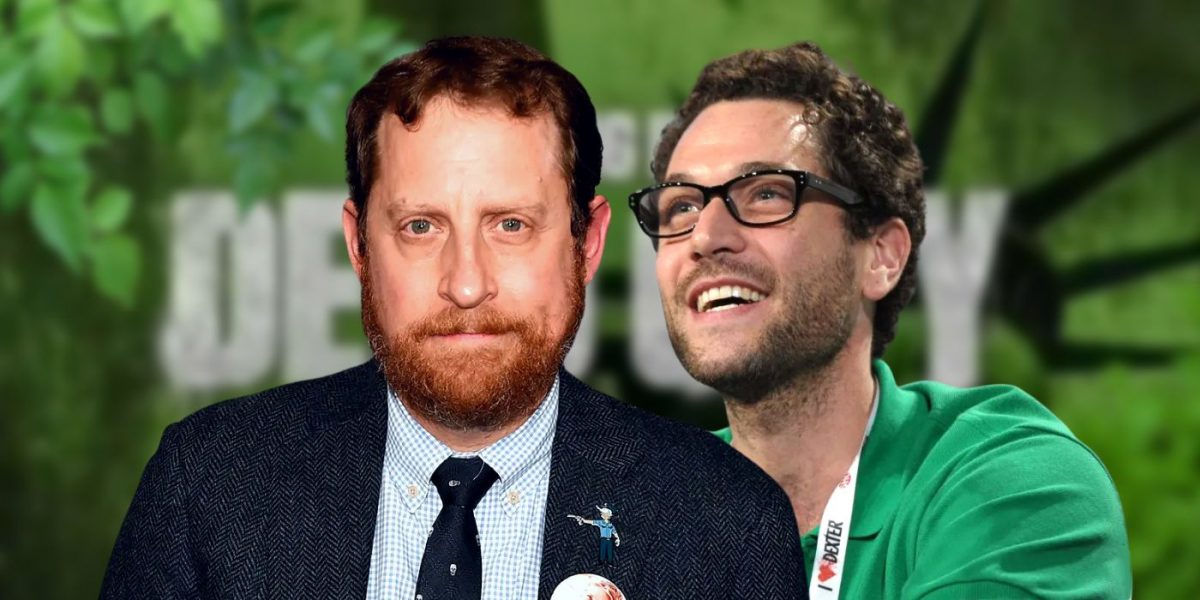
Back during the Television Critics Association Press Tour in January, Collider got the opportunity to chat with Scott M. Gimple, chief content officer of The Walking Dead Universe, and showrunner Eli Jorné. While we’ve already shared portions of this conversation, here is the entire interview, in which they talked about what fans can expect from the six-episode season, how Maggie and Negan came to have their own series, what made Manhattan the perfect setting, having a textured and tragic human villain, that viewers should brace themselves for these walkers, and how the plan is for this series to be ongoing.
COLLIDER VIDEO OF THE DAYSCROLL TO CONTINUE WITH CONTENT
Collider: When did this start to happen? It seems crazy that you would end up here, where you have a show with two characters that you couldn’t possibly have thought would ever have ended up on the same show together.
SCOTT M. GIMPLE: That’s the easy part.
ELI JORNÉ: That’s the exciting part.
GIMPLE: Back in the day, Carol almost didn’t make it, but I was very much about, “Well, what if this victim became the hero?” It wasn’t like, “Oh, it’s these steps and these steps and these steps.” Just talking about them, we were like, “Yeah, that’s a story. A woman whose husband has been brutally murdered has to become the ally of the person who did it. That’s a story.” That’s the very kernel that we started with, and Eli [Jorne] took the kernel and popped that corn.
JORNÉ: To me, all the challenges that seem like they would be there between these characters in real life are the things that excite me, as a writer. Even if you strip away all the walkers and the apocalypse, even then, there’s a compelling story there. How do you work with and cooperate with, and how do you trust, if you have to work with the person who murdered the person you loved most in this life? And vice versa for Negan, how do you work with the person whose husband you murdered? Right away, to me, I was excited to get messy with that unfinished business.
GIMPLE: And I loved something you said on the panel, when they were asking about the pandemic, you were relating this show even more, just to the state of things in the country and looking at each other like enemies, yet we’ve gotta work with each other. This is a very, very heightened version of that. But to tell you the truth, it’s the kind of story that I think actually is an incredible utility to the audience nowadays and one that they can relate to, whether they’ve watched The Walking Dead or not. The way that Eli wrote it, the way that [Lauren Cohan] and [Jeffrey Dean Morgan] played it, you can feel that history and that relationship in a scene, in a moment, and in a look. It’s really been something special.
JORNÉ: And I think in true The Walking Dead fashion, or true to the mothership and the way that Scott ran the show, the cool thing about this universe and this show is that all of that emotion gets to be the vehicle for this wild, cool, crazy ride. It’s a lot of fun. There’s a lot of emotion, there’s a lot of baggage, and there’s a lot of trauma, but this is also a whole new world. It’s really exciting, and there are a lot of surprises. That’s the thing that I always appreciate with The Walking Dead universe.
GIMPLE: These are two people who wanna be as far from each other as they could possibly be, and who are thrown together, and are in a crazy, insane world with horrors and even some, dare I say, fun stuff, and a discovery of a whole new world, but they have to be together. The cool stuff, the fun stuff, and the weird stuff are the challenges that make them forced to be together in New York City.
Image via AMC
Did it start with the two characters, or did it start with the desire to set something in New York? Did you ever consider any other cities? How did you figure out what the time jump would be?
JORNÉ: As with anything, it developed organically. Pieces came in at different times and gradually things started to gel.
GIMPLE: But it started with the two characters. It was like, “These are the two. How on earth does this work?” And Eli was like, “I’ll tell you how it’ll work.”
JORNÉ: For me, the second I heard about a Maggie and Negan spinoff, I was like, “I’m all in.” To me, those are the characters that I was most excited to explore because there’s a lot of trauma and baggage between them that I think is compelling for a new show, even if not for the old show, alone. The New York element was not the first thing. It wasn’t like, “Hey, let’s do a spinoff in New York. Who could be there?”
GIMPLE: It was the other way around.
JORNÉ: If you think about it, there are these two characters that, if they’re forced together, and they are forced to work together, as you can tell from the teaser, and they go to a place that’s as crazy and claustrophobic and chaotic as New York, that just amps up. It turns the dial up on what’s challenging about this cooperative effort. I’m glad it’s New York. It’s hard to think of anywhere else they could’ve gone.
GIMPLE: It just heightens the situation. What if they had to ally together? What if they’re stuck on an island together? What if they’re stuck, encased by buildings, and we just get smaller and smaller and smaller, until they are face to face. It really brought to life all the possibilities that we have with these two characters being stuck together.
JORNÉ: The thing a lot of people forget about Manhattan is that it’s an island. And in the post-apocalypse, it’s very much an island.
GIMPLE: Subways are not running.
JORNÉ: There are a few problems with the bridges and tunnels.
How was the six episodes decided? Are all these spinoffs going to be six episodes? Does it depend on what story you’re telling?
GIMPLE: We can just be straight up about that, that was more of an AMC thing. But to tell you the truth, it really is also a 2023 thing, where it’s telling stories in a different cadence. It’s telling stories to be consumed in a very different way. I think it’s actually pushed us to tell stories in a very different way, which I think is a very good thing, after 12 years. I’m a dinosaur. Considering The Walking Dead universe and The Walking Dead storytelling in a very different way has been really rewarding and really interesting, and thank goodness, it’s given us different ways to go about it.
Image via AMC
It’s certainly been interesting to see how it’s all unfolded, between the many seasons the show had and all these different series, where some are anthologies and some are spinoffs. That kind of opportunity doesn’t happen very often.
GIMPLE: It’s insane, how unbelievably lucky we are to have this playground. I just wanna get to more characters and more worlds and more situations. I will say that the thing about Dead City that I love so much – oh my God, I’m gonna say something really cheesy, but it’s true – is that we have Maggie and Negan, we have these new characters that are so deep and so interesting, and we have a new villain that is just a top five villain of all time, but we also have this new world, of old New York City. This is the cheesy thing I’m gonna say, but I’m gonna say it – the city is a character.
JORNÉ: I’ve never heard that before. I’m just kidding. It’s true though.
GIMPLE: I’m so sorry. But it isn’t like New York City is a character. It’s post-apocalyptic Manhattan. It’s just a different civilization, or lack of civilization, that has persisted.
JORNÉ: And you’ll see how it’s shaped people too.
GIMPLE: The reason it’s a show is because it’s a very, very deep world with great characters.
JORNÉ: The universe definitely has its heroes and villains, but what I always liked about Maggie and Negan is that, as things evolved over time in The Walking Dead, the mothership show, not to nerd out, but with Maggie hanging Gregory in Season 9, and Negan’s arc and who we’ve seen him become, at times, has made the black and white picture of the universe and their relationship a lot grayer over time. I would say that will translate into this show. Yes, certain people lean more villainous than others, but this is a world where all these people are human beings, and it’s about how the apocalypse has shaped them, and how it has brought out the worst in them and the best in them. If you’re looking for good guys and bad guys, I don’t know that you’re gonna find that in this show, but you’re gonna find a lot of gray messiness, in the best way.
GIMPLE: That’s what I meant, when I mentioned the villain.
JORNÉ: There is a villain, but he’s a human being.
GIMPLE: In some ways, he’s a tragic villain. In some ways, he’s a very textured villain. He is someone that has a really, really interesting backstory that we get to see glimpses of. It isn’t so black and white, but it’s never that.
JORNÉ: I think that’s true of The Walking Dead, in general, whether it’s Alpha, the Governor, or even Negan. We’re just continuing that trajectory. To me, what’s especially fun about Maggie and Negan is that, even though we experienced Glen’s murder through her eyes, over time, it’s so much more complicated than that, and it will continue to be.
Image via AMC
Are all the spinoffs going to be six episodes, or will that vary?
GIMPLE: I’ll just say that, right now, these first seasons are six episodes. Things might change after that. We’re still seeing about that. The Walking Dead, in its first season, was six episodes, and then things changed, obviously.
JORNÉ: As someone doing this show, but also as a fan of the universe, it’s cool that there’s this variety. I don’t wanna say it’s a menu, but you can do a little limited series here, and you can tune in for that and experience that. And then, you get to go off and do something deeply serialized, with just a few characters at the center of it. You can finish up Fear the Walking Dead. You can go back and watch The Walking Dead and see a giant ensemble go on for 16 episodes a season. With Tales of the Walking Dead, you get to do one-off episodes. It’s really cool that there’s this variety. However it comes out, whenever that happens, and whatever the reasons are for it, I think it ends up being a really cool variety of opportunities to explore the universe, that aren’t all just, “Here’s another show with one character to lead.” As a fan, I think it’s cool.
Are you looking to do or hoping to do more episodes with Tales of the Walking Dead?
GIMPLE: Oh, yeah. I hope we do. We’re focusing on these classic characters, this year. The thing with Tales, it didn’t end on this cliffhanger where you’ve gotta get back to that. It’s an anthology show. So, I’m hoping that we can get back to it, but it’s probably gonna be catch all as catch can, as far as within all the other shows. This year, though, is about focusing on these classic character shows, but also, we’re still wrapping up Fear the Walking Dead. And then, there are other projects that have been on the burner, as well. We’re getting the next phase ready.
Image via AMC
How many do you juggle, in various stages, at one time?
JORNÉ: There was a time when I didn’t hear from [Scott] for three months, for notes.
GIMPLE: There was a moment where we had six going, in different phases, at once, that have either made it to air, or are making it to air. That isn’t even bringing into the conversation the things that we’re developing. I think six is where the height of it was. Right now, it’s just four of them. It’s a wild ride. But I will also say that we did 16 episodes of The Walking Dead a year, and we did 16 episodes of Fear. Right now, we’re only doing six of each. It’s a lot more work to have three individual series going. Those 18 episodes are much harder than the 16 we had of a single season of The Walking Dead. It’s been exciting, in those moments where I see the shows help each other out in different ways, and people sharing knowledge, and people going to each other. I dig that. It’s a very singular thing that we do. We’re all in this little club of The Walking Dead showrunners.
You’ve talked about how the city is a character. You’ve talked about the villain for this season. You’ve given us a sense of what the story will be. But what can we expect from the walkers? How will they be evolving? What will they be like in New York?
JORNÉ: A lot of it is situational. The universe has never really lived in a city, the way it will, and in a city like New York, especially. Just environmentally and architecturally, there are so many new ways that we can experience walkers that you couldn’t have. There’s the verticality of the city, and that alone has been the gift that keeps on giving with walkers. People’s relationship to the walkers is also interesting. How do you survive in that city, with that many walkers, as we’ll come to see, and the way that they are? You’ll see interesting new walker experiences, but also those ripple effects of, how do you survive in a city with walkers? In The Walking Dead, they fought a lot of walkers in the woods, but there were a lot of stretches of woods where you could just hike and camp out. You don’t get to do that as much in the city.
GIMPLE: There are some incredibly notable walkers this season. There’s one that I think will both invoke awe in people, but they also might throw up.
JORNÉ: That’s the goal.
GIMPLE: It is one of the most awesome, disgusting, terrifying walkers that I’ve seen in the history of the show. There are a number of horrific walkers, but there is a mind-bendingly horrific walker coming up that I wasn’t on set for, and I’m glad I wasn’t. I got to experience the horrific magic at home, and it is magic. It quite possibly will make you throw up. I would just have something handy nearby, as you watch it.
Image via AMC
Yeah, or not eat prior to watching.
GIMPLE: Yeah. I think you should use the swimming rule. Don’t watch The Walking Dead until two hours after eating.
Will this season end in a place where we could see where it would continue?
GIMPLE: Oh, yeah.
Things won’t be wrapped up?
JORNÉ: No. It’ll be ongoing.
GIMPLE: There are certain emotional things that are achieved, and there are certain narrative things that I would say are just opened up, where the veil is pulled away from the audience on something, and they see by the end. The audience is a part of this insane world where our characters are like, “What the hell is this thing?”
The Walking Dead: Dead City airs on Sunday nights on AMC and is available to stream at AMC+.
Publisher: Source link






One of CBS’ Longest-Running & Highest Rated TV Shows Is Coming To End After 30 Years
Along with countless scripted dramas, comedies, and action shows, CBS is well known for its impressive run of unscripted programs over the last 50 years. More recent years have included major competition shows like Survivor and The Amazing Race, along…
Sep 17, 2026

Prime Video Officially Launches New Deal That Changes the Streaming Game Forever
It seems like streamers raise their prices every day. At the end of August, Apple TV raised the subscription service price by $2, bringing it to $14.99 a month. Netflix, Disney+, HBO Max, Paramount+, and Peacock have all raised prices…
Sep 16, 2026
Netflix’s 10/10 Thriller Series Returns After 3 Year Absence With Explosive New Trailer
Over the last five years, Netflix has expanded heavily into non-English content, with international series taking an even bigger focus for the streaming giant. One of the biggest driving forces in that effort is the French thriller series Lupin, led…
Sep 15, 2026
Original ‘Yellowstone’ Dutton Favorite Officially Confirms ‘Marshals’ Return Interest
Yellowstone jump-started a generation-spanning story that has so far spawned four spin-offs that are all interconnected by the Dutton bloodline. While creator Taylor Sheridan has since branched outside that saga with Tulsa King, Landman, Mayor of Kingstown, The Madison, and…
Sep 14, 2026