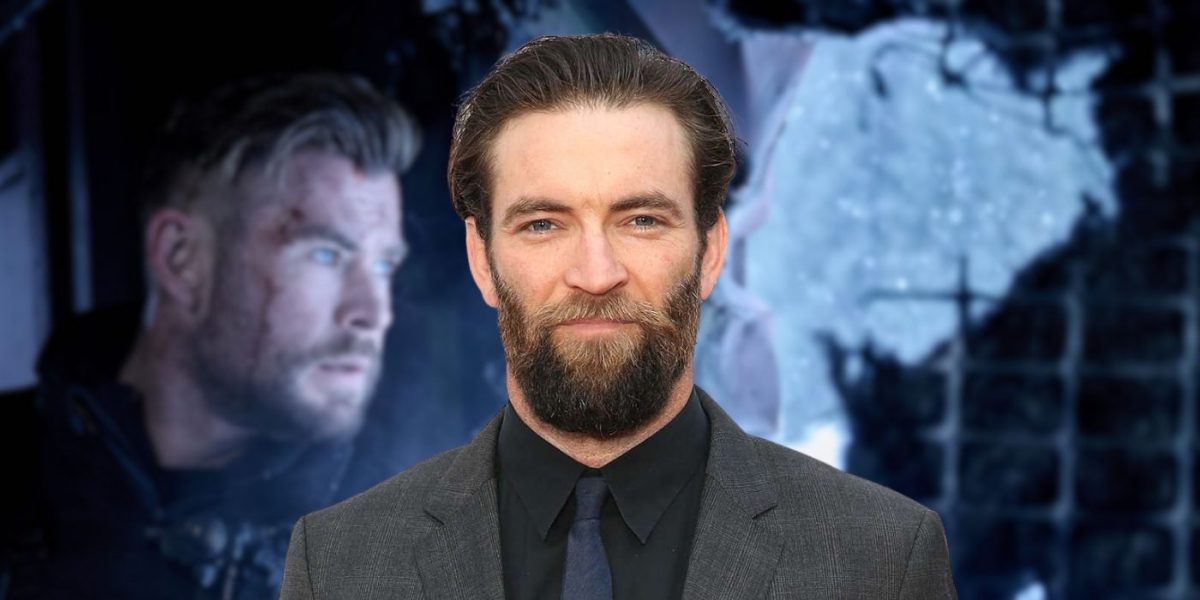
‘Extraction 2’ Director Discusses Action, Stunts, & Working With Joe Russo
Jun 18, 2023
From coordinating the stunts on the Russo Brothers’ Marvel projects, former stuntman Sam Hargrave returns to the action behind the camera as director for his sequel, Extraction 2. Starring Chris Hemsworth as Australian mercenary, Tyler Rake, and adapted by Joe Russo, these movies pack a punch that benefit from the trained eye of someone who has been at the center of that kind of action. With the sequel now streaming on Netflix, Hargrave spoke at length with Collider’s Steve Weintraub about this “dream come true” opportunity, and broke down everything that goes into the epic action set pieces and finding the story at the core of Rake’s franchise.
COLLIDER VIDEO OF THE DAYSCROLL TO CONTINUE WITH CONTENT
Extraction 2 brings our hero, Tyler Rake, back from the dead, and takes him to an icy seclusion where he sets to work retraining his body and mind after the events of the first movie. This time, Tyler is put on a new assignment, one he was specifically requested for, and it’s hinted that the woman he’s fighting his way through Georgian gangsters to save has a history with him. The movie also features Olga Kurylenko, Golshifteh Farahani, Adam Bessa, and Daniel Bernhardt.
In this spoiler-free interview, which you can watch or read below, Hargrave tells Weintraub that “the DNA of Extraction is definitely to do as much practically as possible,” which means landing helicopters on trains, filming in long-forgotten tunnels, and fighting off a prison yard full of guards while on fire for a mind-boggling 21-minute oner. These insane set pieces require “an amazing feat of filmmaking” that Hargrave digs into, from the emergency precautions to the skilled cast and crew who take Russo and Hargrave’s vision and execute it precisely and how he almost fell off the train while filming the train sequence. He discusses the collaboration with Joe Russo on what makes it into the films, how the story will unfold, and why Hemsworth stands apart from other action heroes. They talk about deleted scenes, how and why the movie changed in the edit, where Extraction 3 could take place, and most importantly, who would win in a fight, Tyler Rake or Keanu Reeves’ John Wick?
COLLIDER: I’ve got a ton of questions, but I’m going to start with the most important one probably right up front, and I wanna make sure you’re seated for this – Who wins in a fight, John Wick or Tyler Rake?
SAM HARGRAVE: [Laughs] That’s like the greatest question of all time. I mean, that’s tough because, you know, I’m partial to the character of Tyler Rake. I’m gonna take away John Wick’s bulletproof suit and I’m gonna give it to Tyler Rake. The dude’s a badass, so there’s no debate.
So there’s no debate? If you weren’t the director…?
HARGRAVE: Okay, so you want me to be a fan, remove myself?
Yeah, looking at it from the action, looking at it from everything, being honest. Do you think Tyler has this in the bag?
HARGRAVE: No! No one– John Wick is a verb now, like to John Wick someone, that’s a thing. He’s a legend onscreen in his own movies, and yet he’s a legend now as an action icon. So no, that dude doesn’t go down without a fight, but the fourth movie proves he can go down! And we’ve proven that our guy can be killed and brought back from the dead, so you gotta give it to Tyler Rake. A long, hard-fought battle, to be sure, but I think you gotta go with Tyler Rake.
Image via Lionsgate
Okay, I accept that. I think that if I asked Chad [Stahelski] he would probably say Wick.
HARGRAVE: Well, of course he would, and it probably wouldn’t even be a long… he’d be like, “Nah, Wick,” in five seconds.
[Laughs] I’m just trying to imagine how each of you would craft that action set piece.
HARGRAVE: It would be wildly different, but I think, hopefully, entertaining no matter how you cracked it because those two guys in a scene together would be insane, let’s be honest.
I absolutely agree. Obviously you now made Extraction 2, and I know that Netflix is already thinking about a third one because the first one was one of the most successful films in Netflix history, and the fact that the sequel is good, there’s no way they don’t want a third. So my question is, do you view the Extraction series as your John Wick series the way Chad made four John Wick’s?
HARGRAVE: You know, it’s too early to tell, truthfully, because as they did with the Wick movies, I think you kind of have to wait and see how the audience reacts. Just because the first movie was successful, it doesn’t mean the second one’s gonna be more so, that’s not a given, right? You hope, and it’s tracking well, but who knows? We had a pandemic happen the first time that helped us out, something else could happen that doesn’t help us out, so you never know. The appetite is strong for a continuation of Tyler Rake and his journeys, for sure, and that’s something I would love to see and be a part of, but it’s too early to tell, and I try not to look that far in advance.
What is it like going from, “Man, will I ever get to direct a movie?” to people offering you projects and wanting to meet with you to direct movies?
HARGRAVE: It’s amazing. It’s flattering for people to want to want with me, to direct a movie, is super flattering. It’s funny, you say asking the question, “Will anybody ever hire me?” I knew someday they would, and I knew if they didn’t, I’d do it myself and I’d make a movie. I knew that was gonna happen. However, to be given the opportunity like Extraction, to work with Netflix, Chris Hemsworth, the Russo Brothers, that is a dream come true that I never expected. I was expecting, “Here’s a million dollars, go make a fun movie and we’ll see what you can do.” I was fully expecting that, but to have this opportunity? Never would have expected it.
So now, to have done that and not fallen flat on my face, which was a welcome relief, and then have other people say, “Oh, maybe you want to do this movie, or how about this TV show?” It’s very flattering, and it’s a lot to process, but it’s very flattering and I hopefully can keep doing things that people enjoy watching.
Image via Katie Graves
Now that you are coming into the home stretch, you’re going to promote this movie, I know you’re already thinking about, “What will I do next?” So I usually save this for the end, but I’m just going to ask it now, do you know what you’re going to do next?
HARGRAVE: Yes, I’m doing a TV show for Apple at the end of the year up in Canada called The Last Frontier. Jon Bokenkamp wrote it and is showrunning it, and I’m gonna direct the pilot and the second and third episode, and then executive produce for the series. It’s just a really great story with a great script.
It’s the one with Jason Clarke?
HARGRAVE: Yes, Jason Clarke starring as the lead. It’s a pretty fun story, just propulsive and thrilling. I think it’s gonna be a fun challenge because I haven’t really done anything in the TV space, and I love the idea of long-form storytelling and setting up this world that then other people can come in and riff on, and hopefully improve, and hopefully the series goes on and on and on.
Obviously you know how to do action, so are you already thinking about, “What am I going to do in the TV space with action?” How are you going to balance that sensibility of crafting an incredible action set piece?
HARGRAVE: I know what you’re talking about because you’re talking about reality here. There’s usually less time and less money crafting a TV show than there is a feature. The time we’re gonna have to do the pilot episode, which has a bunch of crazy stuff, is gonna be like a quarter of what we had for Extraction. So part of it is gonna be shifting my – not shifting styles because excellence is something that I want to strive for no matter what I’m doing, but I am gonna have to be present in the reality of there’s less time, less money. So you gotta figure out a way to do something exciting with less time and less money.
I think that’s an interesting challenge because, oftentimes, creativity comes from boundaries. When you have anything and everything you need, sometimes your mind can just run too free, and it get spread too thin sometimes. When it’s like, “Alright, you’re in a shoebox, figure something out,” and you go, “Well, alright,” and now your focus is so much sharper. So I think that’s gonna be a fun challenge, you know, who knows? We’ll see. I’m looking forward to it though. It’s a really exciting script and I’m really looking forward to diving into it.
Image via Redbox
I will say I’m very impressed with Apple TV and the stuff that they’ve been making, it’s all very high quality. It looks great and they spend money.
HARGRAVE: Yeah, I think it’s great. They’re very supportive, so I hear. Again, I have limited experience. I’ve been talking with the line producers and the producers over there, but we haven’t shot anything yet. But from what I hear from other folks is they’re very supportive of the artists.
Jumping into why I get to talk to you. A while ago when I was talking to Joe, he teased that Extraction 2 could be a prequel, it could be a sequel, he was always cagey with the answer. So how close did it come to being a prequel rather than a sequel?
HARGRAVE: We talked about it. I think that was mostly Joe being cagey because he’s a smart businessman. You don’t want to give too much away too early, and it’s good to lead people off the scent, and say, “Oh, we’re gonna do a prequel, look over there while we figure out the sequel!” Because I don’t think you can an audience with that ending and then not go figure out what happened because that’s the question. Everyone’s like, “What? How? Who? When? How did that happen?” And so, we have to answer that question.
So it was never seriously a prequel just because it always felt like moving forward for Tyler Rake was going to be more powerful. If we go backwards, now you’re rehashing the similar thing of his past, right? It’s hard to get more emotionally fraught and higher stakes than your son dying of cancer, leukemia, right? So to go back to that, then you’d kind of be retreading similar ground, knowing where you’re gonna peak emotionally. So we figured forward is the best way, have him still living with that guilt, but then introduce some new emotional stakes and new characters that he has to deal with. We thought that would probably be a little bit more enjoyable for the audience, and just better for the character moving forward.
I think I noticed a certain cameo from you in the movie as a grave digger. How did you decide that was going to be your cameo?
HARGRAVE: Good eye! Basically, I was so busy with everything else that I just ran out of time. There were places where I was like, “Oh, I could do that,” then I was like, “Nope, too busy. I could do that… No, it’s too much.” This was actually an additional scene that we had written. We cut the movie together while we were working, and we were like, “Oh, we need some more information, some more backstory on these villains. Let’s do this scene.” That was actually a character, not for me to play, but that I kind of came up with, like, “Well, what if while they’re walking, you just see this ditch being dug, and we just walk right up to it and then the guy gets offed and falls in the ditch?” Kind of just very gangster, very mafia-esque.
So I was like, “Well, that’s a pretty simple part. Hard to screw that one up. I’ll just jump in the ditch and dig it.” Now, I tried because – you got me, you caught me there – Chris’s guys put a wig on me, we dyed my beard, or at least put some more gray in it, but you still got me. So I didn’t do that good of a job of hiding my identity.
Image via Netflix
I also have a good eye for movies. One of the things about the first film is it has incredible action set pieces. Obviously that is gonna be the mantra going forward with Extraction movies: incredible action set pieces. So before Joe started writing, how much are you guys talking about, “I would love a prison sequence,” or, “I would love to do this,” and then Joe is writing these sequences, and how much is it, Joe saying, “This is my idea?” How are you figuring out where the action is going to go? Because that’s the big hook of these movies.
HARGRAVE: Yeah, it’s a little bit of both and a lot of the second one, meaning, Joe is– the guy has a creative mind and he knows an action set piece like very few [do]. Structurally, we had a 30-page outline in a couple of weeks. It was just like, bam, “This is what would be a great journey for them.” While we were on the first movie, or towards the end, the first inkling of a second movie was, “What if Tyler Rake was in a prison, and we had to fight his way out, or had to get in and get out of a prison and rescue someone in a oner?” And that was a conversation that we had, so that was the first thing about the second movie that was talked about, and it stayed in there, which is great. I think it worked.
So that was the seed that was planted, and then from there, because the other movie was very much nitty gritty and dirty, we’re like, “If we’re gonna go to a prison, which is very similar in that field, we need to kind of contrast that with a little more of a cleaner, sparklier look.” So we found a big city, which was in Vienna, we took it across the river to the more modern side and found this high rise. We were like, “Okay, shiny glass, that’s very different than the first movie.” Because the challenge of a sequel is, how do you make the movie feel very similar so people get what they love, but how do you make it very different in the look, in the feel, but not so much that you turn off the fanbase?
So the first movie had a lot of orange and warm tones because of where we were, we wanted it to feel hot, and it was – we shot in India and Thailand, it was very hot. And so now we’re in Eastern Europe where it’s very cold in the wintertime, so there’s more blues and grays, and we tried to lean into that. So the glass and concrete was just a very great contrast, visually and tonally, from the first movie. The DP, Greg Baldi, and I, and the production designer, Phil Ivey, leaned heavily into that, and it was always something we searched for, was contrast from the first movie, and I think we found it.
I’m just already thinking about Extraction 3, and I’m envisioning you guys in Tokyo. So what do I need to do to have you guys go to Tokyo to make Extraction 3 there? Because the visuals there are so different and so amazing. I don’t know if you’ve been there, but I’m just imagining Tyler and you guys filming action there, and I’m already excited.
HARGRAVE: Yeah, I mean, just putting Tyler in a place like that seems like putting a bull in a China shop. I love it. Send me an email, we’ll pass it down the line, we’ll get it on the list. There’s a long list of places that we could possibly go, I’m sure Tokyo is already there. Let’s move it to the top, how about that?
Yeah, I’ve been lucky enough to go there, and it’s like a different world. I’m just pitching and I shouldn’t be doing that.
HARGRAVE: No, I love it because fan reactions and fan ideas spark creativity. I welcome ideas because, truthfully, some of the ideas for action aren’t coming out of my brain, they’re coming from suggestions. People write a comment, sometimes being funny, sometimes being facetious, and I go, “Wait a second, hold on now… They’re trying to be like sarcastic, but that could be brilliant.” I did that with a number of different action pieces where someone says, “Haha, he should do this,” sarcastically, and I’m like, “Well guess what he’s gonna do – that!” So all of those suggestions, I take them to heart. That doesn’t mean that we are definitely gonna go there, but that idea, I welcome them, man. Don’t say shouldn’t. I love it.
Image via Netflix
No, I’m saying that going to Asia for the third one makes a whole lot of sense because it would look and feel radically different than the ones you’ve done before.
HARGRAVE: Love it. Noted. You heard it here first folks. If we end up in Asia, you know who to thank.
No, that’ll be all you guys. So one of the things about Extraction 2 is some of the set pieces are – especially the train sequence – they are crazy. I think a lot of people aren’t going to realize when they’re watching it how much was done practically, and they’ll think, “Oh, that was a computer.” You can tell when you’re watching it there’s obviously CGI enhancements, but structurally there’s so much practically. So talk a little bit about what you actually did, this is not fake, you actually did crazy shit.
HARGRAVE: [Laughs] That’s the quote, that’s the title of the article: We Actually Did Crazy Shit on Extraction 2. But we wouldn’t be the first action franchise to do crazy things. However, the DNA of Extraction is definitely to do as much practically as possible, so with the train sequence, we fully embraced it. We were on a real train out in the nether regions… away from Prague, out in the mountains, it was amazing and cold and beautiful, on a real train. The helicopters are real, we had real stunt performers, and parajumpers, and we had army rangers, one of our performers coming out of the chopper was an army ranger. So this is, it’s about as real as it gets, and the only CG that we did was background, backplates, which was because the power plant where we got onto the train was not in the same location as where we were filming the train. They just didn’t exist in the same spot, so we had to then recreate that power plant behind them. But everything, you know, the snowing and the helicopter flying in and landing on the train, that was all practical. That was real.
I don’t know if you’ve walked under a helicopter as it’s landing, but there is the wind– the force it takes to keep the helicopter off the ground is very… that’s powerful winds. So to walk under that holding a camera, which I was doing to get that shot, was shockingly difficult. The first attempt – and who knows if they’ll release this behind-the-scenes – but the first attempt blew me off the train, and luckily I was tethered in. We had what we call a dog leash, like a cable that ran along the edge of the train that I was hooked to just in case something like that happened, and it did. It was so much force that I was prepared for, but not prepared for. It blew me off to the side, camera in one hand, holding onto the train with the other, and I almost fell off the train, but for that safety leash, so what we were doing was very dangerous. It was very real.
The take that’s in the movie, I think it was the third of five because the more we did it, the better our pilot, Fred North, got at landing the helicopter, and it became too perfect. When we got back and we watched it, we were like, “It looks fake,” because he lands it, and it’s almost like it sticks to the train, it was just so perfect. The guys get off and then he takes off, and we’re like, “It looks fake!” It looks like it’s all on a blue screen and we dropped it down on a crane, and just didn’t move, and then it just takes off. So we went with the take where there was kind of a crosswind that he was fighting and you can see the concentration in his eyes, and it’s bouncing a little bit on the train, and the guy who’s hopping off is a little more, “Whoa!” But we use that take because it was more real, and we were kind of cognizant of people’s expectations that it would be fake. We wanted to try as hard as possible to say, “No, this is real,” and so we used the one that was a little bit rougher of a landing.
Image via Netflix
What is it like behind the scenes on a sequence like that in terms of the safety precautions? God forbid something does go wrong because you’re in the middle of nowhere. How much are you figuring that out? Is it months in advance?
HARGRAVE: Very much so. That sequence, we started the movie with those seven days. We were prepping– All the other bits of the movie were important, but they were down a little further. We’re focusing on the train. We had five parajumpers, like pararescue from the Air Force, that were with us, and we brought them in specifically for that reason. Because, if something happened, medics are great, but these guys have been through combat. They’ve seen, unfortunately, some pretty gnarly stuff. So if something happens, they would be the ones we would want to turn to with life flighting somebody out, like having to direct all of the rescue effort, so to speak. So we had five parajumpers, two of which were on the train, but not involved in the sequence. A couple of which were actually getting out of the helicopter, but mostly they were on the ground talking to the helicopter, communicating with the train conductor and with our AD’s, and just keeping an eye on everything. They had the life flight helicopter up and running and ready to go. It was just this huge effort in case something went wrong because we were out in the middle of nowhere. The closest hospital was, you know, probably an hour away. So it was all very well planned, very well-thought-out.
Actually, the entire crew went out there weeks in advance to rehearse, leading up to the first day of shooting, because those sequences involve so many different departments. It’s not just, “Okay, stunts and actors and a camera, go for it.” Grip and electric are doing their thing, you’ve got all of the different lenses you’ve got to carry with you, and focus pullers, we had a caravan. The stuff that went into the planning this was insane. Our AD department was amazing because you had the train that was on camera, and you had the engine, and I think there were like two cars, but then we had two more cars that housed all of our film gear, all of our extra people, like the hair, makeup, costume, they had to be involved. We had props, armors, stunts because when we leave the station, it’s miles away, and we can’t get back for something that we need, not effectively. So we carried it all with us.
So we had to plan which way the camera was looking at what time during what day, because overnight they’d have to reconfigure those trains. It’s not like a car in a parking lot where you’re like, “Okay, we’re gonna look this way now, just unhook the trailer…” You’ve gotta take it all the way back to the station, 15, 20 miles away overnight, you’ve got people moving around the yard, you’ve gotta move the tracks, move it forward, move the tracks again. Reconfiguring these cars every night, depending on what we were shooting what day, it was a planning and technical miracle that this team pulled off, and it went without a hitch. That’s why we started with it because we were so focused on that. Like I said, three weeks of rehearsal with everyone there beforehand, and then we started rolling cameras so that we would be a well-oiled machine, so to speak. We had our goal, we had rehearsed it, and we just went right into it and filmed for seven days without a hitch.
It was the most impressive and wild sequence I’ve ever been a part of because it’s not that the set was necessarily bigger than, like, a Marvel movie, or something like that, but it was a real train moving at high speeds with all of our cast and talent on it, in it, around it, helicopters… Like, when we’re over Tyler Rake’s shoulder and he’s shooting down that helicopter at the front of the train – now, we’re not crashing a real helicopter because we love Fred North, that’s a CG takeover – but the lead up to that is Fred North flying sideways at like 40 miles an hour, 10 feet away from Chris Hemsworth, our lead actor. If something goes south, it goes really south really fast, and it’s just catastrophic.
But again, the rehearsal process was so detailed, and our stunt team and safety team were so great, they were just out there over and over again, calculating the exact, to the millisecond, of how long we had between the power lines and the trees, “Alright, this is how much time you have. And if this, then that, if this, then that,” it is so many contingencies. And anyways, it was an amazing feat of filmmaking, and I’m super proud of every single person that was a part of it. I don’t know if we’ll ever be part of something like that again.
Image via Netflix
Yeah, I’m so impressed that Chris did that sequence because you couldn’t pay me enough money to stand 10 feet from a helicopter. No chance.
HARGRAVE: Yeah, it’s wild. And again, you see it in the movie, and you’re like, “Oh, that’s wild!” But when you’re there in person, it’s such a different energy, and we tried to capture that as best we could with getting the camera– Because there were times when I would walk past it, I could reach out and high-five Fred, if he wasn’t so concentrated on landing the helicopter, and I wasn’t so concentrated on not falling off the train, and photographing it so that people could enjoy it. It was wild and super intense. Hopefully people, you know, have some sort of pucker factor, if you will, in that sequence.
Yeah, I think you definitely should release behind-the-scenes footage to show people how real that was because I think people are going to watch it and really not understand because it’s so crazy. But I want to switch to another sequence, which is the prison. So how long did you actually film to do the prison sequence?
HARGRAVE: Well, the prison sequence, in my mind, comprises a couple of different parts, and it was actually a couple of different locations. So once Tyler Rake goes into that prison and pulls the family out, there’s a little scene in the cell and it was a couple of different locations. One was actually where they shot Mission: Impossible 5 when Tom Cruise goes in to pull Yuri, the Russian guy, out of the prison, we filmed in that same location, which I didn’t even know until I rewatched that Mission: Impossible, and was like, “Wait, I know those doors!” Anyway, so we shot there. That was where the corridors were, that was where we got the family out and we started the first part of the sequence where he’s running up and down stairs, and he’s fighting guys in his room.
Then when he goes down and into the darkness, into the tunnels that lead up to the coal shoots, that was in one of our hidden edits. We moved locations, went many, many miles away to another location, which used to be a storage facility for grain during World War II, and so they had this crazy courtyard, which ended up being the courtyard portion of the prison. And the underground tunnel system was amazing, so we really wanted to take advantage of that. So that’s part of my process with scouting, you find these places that might work, and then you see, like, “Oh, that’s really cool. Let’s add this, or find a way to work this in.” So we did.
Actually, the area where the furnace is was behind this bricked up wall, and there was a pipe going through it and there was enough room for me to fit my head through, so when we were scouting, I had my flashlight and it was like, the tunnels were cool, but then I shine through there, and I was like, “Whoa, it keeps going guys!” I asked the locations folks, like, “How tied to this wall are the owners of this building?” And they’re like, “I’ll ask,” and they’re like, “No, they put it up for whatever reason,” and I was like, “Great, let’s take it down!” So we smashed down a wall, opened up this whole space – I don’t know when the last time that was used or even had humans in it. So anyway, I love that side of filmmaking, like just discovering new things, opportunities to see places you never would in real life. So we combined those two locations, and so, from the time that the oner starts to the time that they exit and start the car chase, that prison part, I think, took us like five or six days.
Image via Netflix
That’s crazy. I would have figured it would have taken more time, but maybe it’s because you do extensive rehearsals.
HARGRAVE: Well, extensive rehearsals, and there’s a certain pace that you have to get with the stitches right. So you look at it broken down, kind of like a shot list, and, for example, on the first movie, we averaged between three and five stitches, or pieces that we put together, per day. And with this one, it was like twice as long, so we did have a little bit longer to shoot. I think, all in with the train, the car chase, the prison, I think we had 27 days, or something like that, which some people could film an entire movie in that time, maybe two, you know. We’ll be shooting like two episodes for this Last Frontier pilot in that time. So we had to shoot one sequence, but it was that ambitious.
When you think about it, it makes sense, and I love it about the oner, is once you rehearse it and design it and get it how you like it, once you’ve got it, and it works with the next piece, you move on. Whereas, if you’re traditionally covering something, you look at it one direction, you’re there for whatever, like a couple of hours a day, that’s great. Now you’ve got to turn around and get the other side so that you have the other coverage. But with the oner, you’re covering all of it, it’s all in one shot, and so once you have that piece, you don’t go back to it, so you just keep moving. So it does, in some ways, allow you to move a little faster because you don’t have to go back and recover things to get the inserts, it’s all in one. So, yeah, it was about six days for that. And the prison courtyard, where most of the martial arts action stuff happened, it’s crazy going from gun to knife to hand-to-hand, and all this crazy stuff, that was only three nights. I think we did three nights there.
Yeah, that sequence is, again, it’s another crazy one. So what I love about the prison scene is, it gets pretty brutal towards the end when Chris is fighting. I don’t want to do spoilers here, but it gets pretty brutal. How much is that Joe in the script saying some of these things, and how much is it you on set saying, “Oh, we’re gonna do this and then we’re gonna do this?”
HARGRAVE: It’s a little bit of a third thing, which is the script inspires me to talk with the stunt team, and then we hire the best people in the business and let them do their thing, and I kind of curate, as it were. In the script, it goes from here to here to here, and maybe Joe wrote something, and then we talk about it, like, “How tied to certain things are you?” Like, “Do you really want this to happen?” And he’d be like, “Hey, as long as the character beat happens, as long as I get this moment, it can be anything,” and we go, “Great.”
So then I go, “Alright guys, this is what I’m thinking for this.” Sometimes I’ll be very specific, but most of the time I just try to convey a feeling to them. And actually, that bit where he’s surrounded, and he starts with the rifle, and he goes through all the different weapons, I pulled up a National Geographic special where there’s a lion, like a single lion, surrounded by a bunch of hyenas. It’s like a three or four minute clip of this lion fighting for his life on the Savannah with a bunch of hyenas attacking him, and I would pause at places and be like, “See, that look in that lion’s eye, that’s what I want from Tyler Rake. That’s how we should feel right now. How we get there, the martial arts moves we use to arrive here, I’m not necessarily as concerned about because you guys are the best, but this is the feeling I want.” And you watch, when he attacks one, there’s three of them coming from behind, and they’re going for his legs and he turns around, so I want him to be the lion and all these prisoners to be the hyenas. So that was my direction.
They went out and did an amazing job. They’ll shoot the stunt vis, they’ll bring it to me, and I’ll look at it, a lot of it for timing, especially, in a oner because you’ve got to watch it with the sense of an audience member where if you start to go like, “Hmm,” you start to tune out or you start to reach for your phone, or whatever it is, you go, “It’s too long. We need to adjust this, adjust that, or change the direction. Something has to happen here. It’s too much kicking and punching, and we need a moment.” Originally, it was just Tyler Rake working his way through the prison yard to get to the family. Then when we started looking at the choreography, it was like it started feeling like, “I’ve seen most of these things before,” like Old Boy did it so great, they did it in The Protector, there’s a lot of one guy versus a lot of people, how do we complicate this for Tyler Rake? And I was like, “What if we split the family up, and now he’s got to fight his way through with the mom?” So now that lion is protecting the cub, or something. Then immediately the stakes went from here, “Oh no, Tyler’s in trouble,” to here because it’s Tyler and this innocent woman he’s trying to protect.
So little things like that is what I, as a director, am trying to bring. And then with the fight stuff, I’ll say I wanna end with an exclamation point, and I might suggest, how about we smack the dude’s head with a weight? And they’ll be like, “Oh, I love it.” Little things like that. It could be specific, and sometimes my suggestions make it, sometimes they don’t, but it’s really, I put it to the group, to the stunt team, because that’s what they do, that’s how they live. I was fortunate enough, on a lot of the films that I did, where I would be entrusted with those things, and so I don’t want to micromanage my team. I want them to have the freedom and ownership of the fight stuff. I will, because I’m overseeing the whole thing, I’ll go in and tweak things here and there, but it’s a combination of all three; Joe writes the script, we find those character moments, I turn the stunt team loose with a feeling that I want to achieve, and then I go in and kind of curate the moves that I like, that flow best for my sensibilities.
Image via Netflix
So one of the things that I really respond to with Chris in the Extraction films, and also Chris in general, is that he’s willing to take a punch. He’s willing to get shot, he’s willing to make it that he’s not a superhero in these movies. He takes damage, and there are some action stars that don’t like to be seen getting beat up on screen – not going to mention any names, but there are some, and if you watch the movies you’ll see which ones they are.
HARGRAVE: I totally agree, and I think that’s one thing that makes Tyler Rake so great, and a lot of that, for me, comes from loving Jackie Chan movies so much growing up. And what I think he did that separated him from the Bruce Lee’s and Jet Li’s is, he wasn’t the martial arts expert. The viewing pleasure was kind of voyeuristic, you’re living out your fantasies of being untouchable, and you were like, “How is he going to dismantle these people?” Like Steven Seagal, he doesn’t get touched. How is he going to dismantle all these people? And that’s part of the fun.
What made Jackie Chan so exciting was he always put people who, whether they were actually in real life or not, better fighters around him, and he would have his character get beaten up. Now, that made the next time they meet, or how is he going to get out of that situation, so much more dramatically interesting because you’re worried for his safety. It’s not sit back, pop the popcorn, and be like, “Oh man, I know he’s gonna beat them all up, how is he gonna do it?” It’s like, “Oh, is he gonna survive this? I don’t know if Jackie’s gonna make it.”
So, Chris is great in that, when we talked about it, he was very much a fan of being – I mean in this movie, he borders on being superhero status because he does some pretty incredible things – however, we wanted to make sure that he wasn’t just floating through it and not getting injured. We wanted him to make sacrifices because the greater the struggle, the more glorious the triumph. So we wanted to make him earn it. And in the courtyard, when he gets smacked in the back of the head and he kind of just falls down, we’re kind of like, “Oh no, is he gonna make it?” Anyway, I think it’s really refreshing working with an actor who is, is willing to, for the character, he separates his ego from the character that he’s playing and is saying, like, “That’s not me. The best thing for this movie and this character is to take punishment so that when I prevail, everyone feels that victory that much more.”
Image via Netflix
I definitely want to talk about editing real quick. What did you learn in the editing room? How did the film change, if you will, based on friends and family screenings, test screenings, in ways you didn’t expect?
HARGRAVE: Oh, man, this movie had all kinds of iterations. It originally, on paper, it was scripted as – and it read great –it was scripted as it starts with the oner, and then we go through that crazy sequence, and then we stop, flash back to how Rake came to survive, and then keep going with the story. So we put it together that way, and it was cool to start with the oner, but just because it’s so epic, you get a little lost in tracking the why and the who. If you haven’t met these new characters, he’s saving this woman who’s speaking Georgian, I don’t know who this is, and these two kids, who is this? So because it goes on so long, if that was a three-minute sequence, you could do that. It’s a 21-minute and seven second sequence. It was much harder to do that because people were just guessing longer than you wanted them to.
That’s what I love about what the Russos do really well, is the adage of the best idea wins. So that was how it was scripted, and many times a lot of producers or studios, or writers even, would be like, “That’s how it’s scripted, that’s what I want, make it that way.” But we tried something different. One of our editors was like, “Hey, what if we try it linearly so that we get to know who these people are? We answer the question of how he survived right up front because that’s what people want to know?” And then we started watching it linearly, and we’re like, “You know what? It actually is stronger this way.” It’s a slow burn, it builds, and it’s crazy, there’s not a traditional action sequence in the first 23 minutes, we’re making you wait and earn it. But then when it starts, it doesn’t stop. It goes all the way to the end, and you’re just like, “Whoa, that was crazy.”
So that was a huge change that we weren’t necessarily expecting, but I love that. That’s part of the editing process, to me, is discovering magic in the room, something that you never would have considered, you never would have tried. There was a lot of other side stories that kind of got trimmed, and we had to kind of go back in and reinvigorate some of the connection between Rake and the family. There was a lot of additional things that came in during the editing process that we just had some really great editors working on it, and some awesome minds, very collaborative, and arrived at what we all felt was the best version of the film.
I’ve got to tell you as a fan, I don’t think it would have worked starting with the action set piece because of exactly what you said, which is, who are these people? Why do I care? Did you end up with a lot of deleted scenes, or is it just little bits of scenes?
HARGRAVE: No, it’s more a rearranging of the scenes that were there, and it actually, amazingly, worked pretty well. Now we added a few scenes, we deleted a few, but no, we trimmed a lot. The original assembly cut was, like, two-and-a-half hours long, or something. So we trimmed out like half an hour of footage, which most movies, they’re long and then you trim them down to the most palatable version. But yeah, there’s not a lot of scenes that ended up on the cutting room floor. There’s sections that we had to pull, but it was more tightening what was there, rearranging what was there, and then bolstering some of the story threads that we wanted to really pay off on.
Image via Netflix
So you get to do a training montage with Chris, you know, recovering from the injuries to get ready to go. How much are you looking at Rocky and every other training montage, and being like, “What am I gonna do for mine?”
HARGRAVE: Well, you can’t do a montage and not think of Rocky. They basically made the montage cool. They made it what it is. I mean, they kind of defined the montage. So definitely thinking of that, and actually, my biggest fear was that we’d end up making a Centr workout video for Chris because he’s got so many great references of great workouts that he does, like that’s part of his persona is his physical fitness, and he has an app and he’s got a website, like, that’s what he does. So it was kind of like, “Oh man, how are we gonna have you train that doesn’t look like it’s a plug for Centr?”
So we ended up on a lot of physical activities that were goal-oriented, but also fitness related, meaning, things where like the dead lift exercise came from so that you could lift heavier things. So he’s lifting rocks rather than a bar and dead lifting. And we progressively made him, start smaller and then like bigger and bigger boulders, so that by the end he’s got this big 300-pound boulder he’s picking up doing a big dead lift and dropping it.
But he’s building something, he’s building a wall to improve the cabin, and rather than just hitting a tire with a sledge hammer, which works so many muscles, he’s got an ax and he’s cutting wood because it’s cold, and he’s got to feed the fire, or he’s doing pull-ups, but from a rope because the rope was down at the dock by the lake. We try to incorporate things that would be in his environment with activities that would be functional and yet somewhat interesting to watch. And of course, we were trying not to rip off too much of the Rocky franchise.
Extraction 2 is now streaming on Netflix. Be sure to check back soon for Hargrave’s spoiler interview.
Publisher: Source link





One of CBS’ Longest-Running & Highest Rated TV Shows Is Coming To End After 30 Years
Along with countless scripted dramas, comedies, and action shows, CBS is well known for its impressive run of unscripted programs over the last 50 years. More recent years have included major competition shows like Survivor and The Amazing Race, along…
Sep 17, 2026

Prime Video Officially Launches New Deal That Changes the Streaming Game Forever
It seems like streamers raise their prices every day. At the end of August, Apple TV raised the subscription service price by $2, bringing it to $14.99 a month. Netflix, Disney+, HBO Max, Paramount+, and Peacock have all raised prices…
Sep 16, 2026
Netflix’s 10/10 Thriller Series Returns After 3 Year Absence With Explosive New Trailer
Over the last five years, Netflix has expanded heavily into non-English content, with international series taking an even bigger focus for the streaming giant. One of the biggest driving forces in that effort is the French thriller series Lupin, led…
Sep 15, 2026
Original ‘Yellowstone’ Dutton Favorite Officially Confirms ‘Marshals’ Return Interest
Yellowstone jump-started a generation-spanning story that has so far spawned four spin-offs that are all interconnected by the Dutton bloodline. While creator Taylor Sheridan has since branched outside that saga with Tulsa King, Landman, Mayor of Kingstown, The Madison, and…
Sep 14, 2026