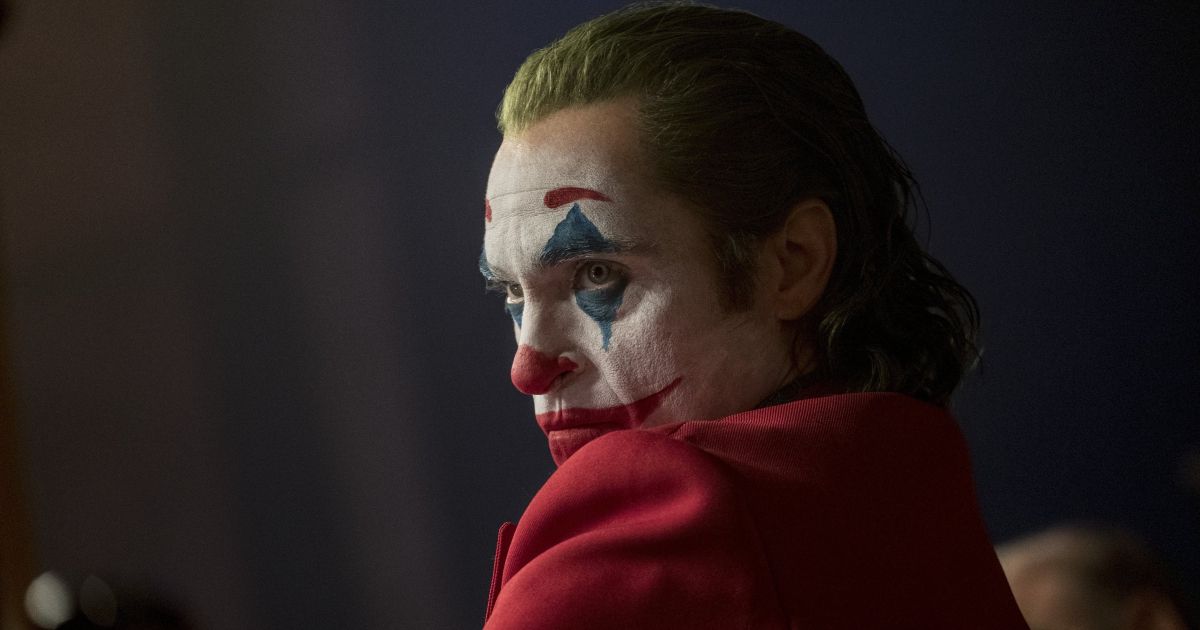
Why Joaquin Phoenix’s Joker Is the Best Villain for Today’s Times
Jun 20, 2023
2019’s Joker ushered in a quiet revolution in the Batman universe, with Joaquin Phoenix’s Academy Award-winning portrayal of Arthur Fleck/Joker garnering critical praise across the board. But it wasn’t just Phoenix’s considered acting work that drew comment. Joker offered a take on Gotham City’s most notorious villain that was notably at odds with previous portrayals, humanizing a character that had all too often been framed in terms of garish, ultraviolent gestures and base motives.
Due out next year, Joker: Folie à Deux will provide director Todd Phillips the chance to further flesh out the character. But it’s worth stopping for a moment to consider why Phoenix’s portrayal was met with such a huge outpouring of praise. Here’s why Joker is the perfect villain for today’s times.
MOVIEWEB VIDEO OF THE DAYSCROLL TO CONTINUE WITH CONTENT
Related: Lady Gaga as Harley Quinn in Joker 2 Has Some Harlivy Fans Feeling Upset
Believability
Warner Bros
In earlier times, believability in Gotham City on the big screen didn’t count for much, and no wonder. After all, Batman’s origins lie in the comics of the 1930s and 1940s, whose authors played fast and loose with what was and wasn’t possible in real life. As such, coming up with a plausible backstory for villains such as Joker and the Penguin was low on their list of priorities.
The usual explanation for Joker’s outlandish appearance – that he fell into a vat of chemicals and was left with bleached skin, green hair, and a rictus grin – was, of course, ridiculous but nevertheless felt entirely appropriate for Jack Nicholson’s anarchic portrayal of the character in 1989. Moreover, director Tim Burton leaned heavily into the aesthetics of the comic book for his two Batman films, offering a take on the Caped Crusader’s universe that chimed well with the sensibilities of comic book aficionados.
None of this feels like a good fit for the 2020s. In a world wracked by anxieties over the climate emergency, global pandemics, post-truth politics, widening economic inequalities, and the ever-present specter of nuclear war, the arch performances of Tim Burton-era villains such as Nicholson, or Danny DeVito as the Penguin in Batman Returns (1993), would seem oddly out of step with the times.
By contrast, Phoenix’s Joker is painfully vulnerable, lonely, and marginalized, living in a Gotham gripped by recession, in which the social contract is slowly breaking down. He is also economically precarious, employed as a clown, earning a living with few prospects of advancement or raising himself to a more prosperous level. Millennials, who are faced with a job market rapidly contracting due to generative AI and a property ladder rapidly ascending out of reach, know the feeling all too well.
Related: Mark Hamill Doubts He’ll Ever Voice Joker Again After Kevin Conroy’s Passing
Understatement
Warner Bros. Pictures
The character of Joker more or less provides actors with a free pass to overact, and the on-screen history of the role shows no end of flamboyant gestures and hyperbolic line readings. Beginning with Cesar Romero’s over-the-top performances opposite Adam West in the 1960s TV series, few actors who played the Joker have resisted the impulse to chew the scenery.
The contemplative, almost Phoenix’s take on Joker was several notches less theatrical than that of Jared Leto, Romero, Nicholson, Mark Hamill, or even Heath Ledger, whose remarkable work in The Dark Knight (2008) was seen in some quarters as definitive. The careful, understated fashion in which Phoenix showed Fleck absorbing hit after hit – the loss of his job; a disastrous performance in a comedy club – more powerfully and compellingly prepared audiences for his transformation into a villain than any number of Burtonesque backstories could.
Phoenix’s Joker: A Tragic figure
Warner Bros. Pictures
This aspect of Joker, too, reaches new heights in Phoenix’s portrayal. It arguably made its first appearance of substance in The Dark Knight, which hints at Joker’s neuroses in a way that had never been seen on screen before.
It’s no coincidence that many of the film’s most obvious influences play with perceptions of outsiders, such as The King of Comedy (1983) and One Flew Over The Cuckoo’s Nest (1975). Todd Phillips took these themes and ran with them, never losing sight of the tropes and symbolism against which audiences interpret loners.
Phillips’s deft use of camera setups – as in the scene in which Fleck, trying to fit in with his co-workers, laughs too hard at a joke and then ceases immediately on turning a corner – draw attention to both the character’s desperation and the depths of his mental illness.
Much has been said of the idea that Joker essentially operates as Batman’s alter-ego. Joker’s achievement was to take that idea and dismantle it. In Phoenix’s Arthur Fleck, we get a believable, sympathetic character for whom we can only feel pity and the tragedy of missed opportunities, neglect, and stymied ambition. It is only when he makes his transformation into a murdering Joker that we see the villain that Batman spends his entire life trying to bring to justice.
Publisher: Source link





Paramount’s Action-Adventure Hit Blazes to Its Biggest Audience Ever With Over 10 Million Viewers
Fire Country premiered in October 2022, and four years later, the action drama remains a hit for CBS and Paramount+. The series’ fifth and latest season debuted on October 9, and within three days, it ranked as the seventh most…
Oct 26, 2026

Rebecca Ferguson’s Near-Perfect Sci-Fi Thriller Is Officially a 600-Day Streaming Smash Hit
While it was the Mission: Impossible franchise that put Rebecca Ferguson on everyone's radar, it was her appearance as Rose the Hat in Doctor Sleep that cemented her as a superstar. It led to movies like Dune, Netflix's A House…
Oct 25, 2026
‘The Gentlemen’ Loses 2 Original Stars, Reunites ‘Lord of the Rings’ Icons in Big Season 3 Shake-Up
Guy Ritchie's signature blend of aristocratic elegance and gritty underworld chaos has officially solidified its place as a Netflix powerhouse. Originally launched as a television spin-off of his hit 2019 feature film, The Gentlemen captivated global audiences across its first…
Oct 24, 2026
Taylor Sheridan’s ‘Yellowstone’ Sequel Hits Major Milestone Ahead of Streaming Return
The Yellowstone universe has grown so fast since the main series ended that it’s fair to wonder whether the franchise might be stretching itself a bit thin. That’s part of why Dutton Ranch came as something of a surprise. Beth…
Oct 23, 2026