Pham Thien An’s Caméra d’Or-Winning Drama Is A Meditative Spiritual Odyssey [Karlovy Vary]
Jul 8, 2023
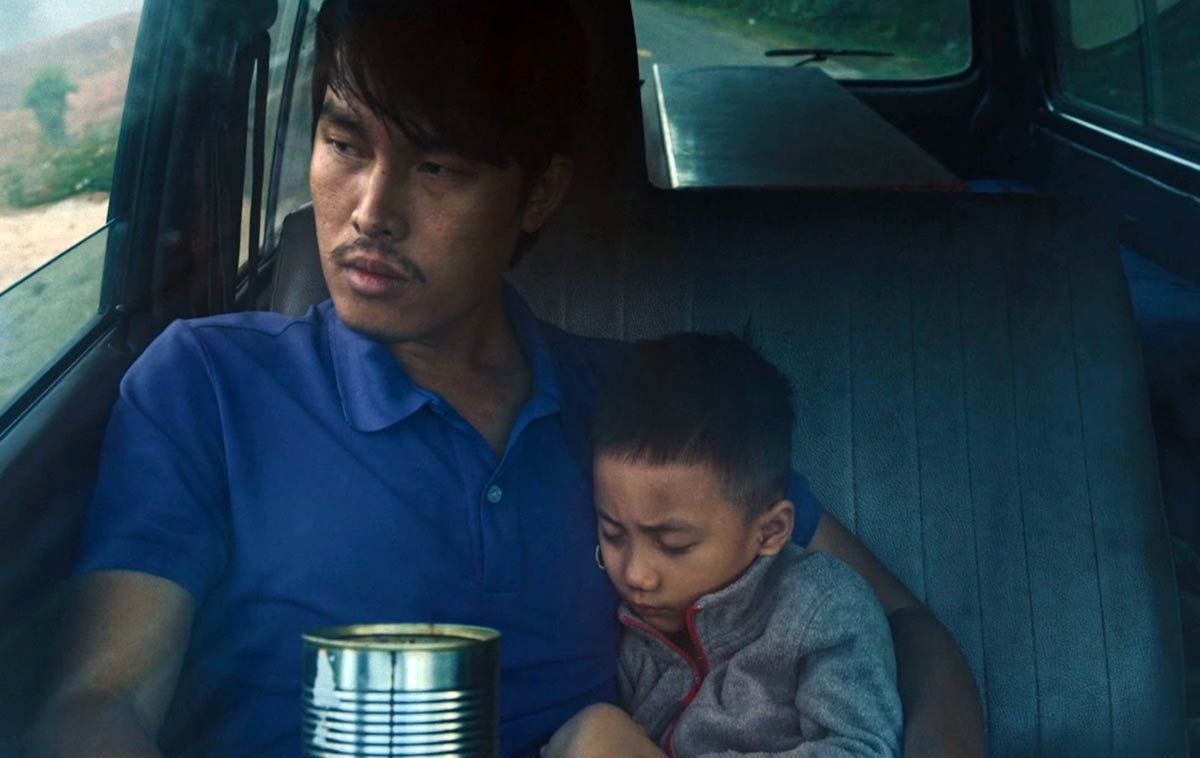
Winner of the Caméra d’Or for the best first feature film last month at the Cannes Film Festival, writer-director Pham Thien An’s “Inside the Yellow Cocoon Shell” is a deeply felt three-hour spiritual odyssey about grief in its many forms.
READ MORE: ‘You Sing Loud, I Sing Louder’ Review: A Vulnerable Ewan McGregor Can’t Save This Father-Daughter Addiction Drama [Karlovy Vary]
An impressive tracking shot moves from a nighttime soccer game through a lively street in Saigon before settling on friends having send-off drinks for a member of the group who is forsaking the city for a simple life in the mountains. The conversation turns to questions of faith, and the quietest of the three, Thien (Le Phong Vu), pronounces that “the existence of faith is ambiguous.” A torrential rain begins to fall, and a crash is heard just out of frame.
Shortly we learn that Thien’s sister-in-law has died in a motorcycle crash, and it’s implied his brother Tâm had left his young family some time ago (though his reasons remain unclear). This means that Thien must now care for her five-year-old son Dao (Nguyen Thinh) and arrange her funeral transport back to their rural hometown.
The more time Thien spends in the country, the more his mind wanders to the past. A conversation with a war veteran and a chance encounter with an ex-lover (Nguyen Thi Truc Quynh) whose life has changed more deeply than he can ever understand causes him to contemplate the many choices he’s made in life and the path in which he’s found himself on. Like poet Gerard Manley Hopkins asks in his most famous poem, “Spring and Fall,” Thien’s grief is not just for those he’s lost, but for past versions of himself, and thus his literal quest to find his brother becomes something much deeper and internal.
For a film ostensibly about the impact of death, “Inside the Yellow Cocoon Shell” is full of so much life. An fills each frame with so much human movement, from the opening nightlife sequence to Thien’s harrowing visit to the hospital to pick up Dao after the accident to the funeral rites for Dao’s mother. An uses the vibrant sounds of the city and the countryside as contrasting symphonies, underscoring life’s joys and traumas as they unfold.
To capture the vibrancy of life, cinematographer Dinh Duy Hung masterfully utilizes long takes and tracking shots in a series of impressive oners that, rather than call attention to the filmmaking, fully immerses the viewer into Thien’s world. Working in lockstep with An’s patient directing and insightful, meditative script, Hung’s camera beguiles as it slowly pans through whole buildings or across the vast and verdant countryside.
As Thien, Vu is tasked with carrying this three-hour epic and does so with aplomb. The brief glimpse we get of Thien’s life in Saigon paints a bleak portrait of urban isolation. Although people always surround him, Thien remains largely disengaged and disconnected, with An using medium and wide shots to highlight his small world. In one of the film’s most striking moments, Thien moves out of a medium shot towards the camera, his red t-shirt fully enveloping the frame. As he pulls backward into the frame, we see he’s found a small bird, a piece of the country found amongst all the chaos of the city, just like him.
However, once the story shifts to the countryside, Thien begins to engage with those around him, partaking in long, soulful conversations. In these moments, An often places the camera squarely on Vu’s face as he listens to the stories of those who have crossed his path. Vu’s reactions are subtle but telling. Much of his performance is done internally, as any spiritual journey is. Yet, Vu transmits this interiority through his expressive eyes and precise body language, allowing the audience just enough of a glimpse inside to witness his profound transformation.
Upon returning to the countryside, Thien grows closer to Dao. Shortly after one of his mother’s funeral ceremonies, the boy asks his uncle what faith looks like, to which Thien replies, “It has no form.” Dao follows up, asking, “What is faith?” “That is also what I’m searching for,” Thien responds.
Like Thien, An understands that it’s easy to ask such simple questions, but to seek these answers is, for many people, the most complex thing they will ever do with their lives. He wisely leaves it up to the viewers to decide if dedicating their life to this seeking is actually worthwhile. [A]
Publisher: Source link



HBO’s Harry Potter Reboot Is Officially Ditching the Most Iconic Part of Daniel Radcliffe’s Era
This December, audiences will be transported back to the Wizarding world of Harry Potter. Of course, those born in the mid-to-late '90s will have fond memories of the movie franchise. Starring Daniel Radcliffe, Emma Watson, and Rupert Grint as Harry,…
Sep 20, 2026
‘Tracker’ Season 4 Officially Puts Its Biggest Mystery on Hold Despite Major Cast Comeback
Our fictional missing persons expert, Colter Shaw (Justin Hartley), has kept audiences happily on the edge of their seats ever since Tracker debuted two years ago, and Season 3 in particular left audiences with quite a major cliffhanger — all…
Sep 19, 2026
‘Reacher’s Action Thriller Spin-Off Gets Major Season 2 Update Following Premiere
For four seasons, Reacher has been one of the biggest TV shows on Prime Video. Based on the novels by Lee Child, the series follows former military police officer Jack Reacher (Alan Ritchson) as he wanders from place to place,…
Sep 18, 2026

One of CBS’ Longest-Running & Highest Rated TV Shows Is Coming To End After 30 Years
Along with countless scripted dramas, comedies, and action shows, CBS is well known for its impressive run of unscripted programs over the last 50 years. More recent years have included major competition shows like Survivor and The Amazing Race, along…
Sep 17, 2026