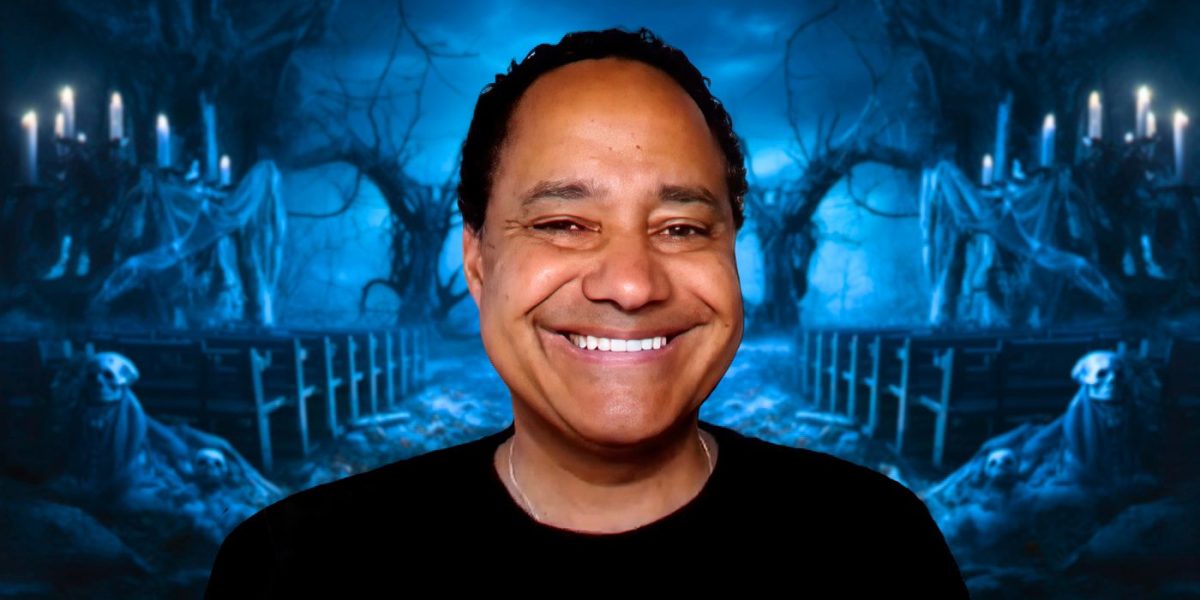
Delivering Blood-Soaked Action on a Limited Budget
Aug 4, 2023
The Big Picture
Til Death Do Us Part is a very bloody action film about a runaway bride being pursued by her former fiancé and his seven deadly groomsmen. Producer Jeffrey Reddick sings director Timothy Woodward Jr.’s praises for his determination and ability successfully execute ambitious set pieces. Reddick also emphasizes his own personal dedication to supporting independent filmmakers.
Til Death Do Us Part is proof you can do a lot with a limited budget when working with the right people.
The film marks Final Destination creator and prolific producer Jeffrey Reddick’s third collaboration with director Timothy Woodward Jr. First was 2018’s The Final Wish, then 2020’s The Call, and now they’re bringing us Til Death Do Us Part, a genre movie that leans heavy into extremely visceral and bloody action. The movie stars producer Natalie Burn as a bride-to-be who runs off on her wedding day. That choice sparks an epic battle for survival pitting her against her former fiancé and his seven deadly groomsmen.
With Til Death Do Us Part now playing in theaters nationwide, Reddick took the time to join me for an extended chat to discuss his passion for and dedication to independent filmmaking, what makes Woodward Jr. a standout director, and why you don’t need a sky-high budget to deliver hugely effective action set pieces.
Hear all about that and loads more in the video interview at the top of this article, or you can read the conversation in transcript form below.
Image via Cineverse
PERRI NEMIROFF: I’m very excited about this interview right now. I have the pleasure of talking with Jeffrey Reddick, the mastermind behind the Final Destination franchise, who is also here to support his brand new movie due in theaters on August 4th, Til Death Do Us Part. Congratulations on both things and then some because you have accomplished way more beyond that as well!
JEFFREY REDDICK: Thank you so much, Perri. I really appreciate you having me on. I follow Collider so I stalk you all all the time, not to be creepy. It’s a pleasure to be here to talk about everything, but especially the new film Til Death Do Us Part, which I just want to say is an indie film. Everybody knows we’re on strike right now. I have my WGA support pin on, but I’m also a member of SAG, so our whole production team supports the strike and hopes that the AMPTP comes back to the table to negotiate a fair deal so that we can all get back to making our independent films, and our bigger films as well.
I am eagerly awaiting that day. Both guilds and then some deserve fair payment in this industry, and I cannot emphasize that enough.
REDDICK: Everybody, everybody in this industry at all levels needs to be fairly compensated and it hasn’t happened in a long time. But that’s one of the reasons I love working in indie films like Til Death Do Us Part, is because when you’re doing an indie film you kind of know that you don’t have the budgets that you do for the big studio films. But I will say, this is my third collaboration with Timothy Woodward Jr., our director-producer, my third work with him, and he’s masterful. I love his filmmaking, first of all. He’s one of these people that when he says, “I’m gonna make a film,” I’m like, “Okay, I’ll talk to you in five years,” and it’s like, “No, we’re making it in like three months.” So I got him into the horror genre, and this is a really fun action in the vein of Violent Night kind of movie I think as far as tonally with a lot of humor, some over-the-top gore, but grounded in real characters. So I think this is gonna be a film that has kind of a wide appeal to people who want some action – a lot of action, actually.
Natalie Burn, our producer and our lead, is phenomenal. She was a ballerina, which obviously means she knows how to train her body to do all kinds of crazy fighting things, but it also means she’s tough as hell. [Laughs] She did all of her stunts, so it was really fun to watch. On set, the producer side of me was nervous. She’s also a producer, so I didn’t get into any arguments with her about her doing her own stunts because I trust her and I know that we keep everybody safe on set, but I’m like, “Are you sure we’re gonna do that?” And she’s like, “Pft, yeah!” I’m like, “Okay.” [Laughs]
Image via Cineverse
I’ve got a two-part question in terms of what you pick to produce. First, more broadly, what signals to you that your own skills and expertise will benefit a particular project? But then on the other hand, when you read something like Til Death, what is it about that particular story that you think can help you grow as a producer and filmmaker as well?
REDDICK: There are a couple of things. I will say the project needs to speak to me on some level, but usually it’s genre stuff. To be honest, because I’m very big on giving back to people, I have produced a lot of independent films that I know filmmakers in Kentucky are doing, or in smaller states. I’ve had to kind of step back from doing some of that because I was doing that a lot, so now I have to focus more on the quality of the project itself. You wanna give back, but I just can’t put my name on everything that somebody sends me [laughs], and produce it for them. But again, it’s just in my heart about supporting independent filmmakers.
But with Timothy, I love our story because he was hitting me up online a lot. That happens a lot, and he’s like, “Would you be interested? Do you have anything?” I was like, “No, no, I can’t really.” And he’s so persistent, that’s what I love about him. So finally, he sent me some clips of his work, and then I checked it out. I’m like, “Holy crap, this guy is really good!” So I met him for lunch with my writing partners on The Final Wish, which was a horror film, the first one we produced together, and literally like two minutes in, I was kind of sold on him going into the room, but just talking to him and hearing how passionate he was and the vision he had in his head. So with Timothy, if Timothy wants me to produce something, I’m just like, “Yes,” because I know the quality is gonna be good, and I know that he makes his style. It’s crazy because a lot of times it takes 10, 15 years to get something made in this business, and when Timothy says he’s gonna make something, he makes it, and it turns out good.
This just happened to be a happy mixture of, like I said, Violent Night, kind of the blood and the action and stuff that I like, but it’s got a cool love story at the center of it that’s kind of a love that, unfortunately, outside forces are determined not to make happen. Stories that I’m usually drawn to have some kind of universal appeal to them, and when I did read this, I did love the fact that it was about two people who were in love and wanted to be together, but outside forces are like, “You can’t,” and, unfortunately, bloody mayhem ensues. [Laughs]
Unfortunately, but fortunately for the viewer.
REDDICK: Yes, the audience, they need that!
Image via Cineverse
This movie is top to bottom ambitious set pieces, one after the next. So you sign on to produce, you read the script, is there any particular scene that you circle on the shooting schedule and say to yourself, “My god, we are gonna have our work cut out for us on that particular day?” But then I want to know, ultimately, was that indeed the toughest scene, or did something else catch you all by surprise?
REDDICK: There wasn’t a lot because, again, I’ve worked with Timothy so much I know that he’s gonna pull off stuff. It’s always an ambitious shoot with the projects that we work on because we don’t have the luxury of, like, 40, 50 shooting days, sometimes not even 30 shooting days, but he’s always got an ambitious vision in his mind, and he always gets to pull it off. [In] some of the scenes, there’s just so much fighting in it. I’m like, “There’s a lot of set pieces that I hope we don’t have to shorten these fights and make them really quick just because we don’t have time to shoot them,” and we didn’t. And that was because, again, Tim knew what he wanted. We hired several stunt people to play some of the groomsmen, but a lot of the groomsmen were actors as well.
The fight with Pancho Moler is one of my favorite scenes just because it’s got humor in it. And Pancho came up with a couple of ideas for the scene that are just fun. They’re really funny but violent, and he’s such a good actor and such a good sport, and Timothy kind of let them play. After working on two movies with Tim, [on] the first film, I thought, “Oh, these scenes are gonna be hard to pull off,” and then we did The Call, and he came up with even crazier scenes that we pulled off with less time than we had, I think, on The Final Wish.
And then on this one, we have a big cast, and a lot of the stuff is centered around this hideaway for the bride, but we’ve got scenes on this expensive yacht that’s out at sea. I know several people — I was not there for that day, not on purpose — but I know a lot of people got a little seasick [laughs], you know? Because they’re out on the sea, and the ship is pitching. I don’t know, Tim would have to answer that question, but I think that might have been probably the toughest for them because when you’re in control of everything, you can handle all the variables, but if your yacht tilts and things go flying and you’re seasick, that’s got to be a tough thing. I feel bad that I wasn’t there for that because I feel like I should have been through that seasick experience with the rest of the team that was involved.
The second you said “seasick” I’m like, “Oh, no filmmaking challenge sounds more challenging than having to deal with that.”
REDDICK: Absolutely.
Image via Cineverse
We’ve mentioned that there are a bunch of extensive fight scenes in this movie and also that you do not have a gigantic blockbuster-sized budget to pull them off with. That was making me wonder, can you maybe give us an example of a specific economical filmmaking tactic that one can use to pull off action scenes that maybe more productions out there would benefit from learning about and utilizing?
REDDICK: Well, I think part of making action scenes work is you have to care about the characters, first of all. Especially your protagonist, which again is Natalie Burn, so I think you have a lot of sympathy for her. And the fight scenes in our movie are brutal because of the intensity of them. You don’t have to have people flying, driving cars through walls, you know? And a lot of movies, especially because we’re used to Marvel movies, it’s like, Iron Man can’t just knock somebody into the air, into the ocean anymore. He’s gotta fly them through 20 buildings that have to crumble, so there’s the spectacle of that.
But when you have a movie with a character that you care about, and also the groomsmen that are her kind of main nemesis, when you have these fight scenes between people that know each other, and they’re brutal in their intensity in that there’s no holding back – that’s why they have a lot of female horror leads as well. There’s something about having a female in danger that gets us on a visceral level. We certainly don’t want to see a woman getting the crap beat out of her, but this is a fight-for-survival movie so watching two human beings pummel each other and kick each other in the ribs, every hit counts. That’s a mixture of sound effects and stunt work, but also, sometimes they took a punch, and so I think that intensity, it doesn’t have to be on a big scale. If you’re really feeling it, especially between characters that know each other, and also if it’s characters that love each other, it’s like the old, “Only one of us is getting out of here alive,” kind of situation. The stakes of it are what make it really impactful, I think, with action set pieces like that.
Oh, absolutely. It doesn’t matter how big the punch is, as long as it feels visceral in the end, that’s really all that matters.
REDDICK: There’s a couple of kills that are just like, “Ah,” viscerally, but then it’ll go next level over where it kind of makes it fun, you know? Not that it’s fun. It’s horrible murdering people in real life. I always have to clarify that when I talk about “fun” murdering people.
With every single project you work on, I imagine!
REDDICK: Yeah, I do not condone murdering people or hurting people in real life, but I love watching it in movies when it’s done in – one of the things I think Tim brings to this film and all of his films, is there’s a sense of humor to it, but not like goofball, Three Stooges kind of humor. There’s levity within the violence as well. And you do get little breaks at certain points, and then there are points where you just don’t get breaks [laughs], where she is going groomsman after groomsman after groomsman.
It’s that intensity and that emotional connection, I think, that filmmakers – and a lot of them get it. You see a lot of independent films where they do a great job with this, where they realize it is the intensity within the scene and it’s not about having super big explosions happening behind your characters while they’re fighting. I mean, yeah, it looks cool, again, from Marvel movies or Fast X, if you want to have a car jump off a bridge and then ride down a dam and then go into space or whatever. [Laughs] I love that stuff, too. It’s crazy and fantastical, but this stuff is more grounded, and I think the more grounded set pieces – even like in a Die Hard movie, the first one especially. They had effects, but it really was Bruce Willis taking on the people that were holding that building hostage and trying to protect his wife. That made every fight, it made the stakes behind the fight so important, and the stakes behind every fight in this movie are important.
Absolutely! With that, I’m gonna remind everybody, Til Death Do Us Part is in theaters on August 4th.
Publisher: Source link



‘Reacher’s Action Thriller Spin-Off Gets Major Season 2 Update Following Premiere
For four seasons, Reacher has been one of the biggest TV shows on Prime Video. Based on the novels by Lee Child, the series follows former military police officer Jack Reacher (Alan Ritchson) as he wanders from place to place,…
Sep 18, 2026

One of CBS’ Longest-Running & Highest Rated TV Shows Is Coming To End After 30 Years
Along with countless scripted dramas, comedies, and action shows, CBS is well known for its impressive run of unscripted programs over the last 50 years. More recent years have included major competition shows like Survivor and The Amazing Race, along…
Sep 17, 2026
Prime Video Officially Launches New Deal That Changes the Streaming Game Forever
It seems like streamers raise their prices every day. At the end of August, Apple TV raised the subscription service price by $2, bringing it to $14.99 a month. Netflix, Disney+, HBO Max, Paramount+, and Peacock have all raised prices…
Sep 16, 2026
Netflix’s 10/10 Thriller Series Returns After 3 Year Absence With Explosive New Trailer
Over the last five years, Netflix has expanded heavily into non-English content, with international series taking an even bigger focus for the streaming giant. One of the biggest driving forces in that effort is the French thriller series Lupin, led…
Sep 15, 2026