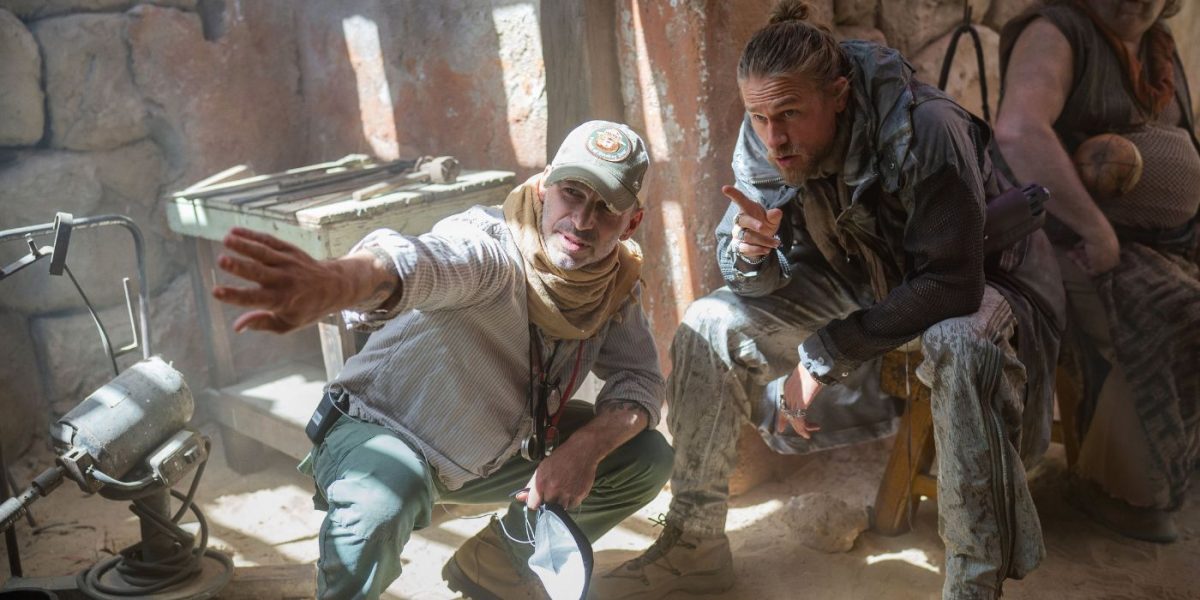
How Zack Snyder’s ‘Rebel Moon’ Went From Star Wars to Two Movies on Netflix
Dec 11, 2023
The Big Picture
Zack Snyder recommends watching his film “Watchmen” as a primer to understand his approach to deconstructing superheroes and pop culture. Snyder’s signature action sequence is the charge scene from “300,” which was uniquely shot with multiple cameras and a CG environment. Snyder uses slow motion intuitively in his films and prefers not to slow down footage shot at 24 frames per second. He often shoots in slow motion and decides whether to use it in post-production.
No one will ever accuse filmmaker Zack Snyder of not sticking to his guns. The director’s name is synonymous with controversy, but not necessarily in a bad way. He’s taken creative license over all of his films, from introducing Henry Cavill as Superman in the DCEU’s first feature Man of Steel to adapting comics like Alan Moore’s Watchmen and Frank Miller’s 300 to his signature style. When you’re watching a Snyder movie there’s no question it’s a Snyder movie, and that’s a great talent in Hollywood.
After nearly a decade with the DCEU, Snyder is stepping out with his original two-part film series, beginning with Rebel Moon: Part One – A Child of Fire. At this year’s Comic-Con Experience (CCXP) in Brazil, Collider’s Steve Weintraub sat down with the director for an exclusive interview to discuss the inspiration behind Rebel Moon, the R-rated director’s cut Netflix granted him from the get-go, and how this movie, and its second part, have evolved over the last five or so years.
Having started out as a Star Wars pitch, Snyder digs into how Rebel Moon developed into its own epic story, what it still shares with the final frontier franchise, and other ’80s influences that inspired him when co-writing with previous collaborators Shay Hatten (Army of the Dead) and Kurt Johnstad (300). Snyder also discusses other projects like why Sucker Punch never got a director’s cut, why Watchmen is the best film to dip your toes into his filmography, which of his many action sequences is his favorite, and what to expect from his star-studded, sex-filled, violent animated series, Twilight of the Gods. Check it all out in the transcript below.
Rebel Moon When a peaceful settlement on the edge of a distant moon finds itself threatened by the armies of a tyrannical ruling force, a mysterious stranger living among its villagers becomes their best hope for survival. Release Date December 22, 2023 Director Zack Snyder Studio Netflix
COLLIDER: So you’ve directed a lot of cool shit. If someone has actually never seen anything you’ve directed, what is the first thing you want them watching and why?
ZACK SNYDER: The first thing I want them watching is Watchmen.
Which version?
SNYDER: I would say not the director’s cut but not the super extended with the animation. It’s cool, but that version, the director’s cut version, the three-hour version, to me, that was like what I what I wanted to do when we were shooting. And the reason why is because I think in retrospect, and in context of everything I’ve done, it’s good to see that movie and understand what Alan Moore did in the deconstruction of superheroes and pop culture. Every single piece of the weaving together of what we glorify in fandom and literally in the genre he takes apart and says, “Why?” And so for me, because I’ve worked in genres so much, to see that movie first, even if you were going to see 300 or Army of the Dead or Dawn of the Dead or Justice League, whatever it is, that movie as a primer is, I think, the way to kind of look at the library.
Related Malin Akerman on Why ‘Watchmen’ Was a Turning Point: “I Felt Way Out of My League” “I really struggled because it was such a big film and I really felt like I had no idea what I was doing.”
I also don’t think a lot of people remember that when you released that, one of the reasons it was the length it was in theaters is the IMAX platter.
SNYDER: 100%.
People just don’t remember that. And what I love is that Christohper Nolan, with Oppenheimer, has made them get to the three-hour mark.
SNYDER: Making the platters bigger.
He has said that IMAX told him that is the maximum length of a platter. Anyway, a lot of people don’t remember that.
SNYDER: No, 100%. I’ve talked about it recently actually. Even with 300, they were saying that if there was moisture in the projection room, the film would swell and it would fall off. That’s how on the edge we were with the length. So that did dictate a lot of ‘why’ of the length of the movie. By the way, Chris’s other movies before Oppenheimer were also dictated by that same length.
Will We Ever Get a Director’s Cut of ‘Sucker Punch’?
Image via Warner Bros.
Which of your films changed the most in the editing room in ways you didn’t expect going in, or which film if you want to limit it to one?
SNYDER: I think probably Sucker Punch is probably the movie that I have in my filmography that never really got a true director’s cut because the other director’s cuts of my movies are very specifically what I intended at the beginning. The problem with Sucker Punch is the director’s cut still was just, like, extended scenes. It was more of a deleted scene version than a real, tonally different film. I think with a bunch of the director’s cuts, Batman v Superman, I think, is a really good example of really giving a different feeling as a movie. I think Sucker Punch has never really gotten that treatment. And so, in editorial, when we were cutting the theatrical version of that movie, it’s much different than I had intended with the footage I had and what I thought it was going to be.
So, you’ve directed so many cool action sequences. Do you have a favorite or is there one that you would love to show people if they’ve never seen a Zack Snyder action sequence?
SNYDER: Yeah, I guess for me I would say the signature pieces, like Leonidas’s charge from 300. The way we shot that was very particular and it’s particular because it’s in a weird movie anyway. I mean, it’s photographically weird, you know what I mean? It was, camera-wise, shot with three cameras all shooting through the same perspective, all at the same time, all high-speed in one dolly shot with Gerry [Butler] doing the action in the CG environment beyond him, but real stunt men. So that, as an exercise in just weird action. I, as a student of action, really don’t like doing action sequences where you can’t see what’s happening, like that kind of shaky…I like the real poetry of the physicality of the thing I’m into. So, yeah, I’d say that one because, for me, that sequence from 300 was the first time where I was really able to just kind of say, “Okay, this would be a cool way to do it.”
It wasn’t connected to, like in Dawn of the Dead, where I would say from the time the kid comes into the bedroom to Sarah Polley crashing the car into the tree at the beginning, the title sequence starting in Dawn was like an action sequence that was pretty simple in the script, and I had had this idea, “Let’s do it slightly differently than you would imagine,” in that when she gets in the car, there’s no shots that are on the ground, right? All the shots are in the car, attached to the car, the camera is attached to the car, and I remember the studio going, “Okay, where are the normal shots? We need some shots.” And I think that that was interesting. I was worried at the time that they were gonna force me to go shoot some drive-by’s, and I was like, “I really don’t want to do that.” So when I got to 300 and had built a sort of cage around the movie, it was impenetrable because the studio didn’t know what was happening anyway.
Image via Warner Bros
You were also in Montreal.
SNYDER: Yeah, and to comment on what we were photographing would be impossible because it just looks like shenanigans anyway. You know, like Gerry standing there in a leather bikini in front of a green screen, you couldn’t say, “Hey, you know what would be a cool shot in this sequence?” You couldn’t say it because you didn’t know what we were doing anyway. So, I know it’s a long answer, but I think, for me, that’s kind of where our approach to action really started. That was its birth.
One of the many things I like about your work is where and when you use slow motion photography. I’m curious if we could talk about with Rebel Moon where and when you chose to use it, and how much do you debate that on set? Is all of that being figured out on set, is some of that being figured out in post? What’s the process of when you decide to do that?
SNYDER: It’s kind of intuitive. What I don’t like doing, what I never have done and I try not to do, is slow anything down that was photographed at another frame rate. Like if I shot something at 24 frames, I never would say, “Oh, let’s slow it down so it looks like slow motion.” The only reason we did something similar to that in Watchmen in the title sequence, we had to do that fake slow motion because we couldn’t get the cameras. At that time, there was no Phantom, it was only Photo-Sonic. So in order to get, like, 1000 frames, we would have the actors act like they were in more slow motion than they were, so that’s what we were thinking. Then in CG you’d make the spit, or the shell casings, to make it look like it was super slow. So sometimes what I will do, if I’m wondering whether or not this sequence should be in slow motion, I’ll shoot it in slow motion anyway and then decide whether to put it back in 24 after.
So you’re on set, maybe shooting other things in slow motion or for slow motion, but maybe you’re not going to use it later.
SNYDER: Maybe I won’t use it, but I want to be sure that I won’t have to then slow down something that I shot at 24 frames. That I just couldn’t do because I don’t like the way it looks.
How Did ‘Rebel Moon’ Evolve From ‘Star Wars’?
So you talked about how originally Rebel Moon was inspired by Star Wars, and you were thinking about a Star Wars movie. I’m curious how much of the movie that you envisioned and imagined is the same, and how much changed when you made Rebel Moon?
SNYDER: I would say that it ends up being nearly 100% different than what I had intended. I mean, other than the basic concept of farmers – the bad guys come, they want the farmers’ food, the farmers say no, they’re going to come back, build an army, fight. That was the basic idea, but what happened was when we split off from Star Wars, Debbie [Snyder] was like, “That’s the best news ever because now you’re not…” It’s literally what she said, that if you have a hard time with DC, this is going to be a million times worse.
And it would have been.
SNYDER: And it would have been. So I was like, “Okay, cool.” Then I think what happened was then when we brought Eric [Newman] on, we brought him on because I was like, “You know TV. Let’s do a series. Let’s make a series out of it.” Each planet will be the first season, each episode will be finding a member of the team. It’s episodic in that way anyway. During that process, the movie really split off from the original sort of Star Wars mock, the way I was imagining. And it was good that we did that exercise because conceptualizing the TV version really made us ping in a lot of the corners of the mythology because a TV show is a deeper dive than a movie anyway. So we really had to figure out, “Okay, what is the Motherworld? Why? What is the deal with that?” And then becoming this kind of dieselpunk, Victorian weirdo, the mythology of the Motherworld, in a lot of ways, we retrofitted, we did that work. So now we’re like, “Okay, this is the world we’re in. This is the universe we’re in. It’s different from Star Wars.”
Yes, it’s influenced sort of iconographically in some ways. We have space fascists, they have space fascists, but I was kind of into that relationship because I like the comment. I think that’s one thing that you’ll see in the director’s cut that is different from the PG-13 version is the irony of a super hard R-rated sci-fi movie at this scale is cleaner in the R-rated version. In the PG-13, we push. It’s a hard PG-13. We push them to the ragged edge. The sort of sex and violence aspect of it, being able to understand that, like, for instance, when they go into the bar, it’s a brothel, right? It’s like a real brothel, and the dog-faced man wants to fuck them, right? That’s what he wants. And so that wouldn’t happen in a Star Wars movie, you know? But I like the idea that I saw Star Wars when I was 11 years old. I’ve grown up now. The implications of what could be happening in that bar, that cantina, are now a reality to me. These are things that could have been going on, and would have been, if looked at from the perspective of a grown-up.
So that’s kind of, to me, the way things like Excalibur and Star Wars come together, and heavy metal. The reason why I use those three references is because they all came together for me in the early ‘80s and created my love of fantasy art, fantasy storytelling, science fiction. At the beginning of Excalibur, when Uther and Igrayne are having sex, he’s in his armor and what’s-his-name is out there dying, it’s like this incredible, for me, whatever I was, 13 years old, it was really this seminal, crazy thing that I was witnessing. I guess having my eyes open to that world is kind of like what has resonated all the way to this movie. I was going after that sort of sci-fi fantasy as a way to kind of open your eyes to… When I saw the trailer for Empire Strikes Back, there’s a shot — I can remember it perfectly — it wasn’t in the movie, of C-3PO…
Image via 20th Century Studios
Yeah, it’s the sign in Cloud City. I know exactly the shot you’re talking about.
SNYDER: And it was in the trailer, it wasn’t in the movie. And by the way, Empire is my favorite of the Star Wars movies. I think true dorks fall into that category.
You know what’s funny? I go through phases where it’s either Star Wars or Empire because without Star Wars, you don’t get Empire.
SNYDER: 100%.
But it’s always one of those. There’s not even another question.
SNYDER: I have [Star Wars: The Despecialized Edition]. At the theater we’ll put it on and it’s really a great experience to watch that movie because you really can be transported back to the unicorn that is that movie in its design and everything. It’s so exotic in a weird way. It’s unduplicatable. It’s funny because we were noticing that when we went to watch the other day because we have the 70-mil print of this movie at The Egyptian for a week before the movie comes out. The thing that’s cool about it is, we kind of did a crazy thing – I did it in Ultra Panavision, so what we did was we had to re-squeeze the movie, and then it’s Ultra Panavision 70, so we printed the movie in 70-mil Ultra Panavision We had to do the math on re-squeezing because it’s an anamorphic movie anyway, but Ultra Panavision, they never unsqueeze the movie until it is projected, so you have to put a lens on the projector that unsqueezes the movie. We were watching in the theater and in that format you really feel the retroness of the movie in a really cool way. Anyway, it’s a bespoke experience for a few people, but it’s cool.
Why Working With Netflix on ‘Rebel Moon’ Was Liberating
I don’t want to devote too much time to the director’s cut, but I am a real big fan of your director’s cuts. You look at what you’ve done with Watchmen, with Justice League, to me, they’re just better movies. I’m just curious, with Rebel Moon, I don’t want to say, do you consider it the better version, but do you…?
SNYDER: Here’s the thing, and this is why I think it’s the best case scenario, for me, was that when we went into the movie– I’ve never gone into any film project where they’ve already set aside money for the director’s cut and they know it’s gonna happen. It’s always been an afterthought. It’s always a knee-jerk. I’m always like, “This time it’s not gonna happen.” I guess fool me once, but I always go into it going, “This time the studio is not gonna fuck with me. They’re gonna get it.” Maybe I’m just naive, whatever. But the cool thing was with Netflix, and I had this experience on Army [of the Dead], was that they were so cool with what I wanted to do. That’s why there’s not a director’s cut of Army because it was really just the movie. They never said, “Oh…” I think the only thing they wanted me to take out was the zombie penis because we had it in the opening credits. One of the Chippendale’s dancers had this huge cock with a bite taken out of it. I had a shot of it and they were like, “Look, is there any way…?” And I as like, “Alright.”
It’s funny, I always wonder where the streamers are willing to say no because I watch The Boys and I watch other things, and I’m like, “I can’t believe what they’re getting away with.” So that’s the line at Netflix.
SNYDER: Apparently. And I think mostly because it was near the beginning of the movie. I think if it had been deeper in the movie it might have been okay, but right at the beginning…
No, actually, by the way, they’re probably right.
SNYDER: They’re not wrong.
They’re probably right on this one.
SNYDER: I said, “Cool.” I was like, “You know what? That’s not a lot to ask.”
And by the way, I think you’re also right. If it had been in the middle of the movie or in the third act, you probably would have gotten away with it.
SNYDER: Yeah because they’d be like, “Okay, you’re in now.” No one’s gonna shut the movie off because they see a zombie penis in the third act.
Image via Netflix
So you’ve talked about how in the two movies there’s about an hour of extra scenes.
SNYDER: Okay, well, I guess that that is what I’m saying. So, because we went into it as partners, going like, “Look, the director’s cut is over here. We know you’re gonna have it. Whatever you want to do is there, so we’re not even saying to you take this out, take that out. We’re not gonna do that.” They’re like, “Now that you know that you got it, what would you do?” That is super liberating in a lot of ways for me because there’s always a balance between commerce and art. That’s the battle, right? And in this case, I felt like I was liberated to really what I thought would make this sort of the best version of the movie for a broad audience that I could. Because my knee-jerk aesthetic is very bespoke, it ends up being, I feel like. Weirdly, it has broad appeal, I think, in the end. But what I really like is much more sort of heavy metal. PG-13 is not my natural default, I guess is what I’m saying.
I would agree with that assessment.
SNYDER: But I feel like in this case, and with my partners at Netflix, I didn’t feel hemmed in by it. I felt like I could make something super entertaining. I felt like I could make something that I was proud of, but fully with my eyes wide open about what the requirements of a big budget PG-13 movie.
I think the movie is two hours and 15 minutes.
SNYDER: Yeah. That’s with the titles, so without the titles it’s probably like two hours and four minutes.
My bad, but it’s a little over two. When you’re making this version that’s essentially for a wider audience, because Netflix can be any runtime, how do you decide, “That’s the length I wanna go for and this is what I want to save for later?”
SNYDER: Because I had really wanted to keep the movie close to two hours. That was like a thing I really wanted to do. I just felt like these two movies together, if they’re both about two hours each, and I think movie two is even shorter, it’s like an hour and 54 minutes — it’s like, I think, one of the first movies I’ve made that’s under two hours, which is incredible — that was the sort of thing I had in my mind was that I really wanted to keep it close to two hours. So Dody [Dorn] and I, he’s an amazing editor, it was really the exercise of like, “Okay, what’s the leanest line through the movie?” And that was the game we played with ourselves – only good shots, the best, cleanest line. That was the way that we went about finding what stuck. What stayed in the juggernaut of the movie is what we were looking for, and that was really how we did it. So, the R-rated version of the movie is really simply what I wrote. It’s really what the script was, or part of it.
Can I ask, is it extended scenes? Is it the scenes we see but maybe a little longer?
SNYDER: It’s a bit of that but…there’s a lot more Jimmy, like him wandering around. It’s a lot of that stuff.
Image by Steve Weintraub
Yeah, we don’t have to spend too much time. We can talk about that down the road. What tech or cameras have you seen privately that you’re excited to use in your future movies?
SNYDER: There was this technology that we’re looking at, but I don’t know. We haven’t seen it vetted.
I know what you’re saying.
SNYDER: It could be amazing, and so that would be awesome, but I haven’t seen it 100% vetted.
What Is Zack Snyder’s ‘Twilight of the Gods’?
I’m really looking forward to Twilight of the Gods. There’s basically nothing known about this project, so my question is, what can you tease fans of yours about what this project is and what it’s about?
SNYDER: I just think that it was one of these things that we kind of did not understanding, first of all, the rigors of what it would take to make eight episodes of animation. If I had known, I don’t know if I would have done it. [Laughs]
Did you call Tim Miller?
SNYDER: I should have because ours is this company called Xilam in France. Amazing Artist. It’s a 2D movie. It’s beautiful. We just ended on a style and a beauty that I feel like is kind of not out there in the marketplace, and so for me it’s been a real fun and exciting…it’s just not like anything out there. It’s rated R. It’s bizarre.
Is it coming out next year or is it still 2025?
SNYDER: No, no, it’s next year, isn’t it?
DEBORAH SNYDER: They don’t have it dated yet, but we still don’t finish it until sometime in almost summer.
SNYDER: This summer.
Oh, then maybe at the end of the year?
DEBORAH: It could be end of the year.
I wish people online could see he’s holding concept posters of. So the episodes, would you say super hard R or R-rated?
SNYDER: It depends. It depends.
DEBORAH: It’s 2D animation.
SNYDER: Yeah, it’s 2D animation.
I don’t know what 2D animation means because you could have blood splatter across the screen.
SNYDER: We do do that a bit.
Of course you do.
SNYDER: But it’s really quite a stunning exercise in graphic…the blood is kind of beautiful.
I’m sure it is. That’s what I’m saying. [Laughs]
SNYDER: Yeah. So, no, absolutely. I mean, there’s a lot of sex in it because that’s fun.
You’ve given little hints but is there like a logline or something?
SNYDER: It’s basically this: there’s a king and his queen in a small Viking village and they want to get married. An event happens to them at their wedding that causes Sigrid, who is the bride to be, who is the child of giants, to go on a crazy mission of revenge. She enlists a cast of characters – a seer, a dwarf – and they come together to form a band that has this one mission to find a god and fight him. It’s a mission, it’s a revenge story. Sigrid is this beautiful, very Scandinavian kind of cold but passionate character that I’ve really enjoyed working through and with because she’s just so cool. Sylvia Hooks voices her.
I think she told me about this a while ago.
DEBORAH: And Stuart Martin is the voice.
SNYDER: Yeah, Stuart, he’s in this movie, he’s dead in this movie, and he was in Army of Thieves.
I am very much looking forward to this, and I’m so happy to thank Netflix because I’m so happy with the adult animation being made right now. There’s so much out there that’s fucking awesome. It’s great because America has been afraid of adult animation and now it’s great.
SNYDER: I love it too. We were talking about Blue Eye Samurai, which is fucking amazing, and all the Love Death + Robots stuff is amazing.
Rebel Moon: Part One – A Child of Fire premieres on Netflix in the U.S. on December 22.
Watch on Netflix
Publisher: Source link




‘Tracker’ Season 4 Officially Puts Its Biggest Mystery on Hold Despite Major Cast Comeback
Our fictional missing persons expert, Colter Shaw (Justin Hartley), has kept audiences happily on the edge of their seats ever since Tracker debuted two years ago, and Season 3 in particular left audiences with quite a major cliffhanger — all…
Sep 19, 2026
‘Reacher’s Action Thriller Spin-Off Gets Major Season 2 Update Following Premiere
For four seasons, Reacher has been one of the biggest TV shows on Prime Video. Based on the novels by Lee Child, the series follows former military police officer Jack Reacher (Alan Ritchson) as he wanders from place to place,…
Sep 18, 2026

One of CBS’ Longest-Running & Highest Rated TV Shows Is Coming To End After 30 Years
Along with countless scripted dramas, comedies, and action shows, CBS is well known for its impressive run of unscripted programs over the last 50 years. More recent years have included major competition shows like Survivor and The Amazing Race, along…
Sep 17, 2026
Prime Video Officially Launches New Deal That Changes the Streaming Game Forever
It seems like streamers raise their prices every day. At the end of August, Apple TV raised the subscription service price by $2, bringing it to $14.99 a month. Netflix, Disney+, HBO Max, Paramount+, and Peacock have all raised prices…
Sep 16, 2026