Ian McShane Talks New Hitman Film & Teases His Return to the John Wick-Verse
Jan 26, 2024
The Big Picture
American Star offers a contemplative and character-based approach to the hitman genre, focusing on relationships and emotions rather than just the action. The island of Fuerteventura serves as a unique and integral character in the film, providing a desolate yet intriguing backdrop for the story. Ian McShane’s character, Wilson, is a listener rather than a talker, and his observations and interactions with others drive the narrative, with McShane saying the film highlights the importance of listening as an actor.
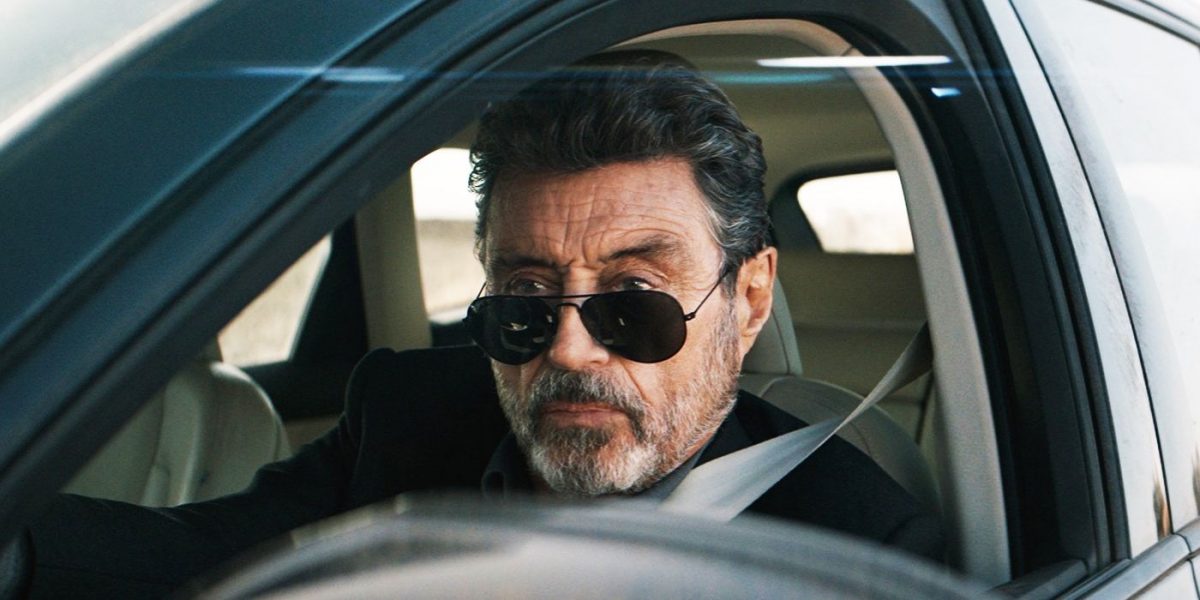
Eight years after making the neo-Western The Hollow Point, actor Ian McShane and Spanish director Gonzalo López-Gallego have teamed up once more for American Star, a new character-first thriller set on the dusty and desolate island of Fuerteventura, located off the African coast. McShane plays Wilson, a government-sponsored hitman sent to the island on assignment. But with his target surprisingly not at home, Wilson decides to check into a local hotel and take a bit of vacation. While he waits, he befriends a free-spirited local named Gloria (Nora Arnezeder), her protective mother Anne (Fanny Ardant), and a young boy named Max (Oscar Coleman), who’s staying down the hall from him in the hotel. Further complicating matters is the arrival of Ryan (Adam Nagaitis), a long-time family friend who’s also in the assassination game and might have been sent to keep an eye on Wilson.
The island itself almost serves as its own character in the film, as does the titular American Star, a rotting real-life ocean liner that was abandoned off the shore of Fuerteventura. As his relationships with his new friends deepen and his fascination with the island and its wrecked ship grows, Wilson finds himself questioning his past and his future, all while knowing that, at some point, he’s going to have a job to do. In this exclusive interview with Collider, McShane and López-Gallego discuss how American Star is truly an independent film and how they bent the hitman genre to tell a melancholic, emotionally-resonant story. McShane also drops a few teases about Ballerina, the upcoming Ana de Armas-led John Wick spinoff that will see him reuniting with Keanu Reeves and the late Lance Reddick.
American Star An assassin on a final assignment in Fuerteventura, to kill a man he has never met. When his target is delayed, he finds himself drawn to the island, people and a ghostly shipwreck. Release Date January 26, 2024 Director Gonzalo Lopez-Gallego
Ian McShane and Gonzalo López-Gallego on How ‘American Star’ Is a Different Kind of Hitman Movie
Image via IFC Films
COLLIDER: One thing I love about hitman movies is that you can bend them to fit almost any style. Ian, you’re obviously no stranger to films about hitmen these days, but, to me, American Star feels much more contemplative and character-based than most. Is that specifically something that attracted you both to this film?
IAN McSHANE: Yeah, the thing is, we’ve been involved with this project for seven, eight years now, Gonzalo and I. We first made a very good Western noir called The Hollow Point with John Leguizamo and Patrick Wilson. That’s where we first met, and we said we’d like to work together again. He came up with this. We talked about it over a few years and found the script got better and better. Then I brought in my partner, Michael Elliott, who I made another independent movie with called Jawbone. An opportunity arose to make it in ’22, and we did. And here we are a year and a half later. And, yeah, the character is … you say “hitman.” He’s really a government operative more in this sense, but it’s the same thing. I made a terrific movie about 20 years ago called Sexy Beast with Ray Winstone and Ben Kingsley. Jonathan Glazer directed it. That film was a good film and would be if it was just a gangster film. But what gave it its uniqueness was the emotion of Ray’s relationship with his wife, which was a love affair. The film was basically a love affair underneath it. And, in [American Star], it’s the relationships with the other characters. He doesn’t want them, but they sort of come upon him. He disobeys his original cardinal rule: “Get the hell out of dodge if the intel is bad.” But he doesn’t. He stays because there’s something about the place that intrigues him. Then the ship, and then he meets people. But it’s all inevitable leading towards something. But, yeah, there’s a melancholy to it. It’s not just about a hitman.
GONZALO LÓPEZ-GALLEGO: Yes, I think that, in our film, the hitman thing … I don’t want to say that it was secondary because it’s the starting point. It’s how everything ignites. But it could be anything. [Wilson is] someone who has been, for so long, focused just on his work and not thinking about himself and not thinking about his life or having a family or having a relationship or even having holidays. It could be he’s just a workaholic, you know? It just happens that — because of him being an assassin or having a really difficult background and backstory — it’s easier for us to tell the metaphors about what the movie is talking about. And confronting him with childhood with Max, or with parenthood with Ryan, or with an affair over summer holidays with Gloria … it was easier because the character was more exaggerated. You can tell easier how he feels. Then, of course, showing the gun at the beginning — you know that something is going happen at the end. But it’s not something that is far-fetched or out of nowhere. It goes there in a way where there is no other way to avoid it. So we were thinking about Wilson as a human being … and how he behaves differently with every character. I love Wilson with Max, for example. I love Wilson with everybody. I love the scene with Fanny Ardant as Gloria’s mother. But it is true that, with Wilson with Max, you can see more pure Wilson because he can be more himself. He feels really relaxed.
Those scenes between Wilson and the kid, Max, are some of my favorites in the movie. How important was it, and how difficult was it, to really nail the warmth and the humor of those scenes?
McSHANE: The great thing is we did have four days altogether of script discussions, rehearsals, and costume fittings before we started shooting. The two scenes with the kid, Oscar, who is delightful, were both filmed in really early morning. We had to get them in really early morning at the hotel, and then the other one at “magic hour.” But they never felt rushed. It was a relationship which we established, with me and the kid, and it just seemed very natural to behave that way. We had a limited time to shoot it, but [Gonzalo] has got a very gifted cinematographer, so it wasn’t that difficult. I knew that whatever we’d do would be followed by him. But I also think that the island itself is as much a part of the movie as anything — the landscape, the scenery. It really does give that remoteness, yet sort of intimate and strange … it’s more like North Africa than it is an island, isn’t it? Gonazlo lives there.
LÓPEZ-GALLEGO: Yeah, I live in one of the Canary Islands. I live in Gran Canaria. I moved here five years ago because of my kids. I had fraternal twins, and my wife’s place was the best place to be. So I got to know all the islands around, and all the islands are completely different. Fuerteventura, it’s the only one that has these beautiful dunes, this completely deserted landscape. And that’s when I heard, for the first time, about the American Star … about this shipwreck. Actually, my wife showed me that. That’s when I talked to Nacho [Faerna], the writer. He was not writing yet. He just had the idea of doing this movie, but he never wrote it. And the film he had in mind was happening in the south of Spain. When I showed him the American Star then everything started to work, one piece after the other. Then I told him of the possibility of getting Mr. McShane on board, and that’s when we found Wilson. He wrote it for Ian, knowing exactly that we wanted it to happen in Fuerteventura. I think when you write something like that, writing it for the characters and for the island, I think you have more leverage to really go into details and to portray those details in a natural way.
Related Sebastian Stan and Ian McShane Made This One-Season Epic Drama a Must-Binge NBC’s engaging political drama lasted only one season but is still worth the binge-watch.
Ian McShane Talks About the Importance of Listening as an Actor
Image via IFC Films
Because I knew I was talking to you gentlemen this week, I also watched The Hollow Point. One thing I noticed is that, Ian, despite having less screen time in that movie, you actually have about triple the amount of dialogue in that one than you do in American Star. I also think Americans still know you best for those long monologues you got to deliver on Deadwood. So, for you, what is the trick to playing a character like Wilson who is supremely compelling but sometimes doesn’t have a lot to say?
McSHANE: Oh, it’s great. [Laughing] But what’s Wilson going to say? He’s a listener. He’s not a talker. That’s the great thing. I always thought it was important as an actor, anyway. It’s the first rule. I remember the first compliment I ever got from an actor I respected was “You listen very well.” I thought, “That’s a good compliment.” Because you’ve got to listen to or watch the other characters, the other people. It all comes from them. And that’s what Wilson gets from this — he becomes more drawn in the more he observes. Wilson lives inside his head a lot. We’ve all done that since Covid a little bit, but Wilson’s spent a lifetime of that, I think. And the intel goes wrong on a job, and he knows his first instinct should be to get the hell out of there. But he doesn’t. And it all snowballs as a result of that, but it snowballs in a good way. Otherwise, he would never have known these emotions. Also, I think the casting of the people is important. The relationship with Nora, which I don’t feel is ever kind of “old man and young girl.” There’s something else between them. There’s a connection of a different kind, and that was brought on by something else. It’s like the enigmatic scene with Fanny playing the mother, which I think is a marvelously enigmatic scene. She knows something about him. She doesn’t know what it is, but she’s instinctive about it. And so is he, but he still carries on with lunch. It’s lovely actually being able to just observe for a while. But having worked with [Gonzalo] before and knowing what would be brought out of it … there’s no sign saying “cut the dialogue.” We did all of this when we had the script rehearsal, which is fortunate. “Oh, I’d like to add this, or I’d like to do that.” All of that was out of the way. So we could concentrate purely on what we were going to do that day and what the other actors were going to do in response. I think it worked out pretty well.
LÓPEZ-GALLEGO: I think so.
American Star is interesting in that its characters rarely wear their motivations or their desires on their sleeves. I think it’s intentional that the audience is expected to do a little bit of work there, and I think that actually ends up working to the movie’s benefit. Would you two agree with that? And was that something you talked about when honing in on this story?
McSHANE: Yeah. It’s like Godard said once: All you need is a girl, a gun, and a car. What else do you need? You need a hit man, a desert island, and strange relationships. And it’s where you go with it from there. I think that’s half of movie-making. You can leave it to the audience. If the camera is in the right place and shows you what it wants, there’s no need to start talking about it. Deadwood — that’s a different thing. You’re doing a television series, and Mr. [David] Milch was a genius to work with. But maybe, in a feature film, there wouldn’t have been half as much dialogue. You don’t need that [in a movie]. The landscape, the other characters, the way it’s set — it’s pretty formalized filmmaking. This isn’t stick a close-up here now and again, now we’ll go to an over-the-shoulder. This is very much classical formalized filmmaking of a style which Gonzalo creates every time he makes a movie, a different style. That’s the sign of a gifted filmmaker. You don’t need all those close-ups in a film like this. You need it occasionally, but it is told from Wilson’s point of view.
LÓPEZ-GALLEGO: It’s the fact that Wilson is a good listener, and, actually, that’s one of the things we tried to portray technically in the movie with the way we shot it. The camera is always with him and over his shoulder. He’s always listening, and there’s no reverse angle for the [other] characters because he is the one that is listening. It makes him think that he’s in control of the situation because he is scanning everybody. But he’s missing a lot of things. I don’t know if it’s because he’s getting older. I don’t know if it’s because he is now failing a bit because he’s weaker because of those holidays he needs. But Gloria has a secret that he didn’t see coming. And Anne — Fanny Ardant — it’s a great scene, a great moment between them, but they both know things about each other. It’s like a poker game all the time. That makes Wilson’s journey more interesting, because he’s confronting really interesting people.
McSHANE: And the way he reacts with the kid. I think he is at his most natural with the kid. And with the scenes with Adam, I think, in the end, he’s like, “I created a fucking monster. From all good intentions, he’s turned out just like me.” Which is not what anyone wants to turn out like — Wilson. So it’s a reflection of himself, and he realizes, “Wow.” I don’t think he ever expects the ending to be like that or what Adam turns into. Even though he knows deep down what he’s encouraged and set in motion, and it’s sort of an inevitability. As the film is — an inevitability. And I love the last shot after it all, of the sea. I like the movie.
Gonzalo, I love the way this movie looks, and there’s a scene at the end that really struck me. It’s when Ian is walking through the hotel hallway after the fight with Gloria, and the camera starts sort of rocking back and forth. It’s almost like Wilson is becoming unmoored, maybe mirroring the ship, the American Star, itself. I was hoping you could talk about that moment and about the visual style you wanted to bring to the film as a whole.
LÓPEZ-GALLEGO: Spending time in the hotel, I felt like it was somehow like being inside the American Star. And it’s not just that shot. There are other moments in the movie where we tried to portray that with the movement.
I’m glad I picked up on one of them!
McSHANE: Very good! I’m very impressed.
LÓPEZ-GALLEGO: For me, to plan a movie and to shoot a movie, I need things to grab on to. Somehow, my brain … everything has to have a logic, and then I know how to shoot it. The hotel was something like that. That melancholic effect of being really inside the American Star. And the way we shot it, technically, it was trying to give Fuerteventura the feel of a different character, of another character in the movie. So we wanted to portray the scope of those landscapes, but not in a beautiful way. We were trying to enhance that grittiness and those scars and those textures that the land has. So, working with [cinematographer] José David [Montero], we decided the proper lenses were lenses that somehow were old and felt like an old movie or like a more classic movie. Really strong anamorphics. Really difficult-to-use anamorphics. These days, I’m pretty sure Netflix would never allow us to use those lenses. [Laughing]
McSHANE: That was the great gift: Being able to make the film that you wanted to make and that we all wanted to make, with nobody looking over your shoulder for five weeks. Being able to make it an independent movie, and it was shot like a real independent movie.
Ian McShane on Returning to the ‘John Wick’ Universe with ‘Ballerina’
Image via Lionsgate Films
Ian, I do have to sneak in one John Wick question. I know you’re going to be back as Winston later this year in Ballerina. I’m sure you can’t say too much yet, but I wanted to ask you how it was playing that character for a different director in Len Wiseman and also ask if fans can expect to see any new sides of Winston in this film?
McSHANE: This time we’re protecting Ana de Armas, and I had my great friend, Mr. Lance Reddick. God bless you, Lance — he passed away last year. This one is set in between John Wick 3 and John Wick 4, because Keanu is in it, too. You didn’t want to set it after John Wick 4, because then you’d have social media saying, “Oh, so he’s still alive! What’s he going to do next time? Is there a John Wick 5?!” This way, you can still keep up the pretense that there might not be a John Wick 5. But Lance and I bring our usual protection towards Ms. de Armas. And Len I found a delight to work for. Again, we worked out the script beforehand, so there was no wasted time. They tend to make me sound a bit like an English dictionary sometimes on John Wick. They’re great writers — Michael [Finch] and Shay [Hatten] on those. We go through it, I check with them, and we cut it down to whatever. Len had conferred with Chad [Stahelski], so I think there’s a continuity from the other Wick movies. So it should be very enjoyable. [Ana] was lovely to work with. I think Gabriel Byrne plays the chief villain, so there’s a good actor for you. And then we’ve got Kung Fu Panda [4] coming out, which is a change. I love Wilson, but he’s not a snow leopard. [Laughing]
Yeah, that’s quite the jump from Wilson to a snow leopard.
McSHANE: Actually, if Wilson was an animal, he would be a snow leopard! Trudging through those mountains, lonely, looking for his soul mate forever.
Maybe it’s a smoother transition than you would think between those two characters!
McSHANE: Maybe it is. I didn’t think of that! [Laughs]
American Star releases today on digital platforms in the U.S.
Watch On Amazon Prime
Publisher: Source link




Alan Ritchson’s New 8-Part Action Thriller Lands Solid RT Score While Dominating Streaming
Alan Ritchson has, somewhat quietly, become one of streaming's more dependable stars, which is not necessarily where you would have expected his career to land back when he was doing Smallville supporting work and Blue Mountain State. Reacher turned him…
Sep 21, 2026
HBO’s Harry Potter Reboot Is Officially Ditching the Most Iconic Part of Daniel Radcliffe’s Era
This December, audiences will be transported back to the Wizarding world of Harry Potter. Of course, those born in the mid-to-late '90s will have fond memories of the movie franchise. Starring Daniel Radcliffe, Emma Watson, and Rupert Grint as Harry,…
Sep 20, 2026
‘Tracker’ Season 4 Officially Puts Its Biggest Mystery on Hold Despite Major Cast Comeback
Our fictional missing persons expert, Colter Shaw (Justin Hartley), has kept audiences happily on the edge of their seats ever since Tracker debuted two years ago, and Season 3 in particular left audiences with quite a major cliffhanger — all…
Sep 19, 2026
‘Reacher’s Action Thriller Spin-Off Gets Major Season 2 Update Following Premiere
For four seasons, Reacher has been one of the biggest TV shows on Prime Video. Based on the novels by Lee Child, the series follows former military police officer Jack Reacher (Alan Ritchson) as he wanders from place to place,…
Sep 18, 2026