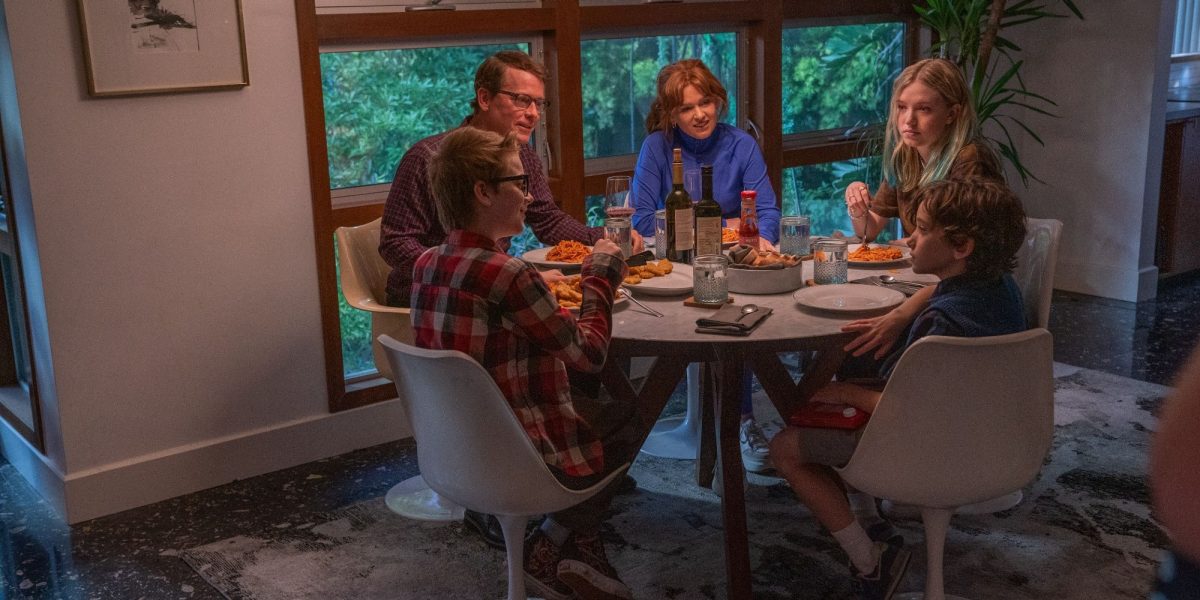
Isla Fisher & Greg Kinnear Break Up In Middling Family Time Loop Comedy
May 23, 2024
Summary
Child actors shine in
The Present
, adding depth to the time loop scenario.
The film presents a refreshing, magical atmosphere with an orchestral score.
The story could have better character development and risks giving young viewers unrealistic expectations on marriage.
The Present stars Isla Fisher and Greg Kinnear as a couple on the brink of divorce, and for some reason, it’s up to their kids to stop them from splitting up. Director Christain Ditter and writer Jay Martel toe the family-friendly line, but in a way that trusts their audience and lets the parents watching know they’re in on the joke. Unlike other time loop movies, the characters aren’t trapped in a never-ending existential cycle. The children choose to be in the loop to change the events of the day their parents break up.
The film follows a young boy who discovers he can use an enchanted grandfather clock to go back in time. He teams up with his siblings on a quest to bring their separated parents back together again.ProsThe Present has great young actors who are really believable in their rolesThe time loop scenario nicely includes multiple perspectives and well done ConsThe film risks telling its young audience that they’re responsible for their parents’ marriageThe lack of character development affects the filmSome of the dialogue is clunky
Unlike some of Isla Fisher’s best films, she and Kinnear don’t have the hardest job in the story — the kids do. Fisher and Kinnear get to sit back and play out scenes of disaffected adulthood that scratch the surface of their deeper issues. The Present should be praised for casting child actors that genuinely look the ages they’re supposed to be, automatically generating affection for the young characters. Many scenes are recreated from different viewpoints over and over again, and Ditter livens this up with a dynamic camera and the use of multiple perspectives.
The Present’s Magical Score & Fairytale Elements Appeal To Our Nostalgia
It’s difficult not to empathize and relate to the plight of the three siblings
The movie’s opening scene promises a slightly more magical tale than is delivered by the story. Nevertheless, the score immediately sticks out as an essential element of the atmosphere. It’s refreshing to watch something that isn’t overstuffed with music needle drops of the current top 40. Relying on an orchestral score and deemphasizing technology, outside the unavoidable use of phones, grounds the narrative and establishes a human connection with the audience. However, the feeling that we never truly know any of the characters is inescapable. They have hobbies, jobs, and interests, but they’re superfluous.
Part of this is because The Present moves so quickly. However, the pace is necessary and engaging until the final fourth of the film, when it resorts to a montage and a rather anticlimactic ending. By nature, the movie’s structure means the story needs lots of exposition and repetition. For the most part, it avoids getting bogged down by this. We’re thrown into the narrative with the time loop already in play, but it’s easy to put the pieces together. Unfortunately, the characters are stuck in a state of arrested development, not only because of the loop.
The relationship dynamic between the three siblings could have been the strongest part of the film if it had been developed more fully.
Using child actors always runs the risk of dialogue feeling clunky or forced, and many parts of the script don’t need help in that department. The relationship dynamic between the three siblings could have been the strongest part of the film if it had been developed more fully. Their love for each other was poised to be just as powerful, if not more, than their desire to keep their parents together. Despite being brought closer by the time loop, the kids don’t prioritize their relationships with each other, even though that has been the only constant throughout the plot.
There are strong emotional beats throughout the story that anyone who experienced childhood will be touched by. However, the film lacks a bigger reason to care about the outcome besides the end of an unhappy marriage. A recurring plot point is the developmental struggles that Taylor (Easton Rocket Sweda), the youngest son, faces. The fact that he doesn’t like to be touched and requires so much attention is supposed to be the wedge that drives the parents apart, but Taylor is extremely self-sufficient for the most part. How his difficulties affect the family is discussed but rarely shown.
The Present (2024) Director Christian Ditter Release Date May 24, 2024 Cast Isla Fisher , Greg Kinnear , Ryan Guzman , Shay Rudolph , Alphonso McAuley Runtime 87 Minutes Studio(s) AGC Studios , MacPac Entertainment , CatchLight Studios Writers Jay Martel Expand
The Present’s Thematic Messages Leave Something To Be Desired
Questions remain about what the audience should take away from the story
The half-formed characterization of Taylor and the family dynamic is representative of the larger issues of the story. Many of the plot devices that character actions are supposed to hinge on feel as forced as the dialogue. It’s commendable that the narrative never tries to explain the magic system of the world or bring up questions of potential paradoxes. However, it equally avoids questions about the nature of consequences. Without any real stakes or time crunch, the story builds and builds, but ends up going nowhere.
For all its charm and positive messaging, The Present runs the risk of communicating to its young audience that it’s up to them to keep their parents together, or that there’s a magic word or a grand gesture that will prevent what is often inevitable. Had the movie been brave enough to go with an alternate ending, it would have delivered a better moment of emotional catharsis, and likely been more true to life. As a fantasy, it’s a given that parts of the movie will be unrealistic, but fantastical elements are tools to build a story that holds universal truths.
The Present
will be released in theaters in the UK on May 24 and available on digital on June 18.
Publisher: Source link






‘The Rookie’ Already Filmed a Series Finale To Prepare For Its Cancellation
The Rookie is one of the most popular procedurals ABC has aired over the past eight years. It was unsurprising that after ABC's highly popular series Castle ended in 2016, the network wanted to continue its working relationship with the…
Jul 31, 2026
‘It’s Always Sunny in Philadelphia’ Finally Returns in First Season 18 Trailer
For over two decades, FX has enjoyed massive success and delivered countless laughs behind the team that makes It's Always Sunny in Philadelphia, one of the highest-rated sitcoms of the modern era. After releasing 14 hit seasons in consecutive years…
Jul 30, 2026

Nathan Fillion Confirms Current Status of Long-Awaited ‘Firefly’ Reboot
We can only imagine what could have been for TV shows that were cancelled too soon, many after just one season. Shows get canned for multiple reasons, but primarily because of declining ratings, high production costs, and network programming shifts.…
Jul 29, 2026
Netflix’s Best 10-Part Gothic Thriller Officially Getting New Remake
Netflix has been in the horror game virtually ever since the DVD rental service went all-in on streaming. Titles like House of Cards and Orange Is the New Black might have been the shows they used to highlight the platform's…
Jul 28, 2026