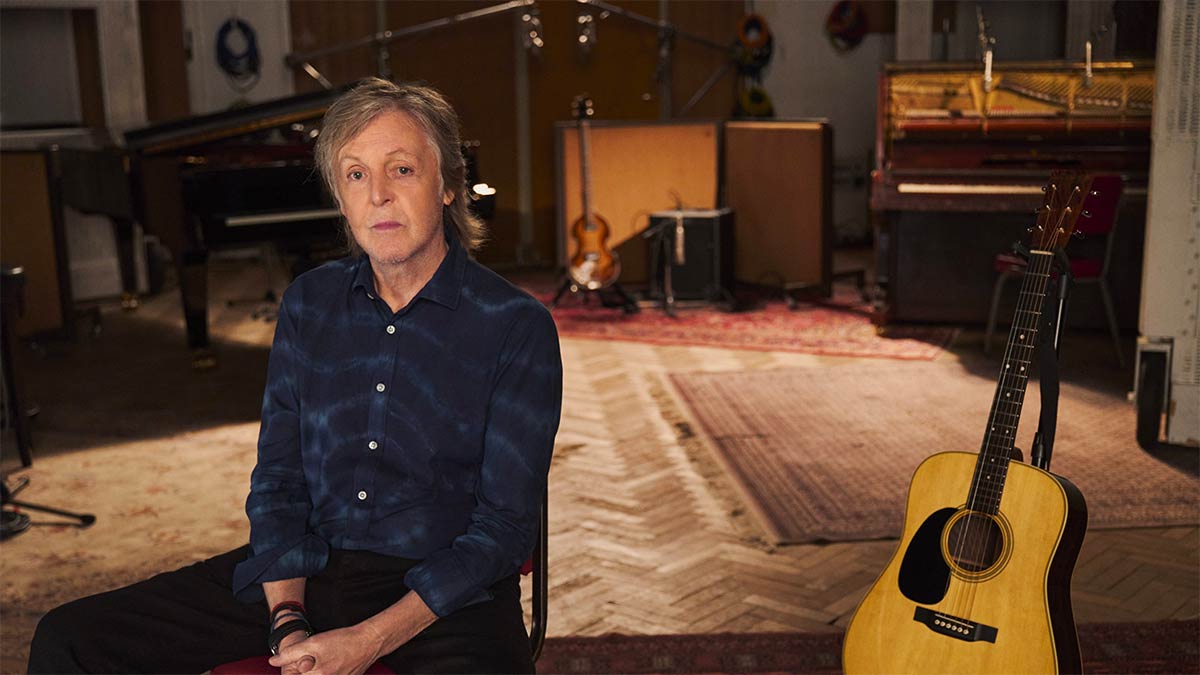
Paul McCartney’s Daughter Helms A Shallow, Unsatisfying Chronicle Of Abbey Road Studios
Jan 21, 2023
“My name is Mary,” she says in the opening voice-over. “Abbey Road Studios has been part of my life for as long as I can remember. Every time I walk through these corridors, it feels magical.” If you’re cringing reading it, imagine watching it with saccharine dripping off the voice track and twinkly music filling the soundtrack; that feeling doesn’t subside as the camera slow-pans through the studios, the drippy music continues, and celebrities pop up to give their sound-byte testimonials, from Elton John (“It’s history, you can feel it seeping through the walls”) to Liam Gallagher (“It’s a national treasure, innit?”). It doesn’t feel like a documentary — it feels like an infomercial, a QuickTime sales video, working overtime to sell studio time.
READ MORE: The 25 Best Films Of 2022
The film is called “If These Walls Could Sing,” the director who appears in that opening is making her feature debut, and if you’re wondering how she pulled that off, well, her last name is McCartney. “My mum, who was a photographer, and was in a band with my dad,” she explains, but this is not some personal memoir essay film, oh no; Mary McCartney wants to tell the entire nine-decade story of this iconic recording facility — in 88 minutes.
But, of course, she goes heavy on the material related to the most famous band to record there, including interviewing its two surviving members. “It’s just a great studio!” Sir Paul tells her enthusiastically. “All the microphones work.” But before they get into its doors, we get a bare bit of background; the EMI studio at No. 3 Abbey Road N.W. opened in 1931, a large residence converted into “the largest and best-equipped studios in the world,” albeit initially and primarily for the recording of classical music. But when Sir Joseph Lockwood took over EMI in 1954, he made an effort to seek out pop acts, including British singing sensation Cliff Richard and, of course, the Beatles.
Again, this is glancingly covered; the Beatles have entered the history before the 10-minute mark, and McCartney — with the help of Paul, Ringo, archival audio of their late producer George Martin, and new interviews with his son Giles — revisits well-told tales of the Fab Four in the studio: the one-day recording of the “Please Please Me” album, the wildly experimental “Sgt. Pepper” sessions, the “back to basics” approach to “Abbey Road,” etc. These are good stories, to be clear, but it’s also worth asking how many people who are drawn to a documentary about Abbey Road Studios haven’t heard them before?
To be fair, other acts are represented, at least briefly; Elton John and Jimmy Page share some entertaining memories about their time as Abbey Road session musicians, a Pink Floyd section is brief but informative, and there are flashes of interest in the footage of Oasis, Kate Bush, Felt Kuti, and (oh dear) Kanye West. And there is some general history as well — Abbey Road’s place at the center of the Swinging London scene, the rough and out-of-vogue period of the late 1970s, how it became a go-to score recording space for the likes of John Williams in the 1980s.
Of course, the copious archival footage and original studio tapes are priceless, and the interviews are chummy and charming. But for a facility known for its technical wizardry, there’s scant investigation (or even, it seems, interest) in exactly how its particular sound was achieved; it’s left to its celebrity subjects to mouth vague inanities like “You feel as though the walls are saturated with great music” and “It makes a noise that is it’s own.” And speaking of inanities, the voice-over narration is not only clumsy but inconsistent; it pops up at the beginning, disappears, returns just past the halfway mark (“Abbey Road has always felt like a family to me” — woof), and then vanishes again. And it must be said that in a film about great music, it’s almost comical to have a score this terrible.
“If These Walls Could Sing” isn’t a complete washout — the material is inherently interesting, and it will undoubtedly snag a fair share of Disney+ subscribers who are jonesing for a new, post- “Get Back” Beatles fix. But one wonders what a more accomplished documentarian could have done with this kind of material and this much access. As is, “Walls” is more like a Wikipedia entry— the hyperlinked names appear, and the key events are noted, but there’s not much in the way of genuine insight. [C-]
“If These Walls Could Sing” premieres on Disney+ on December 15.
Publisher: Source link






‘Reacher’s Action Thriller Spin-Off Gets Major Season 2 Update Following Premiere
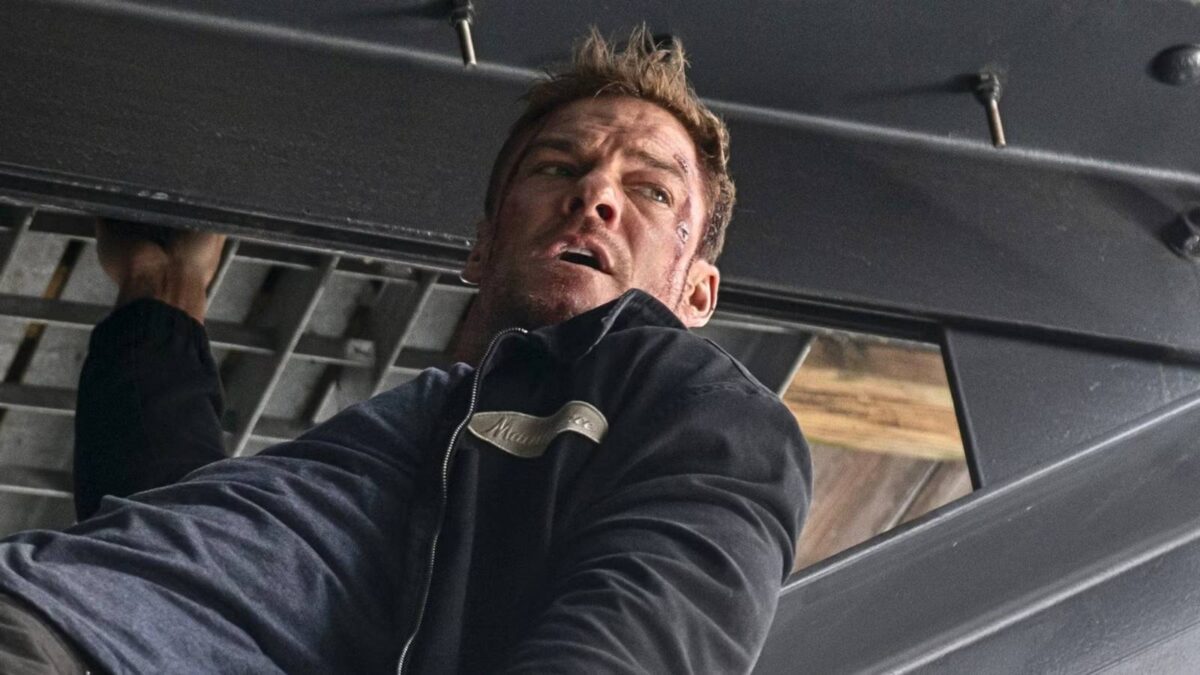
For four seasons, Reacher has been one of the biggest TV shows on Prime Video. Based on the novels by Lee Child, the series follows former military police officer Jack Reacher (Alan Ritchson) as he wanders from place to place,…
Sep 18, 2026

One of CBS’ Longest-Running & Highest Rated TV Shows Is Coming To End After 30 Years
Along with countless scripted dramas, comedies, and action shows, CBS is well known for its impressive run of unscripted programs over the last 50 years. More recent years have included major competition shows like Survivor and The Amazing Race, along…
Sep 17, 2026

Prime Video Officially Launches New Deal That Changes the Streaming Game Forever
It seems like streamers raise their prices every day. At the end of August, Apple TV raised the subscription service price by $2, bringing it to $14.99 a month. Netflix, Disney+, HBO Max, Paramount+, and Peacock have all raised prices…
Sep 16, 2026
Netflix’s 10/10 Thriller Series Returns After 3 Year Absence With Explosive New Trailer
Over the last five years, Netflix has expanded heavily into non-English content, with international series taking an even bigger focus for the streaming giant. One of the biggest driving forces in that effort is the French thriller series Lupin, led…
Sep 15, 2026