Tacky Supernatural Elements Nearly Derail Netflix’s Intense Family Drama
Aug 29, 2024
Onscreen possessions can be a scary thing, and it’s not only because a person’s body can suddenly (and horrifyingly) bend so far backwards that the crunch of bones sounds sickening. Lee Daniels’ The Deliverance, which claims inspiration from real events, pairs the possession with a very personal and well-developed family story. The latter is so good and intriguing that, when the demonic possession begins to overshadow it, I found myself frustrated with the supernatural elements of the film. Written by David Coggeshall and Elijah Bynum, The Deliverance kept me hooked — until it didn’t.
The Deliverance Is Ripe With Tense, Layered Family Drama
It’s what keeps the film going
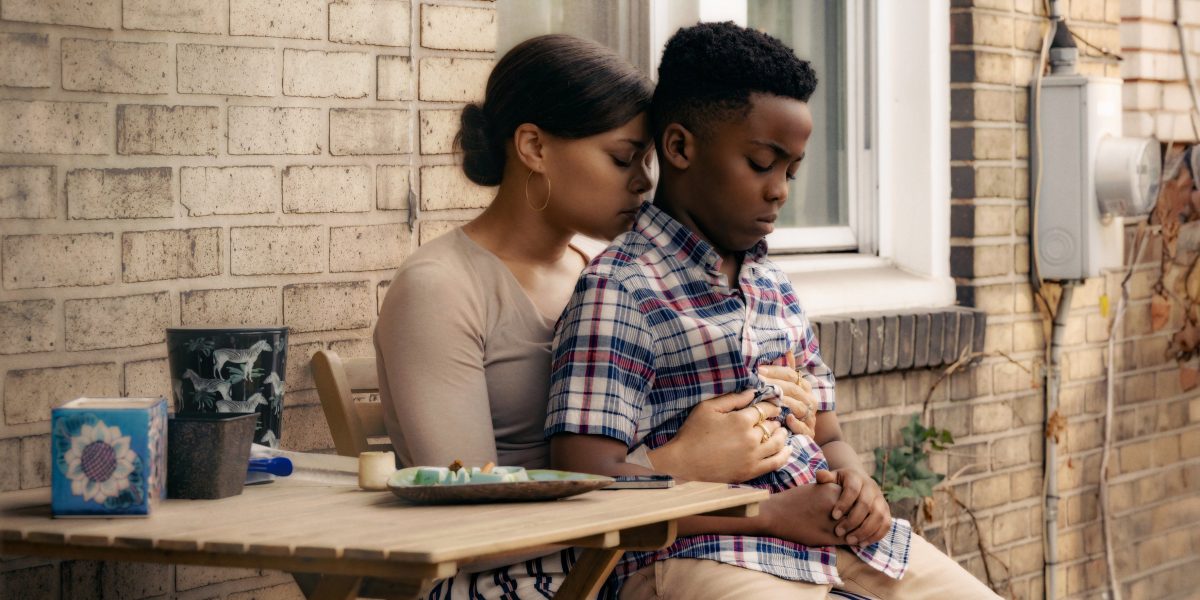
Daniels and Co. do a great job building up the dysfunctional family dynamics. Andra Day plays Ebony, a single mother of three who’s struggling to pay bills and has taken in her ill mother, Alberta (Glenn Close), with whom she has a contentious relationship. Every bad thing Ebony ever learned was from her mother, who’s trying to gain forgiveness by going to church. If Ebony gets frustrated enough and slaps her youngest, Andre (Anthony B. Jenkins) across the mouth, she blames Alberta for setting that example first.
Mo’Nique also stars in
The Deliverance
, playing Cynthia, the social worker who checks in on Ebony’s family.
Ebony’s eldest kids — Shante (Demi Singleton) and Nate (Caleb McLaughlin) — oscillate between being afraid of Ebony and defying her. And yet, Ebony, who’s been to jail and has had her kids taken away from her by Child Protection Services, is always there to defend them. The Deliverance lays the groundwork for its story so well that when the eerie stuff starts to happen, we’re led to believe it’s Ebony who’s been abusive. The supernatural, in this case a demonic possession of Andre, initially complements the family drama and leaves us guessing.
There’s also a layered tension that exists between Ebony and Alberta. There are obviously some unresolved issues there, some of which are aired out in the open, but their relationship is central to understanding the family and how they function as a whole. The film has something to say about the generational trauma of mothers and daughters, as well as how race can affect the nature of their relationship. In one scene, Ebony is speaking with the doctor about her kids, but the doctor looks to Alberta, ignoring Ebony’s questions. Later, Ebony accuses Alberta of not standing up for her.
The supernatural, in this case a demonic possession of Andre, initially complements the family drama and leaves us guessing.
The scene is a testament to the racial undertones embedded in the film, and I’m glad the film doesn’t ignore how that plays into the already fraught connection between Ebony and Alberta. To that end, The Deliverance’s family moments boast enough tension to keep the story afloat and steady. There’s a chill in the air that is occasionally due to the supernatural moments, most of which happen offscreen in the first two-thirds of the film, but are primarily tied to Ebony and her family. As a family drama, the film is effective, but then it unfortunately breaks down.
The Deliverance Wants To Be Two Different Movies
And only succeeds at being one
Netflix’s horror thriller functions as two disparate movies combined into one. In the final third, the family drama is mostly set aside to focus on the demonic possession of Andre. Reverend Bernice James (Aunjanue Ellis-Taylor) plays a big role in that, telling Ebony about the history of her home and what happened to the family who lived there decades before. It’s your run-of-the-mill supernatural explanation, but what really derails The Deliverance is the insincerity behind it. If not for the believable performances by Day and Ellis-Taylor especially, I would have laughed out loud at the astonishing tackiness of it all.
Because it is tacky. It’s not enough to throw out the rest of the film because of it, though, since the buildup to the possession was good on its own and shouldn’t be punished for the film’s inferior final act. The Deliverance takes possession very seriously, and I appreciated its connection to breaking generational trauma. When Bernice talked about Jesus protecting Ebony’s family, I found myself believing it because of her conviction. At the same time, the film nearly falls apart because it shifts its focus to be about the supernatural, which was honestly better as an offscreen mystery.
The Deliverance
is bolstered by the cast’s commitment to the story and their characters. Without them, the film would’ve easily been overshadowed by its finale.
Scenes of Andre crawling up walls or Ebony shouting at the demon in another language to leave her son’s body destroys the seriousness of the family dynamic. It also quickly causes The Deliverance to lose steam. Daniels could have opted to make two very distinct movies, but shoving them together here makes no sense and undercuts the familial stakes at its core. The Deliverance is bolstered by the cast’s commitment to the story and their characters. Without them, the film’s ending wouldn’t have been remotely believable.
With a great cast and multidimensional family drama making up its foundation, The Deliverance’s good manages to overshadow the bad. I only wish Daniels, Coggeshall and Bynum had let the characters and their relationships continue fueling the central conflicts. The possession storyline was just not strong enough to make up for an already intriguing setup that didn’t fully benefit from the inclusion of the supernatural.
The Deliverance is streaming on Netflix August 30. The film is 112 minutes long and rated R for violent content, language throughout and some sexual references.
Publisher: Source link


Forget ‘Lioness,’ Paramount’s 114-Episode Non-Stop Action Thriller Is One of the Biggest Shows on Streaming
Taylor Sheridan's hit action thriller, Spec Ops: Lioness, is nearly back with its third season. Season 3 of Lioness debuts on Aug. 2, dropping a new episode each week. While Taylor Sheridan fans are re-watching the series (and Sheridan's other…
Aug 3, 2026
Long-Awaited DCU Superhero Series No Longer Moving Forward After 3 Years
Another day, another superhero project canceled. Despite the box office success of Marvel Studios' Spider-Man: Brand New Day, it was sandwiched between the cancellation of Wonder Man Season 2 and Mahershala Ali confirming he is no longer attached to star…
Aug 2, 2026
Marvel Star & Creator Officially Address Shocking Series Cancellation
In a disappointing turn of events, one of the MCU's most-acclaimed shows has been cancelled shortly after it was confirmed for a second-season run. Featuring quirky and relatable characters, the series gained quite a following for its meta commentary on…
Aug 1, 2026
‘The Rookie’ Already Filmed a Series Finale To Prepare For Its Cancellation
The Rookie is one of the most popular procedurals ABC has aired over the past eight years. It was unsurprising that after ABC's highly popular series Castle ended in 2016, the network wanted to continue its working relationship with the…
Jul 31, 2026