

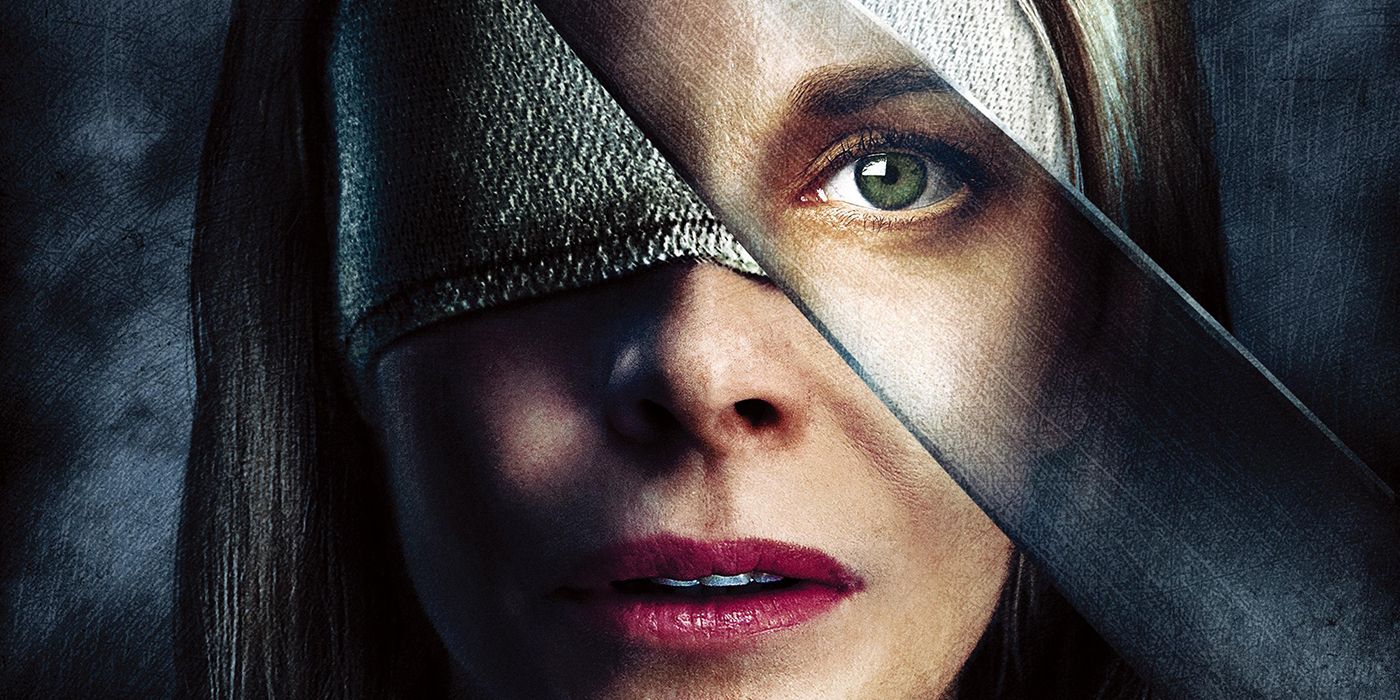
We are all familiar with modern horror films that have figures lurking in the shadows or rooms so dark that you find yourself squinting at the screen. But what about when the main character is blind and the audience is forced to see through her eyes? Julia’s Eyes, also known as Los Ojos de Julia, is a 2010 Spanish horror and psychological thriller directed by Guillem Morales and produced by Guillermo del Toro that changes how the audience interacts with the content.
The film follows Julia Levin (Belén Rueda), a woman suffering from a rare degenerative eye condition that worsens with stress, but the story actually begins with her twin sister, Sara. Sara, who shares the same eye condition as Julia, but is fully blind, is tormented by a non-visible figure in her home. After Sara’s apparent suicide, Julia suspects foul play and begins investigating her sister’s death. As her own vision starts to deteriorate, Julia is stalked by an unknown figure who seems to leave no traces behind.
Experiencing a New Kind of Sight in ‘Julia’s Eyes’
Image via Universal Pictures International
The film’s biggest highlight is its ability to make the audience experience what it’s like to see the world through Julia’s failing vision. The film begins when Sara is directly facing the corner of a room in her house. She begs and pleads for someone to leave her alone, yet, there is no one there, at least no one the audience can see. This is where the film begins to make the sisters’ blindness and eye condition interactive with viewers. Julia’s progressive loss of eyesight is masterfully conveyed through the film’s cinematography and editing. The camera lens often adopts a misty quality and the screen narrowly grows darker when Julia experiences stress that threatens her remaining vision. It is not solely Julia who has to look at the world through this clouded vision, but the audience too.
One of the film’s most subtle, yet memorable shots, comes towards the end of the film as Julia’s vision fails, and she struggles to get away from the killer. In the shot, which feels quite reminiscent of the “button moon” in Coraline, clouds slowly drift over the moon, leaving only a sliver of light in the nighttime sky. Similarly to Julia’s eyes, she only really has a sliver of eyesight left. This comes after Julia undergoes a medical operation in hopes of saving her eyes, yet she removes the bandage four days early, causing irreversible damage.
But this blindness is also represented in the way the villain is shown on screen. The film consistently uses darkness to keep the killer hidden, with only glimpses of a hand or a figure. He always wears all black, never fully faces the camera, and is always in the shadows. When Julia is recovering from her operation, she is aided by a friendly home nurse, Iván (Pablo Derqui). For nearly two weeks, Iván is patient and caring towards Julia, but since only his body is shown, a sense of distrust gradually builds around his character. Is he truly a caregiver from the hospital? Or is he the man who killed Sara and has been stalking Julia ever since? But we also don’t see the faces of a few other people that Julia interacts with during her recovery. This clever use of limited perspective not only deepens the mystery, drawing viewers to want to unmask the killer, but also makes us feel as though we are right there with Julia, struggling to solve the case ourselves
.
When Julia and her husband Issac (Lluís Homar) go searching for this invisible man, any trace of his identity is destroyed by wiped security cameras, stolen footage, and broken lights. Even though the identity of the killer can be predicted towards the end of the movie, there is always some mystery to the character. Just like Julia, the audience is not able to see Iván for most of the film. It is frustrating yet continually captivating.
The Influences of Giallo and Hitchcock on ‘Julia’s Eyes’
Image via Universal Pictures International
The hiding of characters’ faces and the overall suspense of the film, is very much influenced by the master of suspense himself, Alfred Hitchcock. In the final minutes of the film, Julia cuts all of the lights in the house to level the playing ground. With heightened senses and her memory, Julia sneaks around the pitch-black room while Iván struggles to locate her. Desperate to find Julia, Iván repeatedly flashes his camera. The scene feels straight out of Hitchcock’s Rear Window. The film’s repeated cat-and-mouse dynamic also relays a certain Hitchcockian sense of action and suspense.
Guillermo del Toro’s touch on Julia’s Eyes makes the film feel like a modern Spanish Giallo. This is evident in the film’s use of cold, desaturated colors, and Iván’s ghost-like appearance, reminiscent of del Toro’s earlier works, such as The Devil’s Backbone. The narrative, which follows Julia as she attempts to solve her sister’s death by herself, blends elements of a murder mystery, horror, and whodunit slasher film, all while expertly keeping the killer’s identity hidden. Iván may be invisible to many, but his romantic feelings towards Julia are not. This storyline of the male villain having desires for his victim is also a common trope in many Giallo films.
The film also draws inspiration from other horror films, especially in the scene where Iván holds a knife just centimeters from Julia’s eye to see if she’s truly blind. The image of razors, needles, or sharp objects close to the eye is present in numerous horror films, including the French short horror film Un Chien Andalous (1929) and Dead and Buried (1981).
All Eyes on Julia’s
Image via Universal Pictures International
Although the film can feel a bit slow and prolonged at times, it never loses your connection to both Julia and the story. This connection is deeply rooted in the film’s ability to make you feel as though you are part of the narrative and can empathize with Julia’s experience. It is rare for horror to use the sense of sight, or rather, loss of sight to its advantage but Julia’s Eyes masterfully leverages this concept, turning blindness into a tool for tension and deception. With Guillermo del Toro’s clear ghostly influence and inspiration from Hitchcock and Giallo films, Julia’s Eyes is a tense, immersive psychological horror film you don’t want to miss.
Julia’s Eyes is available to stream on AMC+ in the U.S.
WATCH ON AMC+
Publisher: Source link


![Rob Reiner On 41 Years Of Amplified Genius & Rock ‘N Roll Lore, & ‘Spinal Tap II’ Plot Details [The Discourse Podcast]](https://www.filmibee.com/wp-content/uploads/2025/07/Rob-Reiner-On-41-Years-Of-Amplified-Genius-Rock.jpg)