Restrictive Storytelling Holds Back Entertaining Sexual Repression Drama
Sep 11, 2024
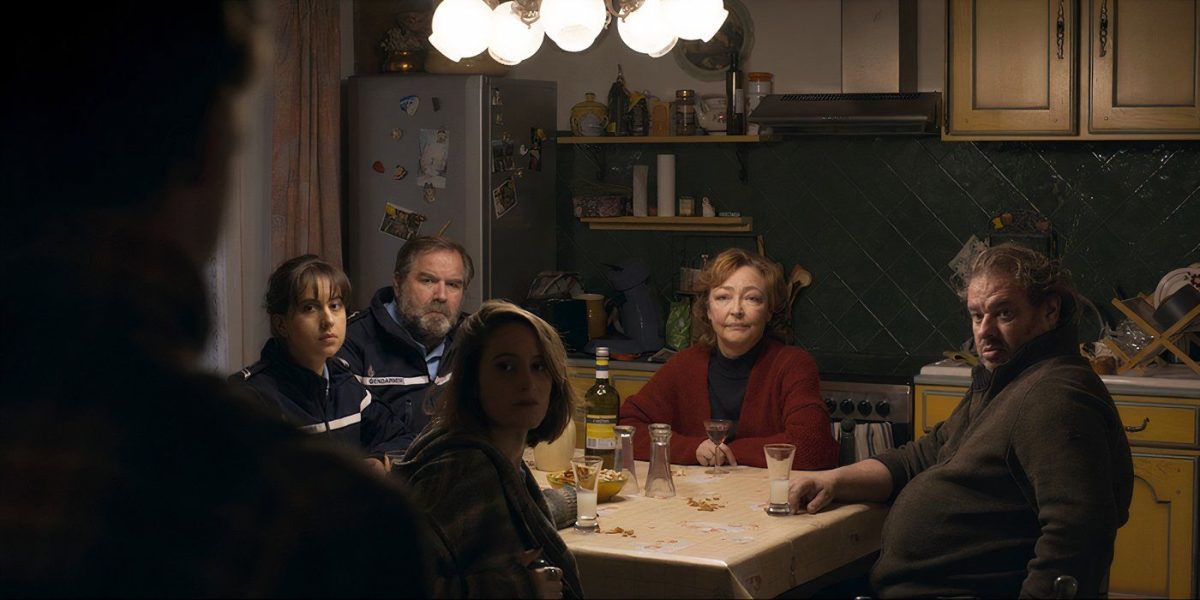
Acclaimed French writer-director Alain Guiraudie’s latest feature, Misericordia (Miséricorde), attempts to tackle repressed sexuality in a twisted mix of humor, secrecy, and deception. The film’s centerpiece is the mysterious Jérémie Pastor (Félix Kysyl), who returns to his rural hometown of Saint-Martial from Toulouse, France to attend the funeral of his former boss, the village baker. With the family in mourning, Jérémie decides to stay with the widow, Martine (Catherine Frot), to the dismay of her son Vincent (Jean-Baptiste Durand) and his former childhood best friend. With the growing tension and discomfort, Jérémie leans on his impulses for relief.
Misericordia is an intense display of human uncertainty when conflicting feelings of desire and disdain clash. Through Jérémie, the script slowly introduces us to this concept through strange conversations among the characters. Upon his arrival, Jérémie recalls childhood moments differently than his counterparts. The loner neighbor, Walter (David Ayala), remembers feeling isolated from Jérémie while Vincent recalls playing Yahtzee with him frequently. These examples demonstrate the small frictions that will predictably grow after being away for so long.
Misericordia Blends Genres To Tackle The Intricacies Of Repressed Desire
Eventually, the relationships between Jérémie and the townspeople take a sudden turn when a heated argument breaks into a deadly fight. Guiraudie plays his cards right by shifting his somewhat lighthearted tale of a reunion to one that marries investigation, mystery, and pent-up desire. The script also takes on investigative storytelling by introducing other characters, like the local priest and a police officer (Sébastien Faglain), who offers a hint of humor and escape to exercise the inherent mystery of the story. With the involvement of Martine’s family, local neighbors, and police, a group effort ensues to uncover the mystery.
Despite a solid foundation, Misericordia lacks the conviction to convince us of its message and intent to understand human behavior. This is a story about expression and acceptance of one’s sexual desires, yet there’s no buildup to its thematic elements, nor is there an adequate execution that is meaningful. We often get a glimpse of Jérémie’s repressed desires through small interactions that are later excused for drunkenness. Unfortunately, these moments never lead to important commentary or conversation. They’re contrived afterthoughts incorporated as a means to provide excuses for Jérémie’s deceit.
Claire Mathon’s Cinematography Amplifies Misericordia’s Script
Even with these flaws, Misericordia contains redeeming qualities that keep us glued to the screen. The cinematography stands out; Claire Mathon’s captures the setting’s serious tones and autumnal vibrancy. The allure of her camerawork accentuates the storytelling even when the script does not. Additionally, the cast fully commits to their respective roles with the perfect amount of humor. Frot is sensational as Martine, battling her curiosity with growing contempt as she’s forced to deal with continuous lies. She is fully convincing as a widow overcome by tragedy and deceitfulness.
Despite a solid foundation,
Misericordia
lacks the conviction to convince us of its message and intent to understand human behavior.
With its best effort to tackle the complexities of sexual desire and repression through circumstance, surroundings, and setting, Misericordia never reaches a level that would lead to valuable conversation. As a whole, the film is entertaining, but even its ending is abrupt and uncertain given the groundwork of the first half. Guiraudie’s latest boasts great performances and stunning cinematography, but even these elements aren’t enough to fully embrace the weak implementation of its thematic elements. Though it may not have been executed to its best potential, Misericordia still manages to get a rise out of you when you least expect it.
Misericordia premiered at the Cannes Film Festival and screened at the Toronto International Film Festival. The film is 102 minutes long and not yet rated.
Publisher: Source link







Origins’ Sets Return Date With Mark Harmon Getting a Season-Long Arc
Mark Harmon played special agent Leroy Jethro Gibbs for 18 seasons of NCIS before leaving in Season 19. The original show has soldiered on without him — it will soon be back for its 24th season — but the franchise…
Aug 4, 2026

Forget ‘Lioness,’ Paramount’s 114-Episode Non-Stop Action Thriller Is One of the Biggest Shows on Streaming
Taylor Sheridan's hit action thriller, Spec Ops: Lioness, is nearly back with its third season. Season 3 of Lioness debuts on Aug. 2, dropping a new episode each week. While Taylor Sheridan fans are re-watching the series (and Sheridan's other…
Aug 3, 2026

Long-Awaited DCU Superhero Series No Longer Moving Forward After 3 Years
Another day, another superhero project canceled. Despite the box office success of Marvel Studios' Spider-Man: Brand New Day, it was sandwiched between the cancellation of Wonder Man Season 2 and Mahershala Ali confirming he is no longer attached to star…
Aug 2, 2026
Marvel Star & Creator Officially Address Shocking Series Cancellation
In a disappointing turn of events, one of the MCU's most-acclaimed shows has been cancelled shortly after it was confirmed for a second-season run. Featuring quirky and relatable characters, the series gained quite a following for its meta commentary on…
Aug 1, 2026