Quentin Tarantino’s Crime Saga Is An Exhilarating Ride You Can’t Look Away From
Sep 23, 2024
With a rare career exclusively full of hits, Quentin Tarantino is undeniably one of the most prolific filmmakers of all-time, and Pulp Fiction is not only an exemplary example of his unique style, but arguably still his best film. The movie was Tarantino’s second directorial effort following his debut with Reservoir Dogs, and while it was seen as an independent film like the 1992 crime thriller, it was a far bigger hit, grossing over $107 million worldwide against its modest $8 million budget. It netted seven Oscar nominations, winning one for Best Screenplay – Written Directly for the Screen.
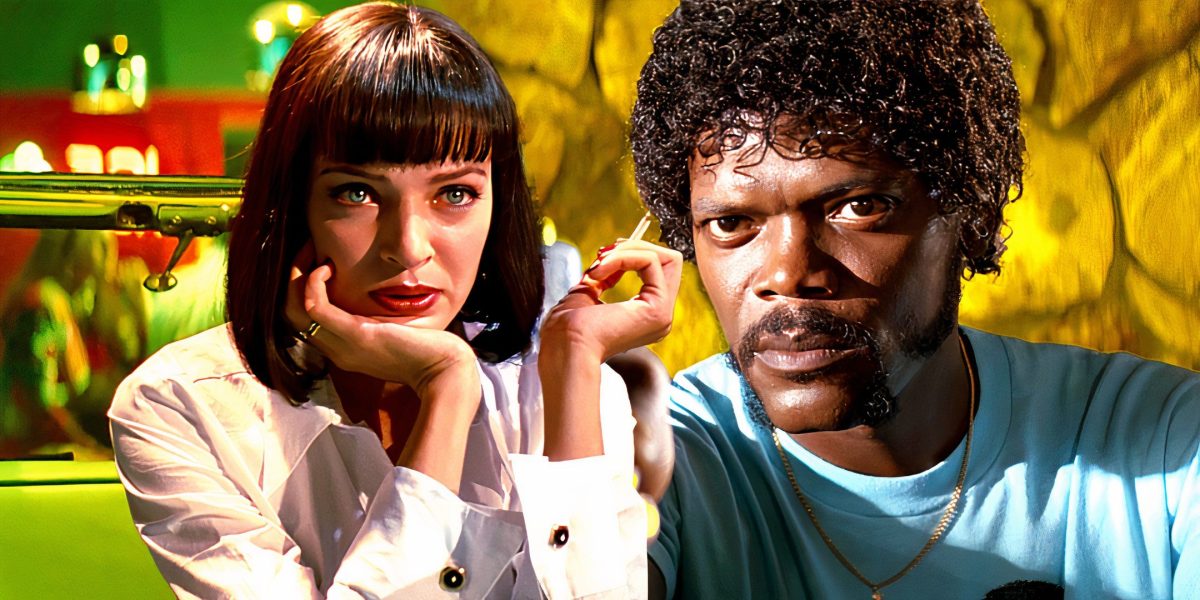
Pulp Fiction is a non-chronological journey through the intersecting lives of various people in Los Angeles — hitmen Jules and Vincent as they have a job go wrong, boxer Butch having to go on the run after taking a bribe to throw a match, only to use the money to bet on him winning and drawing the ire of local gangster Marsellus Wallace, and Vincent’s night of looking after Marsellus’ wife Mia going from entertaining to nightmarish.
Pulp Fiction’s Script Is Crackling With Energy
Tarantino Keeps The Dialogue Fressh & The Characters Full Of Life
One of the biggest reasons why Tarantino remains one of the best filmmakers is his intricate approach to writing. Whether it’s a scene with a lot of moving parts, like Mia accidentally overdosing when mixing up heroin for cocaine, or an idle reflection on the difference between being a “bum” and a nomadic wanderer looking for purpose in life, every scene feels alive and brimming with energy.
Tarantino gives just as much thought to people with very little dialogue that makes them feel lived-in.
This further extends to Pulp Fiction’s extended cast of characters. Not a single person isn’t captivating to watch. Given the movie features such a large ensemble, it would be understandable if a writer elected to put more effort into their main characters over smaller ones. And yet, Tarantino gives just as much thought to people with very little dialogue that makes them feel lived-in and just as compelling to watch as the likes of Jules, Vincent, and the other main story figures.
The one point where the script does somewhat falter is its use of racial slurs. Tarantino has become controversial over the years for his frequent usage of the n-word in his movies, something that better fits the likes of Django Unchained and The Hateful Eight for its period settings, though is a bit out of place in Pulp Fiction when white characters are using it. The fact Tarantino’s character, Jimmie, has a whole tirade about having Marvin’s body in his garage by referring to him as a “dead n—–” further exemplifies this issue, as it feels wholly unnecessary.
Pulp Fiction’s Actors Are At The Top Of Their Games
There’s A Reason Tarantino Keeps Working With Many Of These Stars
While Tarantino’s script certainly set them up for success, there’s no denying that Pulp Fiction’s characters are so compelling is thanks to the performances of its ensemble cast. John Travolta brings a hilarious coolness to Vincent, Samuel L. Jackson is downright powerful as Jules, whether he’s touting his iconic Ezekiel 25:17 verse or arguing with Vincent over infidelious intent from a foot massage, and Uma Thurman is magnetic as the smooth-talking Mia.
As previously mentioned, Pulp Fiction’s supporting characters are just as compelling, and no one proves that more than Harvey Keitel’s Winston Wolfe, simply referred to as The Wolf by Marsellus, Vincent, and Jules. Having previously worked with Tarantino on Reservoir Dogs, Keitel clearly had a feel for the filmmaker’s style of writing and direction, and he runs with it to make the cleaner an enigmatic figure as he swiftly lays out a game plan to clean Marvin’s dead body while also being darkly humorous through the scene.
Pulp Fiction’s Non-Chronological Structure Grew On Me Over Time
Unfolding The Story Out Of Order Better Allows Its Characters Room To Breath & Evolve
One of the more unique things about Pulp Fiction is the non-chronological structure Tarantino implements for the movie, beginning near the end with Tim Roth’s Pumpkin and Amanda Plummer’s Honey Bunny holding the diner hostage where Jules and Vincent have breakfast after dealing with Marvin’s body. The movie then jumps around between their first interaction with Marvin during a hit, Vincent’s night with Mia, Butch’s double-crossing of Marsellus, and Marvin’s actual death.
In my earlier viewings of the film, this structure always left me a bit mixed, not only because I wanted more time with certain characters, but also because of the way certain fates play out. Vincent’s death in Butch’s story, in particular, used to leave me feeling disappointed, especially given the subsequent story is that of him and Jules’ cleaning of Marvin’s body.
With some time and perspective, however, Pulp Fiction’s non-chronological structure has truly grown on me and enhanced a lot of what I love about the film. It not only better allows for certain characters to be properly fleshed out, but also makes things like Vincent’s death more effective when seeing how it factors into the overall trajectory of the movie. And while Tarantino’s movies since have all been incredible, Pulp Fiction truly remains his magnum opus 30 years later.
Publisher: Source link


Origins’ Sets Return Date With Mark Harmon Getting a Season-Long Arc
Mark Harmon played special agent Leroy Jethro Gibbs for 18 seasons of NCIS before leaving in Season 19. The original show has soldiered on without him — it will soon be back for its 24th season — but the franchise…
Aug 4, 2026
Forget ‘Lioness,’ Paramount’s 114-Episode Non-Stop Action Thriller Is One of the Biggest Shows on Streaming
Taylor Sheridan's hit action thriller, Spec Ops: Lioness, is nearly back with its third season. Season 3 of Lioness debuts on Aug. 2, dropping a new episode each week. While Taylor Sheridan fans are re-watching the series (and Sheridan's other…
Aug 3, 2026
Long-Awaited DCU Superhero Series No Longer Moving Forward After 3 Years
Another day, another superhero project canceled. Despite the box office success of Marvel Studios' Spider-Man: Brand New Day, it was sandwiched between the cancellation of Wonder Man Season 2 and Mahershala Ali confirming he is no longer attached to star…
Aug 2, 2026
Marvel Star & Creator Officially Address Shocking Series Cancellation
In a disappointing turn of events, one of the MCU's most-acclaimed shows has been cancelled shortly after it was confirmed for a second-season run. Featuring quirky and relatable characters, the series gained quite a following for its meta commentary on…
Aug 1, 2026