“It Was up to the Subject To Choose Their Own Eyeline”: DP Bobby Bukowski on Willie Nelson & Family
Feb 5, 2023
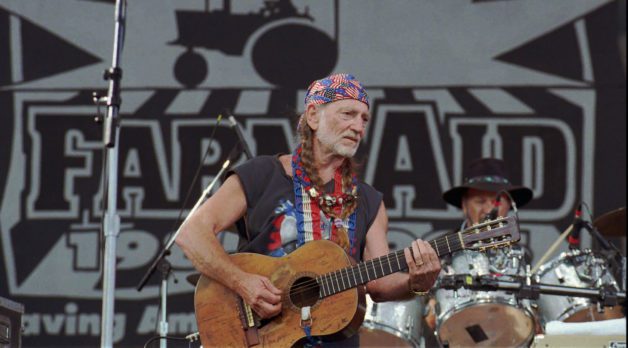
Wille Nelson & Family, courtesy of Sundance Institute.
Filmmakers Thom Zimny and Oren Moverman capture the seven decade-spanning legacy of one of America’s greatest living musicians in Willie Nelson & Family, a seven-part docuseries that weaves together archival and present-day footage to create a non-linear portrait of an iconic artist.
DP Bobby Bukowski talks about lensing the series, touching upon his longtime collaboration with Moverman and how “no artificial enhancement was employed” on the shoot.
See all responses to our annual Sundance cinematographer interviews here.
Filmmaker: How and why did you wind up being the cinematographer of your film? What were the factors and attributes that led to your being hired for this job?
Bukowski: I shoot with Oren Moverman, the co-director of Willie Nelson & Family, on all his films.
Filmmaker: What were your artistic goals on this film, and how did you realize them? How did you want your cinematography to enhance the film’s storytelling and treatment of its characters?
Bukowski: In the footage of Willie himself and family, we wanted to portray them in the variety of favorite places they normally hang out: His saloon in Luck, Texas, his “play room” in Maui, inside their homes, etc.The objective was to try to be flies on the wall and interview and capture him/them in his daily routines. No artificial enhancement was employed. We used available light and quite normal lenses at a medium distance to Willie and his family.
Filmmaker: Were there any specific influences on your cinematography, whether they be other films, or visual art, or photography, or something else?
Bukowski: The people and the natural environments were the inspiration for Willie and his family. With the witnesses, we were inspired to some degrees with the “documentary” sections of the film Reds.
Filmmaker: What were the biggest challenges posed by production to those goals?
Bukowski: We embraced challenges as inspirations. We used the locales and personalities to drive our methods
Filmmaker: What camera did you shoot on? Why did you choose the camera that you did? What lenses did you use?
Bukowski: We shot on the Alexa Mini LF. Much of what we were capturing we chose to capture in the Large Format, as the bigger sensor affords a rarefied selective depth of field to enhance the portraiture, making the subject’s eyes the main point of focus
We used the Tribe 7 Blackwing Prime Lenses for portraiture and Angenieux EZ 1 and EZ 2 zoom lenses for landscape. These are beautifully designed lenses which lend a softness to the rendering of flesh and have a lovely drop-off on the periphery of the frame.
Filmmaker: Describe your approach to lighting.
Bukowski: Pretty much available light with Willie and his family in natural locations. When we shot studio-style interviews against a black background we lit with a soft key light, bounced light diffused through Magic Cloth and directionalize through the use of Light Tool Soft Crates on top of the diffusion material. Directionally we keep the key light as side Light or a Frontal, positioned slightly high. Additionally, camera-wise in these interviews, we created a 360 degree Black Box, with large Solids. We placed the camera at about a 5 foot distance from the witnesses and left the camera unmanned. The directors were posing their questions to the subject, out of sight, outside the black box, unseen by the witnesses. It was up to the subject to choose their own eyeline.
Filmmaker: What was the most difficult scene to realize and why? And how did you do it?
Bukowski: Shooting Willie driving on a very rough road in his truck on his ranch at Luck, Texas. It was bumpy with sudden curves, and Willie is a very carefree driver. We used Go Pros mounted on the inside of windshield and to the exterior side surface of the truck.
Filmmaker: Finally, describe the finishing of the film. How much of your look was “baked in” versus realized in the DI?
Bukowski: Nothing baked in. We developed separate LUT’s for the interviews and different exteriors—Texas vs. Hawaii, for instance. We used these as guides in our final color grade.
TECH BOX
Film Title: Willie Nelson & Family
Camera: Alexa Mini LF
Lenses: Tribe 7 Blackwing Prime lenses, Angenieux EZ1 and EZ 2 Zoom lenses
Lighting: ARRI s60 and s30 light panels
Processing: Arriraw
Publisher: Source link



Prime Video Officially Launches New Deal That Changes the Streaming Game Forever
It seems like streamers raise their prices every day. At the end of August, Apple TV raised the subscription service price by $2, bringing it to $14.99 a month. Netflix, Disney+, HBO Max, Paramount+, and Peacock have all raised prices…
Sep 16, 2026
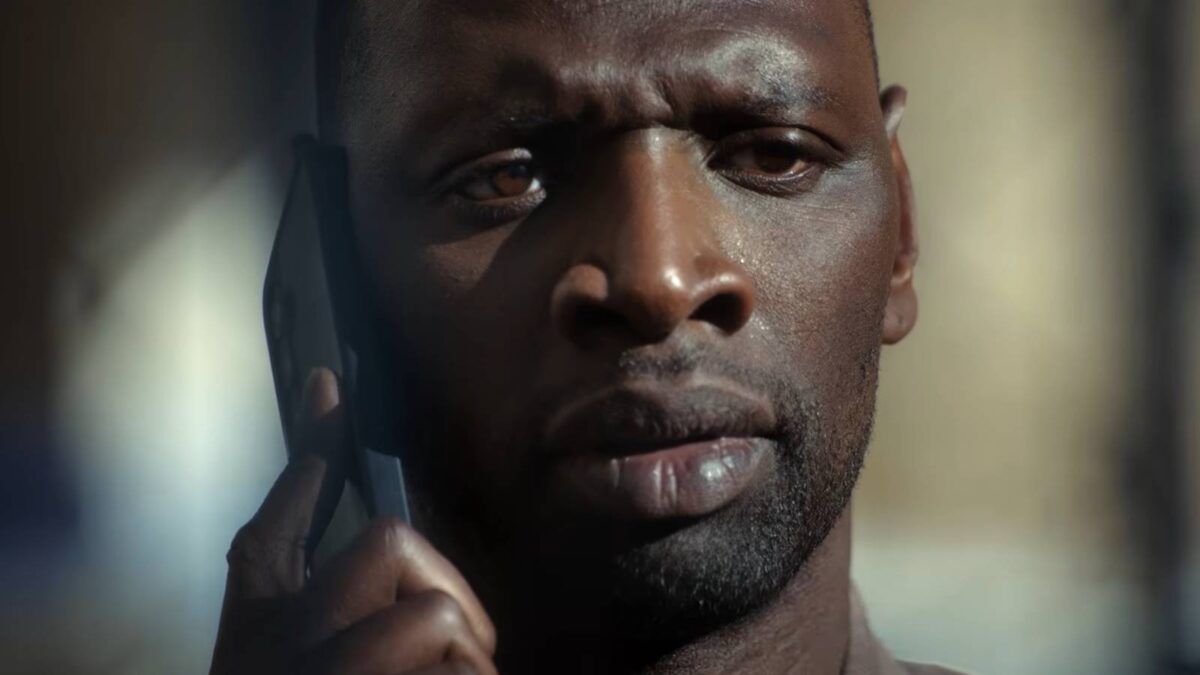
Netflix’s 10/10 Thriller Series Returns After 3 Year Absence With Explosive New Trailer
Over the last five years, Netflix has expanded heavily into non-English content, with international series taking an even bigger focus for the streaming giant. One of the biggest driving forces in that effort is the French thriller series Lupin, led…
Sep 15, 2026
Original ‘Yellowstone’ Dutton Favorite Officially Confirms ‘Marshals’ Return Interest
Yellowstone jump-started a generation-spanning story that has so far spawned four spin-offs that are all interconnected by the Dutton bloodline. While creator Taylor Sheridan has since branched outside that saga with Tulsa King, Landman, Mayor of Kingstown, The Madison, and…
Sep 14, 2026
Netflix Officially Cancels Its 2-Part Taylor Sheridan Replacement Western
Netflix Published Sep 12, 2026, 10:30 AM EDT Omar is an experienced editor and writer who sees life and storytelling as one and the same — there’s always a story to tell. He’s helped shape features, headlines, and coverage across movies,…
Sep 13, 2026