Hold On… There Are Other Planets in The Lord of the Rings?
Nov 13, 2024
With J.R.R. Tolkien’s high-fantasy world of Middle-earth being so far removed from our own, it’s easy to get so caught up in what’s on the map itself that we rarely even think about what’s not on it. We know from The Lord of the Rings that Tolkien crafted endless stars in his legendarium, but are there other planets too? Though extra-terrestrial life in Tolkien’s universe has not been confirmed, the author did note that other planets do exist in Eru Ilúvatar’s created cosmos, called Eä in his world. Yes, there are other worlds out there, we just don’t know much about them.
J.R.R. Tolkien Gave Names to Other Planets In Eä
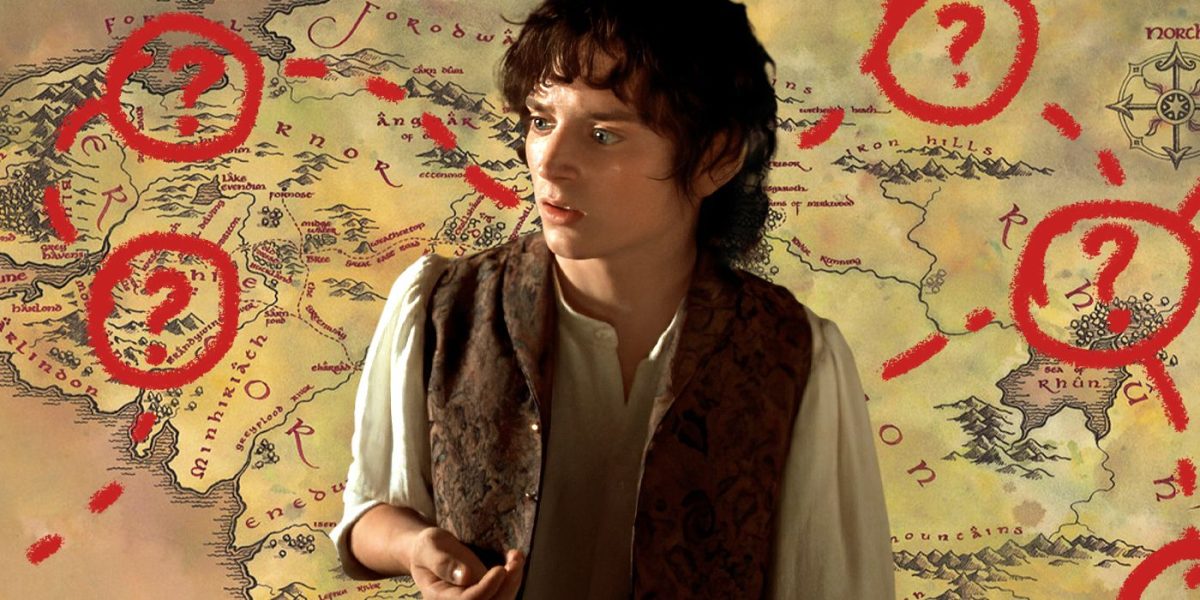
Image via New Line Cinema
There are a few places in Tolkien’s legendarium we know for sure exist. There’s Arda, which is the Earth itself that largely makes up the Seen World, and then there’s the Unseen World. Outside Eä (the universe) exists the Timeless Halls – similar to Heaven, and the Timeless Void – an “everlasting darkness” which Morgoth was banished to. But within the seen and known portion of the cosmos, not only on Arda itself, are other planets. According to The Book of Lost Tales, Tolkien imagined various planets as existing within his created universe, going so far as to name them in the tenth volume of The History of Middle-earth (collected by his son, Christopher Tolkien) titled Morgoth’s Ring.
But what are these names? Well, in the Sindarin language (a form of Elvish), there’s Silindo, Carnil, Elemmire, Luinil, Lumbar, and Nenar. These planets seemingly correlate to Jupiter, Mars, Mercury, Uranus, Saturn, and Neptune, respectively. It’s worth noting too that the aforementioned Book of Lost Tales also refers to Jupiter by the name Morwen. In any case, none of these planets are talked about elsewhere in Tolkien’s lore, and they don’t factor into the larger narrative beyond simply existing. But even including Arda/Earth, these planets only account for seven of the nine planets. As usual, Pluto was left out of the lineup, which just leaves Venus. However, Venus has a more involved history in Tolkien’s legendarium, one that harkens back to the Elves of the First Age. In Letter 297 of The Letters of J.R.R. Tolkien, the professor explains that the piece of the Silmaril that Eärendil the Mariner sailed into the heavens (an event referenced in The Fellowship of the Ring but expanded on elsewhere in Tolkien’s writings), called the Star of Eärendil or Gil-Orestel, is actually synonymous with the planet Venus. Once it was placed up there in the stars, it burned bright as a “morning star” for centuries, eventually coming to be known as Venus many ages down the line.
1:30 Related The Lord of the Rings Adaptation Tolkien Hated One does not simply rewrite J. R. R. Tolkien.
J.R.R. Tolkien Imagined Arda as Earth of Ages Past
Of course, the reason why Tolkien committed so intently to ensuring that the main planets (again, sorry Pluto) were included in his high-fantasy cosmos was because his intention with his legendarium was to tell an alternative history to our world. In Letter 165, collected in The Letters of J.R.R. Tolkien, the professor once wrote that, “though I have not attempted to relate the shape of the mountains and land-masses to what geologists may say or surmise about the nearer past, imaginatively this ‘history’ is supposed to take place in a period of the actual Old World of this planet.” This means that when we say Arda and Earth are synonymous, in the world of The Lord of the Rings they’re actually one and the same.
In another letter (Letter 221), penned in 1958, he expanded further on this idea by noting our place within the Middle-earth story. “I imagine the gap to be about 6000 years: that is we are now at the end of the Fifth Age, if the Ages were of about the same length as [the Second and Third Ages],” Tolkien explained. “But they have, I think, quickened; and I imagine we are actually at the end of the Sixth Age, or in the Seventh.” While Tolkien’s world was indeed fantastical, magical, and purely fictional, its connection to ours — not unlike how his friend C.S. Lewis connected The Chronicles of Narnia to human history — makes it feel all the more real.
Release Date December 19, 2001 Runtime 178 minutes
The Lord of the Rings is available for streaming on Max in the U.S.
WATCH ON MAX
Publisher: Source link









Paramount’s Action-Adventure Hit Blazes to Its Biggest Audience Ever With Over 10 Million Viewers
Fire Country premiered in October 2022, and four years later, the action drama remains a hit for CBS and Paramount+. The series’ fifth and latest season debuted on October 9, and within three days, it ranked as the seventh most…
Oct 26, 2026

Rebecca Ferguson’s Near-Perfect Sci-Fi Thriller Is Officially a 600-Day Streaming Smash Hit
While it was the Mission: Impossible franchise that put Rebecca Ferguson on everyone's radar, it was her appearance as Rose the Hat in Doctor Sleep that cemented her as a superstar. It led to movies like Dune, Netflix's A House…
Oct 25, 2026

‘The Gentlemen’ Loses 2 Original Stars, Reunites ‘Lord of the Rings’ Icons in Big Season 3 Shake-Up
Guy Ritchie's signature blend of aristocratic elegance and gritty underworld chaos has officially solidified its place as a Netflix powerhouse. Originally launched as a television spin-off of his hit 2019 feature film, The Gentlemen captivated global audiences across its first…
Oct 24, 2026

Taylor Sheridan’s ‘Yellowstone’ Sequel Hits Major Milestone Ahead of Streaming Return
The Yellowstone universe has grown so fast since the main series ended that it’s fair to wonder whether the franchise might be stretching itself a bit thin. That’s part of why Dutton Ranch came as something of a surprise. Beth…
Oct 23, 2026