It Starts as a Chaplin-esque Comedy and Ends as the Cruelest Horror Movie You’ve Ever Seen
Nov 15, 2024
Despite its film history perhaps not being as well-known or regularly lauded as that of the U.S., France, or Japan, the country of Spain has a rich and fascinating cinematic catalog. Of course, there are the iconic works of Pedro Almodóvar and Luis Buñuel and satirical comedies like The Executioner and Welcome Mr. Marshall! One film that may have passed the average film-lover by, however, is the 1972 horror short classic from director Antonio Mercero, La Cabina.
La Cabina (or The Telephone Box in English) was produced for television in the midst of Francisco Franco’s rule over the country. This was a time marked by authoritarianism repression, and censorship in entertainment, specifically film. La Cabina’s existence is made all the more interesting by this context, as it was able to get past the censors and make it to television while still teeming with social commentary beneath the surface. It all builds to one of the most terrifying and well-executed endings in horror history.
What is ‘La Cabina’ About?
Image via RTVE Archivo
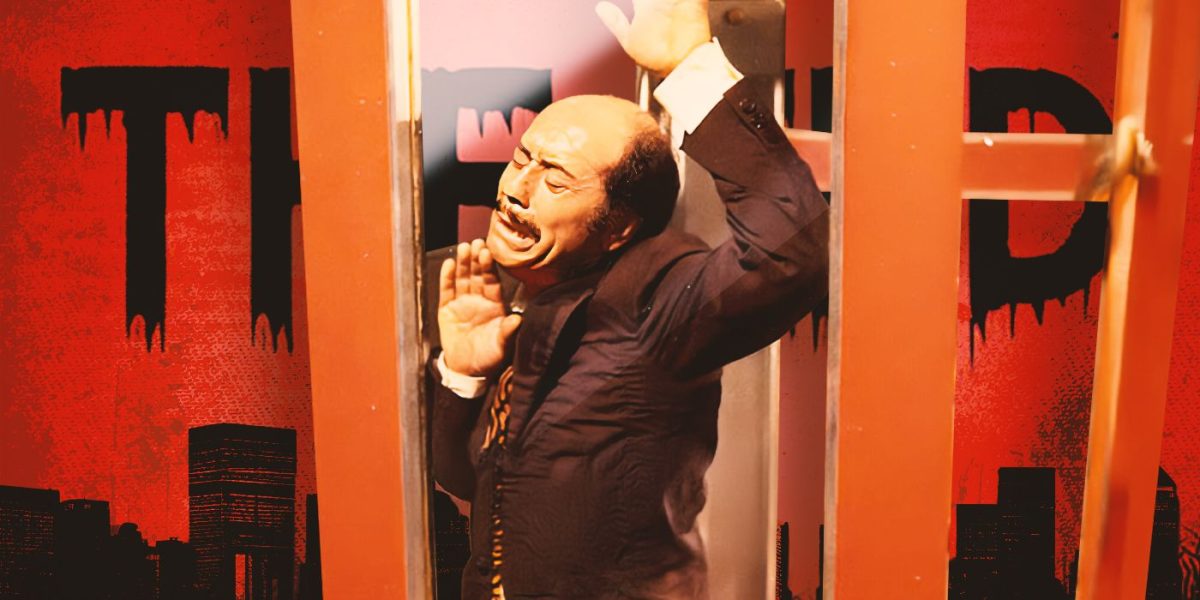
La Cabina (which is free to watch in its entirety on YouTube) follows an unnamed middle-aged businessman as he sends his son off to school. Upon noticing a new telephone box, the man steps in and finds himself trapped inside when the door closes behind him and cannot be opened again. Soon, a crowd starts to form around the box out of curiosity to laugh and observe, with various members of the public unsuccessfully trying to get the man out. Eventually, men who appear to be city officials arrive on the scene and load the telephone box onto a truck, which they then drive out of the city and into the countryside.
Related The 10 Best Spanish-Language Movies of the 21st Century, Ranked According to IMDb Celebrating the brilliance of Spanish cinema.
The ending of La Cabina is what ties the entire film together, and it is recommended one watches the film before reading further, given that that ending will be spoiled here. As the phone box is transported further and further out of the city with the man still trapped inside, he becomes increasingly anxious and suspicious as the travel route seems to be veering further and further away from civilization. Eventually, the truck arrives at a cavernous facility in the mountains, and in a painstakingly slow process, the box is slowly dropped into a massive room filled with hundreds of other phone boxes with similar-looking men inside, all in various states of death and decay (with one man who was seen earlier in the film having strangled himself with the telephone chord). The man the audience has been following weeps as his fate has been sealed, and the viewer is left with no explanation, no happy ending, only the haunting final image of the man’s hand pressed against the glass of what will become his tomb.
The Cultural Impact of ‘La Cabina’
Image via RTVE Archivo
La Cabina was hugely successful, winning an International Emmy and becoming a pop culture fixture in 1970s Spain. The short was so well-known in the public consciousness that the lead actor, José Luis López Vázquez, reprised his role from the film in a commercial years later, in which his character finally escaped the telephone box. There are (possibly tall) tales that the film was so disturbing that it actually discouraged people around the country from using telephone boxes, and was not broadcast again for several years.
What makes La Cabina so effective is the succinct simplicity of its premise and execution. Seemingly taking notes from the ’50s/’60s classic The Twilight Zone, La Cabina builds from a seemingly innocuous start to a twist ending so shocking it would make Rod Serling proud. The true genius in the ending is how the film transitions from jovial and comedic to horrifying and harrowing. The first half of the film seems almost Mr. Bean-like, with the physical comedy that can come from a situation like being trapped in a phone booth on full display.
With the lack of dialogue, the comical image of the man trapped inside the booth, and the various characters who use differing (sometimes absurd) methods to try and free him, one could be forgiven for thinking this would be a Chaplin/Keaton-style comedy. It is in the eeriness of the drive out of town that the claustrophobia starts to settle in; the viewer is expecting the man to be taken to safety just as much as the man himself is, and when the drive keeps going and gets further away from that apparent safety, the viewer and the character both become deeply unsettled. This all builds to the operatic music of the final sequence and the nail-bitingly slow transportation of the phone booth through the facility, ratcheting up the tension and fear in an incredibly effective way. And that fear is then justified by the grim final reveal).
The Deeper Meaning in ‘La Cabina’
Image via RTVE Archivo
Another impressive aspect of La Cabina (and a further example of how it takes cues from The Twilight Zone) is the meaning under the surface of the Kafkaesque story that plays out. The film has been subject to much academic interpretation over the years, particularly because of the time and place in which it was produced. Some have read it as a critique of the Franco government and its oppressive, restrictive nature. One can expand on this by examining the first half of the film, with all of the on-lookers gathering around the show of the man helplessly trapped as a symbol of some being guilty of simply watching the oppression play out and doing nothing to help or affect positive change.
Throughout the film, the audience sees only bald, middle-aged businessmen get trapped in the phone booths, while at one point, a young businessman with a full head of hair steps out of one with no problem. While the actual motives within the film’s narrative of the company trapping men in these phone booths are never explained, this could be a commentary on how society is quick to forget about the older middle-class working generation.
There are more symbols throughout the drive as well, from the city towering over the man in the phone booth in low-angle shots commenting on the modernization and growth of big cities (again possibly to the detriment of the common, older working man), to the funeral the phone box passes with a casket foreshadowing the protagonist’s end. There are also the circus folk who, in contrast to the young drivers on the road, don’t laugh at the man, but rather regard him with weary sympathy, as they know how it feels to be presented as a laughingstock for others’ entertainment (perhaps this is even a fourth wall break asking the audience to think bout how they were watching the first half of the film). All of this exhibits the genuine genius of La Cabina, a film that works as a slow-burn horror short with a crazy twist ending but also as a work worthy of academic analysis.
La Cabina is one of the most effective horror shorts of all time. It is simple and easy to understand in its premise, and the way it smoothly tonally transitions from comedy to suspense to horror is masterfully done. It results in a viewing experience that will stay with most audiences for a long time after they’ve watched it. Not only that but its broader symbolism and commentary point to more complex themes beneath the surface, making it an exceptionally rewarding re-watch even after one knows the twist ending.
La Cabina is available to watch on YouTube.
Watch on YouTube
Publisher: Source link








Paramount’s Action-Adventure Hit Blazes to Its Biggest Audience Ever With Over 10 Million Viewers
Fire Country premiered in October 2022, and four years later, the action drama remains a hit for CBS and Paramount+. The series’ fifth and latest season debuted on October 9, and within three days, it ranked as the seventh most…
Oct 26, 2026

Rebecca Ferguson’s Near-Perfect Sci-Fi Thriller Is Officially a 600-Day Streaming Smash Hit
While it was the Mission: Impossible franchise that put Rebecca Ferguson on everyone's radar, it was her appearance as Rose the Hat in Doctor Sleep that cemented her as a superstar. It led to movies like Dune, Netflix's A House…
Oct 25, 2026

‘The Gentlemen’ Loses 2 Original Stars, Reunites ‘Lord of the Rings’ Icons in Big Season 3 Shake-Up
Guy Ritchie's signature blend of aristocratic elegance and gritty underworld chaos has officially solidified its place as a Netflix powerhouse. Originally launched as a television spin-off of his hit 2019 feature film, The Gentlemen captivated global audiences across its first…
Oct 24, 2026

Taylor Sheridan’s ‘Yellowstone’ Sequel Hits Major Milestone Ahead of Streaming Return
The Yellowstone universe has grown so fast since the main series ended that it’s fair to wonder whether the franchise might be stretching itself a bit thin. That’s part of why Dutton Ranch came as something of a surprise. Beth…
Oct 23, 2026