‘Modi, Three Days on the Wing of Madness’ Review
Dec 16, 2024
Of all the films that Johnny Depp was to return to the director’s chair for, this darkly comic story of a highly intoxicated, mildly sociopathic yet intensely charismatic creative feels more than a bit fitting. A movie that’s been decades in the making, drawing legendary talents to tell the tale of a few days in the life of an irascible, self-destructive artist, there was promise here for something extraordinary to emerge from the tumult, something to be celebrated both for its tenacity but also its supreme qualities. This is not that film.
Despite one electric scene that makes the rest of the film feel more risible, Modi, Three Days on the Wing of Madness is a plodding, pretentious mess that is easily one of the worst productions of the year. If it was a total failure then Modi would almost be of interest to those irascible few that seek out such masochism, drawn to be delighted in the campness of it all. Instead, this dreary piece feels utterly disposable, so forgettable that it’s not even worth the time to be embraced with scurrilous irony. Messy and meandering, Depp’s film drains all the life out of its wild and crazy subject and instead presents us with the worst clichés of such narratives.
Johnny Depp’s Dull Portrait of Amedeo Modigliani
For those unaware, Amedeo Modigliani was a boorish wildman of an artist at a time when Paris was littered with such countercultural characters. One need only watch the absinthe-soaked psychedelia of Baz Luhrmann’s Moulin Rouge to get a sense of such seductive salaciousness, and it’s within this milieu that this most tortured of tortured artists managed to leave his mark.
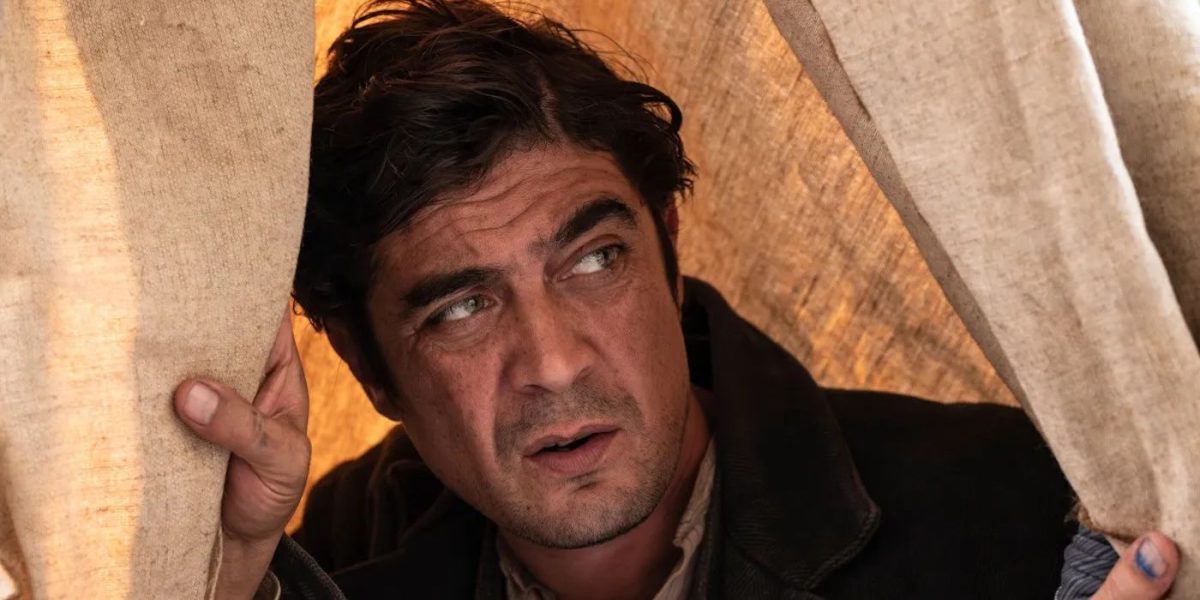
Riccardo Scamarcio (best known to international audiences for his role in John Wick: Chapter 2) is a fine actor as the titular character, but here he’s prompted to play the decade-younger artist with the swagger of a pirate, attempting to find the kind of intoxicated charm that Depp’s own franchise successes milked for billions at the box office. Modi is surrounded by a retinue of reprobate artists, including a Baron Munchausen-like gaunt figure named Maurice Utrillo (Emily in Paris’s Bruno Goery), as well as an Andy Kaufman-like turn by Ryan McParland as Chaïm Soutine, an artist consumed with filth and rot, whose disturbing yet compelling still-life paintings of hanging meats are perhaps his most famous artistic legacy.
Set during Modigliani’s final burst of creative flair, he’s the epitome of the artist refusing to conform while perpetually engaged in acts of self-sabotage that, for some, are part of his allure while for others simply the manifestation of his obvious narcissism and intoxicant-addled brain. In Depp’s telling, there’s obviously sympathy here for the garrulous character, the supposedly deep philosophizing about art as destruction taking on the kind of existentialist ennui that was flourishing during this mid-War period.
Stylistically, Depp’s film bounces between broad attempts at comedy and murky moments of fatalistic seriousness. The hoary convention of the blood-expectorating doomed individual is fully employed here without a shadow of reluctance, the constancy of coughing yet another exemplar of how deeply cliché this telling truly is. The flourishes of filmic experimentation, from bursts of black-and-white undercranked silent film whimsy, through to the anachronistic use of Tom Waits’ “Tom Traubert’s Blues” rarely coalesce. Often the boorishness of Scamarcio’s take is paused with moments of gape-mouthed allusions to Theodore Dryer’s The Passion of Joan of Arc, but rather than being drawn into the deep emotionality of the scene it comes across as both redundant and pretentious.
Related Johnny Depp Returns to the Director’s Chair in First ‘Modi’ Set Images Depp will direct Al Pacino in his first turn behind the camera in 25 years.
This mix between the physical humor and the darker elements of this character was always going to require a great deal of both narrative and directorial dexterity to pull off. Suffice it to say that Depp’s attempt to walk this tightrope is a complete failure. Take Stephen Graham’s turn as Léopold Zborowski, Modi’s ostensive yet ineffectual art dealer. Here is one of the great actors of his generation, electric in nearly every role he’s made, a talent deserving of a big screen canvas that he’s too rarely afforded. Yet here, his sniveling reading and underbaked accent provide little in the way of engagement, a role as two-dimensional as the paintings that litter his office.
Modi’s muse, Beatrice Hastings (Antonia Desplat), is given the thankless task of being at once a cloying writer believing her own commentary to be equal to that of who she champions and criticizes, while also being yet another character who must tell the audience over and over just what a great artist Modi is. Modigliani is as famous for the paintings and sculptures he destroyed as much as those that survive, and Hastings provides a bit of the context in which such brutalities are to be lauded rather than chastised. Despite Desplat’s best intentions to humanize Modi’s foibles, in the end, it comes across as the stark ravings of a delusional man demanding from others what he himself would never stomach.
Al Pacino’s Scene Is the Only Positive of the Movie
Image Via Be Water
This brings us to the central moment that rescues the film from what’s otherwise nothing less than a turgid morass. There’s a secret weapon at the heart of this telling, and that is one Mr. Al Pacino. As documented by Esquire, It’s been Pacino’s dream for a half-century to bring Modi’s story to life, a desire to celebrate the complexity of the man during this most tumultuous of times.
Pacino aged out of playing the artist himself, but spent years looking for another mode to present this tale. Pacino commissioned several adaptations of Dennis McIntyre’s play about Modigliani, and the actor spent years unsuccessfully eliciting the likes of Francis Ford Coppola and Martin Scorsese to helm the production. Ten years ago the project again was revitalized, with Johnny Depp set to play the artist. When that fell through, Pacino continued to push the project forward, eventually convincing Depp to helm the film based on a new screenplay by Jerzy and Mary Kromolowski.
In this telling, Pacino shows up in his now preferred seated position, not dissimilar to the mode he used to great effect in Quentin Tarrantino’s Once Upon a Time In Hollywood. He plays Maurice Gangnat, a rich art collector who teases at literally changing Modi’s fortunes, speaking truth from a position of power that serves as the emotional and philosophical core of everything else that transpires. This scene is the film’s only highlight, an island within a sea of mediocrity that’s as startlingly superior as it is short.
The counterpunch between the privileged and the impoverished is not only the richest moment, but one can literally feel everything else fade away as the combative dialogue plays out. It demonstrates a kind of aesthetic purity, where the creator refused to succumb to temptation and sell his art short. But it’s also a petulant reaction spawned by a man who exploits the generosity of others, only to spit in the face when the time may finally come for him to reciprocate such favors. Pacino’s affectations and expletives are as anachronistic as anything, but it’s his calling of bullshit to Modi’s face that’s so effective given the building tension for at least someone to do so after such a lengthy runtime. Seen in isolation the moment may appear overwrought, but given how long it takes for even this modicum of movie magic to rear its head, when it finally arrives the catharsis is palpable.
Soon we leave this bastion of competence and are plunged back once again into the risible affairs of Modi’s mayhem. Shot in Hungary to pass for the streets of Paris, the shadowy images peppered with hallucinatory visions are more stark than seductive. More bemusing is the representation of the artworks themselves. One must assume that the actual paintings were unable to be shown due to rights issues, so the paltry simulations presented here are even more incredulous as they are held up as masterworks.
In fact, these half-baked imitations of Modi’s style are perhaps the greatest injustice to the celebration of this artist, for they seem so far removed from what made him famous that it’s a challenge for viewers unfamiliar with the history of the man to equate genius with these quite banal portraits and simplistic sculptures. Take the portrait of Soutine, referenced throughout the film: It is so sloppily presented, so differing in its qualities compared to the original, that it turns one of the most celebrated works of the century into something akin to the famous “Monkey Christ” that resulted from the restoration debacle at the Santuario de Misericordia.
Johnny Depp’s Return to Directing Is Completely Forgettable
Image Via Be Water
Depp’s last directorial effort was the equally forgettable film The Brave from 1997, but that at least served as a valiant attempt to provide Marlon Brando with a late-career boost. Here, the film is quite literally nothing save for a chance for Pacino to finally realize a long-held dream, only to have aged out from any believable portrayal by him of the artist. And so, one of the most discussed and celebrated artists of his age is given a cinematic portrait that would find a home in a Midwestern hotel lobby, a coarse and boring film that mixes tedium and tantrums in the same chaotic fashion that paint is slathered on a palate.
Without Depp’s name attached, and Pacino’s intrinsic contribution, the film would be relegated to obscurity, and even now it feels more like the answer to a trivia question than an actual film to be screened. You’ll feel yourself aging while watching Modi, Three Days on the Wing of Madness, the time spent withering and wasting as one awaits the most obvious of conclusions. You can feel the efforts of all on-screen attempting valiantly to polish this turd, and there’s little evidence that a firm directorial hand was there to assist in any meaningful way.
Modi, Thee Days on the Wing of Madness screened at this year’s Red Sea International Film Festival.
Johnny Depp’s directorial return would be the worst movie of year if not for a masterful scene from Al Pacino.ProsAl Pacino shines in an all-too-brief scene ConsDoes deep injustice to the artist and his workA clichéd mess of a biopic, wasting the talents of all involvedDepps direction leaves much to be desired
Modi: Three Days on the Wing of Madness follows bohemian artist Amedeo Modigliani during a frenetic seventy-two-hour period in 1916 Paris. Navigating personal and professional turmoil, Modi encounters fellow artists and a pivotal American collector amid the chaos of a war-torn city.Release Date December 5, 2024 Cast Riccardo Scamarcio , Antonia Desplat , Benjamin Lavernhe , Al Pacino , Bruno Gouery , Stephen Graham , Ryan McParland , Sally Phillips , Eva Jane Willis , Luisa Ranieri , G. Maximilian Zarou , Hugo Nicolau , Kat Fairaway , C.J. Byrnes , Kembe Sorel , Philippe Smolikowski , Nóra Trokán , George Jovanovic Runtime 114 minutes Writers Jerzy Kromolowski , Dennis McIntyre Expand
Publisher: Source link



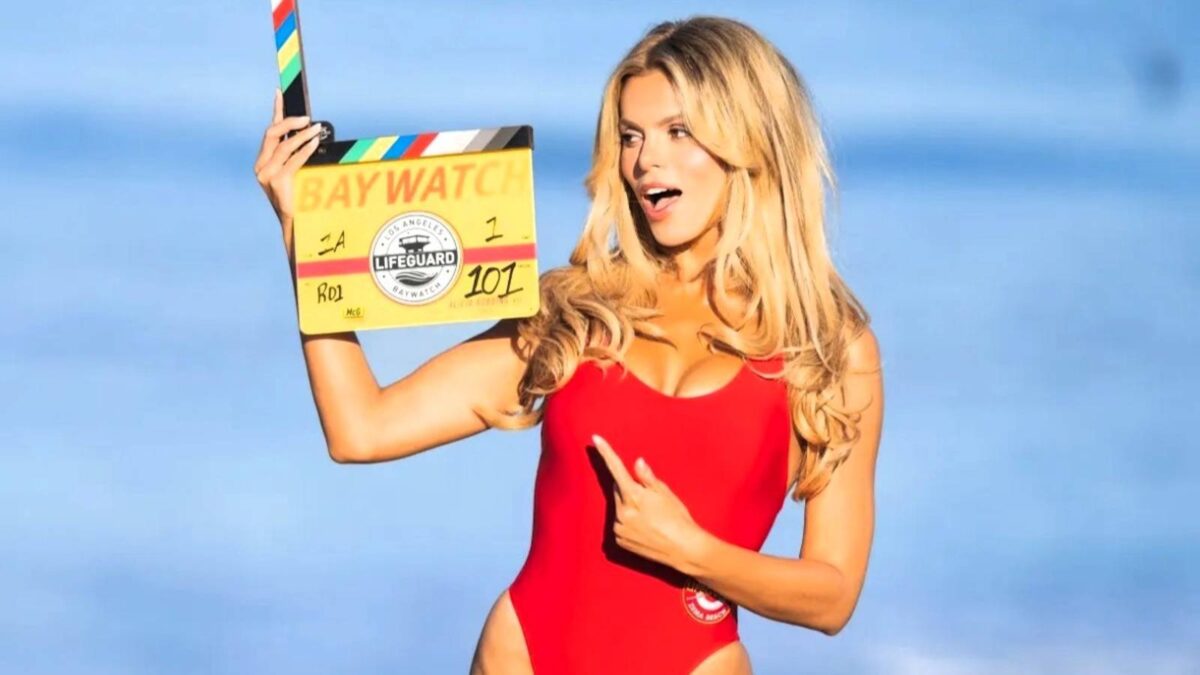
‘Baywatch’ Reboot Officially Confirms Streaming Release Details
When Baywatch signed off in 2001, it had already spent the better part of a decade as the most-watched show on the planet, airing in more than 200 countries and reaching over a billion viewers a week at its peak.…
Aug 5, 2026
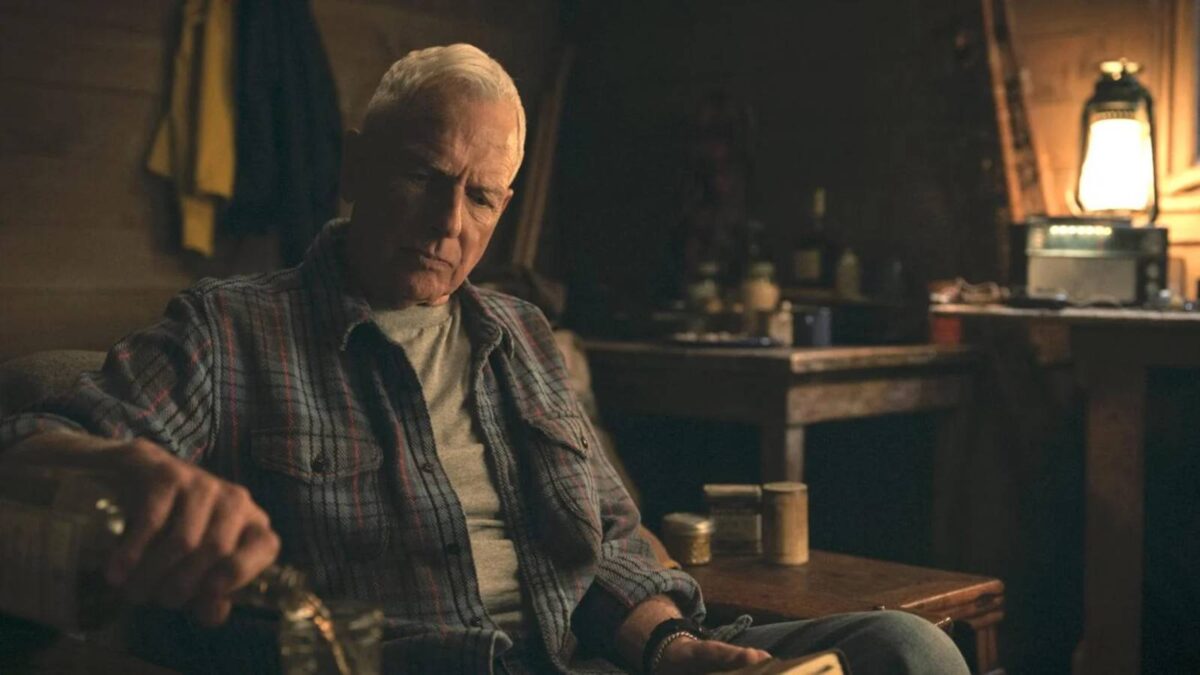
Origins’ Sets Return Date With Mark Harmon Getting a Season-Long Arc
Mark Harmon played special agent Leroy Jethro Gibbs for 18 seasons of NCIS before leaving in Season 19. The original show has soldiered on without him — it will soon be back for its 24th season — but the franchise…
Aug 4, 2026

Forget ‘Lioness,’ Paramount’s 114-Episode Non-Stop Action Thriller Is One of the Biggest Shows on Streaming
Taylor Sheridan's hit action thriller, Spec Ops: Lioness, is nearly back with its third season. Season 3 of Lioness debuts on Aug. 2, dropping a new episode each week. While Taylor Sheridan fans are re-watching the series (and Sheridan's other…
Aug 3, 2026
Long-Awaited DCU Superhero Series No Longer Moving Forward After 3 Years
Another day, another superhero project canceled. Despite the box office success of Marvel Studios' Spider-Man: Brand New Day, it was sandwiched between the cancellation of Wonder Man Season 2 and Mahershala Ali confirming he is no longer attached to star…
Aug 2, 2026