Bodycam Doc Explores the Consequences of Manufactured Fear In 2020s America [Sundance]
Jan 29, 2025
The whole world feels brittle right now like a thin piece of glass struggling to hold its shape in a hurricane. Indeed, tension is high and promises to get higher, and if the documentary “The Perfect Neighbor” is to be believed (as it should be), this is every inch of our own doing. It’s a crumby situation to be in when the dominant political movement of the moment can only sustain itself by feeding this paranoid fear frenzy, yet those are the murderous results on display, here.
READ MORE: 25 Most Anticipated Movies At The 2025 Sundance Film Festival
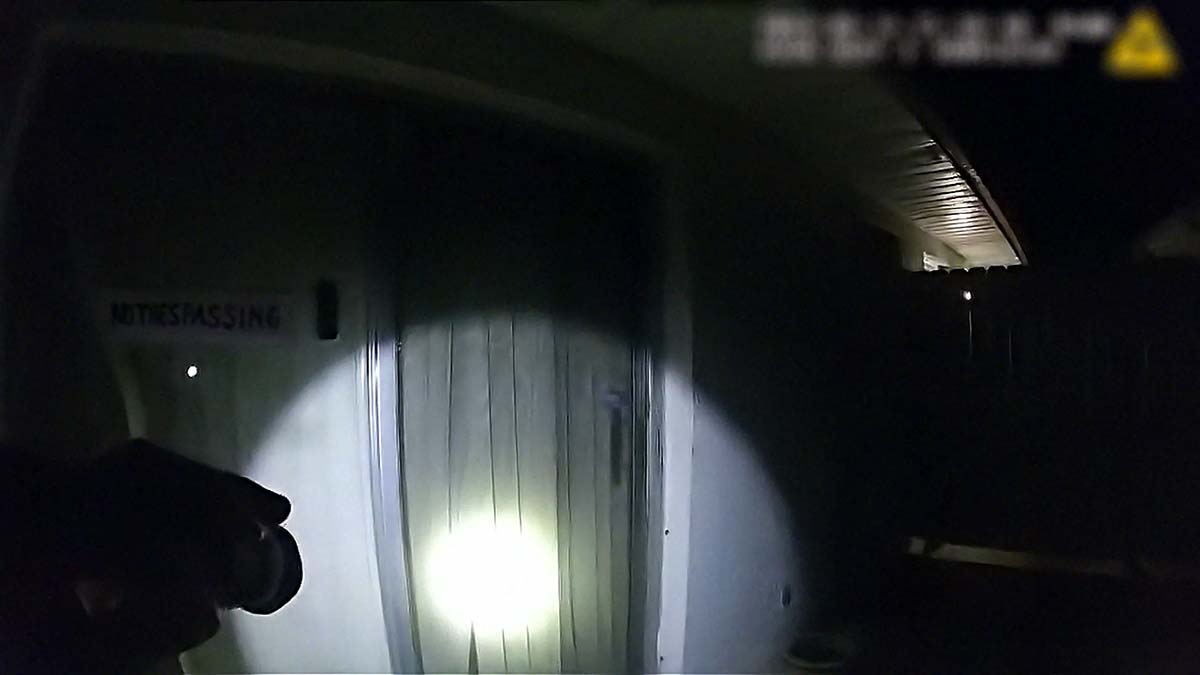
Starting first with bodycam footage of officers responding to a June 2, 2023, residential shooting in Ocala, Florida, “The Perfect Neighbor” cuts between that scene, the investigation to follow, and previous police responses to that neighborhood to tell its story. Text in the opening seconds states “This film is primarily composed of police body camera footage recorded over the course of two years,” and this holds true for nearly all 96 minutes of the runtime. Absent any talking head interviews, text interstitials, or narration, the documentary relies on the raw footage and audio of events to assemble a crystal-clear picture of what happened on June 2nd and why.
Sheriff’s Department body cameras record a visit to the neighborhood in question as early as February 2022, where Susan Lorincz, a cranky older white woman, is making a complaint against her neighbors. She claims that she was attacked with a yard sign, but the surrounding residents all tell a different story: one that has Susan concocting paranoid fantasies about the good-natured kids playing too close to her apartment. Repeat visits by the Sheriff’s Department in August, December, and February 2023 all follow a similar script, with the cops writing off Susan’s exaggerated complaints as bothersome and unwarranted.
Things come to a head on June 2, when Susan assaults a neighborhood child, compelling the boy’s mother, Ajike Owens, to knock on Susan’s door demanding an explanation. Susan shoots and kills Ajike through the closed door, claiming that she was acting in self-defense by way of the state’s “Stand Your Ground” law. The neighborhood witnesses say it was the final step in a series of escalations perpetrated by a cold-blooded killer, and the footage of events before and after the incident back up this latter view.
Director Geeta Gandbhir gives Susan every opportunity to tell her side of the story through the bodycam interactions and interrogation room videos, yet it only serves as a deeper indictment of her crimes and the systematic failures that allowed them. The dehumanizing way she refers to her neighbors, the majority of whom are African American, does not paint a sympathetic picture of her actions before or during the murder. Watching all of this, one gets the sense that Susan is an angry, paranoid, and resentful person who feels every inconvenience or annoyance in her life is a mortal attack.
And really: why shouldn’t she feel this way? Ocala sits in Marion County, a voting district that went for Trump and Rick Scott at about 65%, which means about 65% of those residents believe that they are under attack by immigrants, BLM, and/or other leftist boogeymen. When the prevailing social and political force in an area keeps its base on edge by assuring that they are afraid of the ever-encroaching “other,” people are going to die.
Ajike Owens did, anyway, and “The Perfect Neighbor” doesn’t pull any punches in showing just how awful and senseless her murder was. Bodycam footage of the responding officers on June 2nd shows a chaotic and raw crime scene that puts the viewer right in the middle of the horror, as children and adults recount the lead-up to the shooting and contend with the terrible aftermath. In perhaps the most gutting moment, the father of Ajike’s children arrives, nearly collapses at the news of her death, and then must rally himself for the moment he informs the kids.
Devastating doesn’t begin to capture the terrible truth of these scenes, which come unfiltered and up close due to the proximity of the officers and their cameras. It’s a credit to Gandbhir’s confidence as a filmmaker that these moments are presented practically verité to convey the truth of these interactions without commentary or additional context. The construction of the documentary showing the previous complaints and even a criminal incident involving Susan’s truck at an impound lot tells the complete story, anyway, and it’s a devastating one.
Support independent movie journalism to keep it alive. Sign up for The Playlist Newsletter. All the content you want and, oh, right, it’s free.
Susan is a woman who shouldn’t have been allowed to have a gun in the first place considering her history, and should have been warned about her provocative and dangerous behavior as it related to literal children by police who had every opportunity to do so. “The Perfect Neighbor” contends that the toxic combination of U.S. firearm laws, police inertia, institutionalized racism, and politically motivated fear all came together to rob a family of a mother and a community of its pillar.
It’s a uniquely American tragedy that’s set up for reruns, and whether by choice or not, no one is changing the channel. Gandbhir could have arranged all of this like a book report with a foregone conclusion, yet she trusts in the truth of this story and the intelligence of her audience to pull apart the necessary history and sociopolitical context of it all. It’s raw and minimalist, to be sure, but as already mentioned: it’s every bit of who we are as a nation, with no sign of change on the ever-darkening horizon. [A]
Check out the latest reviews from the 2025 Sundance Film Festival and The Playlist’s complete coverage from Park City here.
Publisher: Source link




‘Baywatch’ Reboot Officially Confirms Streaming Release Details
When Baywatch signed off in 2001, it had already spent the better part of a decade as the most-watched show on the planet, airing in more than 200 countries and reaching over a billion viewers a week at its peak.…
Aug 5, 2026
Origins’ Sets Return Date With Mark Harmon Getting a Season-Long Arc
Mark Harmon played special agent Leroy Jethro Gibbs for 18 seasons of NCIS before leaving in Season 19. The original show has soldiered on without him — it will soon be back for its 24th season — but the franchise…
Aug 4, 2026
Forget ‘Lioness,’ Paramount’s 114-Episode Non-Stop Action Thriller Is One of the Biggest Shows on Streaming
Taylor Sheridan's hit action thriller, Spec Ops: Lioness, is nearly back with its third season. Season 3 of Lioness debuts on Aug. 2, dropping a new episode each week. While Taylor Sheridan fans are re-watching the series (and Sheridan's other…
Aug 3, 2026
Long-Awaited DCU Superhero Series No Longer Moving Forward After 3 Years
Another day, another superhero project canceled. Despite the box office success of Marvel Studios' Spider-Man: Brand New Day, it was sandwiched between the cancellation of Wonder Man Season 2 and Mahershala Ali confirming he is no longer attached to star…
Aug 2, 2026