This Overlooked, Frighteningly Realistic Horror Movie Will Devastate You in Ways Others in the Genre Don’t
Mar 18, 2025
A skilled filmmaker can achieve an awful lot with a modest budget, and Canadian director Adam MacDonald (2014’s Backcountry) fashions every resource he has at his disposal to render his 2017 horror Pyewacket a frighteningly effective genre offering that interlocks the supernatural and trauma’s toll. As grimly elegiac as it is deeply nerve-jangling, MacDonald’s sophomore feature film zeroes in on the emotional turmoil begat by a family death, exploring the shattering aftereffects of bereavement. At its core, Pyewacket’s narrative orbits a fraught mother-daughter relationship and a botched revenge plan, which ultimately serves as the backboard for the ensuing scares that come, sometimes running on all fours, at the viewer via a hectic finale.
Assuredly, this minimalist film scores several points off of its unshifting foreboding and bullish confidence in a less-is-more approach. The performances by Laurie Holden and Nicole Munoz are nuanced and keyed into little details, while MacDonald’s at-times documentary style of filming is commendably gritty. Loaded with atmosphere-building visual motifs (sparse trees and winding roads, all coated in a greyish-blue hue), as well as a general sense that something may be hiding behind the sheen of the elements just off-screen, Pyewacket is an engrossing, unpredictable detour, and a prime viewing option for the art horror crowd.
Pyewacket’s Restraint Adds to its Intrigue
Image via IFC Midnight
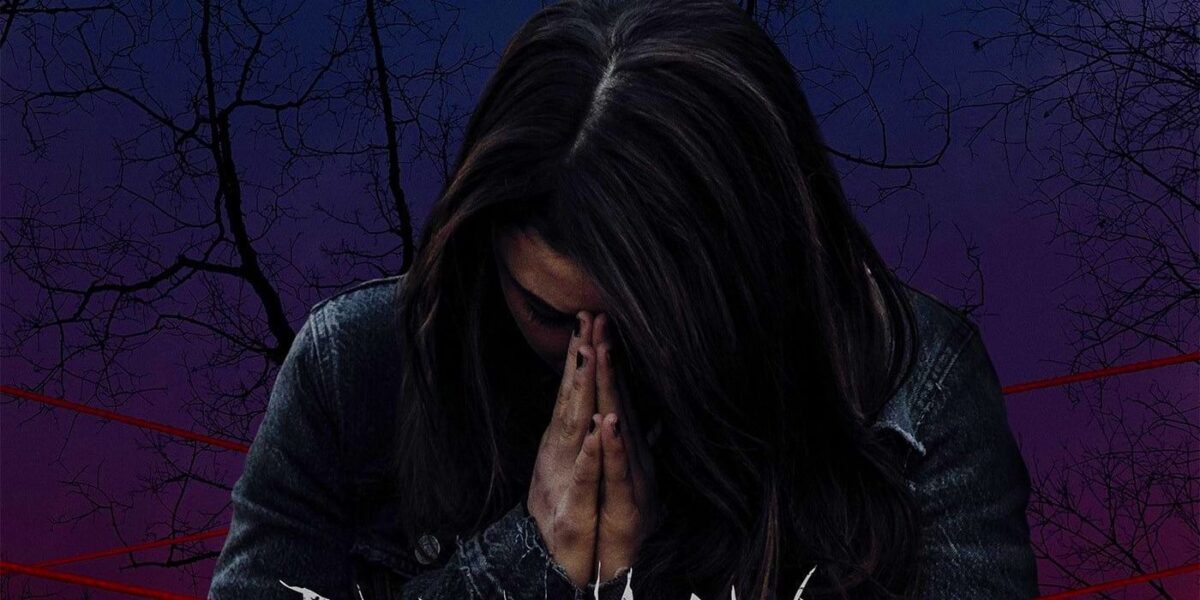
Anguished teen, Leah Reyes (Nicole Munoz in a breakout performance), is desperately confused and unhappy after the death of her father and the subsequent behavioral change in her now-widowed mother (Laurie Holden). Her refuge comes via her tight-knit friendship circle, all of whom dabble in the occult. When her mother announces that they can no longer persist with living in their family home as it’s inhibiting them from turning a page, they abruptly move to a domicile pitched within a gloomy thicket thoroughly separated from Leah’s all-important circle of confidantes. Leah finds this difficult to accept, but her tempestuous mother sees it as their only way to truly forge ahead in the wake of such an unbearable tragedy, their fractious relationship at boiling point. MacDonald captures these tense confrontational moments. He provides the viewer with all-important windows into the barely contained grief both mother (demonstrative) and daughter (more repressive) carry. Leah feels as if her needs have been abandoned, her coping well drained as a result of the move, bereft of compromise or discussion. The drama festers like an untreated sore, as does Leah’s urge to pay back her mother, which spills over when she’s berated via a fairly personal and disproportionate attack.
Related
The 9 Best Canadian Horror Movies to Watch Before ‘Infinity Pool’
These horror movies make Canada seem a bit creepier.
What does she do? She decides to conjure something malevolent as part of an especially dark payback scheme. What she doesn’t bank on is just how real the entity is, so long as she believes in its existence with enough intensity. The titular possessor is evoked via a drawn-out spell involving a host of different constituents amounting to a witchy brew, and the sequence is shot brilliantly. All towering trees, and rocks tap rhythmically before a gruesome crescendo is reached; the viewer is guided through each step by a distraught and determined Leah (who begins to emerge as an increasingly unreliable narrator). The simple, effective cuts MacDonald employs here and throughout the film generate genuine ongoing tension. Like many A24 and Neon contemporaries of the horror mold, Pyewacket is cerebral and chilling, while retaining a welcome ambiguity. It’s only when one of Leah’s best friends stays over (and apparently becomes aware of a presence at their home) that the viewer avers ‘Pyewacket’ could in fact be real. After a somewhat uneasy but tame night, peer Janice (Chloe Rose) is found locked in the family vehicle the next morning, visibly fearful of Leah, and demanding immediate departure. The ‘wake up somewhere other than where they started’ device is used at least once.
The Film’s Themes Jog Alongside the Horror Elements
Image via Les Films Seville
Critically, Pyewacket’s success lies in the way it remains anchored to the themes of loss and grief-induced anger. Both of the primary characters are attempting to cling onto things that may or may not restore faith in the face of paralyzing despair. For Leah, taking sanctuary in the occult serves as a sort of emotional life-raft for her frail mental well-being. For the Reyes matriarch, the house move was supposed to be the answer to her bedridden depression and episodes of extreme anger. Shortly after Leah carries out the invocation ritual, her mother reaches out to reconcile, showing genuine remorse for castigating her daughter for her remote disposition. Leah immediately begins to regret her choice, hoping her conjuring exercise was only a surface-level outlet for her momentary rage and not a successful materialization of something truly despicable. Ultimately, MacDonald leaves much of that up to the viewer, all the way up to the truly devastating ending where Leah becomes convinced her mother is an impostor.
The creepiness is never sacrificed. There’s a fast-moving POV-style shot that evokes Raimi’s Evil Dead in the way it represents something zipping through the woods, and another key moment shows a barely determinable dark figure lowering itself calmly to the floor of a bedroom…from an invisible ledge in the wall. The film’s brisk running time means MacDonald spins the tale in an efficient way, for, as we’re later informed, ‘Pyewacket’ can take many forms. Pyewacket, in the tradition of other multilayered flicks such as The Wretched and Mama, manages to affect and frighten, and it does so over 87 speedy minutes – a collision of depth and dark visuals.
Pyewacket
Release Date
December 8, 2017
Runtime
88 minutes
Director
Adam MacDonald
Producers
Jeff Sackman, Victoria Sanchez, Patrick Roy, Jonathan Bronfman, Joe Sisto
Publisher: Source link






Rebecca Ferguson’s Near-Perfect Sci-Fi Thriller Is Officially a 600-Day Streaming Smash Hit
While it was the Mission: Impossible franchise that put Rebecca Ferguson on everyone's radar, it was her appearance as Rose the Hat in Doctor Sleep that cemented her as a superstar. It led to movies like Dune, Netflix's A House…
Oct 25, 2026
‘The Gentlemen’ Loses 2 Original Stars, Reunites ‘Lord of the Rings’ Icons in Big Season 3 Shake-Up
Guy Ritchie's signature blend of aristocratic elegance and gritty underworld chaos has officially solidified its place as a Netflix powerhouse. Originally launched as a television spin-off of his hit 2019 feature film, The Gentlemen captivated global audiences across its first…
Oct 24, 2026

Taylor Sheridan’s ‘Yellowstone’ Sequel Hits Major Milestone Ahead of Streaming Return
The Yellowstone universe has grown so fast since the main series ended that it’s fair to wonder whether the franchise might be stretching itself a bit thin. That’s part of why Dutton Ranch came as something of a surprise. Beth…
Oct 23, 2026
Taylor Sheridan’s 5-Part Western Sensation Returns to Streaming as New Spin-Off Battles for #1 Spot
Taylor Sheridan's seminal five-season western is officially one of the biggest shows on streaming, once again, all while its latest spin-off fights for the #1 spot on the charts. Taylor Sheridan keeps going from success to success. After his hit…
Oct 22, 2026