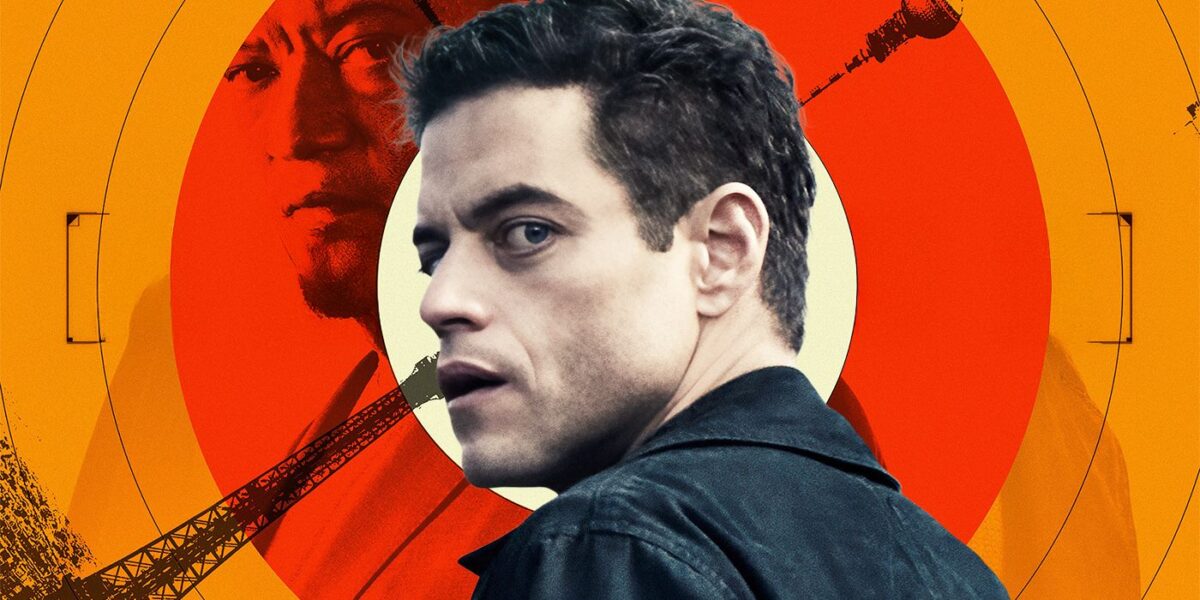
‘The Amateur’ Director on Why Rami Malek’s Protagonist Is Nothing Like What You’ve Seen Before
Apr 10, 2025
Summary
Director James Hawes has worked on various acclaimed series and films, now back in theaters with The Amateur starring Rami Malek.
Hawes prioritizes character development and realistic action sequences in his films, focusing on emotional impact.
Maintaining a balance between rooted storytelling and cinematic thrills, The Amateur presents complex characters and morally ambiguous decisions.
Director James Hawes has been a creative force on an enormous range of critically and audience-acclaimed series and films. Cutting his teeth on Doctor Who, and soon moving on to similarly popular projects like Snowpiercer and The Alienist, he became baked into the DNA of one the world’s current favorites, Slow Horses starring Gary Oldman. Now, Hawes is back on the big screen with his latest espionage thriller, The Amateur, starring Academy Award-winner Rami Malek and adapted from Robert Littell’s 1981 novel of the same name.
Hawes’ film follows Malek’s Charlie Heller, a CIA Cryptographer, after he loses his wife (Rachel Brosnahan) in a London terrorist attack. When it becomes clear his bosses will not bring her death to justice due to internal conflicts, he embarks on a one-man mission to hunt down his wife’s killers using his cutthroat agency training. The film co-stars Jon Bernthal (Daredevil: Born Again), Laurence Fishburne (Thunderbolts*), and Julianne Nicholson (Dream Scenario).
Collider’s own Steve Weintraub had the opportunity to sit down with Hawes to talk about The Amateur and his filmography. Hawes breaks down his latest feature at great length, discussing the changes between the film and the novel, and the acting mastery of protagonist Charlie Heller himself, Malek. They also discuss Slow Horses, Black Mirror, and the eagerly awaited DC series Lanterns, starring Kyle Chandler and Aaron Pierre.
James Hawes Is Tremendously Proud of Setting Up ‘Slow Horses’
“Part of me wants to go and play with the family again.”
Image by Jefferson Chacon
COLLIDER: If someone has never seen anything that you’ve directed, what’s the first thing you want them watching and why?
JAMES HAWES: Slow Horses. Because part of a director’s job is to invent a world and the tone. I think we really succeeded in coming up with a defined tone, and flavor, and a color that shoved the espionage genre a notch forward, somewhere it hadn’t been before.
I’m a huge fan of Slow Horses. What’s it like for you as the one who directed the first season to see the incredible success of the show? And it’s not slowing down.
HAWES: I have a tremendous pride in that, obviously, because setting it up, pulling those actors together, and deciding, as I’ve just described, really what the smell of the show was. To see it go on and on, it’s a strange feeling because you bring this family together, and I feel a little bit removed from it. So I love the success, but part of me wants to go and play with the family again.
What’s it like? Have they asked you to come back? Or are you sort of like, “Well, I’m doing features now. I’m doing Lanterns, my schedule’s pretty full.
HAWES: My schedule’s pretty full, and I’m spoiled with that. The only times I’ve gone back, it’s never been quite as fun, or as exciting, or as comfortable as you think it’s going to be. The thrill is in setting the world and building it up. I think our lesson in life is not looking over your shoulder, and there are new and exciting challenges ahead.
‘The Amateur’ Lingers on Moments Most Movies Won’t
“You see that progressive impact upon his very soul.”
What was it about The Amateur that said: Oh, I want to do this?
HAWES: It was the sort of film I’d like to go and see. I love the genre, as you will gather. But also, there is a rare combination here, or at least rare more recently, where you get all the thrills and spills, and scope of the espionage genre, and an international adventure, but you have a very clear character arc at the middle of it all and at the heart of it all. So there was something to do with character in those tense, intense settings that felt like it had promise, like it had possibility.
One of the things that I really enjoyed about the movie, and I should tell you I really enjoyed it, is that it’s very fast-moving, but it’s never too fast. It’s like you have a very good tone, a very good edit. Talk a little bit about finding that rhythm to propel it, but also make you feel like you have time with the characters.
HAWES: A film is an organic thing. One of the most important things a director can do is to respond to the material as they shoot it, as the actors breathe life into it in front of you. To feel what the scene-to-scene rhythm and the music of the whole is going to be, and we did that in this. So I felt there were moments where I wanted to spend more time with Charlie Heller in his grief. More time with him in his solitude or his darkness. I like to think that’s become part of the signature and the rhythm of the whole film. That you never have any doubt about who you’re traveling with and how his emotions are guiding him at a given moment. That’s a richness of the script and of what Rami’s brought to the character.
One of the things that I really commend you on is that a lot of these movies, you will have the character killing someone, and they’re just moving past it. One of the things you do in the film is you are showing that for someone who’s never killed someone before, there are repercussions, emotional repercussions, mental repercussions. Was that in the script? Did anyone at the studio say, “We really need to get past this?” But it’s really important to establish who Rami’s character is.
HAWES: I talked from quite early on about wanting each killing and the response to each killing to feel slightly different because he hasn’t done it before. I’m not going to spoil it too far, but each one happens differently, and he feels differently after it. He feels differently about the person he’s killing, and he feels differently in the aftermath. You see that progressive impact upon his very soul. So that was something we really set out to chart, to map, so there was a very clear journey for him into a potential final darkness. Then you’re left wondering: is he going to go that dark? Is this the total transformation of a character or is there a fork in the road which he could take as our hero?
James Hawes on His Journey From Television to the Big Screen
“You find your opportunities as you go.”
Image by Jefferson Chacon
You’ve directed a lot of television, and now you’ve recently made two features. Had you been thinking about doing features for a while? How did you make that transition from doing a lot of other stuff to now this?
HAWES: I grew up dreaming of directing features, but that’s tough, and it has become tougher and tougher to make that leap. There is no obvious career path that you can follow. I was lucky in that I sidetracked into television, and I had some amazing adventures. Of course, more recently, television and high-end TV have become so ambitious, attracts top talent, is of such scale, that many of the more risk-taking, most interesting places to play are on the smaller screen. It just so happened that I built this relationship during Slow Horses with the fabulous people at See-Saw, and they had the script for one night. So, you make your own luck.
You find your opportunities as you go. Here I am back doing TV again. I get lured by where the best script, the best talent is, the best team to make it possible. I hope I will continue to be able to switch between the two. But it’s a particular thrill to be able to go and see the work you’ve sweated over on a big, theatrical screen. Justified like this show is as being part of a collective experience in the IMAX or wherever.
Rami is fantastic in this. He’s just such a good actor. I know this is a little generic, but what surprised you about working with him? Because he’s so compelling to watch.
HAWES: His commitment, I think. I didn’t ever doubt it. But to find how much commitment he brought to the work of the day and inhabiting the role was beyond impressive. He has such an intelligence, which was vital to the character. I always think that actors can’t affect intelligence. It’s either something they have to have or not, and you utterly believe it with him. You believe he has the IQ of Charlie Heller. Then he brings that emotional intensity that makes him so captivating on the lens. That combination, and then with his commitment, his risk-taking on set, scene after scene, that was exciting.
How ‘The Amateur’ Changed in the Edit
“We can strengthen it. We can enhance it.”
Image via 20th Century Studios
We’ve never spoken, but I always talk about editing with all the directors I interview because it’s really where it all comes together. So you have a cut that you’re happy with and you start showing it to people, friends and family, the studio. What did you learn from those early screenings that impacted the finished film?
HAWES: There were two things very early on. Listen, for every director — and I defy any director worth their salt to say otherwise — the first screening is terrifying. I mean, you routinely stand on the fire escape somewhere in the middle of Soho and threaten to hurl yourselves to the concrete below, because that’s the nature of it. Then, with your brilliant editor, and I had a brilliant editor, Jonathan [Amos], on this, you’d work through the essence of the story until you distill it to a place that you’re willing to share with the producers.
Quite early on, we decided to test it, and two things stood out. One was that perhaps it had more emotion and humor and color than we’d become used to, because you get used to the gags. The other was, there were one or two relationships in it that begged for more screen time. So, for instance, there were one or two things, particularly with the Laurence Fishburne character, that we thought needed some more airtime. We shot a couple of extra beats with him because it felt so satisfying as a character. That’s the great thing with filmmaking that rarely happens in TV: You can go back into it and say, “This is what this organic creature now is. We can strengthen it. We can enhance it. We can clarify a few more bits here and there.”
Were there any big changes made as a result of test screenings or showing it?
HAWES: Remarkably not. No, there really weren’t. The script held up. There were changes made in the edit. We spent a little bit more time with Rachel Brosnahan’s character, with Sarah, in the flashbacks than was originally intended. We played with that structure. Again, it’s a good, organic process, and you need to respond to the material. The script is your blueprint, but the building emerges as you put brick on brick.
You were shooting and then you got stopped by the strikes. But, I’ve spoken to a lot of filmmakers who actually said obviously the strikes were terrible, but it allows you to look at the footage and see what’s working, what’s not working. So how did the strike possibly benefit the movie?
HAWES: It did in the way you just talked about. There are downsides. Obviously, there are downsides. You lose momentum, and momentum is a very important part of the filmmaking process. We lost locations because we were due to film in Latvia to double for Russia. There were three feet of snow on the ground. It was -19 during the day, and we couldn’t practically film there. But we did have that pause. It was time to know the material. I spent a little time in the edit to know what was working, where we could spend a little bit more effort and money to push our strengths.
‘Lanterns’ Is a More Grounded Series With “Sci-Fi Magic”
“It bewitched me.”
Custom Image by Nimesh Niyomal
As I mentioned earlier, I’m a huge fan of Damon Lindelof. I think he’s such a brilliant writer. And the fact that it’s you and Damon and Chris [Mundy] and Tom King working on Lanterns. How did you get involved in this project? Was it something you went after? Did they ask you?
HAWES: They asked me, amazingly. I’d worked with the team at HBO Max, three times before. I set up Snowpiercer with Sarah Aubrey and Joey Chavez. I’d worked with them on The Alienist and Raised by Wolves. There is a very particular humor that they brought to this. It’s very rooted in a way that I like to think we achieve with Slow Horses, that I achieve with things like my Black Mirrors. Yet there is a rich vein of humor running through it. Again, it was about that tone. I’m such a huge fan of Damon and Chris and the writing that they’ve done in the past.
So listen, it all starts from the script. When you turn those pages, can you get the smell of it? You always find a scene or two that you think: I can’t wait to be stood beside the camera and the cast directing this scene on the day. If that happens on turning the pages, you know this is something you have to take seriously. That absolutely happened with Lanterns. To some extent it’s a swerve. Superheroes and not somewhere I’ve really played before. But it’s created in such a way– and I can’t tell you much– that it bewitched me.
1:27
Related
“It’s the Best Sci-Fi Script I’ve Ever Read”: ‘Lanterns’ Star Reveals When DC Series Begins Shooting [Exclusive]
The series will bring the Green Lanterns Corp to life.
I’ve spoken to people and even James Gunn. And he said that it’s like a very grounded detective story. Unlike the comics, which can be a little bit more sci-fi, if you will.
HAWES: Yeah. And it doesn’t lack its sci-fi magic, but it’s done in a world where you accept that these things just are. They don’t need that extra sprinkle of sci-fi fairy dust. It works within a physical world that we’ve come to know.
One of the things that’s really cool for you is you’re directing the first two episodes. Just like Slow Horses, you get to be the one that establishes the look and feel of the series. I’m just curious, what can you tease people in terms of what you were thinking? Because you’re setting up a huge TV show for DC!
HAWES: I don’t think I can tease that yet. [Laughs] I’m sorry, Steve. You’ve talked about the rootedness that’s out there with James. It’s an extraordinary combination of cast. I’ve been on the set the last four and a bit weeks, the way the cast is landing is electric. I’m thrilled by who we’ve got here. I don’t think DC fans will be in any way disappointed. I know James Gunn has already spoken about how excited he is. So, yeah, watch this space.
Image via John P. Johnson/HBO
I’m a big fan of Aaron and a big fan of Kyle. What are they bringing to the characters that really has excited you the way Rami is for The Amateur? Because I’m so excited that they’re both in the show. I think they’re going to be great.
HAWES: I’m going to use slightly strange words, but the first word that came to mind was “authenticity.” The next word is “charm.” These are two people you just want to hang out with. There’s just no doubt you want to hang with them. You want to go on that journey and add to that. Kelly MacDonald, who I’ve worked with before on Black Mirror, you get people who are just so classy and so busy inhabiting their roles, so you never doubt it. They’re not on the outside that deep in those skins.
James Hawes on How Charlie Brooker Runs ‘Black Mirror’
“They want to attract filmmakers, proper filmmakers, who will come and say, ‘This is how I feel it should be.'”
Image via Netflix
Speaking of Black Mirror, you directed two episodes of those. I’m so curious with a show like that, how much control did you have in casting and so much of it? And how much is Charlie [Brooker]? What’s that collaboration with Charlie? How much individual freedom do you have in your episode?
HAWES: You have an enormous amount of freedom enabled by Charlie. Part of what Charlie and Annabel [Jones] brought to it is they want to attract filmmakers, proper filmmakers who will come and say: this is how I feel it should be. Charlie is incredibly knowledgeable about cast. I wouldn’t pretend to have his skill with the graphics– the computer– because he is just such a genius. But there were absolutely films that I was able to say: This is how I see it. This is how I created it. I’m going to shoot it. He has just that perfect touch between knowing what it should be right and able to steer you when he felt you were just off course. Being excited to be involved, but letting the filmmaker step out and create something individual within the Black Mirror anthology. I think that’s why the show keeps going, because it has a richness to it and a variety.
I’m a huge fan of Black Mirror. Did you get to pick the episodes or does Charlie sort of say, “Here’s the script that I was thinking you should do?”
HAWES: It’s the latter because there’s some amount of casting that’s going on. The first one I did, “Hated In The Nation,” was also with a producer called Sanne Wohlenberg, who later did Andor and Chernobyl. I met with her, and worked with a DP who she knew very well. She sort of felt that there was a fit with giving that rooted thriller feel to that particular episode. Plus, it was feature-length. So for me, it was a wonderful, ambitious piece to play with. But they do. They have a sense of what’s likely to fit with a given director.
Is Black Mirror or something you’d like to go back to? Because the new season’s about to come out, and I’m so looking forward to it.
HAWES: Yeah. I mean, it is the sort of thing I’d love to go back to. Charlie and I have spoken about it. We spoke about maybe trying to find something to collaborate on separately in the future. It would be an honor to do so.
What’s Next For James Hawes?
“I just want to marinate in my own creative juices.”
Image via Warner Bros. Pictures
How much longer do you work on Lanterns? Do you already know what you’re doing after this?
HAWES: have another two weeks of shooting, and I work on into maybe doing the edit. I’m exec on this, as well, so I will be involved from a distance, across a long run of it, and I hope, into the post-production. But I do not know what I’m doing next. For the first time since 2019, I do not know what I’m doing next, and that is very deliberate at the moment. I overlapped directly from Slow Horses to One Life, from One Life to Amateur. Amateur, I finished the final mix on the Friday. I flew to start Lanterns on the Sunday. I want a creative break. I just want to marinate in my own creative juices and do some plotting and planning.
I’ve spoken to a lot of people, who, when they have a big movie coming out, it’s almost like you purposely want to have that break because you really don’t know what you’re going to get offered after the movie comes out. You did a really good job with it, and I would imagine you’re going to get offered more movies.
HAWES: There are a couple of things I’m cooking for myself. There’s an original idea I’ve come up with, which is a little bit of a marriage of my espionage background with Black Mirror. It’s a sort of near-future espionage idea. I’ve got another that is an international crime thriller. So things that play in a similar scale and temperature, but that I think fill into a white space that’s out there. I’m working to develop those. Obviously, I’m lucky enough to be reading some material as it lands. Hey, I’m an incredibly lucky individual at the moment, so I’m excited to see what hits my desk next.
James Hawes on Directing Hollywood Thriller
“My job is largely to answer about 10,000 questions a day.”
Image via 20th Century Studios
What do you think would surprise people to learn about directing a big Hollywood movie Like The Amateur?
HAWES: I have to think about that for just a second. That’s loaded with so many elements. I mean, is it different to anything? I think what will surprise people about directing at all is that my job is largely to answer about 10,000 questions a day, to make all those decisions into the details of what happens. Obviously, making a big movie, the number, and the importance, and the significance of those questions increases. The answer is that: in the detail, it still comes down to the story and the character. Am I telling the story and have I got the character? So, however big the set pieces are, the essence of what being a director has to achieve is the same. When you hit things like some of the set pieces on the scale of The Amateur for the big screen, I guess it’s the complexity, and the size of the team, and the preparation that goes into pulling off something like the blowing up of a sky pool 16 stories above the ground. Or the organization for taking our hero across open sea to board a secretive scientific vessel and have a showdown with the bad guy. It’s the scale of the logistics to achieve the scale of the images.
What’s a decision that you had to fight for that you’re so happy you fought for?
HAWES: The book has a lot of its action set in Prague. I felt it could be updated and made more exotic, current, and exciting if we took that instead of Prague to Istanbul and I think that really paid off. It gave us an exotic big screen location. It has a danger about it. It really puts Heller out of his element so that you feel him on edge, and at risk. So I think that was worth pushing for, and I’m thrilled the production made it possible.
I believe originally, the film was coming out in November of last year and they bumped it to this year. I don’t actually know, was it because of getting Imax screens? Did they tell you why they moved it?
HAWES: Honestly, a lot of it was to do with just production and the impact of the strikes. We were still in editorial, so it was just the process of completing the movie, finishing the sound mix, and writing the music.
Image via 20th Century Studios
When you’re telling a story like this, how much do you want to use real technology and real things? And how much are you sort of like, “Fuck it, it’s a movie. Let’s have fun”?
HAWES: I really wanted this to feel rooted. I thought it was important to the nature of the story that a lot of the science, and the technical, and the clever shit that Charlie Heller character does was real. We had CIA experts and sources with whom we would brainstorm particular situations, particular challenges, moments where Charlie would be trying to escape surveillance, moments where he needed to put a track on one of his targets. We would come up with fairly elaborate ideas in the writers room and then we would stress test them with the experts. Then potentially elevate. If we had a golden rule, it was: “rooted but elevated.” Make it feel real and then push it just into the world of thrilling cinema.
Why Martin Ruhe as your DP?
HAWES: I had a particular look I wanted to achieve that had its heritage way back in the paranoid thrillers of the ’70s and ’80s, that had a particular way of sitting with the character, making sure we were traveling with the character. I really admired Martin’s work on movies like The American that he shot with George Clooney, before becoming very much George Clooney’s favorite cinematographer. I liked his perhaps slightly elevated style that he could bring to an action movie. I thought that that combination was going to be rich and deliver for me and I really think it has.
Related
Everyone Underestimates Rami Malek in New ‘The Amateur’ Sneak Peek
The film hits theaters in April.
Actually, this is one question that’s not about this movie. You’ve directed a number of TV episodes for TV series. What is it like when you’re stepping on set to direct an episode or two or three of a show that’s already in motion? It already has its style, knows what it wants to be. What is it like stepping on set to helm those? Are you watching all the episodes? How are you preparing to step on set?
HAWES: I did, for instance, an episode in Raised by Wolves, which is set up by this director guy called Ridley– Ridley Scott, something. He obviously had a very clear style established. Then, I do! I watch everything, I watch everything I’m allowed to. I bed myself into the lookbook. I turn the pages on Ridley’s storyboards. Because my duty there is to pick up the style, if I can enhance it, but out of the palette that has been established. That’s a different kind of a job.
Sometimes in areas that are more anthological, even like something way back in my career when I did Doctor Who, those could have a different world and a different smell about them. Then you come on as an ambitious director and you want to give it a feel of its own within the laws and the rules and the world of the show. Black Mirror, of course, something like that. Those are individual movies that have the thumbprint of Charlie Brooker across them, and then you’re allowed to give them an individual smell. But if it is an established running theory, your job is to adopt the palette to know what the toolkit is, and to then do your very best to advance it, to enhance it, to take it to the next level.
I was a big fan of Raised by Wolves, and I actually talked to Ridley for the show. I’m sad it didn’t get a third season.
HAWES: It was really extraordinary. It had so many new rules and looks, and an epic, almost sort of classical story underpinning it.
The Amateur is in theaters April 11. Keep an eye out for our spoiler-filled half of the conversation on Collider.
The Amateur
Release Date
April 11, 2025
Director
James Hawes
Writers
Gary Spinelli
Get Tickets
Publisher: Source link



Prime Video Officially Launches New Deal That Changes the Streaming Game Forever
It seems like streamers raise their prices every day. At the end of August, Apple TV raised the subscription service price by $2, bringing it to $14.99 a month. Netflix, Disney+, HBO Max, Paramount+, and Peacock have all raised prices…
Sep 16, 2026
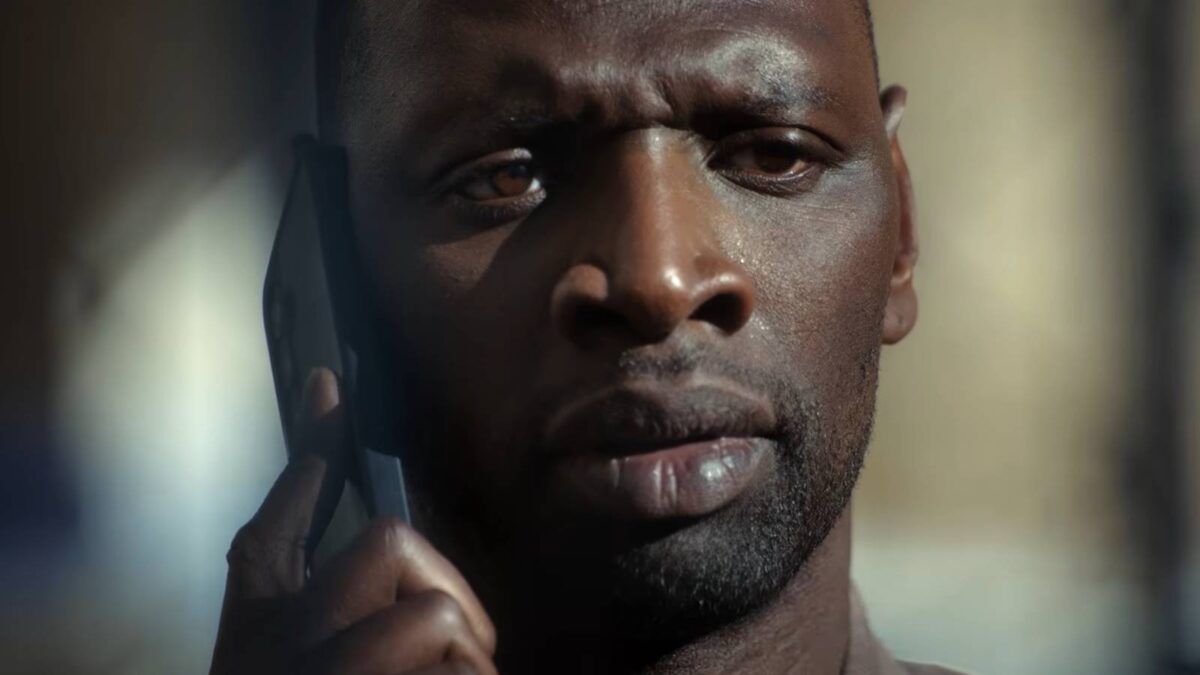
Netflix’s 10/10 Thriller Series Returns After 3 Year Absence With Explosive New Trailer
Over the last five years, Netflix has expanded heavily into non-English content, with international series taking an even bigger focus for the streaming giant. One of the biggest driving forces in that effort is the French thriller series Lupin, led…
Sep 15, 2026
Original ‘Yellowstone’ Dutton Favorite Officially Confirms ‘Marshals’ Return Interest
Yellowstone jump-started a generation-spanning story that has so far spawned four spin-offs that are all interconnected by the Dutton bloodline. While creator Taylor Sheridan has since branched outside that saga with Tulsa King, Landman, Mayor of Kingstown, The Madison, and…
Sep 14, 2026
Netflix Officially Cancels Its 2-Part Taylor Sheridan Replacement Western
Netflix Published Sep 12, 2026, 10:30 AM EDT Omar is an experienced editor and writer who sees life and storytelling as one and the same — there’s always a story to tell. He’s helped shape features, headlines, and coverage across movies,…
Sep 13, 2026