Dominik Moll’s Subdued Police Procedural Has A Sting In Its Tail [Cannes]
May 15, 2025
German-French film director Dominik Moll is no stranger to the art and pleasures of the police procedural. His previous film “The Night of the 12th” (2022) won well-deserved awards for Best Film and Best Director at the Césars, and confirmed that French cinema need not feel inferior to Hollywood when it comes to well-made, rhythmic crime dramas. Revolving around the murder of a young woman in a small alpine village, the film, however, was most striking for its departures from the genre formula: an uncanny atmosphere and the unexpected warmth that developed between its charismatic detectives were the real draws in this ambiguous mystery. This moment in Moll’s filmography should make any au fait viewer look quizzically at the dry realism and emotional monotone of “Case 137,” Moll’s Palme d’Or contender at this year’s Cannes Film Festival. Judging by the director’s track record, this matter-of-fact aesthetic may well be part of a more complex formal and narrative project than initially appears.
READ MORE: Cannes 2025 Most Anticipated Films: ‘Sentimental Value,’ ‘Eddington,’ ‘Die My Love’
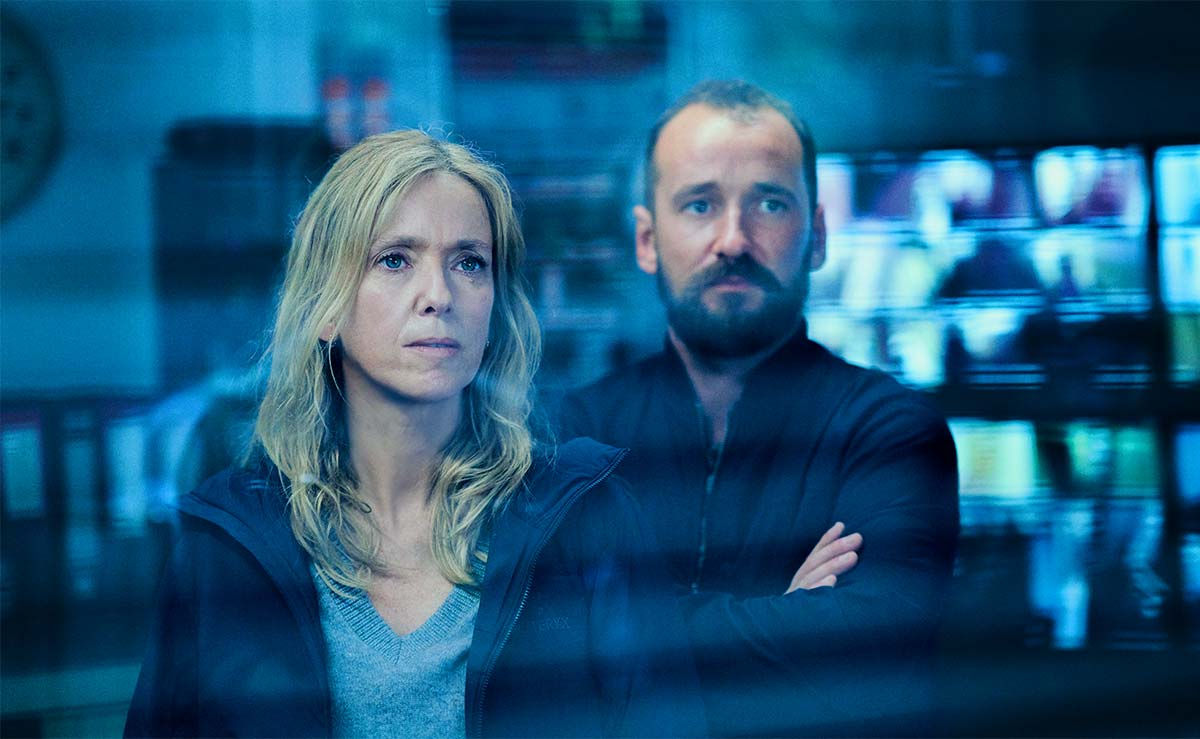
The majestic Léa Drucker (most familiar to English-speaking viewers for her leading role in Catherine Breillat’s “Last Summer”) plays Stéphanie, a detective for Internal Affairs investigating the excesses of the police during the yellow vests protests of 2018. Surprisingly, the character’s extreme poise at first belongs to a pattern of subdued behaviors across the entire film. Stéphanie’s teenage son Victor (Solàn Machado-Graner) is so reasonable and composed as almost to seem grown-up; even the mother of a young man victimised by officers remains exceptionally calm while recounting the traumatic events. It’s a self-consciously bare style of acting — familiar from arthouse cinema worldwide — that intentionally turns the viewer’s attention to the cold mechanisms and processes of the story, away from its human element.
Taking inspiration from several real cases for this fictional film, Moll and co-writer Gilles Marchand envision Stéphanie as an ideal detective. Focused on the case of Guillaume Girard (Côme Peronnet), a young man whose skull was broken by a Flash-Ball projectile fired by law enforcement, she is diligent while maintaining a healthy work-life balance. One scene where she gets home too late to enjoy her son’s cooked dinner feels like a tease, gesturing at clichéd police stories where the incident would signal an unhappy home life. Stéphanie’s industriousness neatly fits into the relatively well-oiled systems of law and order she deals with in her investigation, as she tracks down and interviews witnesses, requests surveillance footage, and tries to identify the officer responsible for the Flash-Ball shot. The dramatic tension does not lie in her resilience when faced with whatever obstacles that may appear in her way — there are none. On the contrary, “Case 137” indulges in the timeless cinematic delight of observing complex yet smooth processes, and professionals at work doing a good job.
But even as “Case 137” lets us enjoy seeing the wheels of justice turn the way they should, the spell is sporadically broken by the intrusion of inconvenient facts. Guillaume is far from being the only victim of protest pushback: at the office, Stéphanie hears of the cases piling up on her colleagues’ desks. Would stopping one bad cop be enough to repair the damage? And what about Guillaume, who will be dealing with neurological damage for the rest of his life? One evening, Stéphanie’s son asks her why some people say that “All Cops Are Bastards”; her response is a disbelieving shrug.
If these moments do not stick out as improbable lapses of judgment on the part of an otherwise intelligent woman, it’s because Moll sticks by Stéphanie’s side throughout “Case 137,” granting insight into her perspective. After all, she is doing something about the situation by going after the violent men who did this. Unperturbed by the intimidation of the cops who see her as an enemy, she is more than willing to spend as long as it takes going after all the culprits. Moreover, she comes from the same small town in the French North-East as the Girard family — how could she be their enemy?
It is only when she reaches the end of her investigation that Stéphanie comes face to face with a truth that, to some, was obvious from the start: the issue is systemic, and going after a few bad apples won’t change that. In tracing her journey towards this inevitable conclusion, Moll lays down, in no uncertain terms, how even well-intentioned police can turn rotten when a government decides to protect its violent elements. Although less familiar and accepted in France than it is in the United States, this is hardly an original perspective. But the director’s ingenuity lies in the telling. Hitting all the beats of the police procedural, Moll, with a simple but effective sleight of hand, turns the genre inside out, and points to a much bigger offscreen enemy: Emmanuel Macron, France’s still current president, whose policies Moll has publicly criticized. But while the film’s play with storytelling and perspective is extremely satisfying in purely cinematic terms, “Case 137” might be most keenly appreciated as a shrewd and incredibly involved way to tell cops not to take “ACAB” so personally. [B]
Follow along for all our coverage of the 2025 Cannes Film Festival, including previews, reviews, interviews, and more.
Publisher: Source link









Jon Bernthal Netflix Thriller Crowned One of 2026’s Biggest Streaming Shows
Jon Bernthal is on a serious hot streak right now, with the actor (alongside fellow MCU star Tom Holland) starring in not one, but two of the biggest box office hits of the year in Christopher Nolan's The Odyssey and…
Aug 7, 2026

Disney+ Officially Exploring Major Streaming Platform Change
With Toy Story 5 making big bucks at the box office and The Devil Wears Prada 2 crushing the streaming numbers, Disney is poised to keep the momentum going. The media giant has been cutting hundreds of jobs in addition…
Aug 6, 2026

‘Baywatch’ Reboot Officially Confirms Streaming Release Details
When Baywatch signed off in 2001, it had already spent the better part of a decade as the most-watched show on the planet, airing in more than 200 countries and reaching over a billion viewers a week at its peak.…
Aug 5, 2026

Origins’ Sets Return Date With Mark Harmon Getting a Season-Long Arc
Mark Harmon played special agent Leroy Jethro Gibbs for 18 seasons of NCIS before leaving in Season 19. The original show has soldiered on without him — it will soon be back for its 24th season — but the franchise…
Aug 4, 2026