Impossible Series Has Had Great Villains. Gabriel Was Never One of Them
May 29, 2025
Mission: Impossible—The Final Reckoning attempts to live up to its name in more ways than one, delivering one of the biggest stunts in the franchise while also giving an ending to Tom Cruise’s superspy Ethan Hunt. By most accounts, it succeeds: there’s a big emotional moment, there are plenty of callbacks to previous movies in the Mission: Impossible franchise, and there is an ending—though how much of an ending it really is will be up for grabs, given that it’s one of Paramount Pictures’ most successful movies and Cruise seems to want to actually keep making movies until he keels over. But there’s one area where Mission: Impossible—The Final Reckoning falls woefully short of its predecessors, and that’s with its villain, Gabriel (played by Esai Morales). So what exactly makes Gabriel pale in comparison to the other foes Ethan’s fought throughout the Mission: Impossible saga?
Gabriel Doesn’t Have the Same Menace or Personal Angle That Other ‘Mission: Impossible’ Villains Have
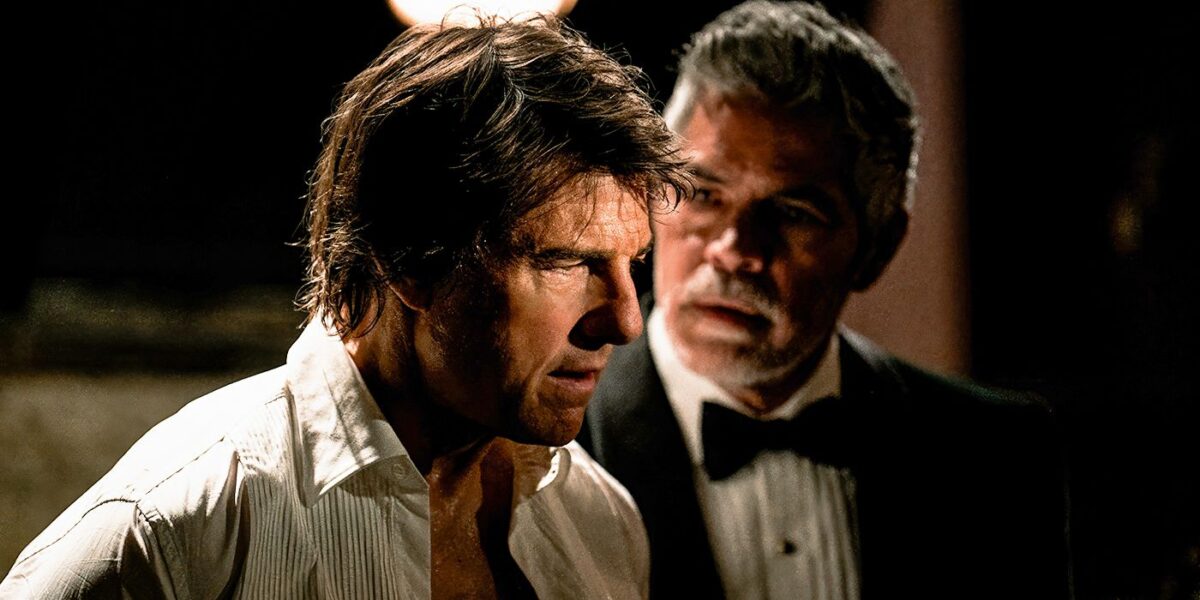
When Gabriel first appears in Mission: Impossible—Dead Reckoning, he serves the Entity, a growing artificial intelligence that is slowly plotting to throw the world into nuclear war. What’s even more chilling is that he’s a figure from Ethan’s past; flashbacks reveal that Gabriel killed someone close to Ethan, eventually leading him to join the Impossible Missions Force. This was a big deal, since very little about Ethan’s past had been revealed. It was also the perfect time to do so, since Mission: Impossible: Dead Reckoning and Mission: Impossible—The Final Reckoning were touted as the end of the Mission: Impossible saga, or at least the end of the story Tom Cruise and Christopher McQuarrie crafted over four films. But this backstory is never expanded upon, which is all the more frustrating because it essentially makes Gabriel a cipher. How did he come to serve the Entity? What’s the deal between him and Ethan? Leaving those scenes on the cutting room floor robs the audience of a potentially compelling antagonist.
Related
The 10 Best Tom Cruise Action Movies, Ranked
Is there a stunt he won’t do?
Gabriel’s lack of a personal motive means that he doesn’t hold a candle to previous villains from the Mission: Impossible franchise. In Mission: Impossible III, the sadistic arms dealer Owen Davian (Phillip Seymour Hoffman) kidnapped Ethan’s wife Julia (Michelle Monaghan) and threatened to kill her until Ethan gave him the device known as the Rabbit’s Foot. Mission: Impossible—Ghost Protocol took a surprise turn with the lovely yet lethal Sabine Moreau (Léa Seydoux); it wasn’t Ethan who had an axe to grind with her, but his teammate Jane Carter (Paula Patton)—especially since Moreau killed her lover Trevor Hanaway (Josh Holloway). But the character who should have provided the template for Gabriel is Solomon Lane (Sean Harris), the rogue IMF agent who formed the terrorist organization known as the Syndicate. Lane proved to be a major threat in Mission: Impossible—Rogue Nation, while Mission: Impossible—Fallout revealed that the Syndicate evolved into a doomsday cult. If The Final Reckoning had explored Gabriel and Ethan’s background, it could have made him a truly compelling antagonist.
Between ‘Mission: Impossible–Dead Reckoning’ and ‘Mission: Impossible–The Final Reckoning,’ Gabriel Receives a Downgrade
Image via Paramount Pictures
Even if Gabriel wasn’t as deep as other Mission: Impossible foes, the fact that he could match Ethan in physical feats was impressive. His single-minded dedication to the Entity also made him terrifying, since there was no one he wouldn’t kill in service of the algorithm. Mission: Impossible—The Final Reckoning strips Gabriel of this menace, turning him into a villain who stops to gloat at every chance. Even worse, he pulls off the biggest villain cliche in the opening of The Final Reckoning, where he explains everything that led to the Entity’s creation. It begs the question: what did Christopher McQuarrie and co-writer Erik Jendresen plan to do with Gabriel? In The Final Reckoning, he’s failed the Entity, meaning that he’s for all intents and purposes not the big bad anymore. In fact, Gabriel pales in comparison to the way the Entity manipulates the world into fighting each other, and it would have made much more sense if the Entity—or rather, the cult that follows its every word. To paraphrase the Joker in The Dark Knight, Ethan Hunt deserved a better class of villain for his final mission.
Publisher: Source link





Rebecca Ferguson’s Near-Perfect Sci-Fi Thriller Is Officially a 600-Day Streaming Smash Hit
While it was the Mission: Impossible franchise that put Rebecca Ferguson on everyone's radar, it was her appearance as Rose the Hat in Doctor Sleep that cemented her as a superstar. It led to movies like Dune, Netflix's A House…
Oct 25, 2026
‘The Gentlemen’ Loses 2 Original Stars, Reunites ‘Lord of the Rings’ Icons in Big Season 3 Shake-Up
Guy Ritchie's signature blend of aristocratic elegance and gritty underworld chaos has officially solidified its place as a Netflix powerhouse. Originally launched as a television spin-off of his hit 2019 feature film, The Gentlemen captivated global audiences across its first…
Oct 24, 2026
Taylor Sheridan’s ‘Yellowstone’ Sequel Hits Major Milestone Ahead of Streaming Return
The Yellowstone universe has grown so fast since the main series ended that it’s fair to wonder whether the franchise might be stretching itself a bit thin. That’s part of why Dutton Ranch came as something of a surprise. Beth…
Oct 23, 2026

Taylor Sheridan’s 5-Part Western Sensation Returns to Streaming as New Spin-Off Battles for #1 Spot
Taylor Sheridan's seminal five-season western is officially one of the biggest shows on streaming, once again, all while its latest spin-off fights for the #1 spot on the charts. Taylor Sheridan keeps going from success to success. After his hit…
Oct 22, 2026