John Ford’s Final Movie Was a Drastic Pivot From His Previous Work, But It Ranks Among His Best
Jun 10, 2025
Everything ends at some point, even the legendary career of John Ford as a Hollywood filmmaker. While Quentin Tarantino argues that directors lose their fastball when they reach a certain threshold, Ford was still making masterpieces in his swan song years, like The Man Who Shot Liberty Valance. His workflow may have gradually decreased as he reached his 60s and health declined, but Ford showed little signs of walking away from the camera, which makes his final film, 7 Women, all the more mythical. Although the text represents Ford reflecting on his six-decade career, both glorifying and deconstructing American history and its key figures, the 1966 film was not intended as a last dance, but the industry, on the eve of the takeover of New Hollywood, was not interested in Ford’s now seemingly retrograde vision according to his longtime collaborator, John Wayne. Ironically, Ford’s final film, a stark pivot from his filmography, is his darkest portrait of the world.
John Ford’s Late Period Run Reflected on His Filmography
Image via MGM
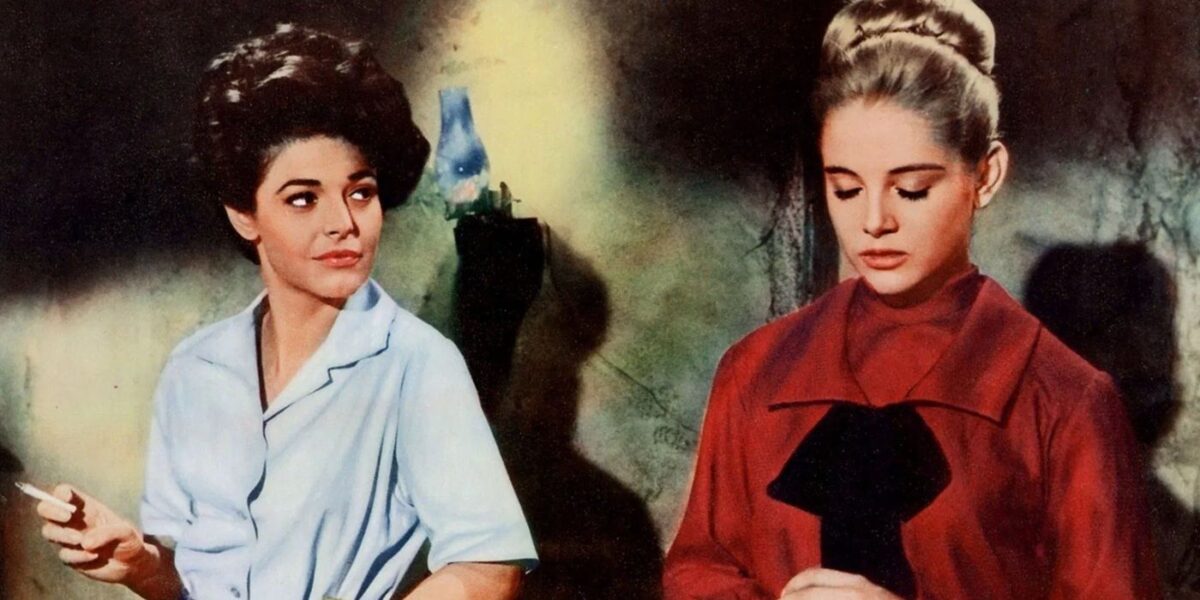
By the 1960s, with the country immersed in political and social upheaval, John Ford’s movies adapted to the changing times with a muted level of reconciliation apt for the reticent director. 1960’s Sergeant Rutledge was a groundbreaking Western following a Black commanding officer in the United States Cavalry tried by court-martial for rape and murder that confronted the Western’s troubled history with race and the distortion of truth. Ford’s greatest offense, the antagonistic treatment of Indigenous people, was put under light in Cheyenne Autumn, the director’s mea culpa for decades of misrepresentation of the screen. During this streak of cinematic reckoning, Ford gave another marginalized group of people in his oeuvre an opportunity to lead a sweeping picture: women. The story of missionary American women living in a secluded outpost educating children on Christianity on the China-Mongolia border during a 1935 conflict does not necessarily read like a Ford film, but it gradually reveals itself to be a culmination of the director’s work going back to the 1910s. In 7 Women, the titular missionaries must protect themselves from a Mongolian warlord, Tunga Khan (Mike Mazurki), and his vicious gang of warriors who who demand their sexual submission in exchange for freedom.
‘7 Women’ Is John Ford’s Bleak Sendoff to Cinema
The wild card of the bunch is Dr. Cartwright (Anne Bancroft), who is in high demand for the mission after the kids fall ill. However, she is a free-spirit, embodying the wave of female liberation that arose around the film’s release. She is an instantly memorable character as she curses, smokes, drinks alcohol, wears pants, and expresses skepticism towards faith. Released one year before The Graduate, the symbol of Hollywood’s countercultural movement, Anne Bancroft’s performance in 7 Women was unprecedented in a Ford movie. Given the strength and austerity of a sheriff or soldier played by John Wayne or Henry Fonda, she stirringly portrays the societal crossroads of women and the national temperament altogether. Dr. Cartwright, who rejects the puritanical sensibilities of her six colleagues, is also free from the idealism that Ford’s protagonists are either empowered or hindered by. To free the rest of the women from Khan’s predatory desires, she agrees to give herself over to him sexually.
Related
John Ford Brought Courtroom Drama to the Wild West in This Gripping, Groundbreaking Legal Thriller
It was payback for John Ford.
Although Ford has directed plenty of magnetic female performances by Maureen O’Hara and Jane Darwell, women are often off the side, adhering to stereotypical portraits of caretakers, affectionate mothers, and mythical damsels. 7 Women is in conflict with itself, as it presents a world where women run society while also enforcing strict social and behavioral norms that would appeal to their depiction in classic Westerns. Additionally, while their intentions are wholesome, 7 Women works as a cautionary tale about Western assimilation in foreign territory, a sobering reflection of Ford as the master of the Western. Ford biographer Joseph McBride, who put 7 Women on his Sight and Sound list in 2022, wrote that the director’s farewell is as “bleak an apocalyptic vision as the cinema has given us.” Remembered for his stately and elegiac visual paintings of the American frontier, Ford’s final note on the big screen is a resentful, inglorious send-off to characters deprived of any nobility. After poisoning both their drinks, Cartwright shouts, “So long, ya bastard!” as Tunga Khan consumes it and drops dead as she subsequently takes a sip, ending this depraved conflict once and for all. John Ford went out with a blaze of glory with 7 Women, which is both an anomaly and the apotheosis of his work. On the one hand, he never placed women at the center of his movies, nor did he ever make anything this disturbing, but on the other hand, the film looks at the disruption of the American homefront amid a never-ending military conflict. As his health declined, Ford saw the rotten core of the world. Although his previous characters faced uphill battles and fearsome enemies, Ford recognized in his last breath that nothing compares to the paranoia and looming danger that women face in the open country.
7 Women
Release Date
January 5, 1966
Runtime
87 minutes
Anne Bancroft
Dr. D.R. Cartwright
Margaret Leighton
Agatha Andrews
Publisher: Source link







Rebecca Ferguson’s Near-Perfect Sci-Fi Thriller Is Officially a 600-Day Streaming Smash Hit
While it was the Mission: Impossible franchise that put Rebecca Ferguson on everyone's radar, it was her appearance as Rose the Hat in Doctor Sleep that cemented her as a superstar. It led to movies like Dune, Netflix's A House…
Oct 25, 2026
‘The Gentlemen’ Loses 2 Original Stars, Reunites ‘Lord of the Rings’ Icons in Big Season 3 Shake-Up
Guy Ritchie's signature blend of aristocratic elegance and gritty underworld chaos has officially solidified its place as a Netflix powerhouse. Originally launched as a television spin-off of his hit 2019 feature film, The Gentlemen captivated global audiences across its first…
Oct 24, 2026
Taylor Sheridan’s ‘Yellowstone’ Sequel Hits Major Milestone Ahead of Streaming Return
The Yellowstone universe has grown so fast since the main series ended that it’s fair to wonder whether the franchise might be stretching itself a bit thin. That’s part of why Dutton Ranch came as something of a surprise. Beth…
Oct 23, 2026
Taylor Sheridan’s 5-Part Western Sensation Returns to Streaming as New Spin-Off Battles for #1 Spot
Taylor Sheridan's seminal five-season western is officially one of the biggest shows on streaming, once again, all while its latest spin-off fights for the #1 spot on the charts. Taylor Sheridan keeps going from success to success. After his hit…
Oct 22, 2026