
âDiving Into the Mess and Chaos of Cinema Doesnât Have to Exist Apart from Care and Ethicsâ: Gabrielle Brady on The Wolves Always Come at Night
Dec 1, 2025
The Wolves Always Come Out at Night
Gabrielle Brady’s The Wolves Always Come at Night follows Davaa and Zaya, a rural Mongolian couple with four young daughters whose dream to continue the traditional herding way of life they’d always known is upended by a cataclysmic storm; which forces them, like so many of their friends and neighbors before, to finally relocate to the outskirts of the urban capital Ulaanbaatar in search of work.
It’s a deceptively simple tale of loss — of both livelihood and identity — poignantly and cinematically captured by the talented Australian filmmaker’s lens. Yet what makes the docufiction drama, crafted with a primarily Mongolian team, so remarkable and powerful is that it’s actually co-scripted with its dedicated stars, who bravely recreate their real-life journey of displacement down to the emotional toll it takes on all.
Filmmaker caught up with Brady (2018’s Island of the Hungry Ghosts) not long after the TIFF 2024-premiering film was selected as Australia’s entry for the 2026 Oscars (Best International Feature Film and Best Documentary Feature).
Filmmaker: So how did you first meet Davaa and Zaya and then decide to collaborate with them?
Brady: Initially I collaborated with Dorjpagma Dugar, an experienced journalist from Ulaanbaatar, who had been meeting with herding families recently arrived from the countryside. One of the families she met was Davaa and Zaya and their children. I had a sense that they were wanting to share their experience; in that first meeting it became clear we were being interviewed as much as they were.
Davaa and Zaya had been searching for a way to tell their story and the forced migration of nomadic herders in Mongolia. In that first meeting Davaa shared that every night, before he fell asleep in the city, he could hear the sound of his horse from the countryside. He knew it couldn’t be real — and yet it felt impossibly vivid.
It struck me in that moment: his loss of homeland and animals had become a kind of physical presence, a haunting that had followed him. As a filmmaker I could already start to envision the story in sound and image.
Filmmaker: What was it like working with a primarily Mongolian team? Were there certain challenges you faced as an outsider filmmaker from the West?
Brady: I have known producer Ariunaa Tserenpil for many years. We first met in 2008, when I was living in Mongolia and working for the national broadcaster MNB. Over time we began having conversations about a possible collaboration — one that could bring together both outsider and insider perspectives.
Ariunaa is a prolific producer, and she started assembling an incredible team. Our first AD Erdene Enkhjargal had studied cinema in Russia and had a very rigorous training — which was similar to my own studies at the EICTV in Cuba — so we had a shared language for cinema and what we were setting out to do.
And collaborating with Dorjpagma was also an incredibly good fit for the project. Journalists make seriously good researchers! Language was a slight challenge at first, but as time went on we developed our own form of communication that went beyond words. By the end of filming we would just have to nod and the other would know what was meant by it.
Filmmaker: I was really struck by the heartfelt “performances” of Davaa and Zaya, but knowing that they’re not professional actors also worried me a bit. Even though they co-wrote the script with you, did you nevertheless take measures to ensure that recreating difficult scenes wouldn’t accidentally re-traumatize them?
Brady: I think the binary I was always struggling with was this idea that there’s only one way to make a film — that you’re either harming people for the sake of art, or being so protective that you completely sanitize the process. But what I discovered while making this film is that diving into the mess and chaos of cinema doesn’t have to exist apart from care and ethics.
I’ve found that the more collaborators are part of the creative process — and the more clearly we all understand what we’re setting out to do — the greater the sense of safety. And within that safety there’s actually more space for creative risk. We didn’t write a traditional script. Instead we had conversations each day about their experiences, and how we could express those in ways that felt truthful to them and could be translated into cinematic language.
I also worked with narrative therapist Poh Lin Lee (who I previously collaborated with on Island of the Hungry Ghosts) to explore non-extractive ways of approaching the filming. A big part of the decision to film in retrospect came from that process — it gave Davaa and Zaya some distance from their more painful experiences so they could re-engage with them in ways that felt safer.
Filmmaker: I’m also curious to hear what draws you to working in the hybrid space. What does the form allow you to do as a filmmaker that you otherwise couldn’t within the documentary or narrative realms?
Brady: For me, it really depends on the film and what it requires. With Wolves it was clear from the beginning that we didn’t want to film with a family at the exact moment they were losing their animals — one of the worst moments of their lives for many herders. So it became necessary to bring in the idea of filming in retrospect, filming after the event had taken place. This approach offered a bit of distance, allowing the protagonists to engage with difficult moments more openly.
Hybrid filmmaking for me has always been about context and cinematic approach. The context of the situation you’re working within often determines how hybrid elements can create a different kind of safety and engagement. Working with hybridity also allowed us to develop the film’s cinematic language in a more deliberate and nuanced way.
All films are a construction; I’m more interested in leaning into that construction — embracing the cinematic language — than shying away from it. In general, I’m also really drawn to the “in between” spaces.
Filmmaker: There seems to be a growing cinematic movement centered on the connection between animals, land and people — and the displacement of the latter from the former. (For instance, Tamara Kotevska’s The Tale of Silyan, which just premiered at TIFF, likewise explores this theme.) So what do you hope audiences — and perhaps policy-makers — will take away from this film?
Brady: I recently had a man in India approach me after watching the film, weeping so much that we had to sit with him for awhile. He told me the story of his two cows that he had been forced to sell, who kept revisiting him in the city where he now lived. He shared that whenever he told this story people laughed at him. But he was describing something profound — that being a herder without animals is like being a mother without a child.
I was deeply moved by his story; and yet another voice in my mind also understood that many people wouldn’t take it seriously. I think that paradox lies at the heart of this film. It reflects what is happening now in Mongolia — an ancient practice and connection, alive since the Bronze Age, is disappearing within decades. And yet somehow this is constantly trivialized and made to seem unimportant in these disquieting times. At its heart the film reminds us we will never forget our connection.
My hope is that people lean in, and listen closely.
Publisher: Source link



Netflix’s 10/10 Thriller Series Returns After 3 Year Absence With Explosive New Trailer
Over the last five years, Netflix has expanded heavily into non-English content, with international series taking an even bigger focus for the streaming giant. One of the biggest driving forces in that effort is the French thriller series Lupin, led…
Sep 15, 2026
Original ‘Yellowstone’ Dutton Favorite Officially Confirms ‘Marshals’ Return Interest
Yellowstone jump-started a generation-spanning story that has so far spawned four spin-offs that are all interconnected by the Dutton bloodline. While creator Taylor Sheridan has since branched outside that saga with Tulsa King, Landman, Mayor of Kingstown, The Madison, and…
Sep 14, 2026
Netflix Officially Cancels Its 2-Part Taylor Sheridan Replacement Western
Netflix Published Sep 12, 2026, 10:30 AM EDT Omar is an experienced editor and writer who sees life and storytelling as one and the same — there’s always a story to tell. He’s helped shape features, headlines, and coverage across movies,…
Sep 13, 2026
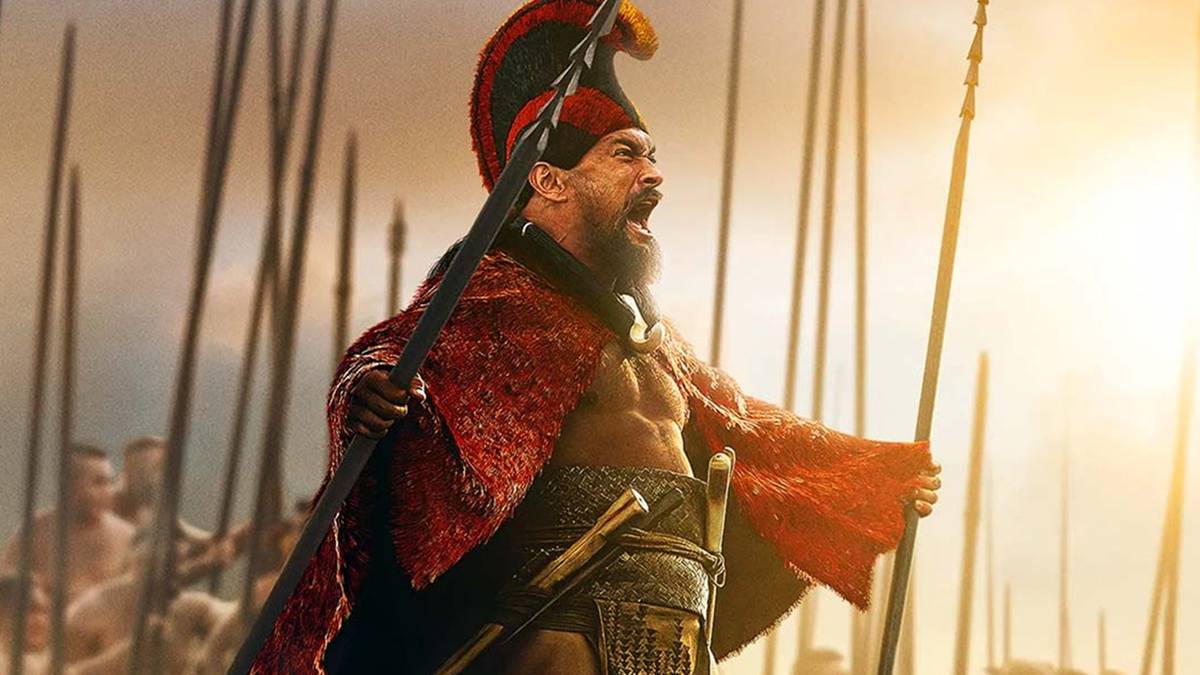
Jason Momoa’s Epic Historical Action Thriller Officially Getting New Release
Apple TV has established itself as a rising force in streaming entertainment. From Silo and Dark Matter to Pluribus and Ted Lasso, there is something for everyone, and not only that, but a ton of huge star power at the…
Sep 12, 2026