Moviemakers Predict the Future, 2025
Jan 21, 2026
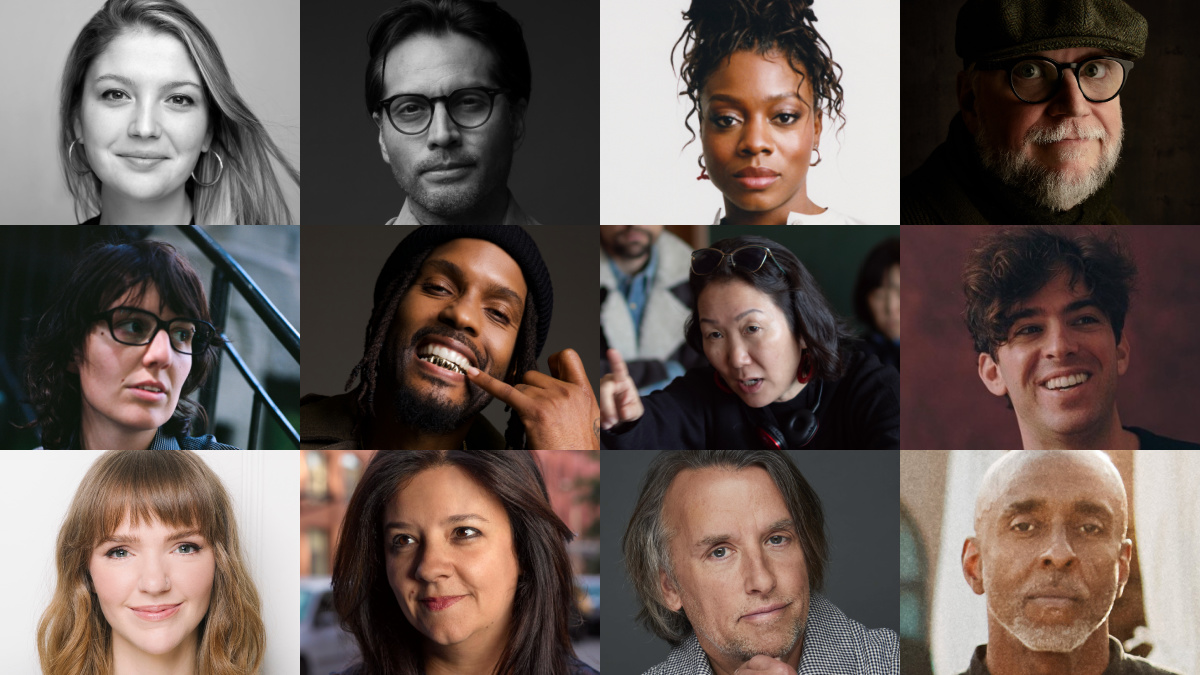
Continuing an annual tradition we started last year, we asked 12 moviemakers from a range of backgrounds and experience levels — including Guillermo del Toro, Richard Linklater, Nia DaCosta, Hikari, and more — to predict the future of film of film and life in general.
Among some of their predictions, or at least hopes: a resurgence of indie films, a renewed focus on storytelling, and more reverence for human experiences no AI can simulate.
We also asked them to please focus their predictions on their expectations for what will happen within their lifetimes. Here’s what they told us.—M.M.
CELIA ANISKOVICH
Aniskovich is a New York–based documentary filmmaker and the founder and editor-in-chief of Switchboard Magazine, a digital publication that produces rich, character-driven long-form nonfiction narratives and also acquires short films. Together, these works form a diverse slate of original content designed to serve as IP for adaptation into television and film properties.
Predictions for film: I believe the future of film will be more democratized, with artists reclaiming ownership over their work and the value it creates. At Switchboard, we’ve built a 50–50 profit-share model because we want to prove that empowering creators is not only possible, but essential. I see filmmaking becoming less about top-down control from studios and more about collaborative, community-driven teams telling stories that matter to them. The tone of those stories will shift, too. From what we’ve seen at Switchboard, narratives of hope, joy, and resilience are outperforming darker ones nearly tenfold — people crave connection and optimism.
Predictions for life: If the last few years have taught us anything, it’s that certainty is fragile. But I believe that in my lifetime, what will endure — and maybe even strengthen — is our hunger for connection through story. Technology will accelerate, yes, and change how we consume and communicate, but the need to make meaning out of chaos, to understand one another through narrative, will only deepen. I suspect the future of life will be marked by more fragmentation in how we live, but also more weaving together of experiences through the way we share them. At its best, that can make us feel less alone, and remind us that endurance, resilience, and hope are not abstract ideas, but lived stories.
JESUS BELTRAN
Beltran is a Stanford-trained mechanical engineer with over 20 years in tech, including more than a decade at Apple, and holds more than 15 design patents. In parallel, he has built a filmmaking career with shorts such as “The Grass Grows Green” and “Motos,” which screened at Sundance, SXSW, Indy Shorts, and Cinequest. He is now developing his debut feature, There’s No Place, a character-driven road trip film about family, ambition and identity, set against the backdrop of Silicon Valley.
Predictions for film: AI will not be stopped, but viewers will demand clarity on how much AI was used in films, leading to the emergence of a classification system for film AI use. On one end of the spectrum will be fully AI created films (agentic content) based off a viewer’s past likes. The other end is what we now know as auteur film. Everything in between will be hybrid content where a human chooses to substitute traditional filmmaking roles with AI. More films, more junk, and more diversity in storytelling will emerge — but so will an increased appreciation for AI-free films. Purely human films will be rare and auteurs who create them will be venerated more than they are today.
Predictions for life: Three major global issues are converging and creating chaos and opportunity for humans: climate crisis, the rise of artificial intelligence and a swing back towards authoritarianism. The wholesale control of energy and data are currently in the hands of a select elite under corporate veils and the overreach and abuses that are stemming from that will be countered by independent journalists, artists, engineers, scientists and hackers using decentralized guerrilla tactics for production and distribution of goods, information and stories. It’s gonna be interesting. Three recommendations: read more; support, encourage and participate in civilized debate; and get to know your neighbors.
NIA DACOSTA
Credit: Photo by Meg Young
DaCosta is the writer-director of the feature films Little Woods, Candyman, The Marvels, and this year’s Hedda. Her latest film, 28 Years Later: The Bone Temple, arrives in January. Her credits also include the shorts “The Black Girl Dies Last,” and her TV credits include episodes of Top Boy. You can read more about her life and work in this story.
Predictions for film:I think one day we will get back to the mid-budget drama in theaters. I have a hope that we will have movie stars again. Robert Redford was an amazing human being and someone whom I met because of my involvement in the Sundance Institute. He was an incredible man, but he was also a movie star. I think it’s something special.
Predictions for life:Oh my gosh. I think James Cameron will make two more Avatar films. Honestly, I think we will get through this very difficult time that we’re all in. I think the moral arc of the universe is chaos, but I do think we’ve come back from really terrible, scary times before, and I think we will again.
GUILLERMO DEL TORO
Photo by Frank Ockenfels/Netflix © 2025.
Guillero del Toro, whose greatest prediction about the future appears in our new cover story, is the director of the new film Frankenstein and such films as Cronos, The Devil’s Backbone, Pan’s Labyrinth, Pacific Rim, and Crimson Peak. He won Oscars for Best Director and Best Motion Picture for 2017’s The Shape of Water and Best Animated Feature Film for 2022’s Pinocchio.
Predictions for film and life: The great wisdom of the yin and the yang is that they take turns, unfortunately or fortunately. Nothing is forever, not the evil, not the good. The very nature of that cycle is that it will never stay put. The fight never ends. And the reason for that is you have to be conscious forever. You never say, OK, now I can not think or feel. Feeling is very important.
You talk to somebody in the 1860s and you tell them that it takes two hours to get from Italy to London, and they’ll go, “No, it doesn’t.” It’s impossible to comprehend. Is technology a tool, or is it an evolutionary step? I don’t know. I don’t know, and I don’t pretend to know.
AVALON FAST
Credit: Photo by Eily Sprungman
Avalon Fast is a filmmaker from Vancouver Island, British Columbia who makes “girl horror” — stories focused on the eerie horrors of growing up, with female influence. Her debut feature film Honeycomb premiered at Slamdance 2022 and her new feature Camp premiered at Fantastic Fest and won Best Picture in the Next Wave competition. She has acted in the trans epic Castration Movie and the witchy-themed The Serpent’s Skin.
Predictions for film: There will be, as there already is, a hard line dividing artists who are filmmakers from filmmakers who work in the industry. Where in the past it seems these worlds had a way of combining, I see this becoming less and less common, as the work in film in the industry becomes more and more doomy.
We have this new wave of DIY filmmakers actually surpassing studio films in terms of rating and awareness: I’m talking Louise Weards’ Castration Movie being one of the top 10 highest-rated movies of the year. That’s film revolution. That movie is shot on a Hi8 camera in people’s apartments in Vancouver, for nothing.
Another thing: movie watching is becoming more and more culty. You have to be in and understanding to know what’s cool. News outlets aren’t going to tell you, the box office won’t tell you. In the years to come, filmmaking (the artist’s way) will become increasingly difficult. There will be no money for us, and this will do two things: Weed whack the artists who are unable to make what they want without funding, and bring the people who will do it regardless closer than ever. In a way I look forward to the changes, the depression of filmmaking. For me it has always been an artist’s game and I know how to do what I do for nothing at all.
Predictions for life: We are totally doomed, but in a similar way to film, with a great potential for full-course revolution.
COURTNEY GLAUDÉ
Credit: Photo by Drea Nicole
Glaudé is a Houston-born, award-winning filmmaker known for bold, emotionally charged storytelling. He first gained attention with The Reading, starring Oscar-winner Mo’Nique, and is a trusted creative voice at Tyler Perry Studios, where he serves as Executive Creator of Scripted and Unscripted. Currently, he has directed episodes of Zatima and Ruthless and is set to helm his first feature film. His short, “Old Gray Mare,” made waves on the 2025 festival circuit, playing at the American Black Film Festival, Martha’s Vineyard African American Film Festival and BronzeLens.
Predictions for film: Movies are getting ready to get back to storytelling. The massive budget films aren’t making the money that they once were. Now, creatives must get really creative with the story that they’re telling, because production studios aren’t willing to put up the money for the big shiny movies. And so soon, we’ll see a separation between true story tellers and clickbait movies.
Predictions for life: Truly, I don’t know. I’m enjoying this journey God has me on, and my prediction is that all things that He has planned for me, I will get.
HIKARI
Photo by James Lisle/Searchlight Pictures – Credit: James Lisle/Searchlight Pictures.
Hikari is a Japanese American writer, director, and producer. Her latest feature Rental Family, starring Oscar winner Brendan Fraser, follows her acclaimed debut, 37 Seconds, which premiered at Berlinale and was acquired by Netflix. Her TV credits include Beef and Tokyo Vice. Hikari is currently developing new projects, including an original series with Annapurna titled Made in Utah.
Predictions for film: This is a very hard question so I’m going to begin with this: 20 years ago, we did not expect YouTube to be where it is now. Every minute, there are content creators who upload original videos with millions of viewers watching them for free. Younger generations and people in some parts of the world primarily use their cell phones as a device to watch films because of convenience and economic reasons.
In order to survive we must work alongside mass media and creators by offering a singular experience. It’s important for us as filmmakers to create original works with distinct voices that include “remakes” or “based-on” stories, and for the studios to support the artists’ perspectives.
Being in a theater and watching a film with an audience is a communal experience that you just cannot get at home. If you can find a way to connect with an audience in a personal way then I think we’ll always have hope.
JONAH FEINGOLD
Jonah Feingold is a New York-based filmmaker known for modern romantic comedies and digital storytelling. A graduate of USC’s School of Cinematic Arts, he wrote, directed, and stars in the new 31 Candles. His debut feature, Dating & New York, premiered at Tribeca in 2021. He also directed At Midnight (Paramount+) and Exmas (Amazon). Under his Romantical banner, his videos have earned over 100 million views. He recently wrapped Busboys, starring David Spade and Theo Von.
Predictions for film: With the increasing democratization of content creation—where it’s never been easier to make and share films—our landscape as filmmakers is shifting dramatically. There’s going to be a lot more competition for audience attention, which means our role will increasingly be about strengthening that parasocial relationship with our viewers. It’s not just about getting people to watch what we create; it’s about making them genuinely care and engage on a deeper level.
The beauty of this shift is that it also empowers us as creators. We get to own our work more fully, control how it reaches our audience, and go directly to the people who love what we do. With so much content out there, the tools we put in place will help us reach our core audience more powerfully than ever.
GG HAWKINS
GG Hawkins is a writer-director whose work explores the female experience and millennial ennui. Her debut feature, I Really Love My Husband, premiered at SXSW 2025 to critical acclaim, screened theatrically, and is now streaming. GG also hosts the No Film School podcast and writes the newsletter Making It.
Predictions for film: We’re at the start of a new golden age of indie films — movies made entirely outside the studio system. I think we’ll see a flood of microbudgets bringing in unique voices. The filmmakers who embrace their individuality, who take real risks, will endure. I think audiences will come through many new and different channels, so creators will need to constantly cultivate their community. My hope is that these changes will usher in a new era of business models in filmmaking, one that provides a livable wage for all members of the filmmaking community.
Predictions for life: I hope there will be a reckoning, a push towards empathy in a world where we so easily jump to black and white thinking. Perhaps this will lead to a great slowing down, a rejection of the way we are using technology, social media, which would be a welcome reaction to the current moment. I worry we’re still a ways off from that, but I’m optimistic. I recently had the chance to screen my film for — and lead a discussion with — some college students, and I left feeling invigorated and hopeful about the future.
STEPHANIE LAING
Stephanie Laing is an Emmy-winning director, writer, and producer (Palm Royale, Your Friends and Neighbors, Family Squares). The Sundance alumni’s third feature film, Tow, tells the true story of Amanda Ogle (Rose Byrne), an unhoused Seattle woman who fought her way out of tow-company hell to reclaim her car and life after receiving a $21,634 towing bill. Tow also stars Octavia Spencer, Demi Lovato, Ariana DeBose, and Dominic Sessa.
Predictions for film: I think we’re seeing a resurgence of indie films and that will continue to grow. The Criterion Channel is more and more popular with younger audiences seeking inspiration and unique storytelling. Films like Sinners and Weapons will always shine through while other films like Splitsville will continue to find their people. I think more films that have something to say about the world we live and the injustices will continue to be popular as well as uniquely told romantic comedies because at the end of the day, everyone is seeking connection. Films can make a difference and art will save us.
Predictions for life: I hope we look for more in-person connections and that we become less dependent on doom scrolling. That as people, we seek out the truth in news stories and don’t become immune to gaslighting. I think most people want to find a common ground and that hopefully kindness prevails. Storytelling connects us as humans, especially if we have open hearts and open minds.
RICHARD LINKLATER
Photo by Hugues Lawson-Body for Netflix
Richard Linklater helped kick off an indie film explosion with 1990’s Slacker, and went on to make such classic films as Dazed and Confused, the Before trilogy, and Boyhood, a 2015 Best Picture nominee. One of the most consistent and prolific filmmakers of the last 35 years, he has also made the hit comedy School of Rock and the modern noir-romance Hit Man. He has two new films this fall, Blue Moon and Nouvelle Vague, and recently shared with us his 15 Rules for MovieMaking.
Predictions for life and film: I find comfort in knowing people have been asking these questions for millennia. We want to feel like we’re in revolutionary times, and things are changing so quickly and all that. And you know, they might be. This could be the big one, but I tend to go back to, “ehh, life’s been kind of the same.” On one level, there’s a sameness to the human mind and the world that is unchanging. But we’ve never met a match like what’s going on now.
It’s interesting. I want to see AI as a friend, as a collaborator of some kind, but we’ll see. For 60 years of cinema, if you go back and read the reviews and film thinking, it’s always been under threat. Film’s always been such a fascinating combo of technology, art, and commerce, so it’s kind of vulnerable to disruptions, and people have always felt vulnerable to losing industries and jobs and everything, for good reason. You kind of have to have an antenna up for warnings, and there’s always plenty of those.
Maybe speaking from a place of privilege by birth: I came along at a time when the studios were a little more open. I got Dazed and Confused made at a studio, which, of course, they wouldn’t do today. If you’re getting out of Sundance now, you don’t really have those opportunities. So I acknowledge that. And, you know, I was established. I’m very lucky.
If you work for nothing, and you can talk other people into things and have a frugal idea, and maybe it’s good, you can still kind of get things done.
I haven’t used AI, but in film, there’s no purity. We really can’t think in terms of that. Filmmakers use visual effects, digital visual effects. Everything’s a construct and an artist will use whatever is in front of them to perfect what they’re making, and should be allowed to. I think it’s the wrong time and place for purity tests. It’s really just: Does it work artistically, and can you do it ethically? Can everybody be treated well and compensated? Those are concerns. But as far as art goes, hell yeah. Use whatever you got. I wouldn’t apologize for anything that I felt made my film better.
MALIK HASSAN SAYEED
Credit: Photo by Emilio Madrid
Malik Hassan Sayeed is a producer and cinematographer who shot the new Luca Guadagnino film After the Hunt, about which you can read more here, and Guadagnino’s upcoming Artificial, about OpenAI CEO Sam Altman. His past credits include Clockers, Girl 6, He Got Game and Belly. He has also shot videos for Nas, 2Pac, Jay-Z, Lauryn Hil and Beyoncé.
Predictions for life and film: We just did a movie about AI and OpenAI, and everybody’s scared of AI. And I’m not necessarily scared of AI, per se, because I think I believe in humans. I think humans are the greatest creation that has ever existed. So I don’t think a computer is going to beat us, because we’re just greater.
Actually the one thing that makes me nervous is people using AI to hide behind, which is what people do. They hide behind nation states. They hide behind corporations, and now they get to hide behind AI. So I’m more concerned about that.
Photos provided by the filmmakers.
Publisher: Source link



‘Reacher’s Action Thriller Spin-Off Gets Major Season 2 Update Following Premiere
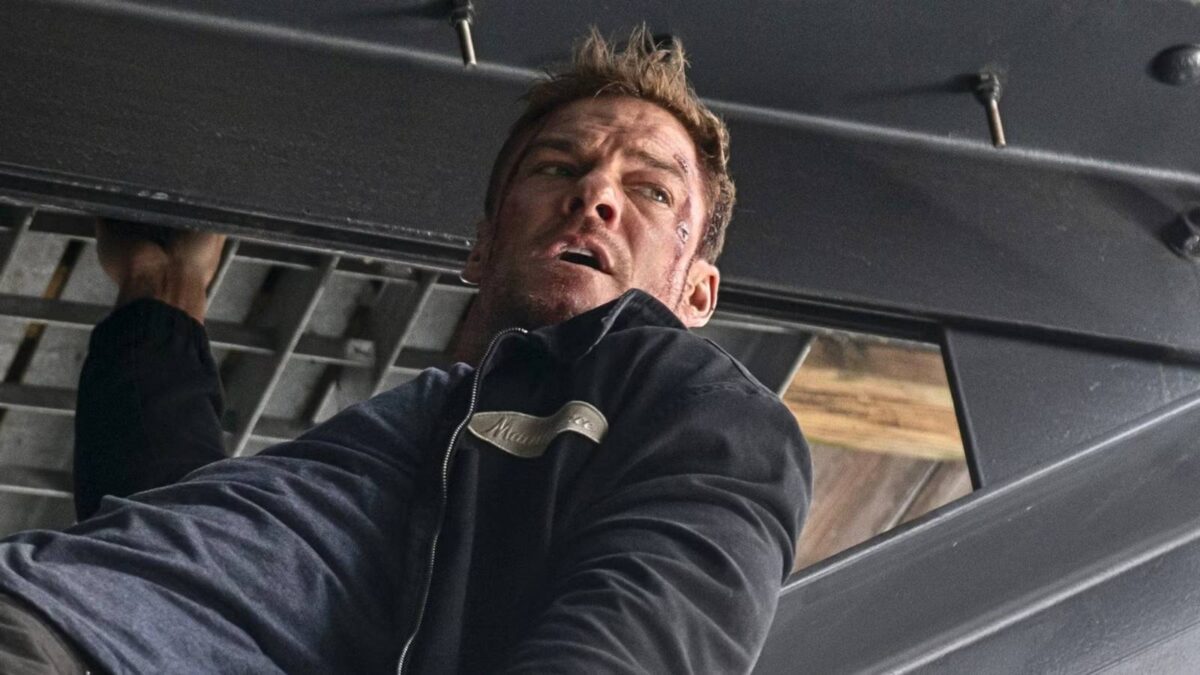
For four seasons, Reacher has been one of the biggest TV shows on Prime Video. Based on the novels by Lee Child, the series follows former military police officer Jack Reacher (Alan Ritchson) as he wanders from place to place,…
Sep 18, 2026
One of CBS’ Longest-Running & Highest Rated TV Shows Is Coming To End After 30 Years
Along with countless scripted dramas, comedies, and action shows, CBS is well known for its impressive run of unscripted programs over the last 50 years. More recent years have included major competition shows like Survivor and The Amazing Race, along…
Sep 17, 2026
Prime Video Officially Launches New Deal That Changes the Streaming Game Forever
It seems like streamers raise their prices every day. At the end of August, Apple TV raised the subscription service price by $2, bringing it to $14.99 a month. Netflix, Disney+, HBO Max, Paramount+, and Peacock have all raised prices…
Sep 16, 2026
Netflix’s 10/10 Thriller Series Returns After 3 Year Absence With Explosive New Trailer
Over the last five years, Netflix has expanded heavily into non-English content, with international series taking an even bigger focus for the streaming giant. One of the biggest driving forces in that effort is the French thriller series Lupin, led…
Sep 15, 2026