Sara Dosa on Time and WaterFilmmaker Magazine
Feb 2, 2026
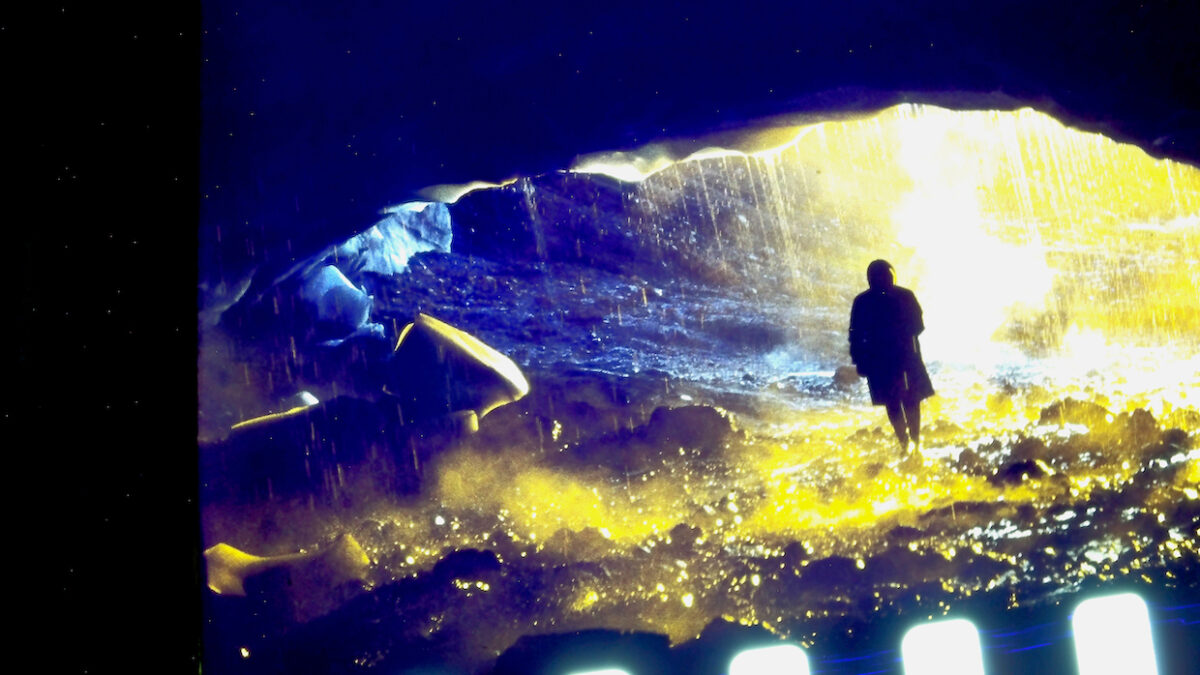
A splendid yet elegiac homage to dying, receding, failing, yet magnificent glaciers, Sara Dosa’s Time and Water, a documentary produced with National Geographic and Sandbox Films, is awe-inspiring precisely because it makes you feel helpless to move. That’s what awe is, after all.The film makes use of a treasure trove of archival materials, some of it supplied by Icelandic writer Andri Snær Magnason and his family, who lived a lot of their lives recording them and raising posterity alongside the glaciers. Standing still with these images and sounds (in front of the largest screen only, please) and catching snippets of this rocking family, becomes the audience’s duty. To be enmeshed in the affect of things fading—of Magnason’s beloved grandparents’ twentieth-century lives of love, and the twenty-plus centuries of their forever-neighbors, the glaciers, one which is nicknamed “Ok”—is to experience the simple joy and midday horror of ice becoming water, folk songs tearing, and rocks resurfacing.In a lively conversation a day before Dosa left for the film’s world premiere at Sundance—where just a few years ago, audiences fell in love with the volcanologist couple at the heart of her film Fire of Love—she tells me why she found those rocks so heartbreaking. When a filmmaker and her collaborators surface after months of being immersed in our planet’s few theaters of timelessness, and what they are broken by is the departure of certain rocks, we glimpse how the miniature dances with the momentous. As Magnason stoically narrates over these shifted archives, he redraws the timelines of his family’s generations. A certain fire meets uncertain ice. The rocks give way. Yet per the title of Icelandic director Hlynur Pálmason’s recent film, kin to Dosa’s, it’s the love that remains.
Filmmaker: What is the connecting line between Fire of Love and Time and Water, or rather how did you get from the former to the latter?
Dosa: I think there’s the thematic ways that perhaps I got there, and then there’s more the specific story. Maybe I’ll start with the specific story, as that’s more grounding. Before Fire of Love, I made a film called The Seer and the Unseen, with many of the same people who I made Fire of Love with and this film with specifically, [including] editor Erin Casper, producers Shane Boris and Elijah Stevens, who at that time was an associate producer, as well as Heather Millard, our co-producer. That film was set in Iceland and it was about the belief in the invisible, both invisible elves and the invisible hand of the free market, so to speak, told through the story of a woman who was in communication with nature spirits. On that film, Andri was a consultant and is quoted in the film. I was very familiar with his work and deeply inspired by his writing, how he saw not just storytelling, but specifically storytelling around nature and the climate crisis.
That project ended and we were looking for our next film. That was around the same time of the funeral of Okjökull, the glacier in Time and Water. Andri had published this very moving article entitled, “How Do You Say Goodbye to a Glacier?” And I wrote to him just saying, “I’m looking for my next project and would you want to collaborate on some sort of film that’s an elegy to glaciers?” Then COVID hit and the world turned and we couldn’t go into production at all. During COVID my team and I decided to pivot to archival storytelling, to do what became Fire of Love.
After Fire of Love came out, Andri got back in touch saying, “I saw Fire of Love. I saw the archival collage that you made with volcanoes. Turns out my grandparents have tons of glacier archival material and I have my own archives. What do you think about collaborating on something that is like perhaps like a sibling or a cousin to Fire of Love, but instead about glaciers?” And I just got so excited because this was another way to get to work with archive, which I’ve just fallen in love with as a storytelling style. It was an opportunity to tell a story about the sentience of nature. In this case, glaciers, which to some might seem like the opposite of volcanoes, but there’s such a kinship there, in terms of just how powerful, how alive, how critical they are to the functioning of our planet. So I got really excited by that opportunity. It was largely the same team from Fire of Love that kind of came into the next one.
Filmmaker: I read that your training is in anthropology and sociology. One idea that I love from those fields is that of “encounter.” Anthropologists and sociologists use it to talk about encountering a subject, a phenomenon, a ritual, or what have you. I don’t know if that term resonates, but if it does, what or whom did you encounter in this work and what emotional impact did that have on you as a filmmaker?
Dosa: Wow, that’s a question I’ll be thinking a lot about. For me, in any kind of process of documentary, I feel like interacting with the subjects of the film as active participants with agency is of the utmost importance.
I should say that we were working with many different sets of materials. We had many layers of archival materials. Then we shot our own layer of original footage, both on an Arri Mini and on a Bolex, to kind of speak to these different temporalities. The Bolex footage was never meant to replace any archives, it was meant as a gesture towards prompting the experience of memory and myth. Whereas the Arri was meant to really establish this feel of the present tense, the moment where glaciers are still alive, still very powerful with their own kind of intelligence and life force.
I think for us being on glaciers, in the moments of production, was just such a profound experience of understanding the true life in an abiotic landscape, if that makes sense. Specifically through sound, we could understand just how glacier systems are so dynamic and alive and always changing, how deeply they were connected to the landscapes of not just Iceland, but our entire planet. By understanding that and feeling it viscerally in our own bodies and in our own limited human perspectives shaped by our own cultural, political and economic realities, we could just sense our own kind of human precarity, At the same time, there is this devastating realization of how short and fleeting our own lives are. Now the fact that these glaciers that in Iceland are thousands of years old, and specifically the one that we were on is a little over a thousand years old, its lifespan is now collapsing to be the span of our human lives. So that sense of being in this moment where something that seems so vast compared to us is now collapsing. I don’t mean to necessarily compare humans and glaciers, but I do find that we’re all kin in a way. But that radical shift in time scale and lifespan mediated through our own human encounter was quite a profound experience.
Filmmaker: There is a literal sense of flow throughout the film, one that is both affective and conceptual. We feel it through photography, imagery, edit, and sound. I was curious how you blended your live principal photography with archives of the glaciers and family to create a sense of flow?
Dosa: First and foremost, I worked with the most amazing team. I see the film as a collage film, but it was also a collage process of so many different people putting their own perspectives, talents and artistry into the film. When we were in production, I worked with an extraordinary director of photography, Pablo Alvarez-Mesa, who is not just exceptionally skilled in digital formats, but also with film formats. Pablo has this incredible way of finding presence through his imagery because he himself connects deeply with nature. So it was so meaningful to be atop these mountains and ice masses with Pablo, to have a moment to settle and listen before shooting, to find that sense of flow in the glaciers, in the waterfalls, in the air and everything around us. So I feel like Pablo’s own kind of channeling of the rhythms of nature really are reflected in the photography that he shot. So that was key to us and showing, again, just how powerful the life force of glaciers and their connected water systems are.
I had three incredible editors. At first, Erin Casper and Jocelyne Chaput, and then Mark Harrison came on at the end. All three of them are exceptionally talented at finding rhythms and thinking about time. This is a film about time, and it’s a film about water. So we had to find the right kind of balance of the edit in the entire film, but also scene by scene, and it was exceptionally challenging because we were working with such a vast archive, just hundreds and hundreds of hours of material. Erin and Jocelyne and Mark are so skilled at finding the most delicate associations between images. That was key because I was always hoping that the film would feel like subjective memory, for all kinds of reasons. The main reason is because I was so hoping to juxtapose the subjective experience of human memory with the idea of glaciers as an archive of planetary memory. If we can feel the power and meaning of human memory and then see it tragically be lost, we can map that human experience onto a glacier to also see the planetary memory stored inside the glacier and then the devastation of seeing that be lost as well. All to say memory was so key, but Erin and Jocelyne, they were so skilled at creating that actual feel of memory through the associative work that they did in a way that I think really worked with flow.
Then I should say we had an incredible composer, Dan Deacon, whose music was so full of vitality and energy, nuance and a sense of play that really helped to create these waterscapes within. Lastly, our sound designer, Björn Viktorsson, was with us in the field as well. He was also one of our sound recordists, but his approach, specifically [with] the power of water in the film, [was] exceptional in making that feel of flow not just like visceral and felt, but also cohesive throughout the entire film.
Filmmaker: Did your sound recordists use specific instruments that are different or new to address the challenge of capturing the sound of water and glaciers for this film?
Dosa: Björn and some of our other sound recordists really focused on getting the deepest glacier sounds possible. A lot of this was also due to the work of an ethnomusicologist, an extraordinary scholar named Konstantine Vlasis, who studies the sonic life of glaciers. He was an advisor for us. We talked to him about special geophones and hydrophones to put deep into the glacier and how to listen to the glacier to capture these rich sonic qualities that could teach us how to then see the movement of the glacier, which is so key to understanding the life of the glacier. Using true glacier sounds was really key to our vision all along.
Then there’s all kinds of creative ways to treat water in terms of to create a more emotional sonic experience. I think one of my favorite moments actually in the sound design process was very late, probably on one of the last days. There’s a shot at the close to the end of the film where Andri, our narrator, is talking about feeling this deep connection to all ancestors and all descendants through the natural landscape. But then there’s a sharp interruption where he says this time is unlike any time before, and we cut to a shot of a melting glacier. The water in that moment at first felt kind of pleasant. We were just like, “Hmm, this interruption isn’t feeling as evocative as we need it right now.” It feels like this is a pretty image of ice. How can we get at this sense of discordance that produces that unease that we’re needing in this moment?
Through our discussion, Erin Casper, one of my genius editors, was talking about putting a certain filter on the water to create this sense of like, there’s something off here. And that was something that Björn, our sound designer, had done elsewhere in the film. This was one of those great mind melds of finding the right moment of how to use sound design to create the emotional experience all the while using our production audio. When we put that filter on the water, it just instantly made what seems like very pleasant water and this pretty image feel so alarming and sad. That’s the power of cinema that I get so excited about, is how you can really work with sound to produce a true experience. I don’t think that any of these things are creating artifice, but rather invoking the higher emotional truth that so many people are feeling in this moment of climate disaster.
Filmmaker: I did notice that two of the co-writers are also the editors, and one of the co-writers is Andri, who is, in a way, both subject and narrator. Could you talk about that collaboration?
Dosa: I like there’s many different levels of writing on this film. First and foremost, the whole film is inspired by Andri Snær Magnason’s book, On Time and Water. This by no means is an adaptation because his book is so wonderfully expansive and we could never be that book, but we really see ourselves as [its] cinematic sibling. The writing in the actual film was extremely iterative and it was very intermingled with the edit itself. That was something that Erin, Jocelyne and I were familiar with, in addition to producer Shane Boris, on Fire of Love. So we had reference points, but it was very different in this film because every new film does require its own new process.
We had an outline for the film that we collectively wrote. We would start off each scene with what we would call “beat sheets,” where one of us—usually me but not always—would start to write a basic flow that Erin or Jocelyne would then build. They would be editing the words to fit with their images and send it back to me. Then I would give notes and adjust, so it was always intermingling.
We would often call Andri and say, “Andri, tell us about this in your own words.” Sometimes we would test things out and say, “Does this feel true to you?” He would say, “No, not at all!” Sometimes he would say, “Yes, absolutely!” And sometimes it would be him providing the actual words. I think of editing as writing. It was really an evolution throughout. We were so lucky to work with some contributing writers, like our associate producer, Natalia Fuentes. She contributed one of my very favorite lines of the film, the idea of Iceland becoming a ghost country.
Filmmaker: I wonder, does it feel almost like an insurmountable challenge when you have so much archive? Did it feel at any point a little bit random where, for example, a set of glacial images that appear after the 60-minute mark could also have been used before the 30-minute mark?
Dosa: We were definitely hoping to create a sense of flow with, the glaciers feeling alive and frozen to then showing the melting, the dying process. We were always come back to this idea that yes, there’s death, yet there’s still life. We’re in this moment where glaciers are still alive, and we can keep living in a glacial world. We were really trying to be intentional with which glacier images we were using when, and which formats we were using. Be they the archives that Andri’s grandparents shot of glaciers in the 1950s through the ’70s, our own original 16mm [footage] to dialogue with those archives, or the present-tense of our digital formats. We had our own rules of how and when we were going to use those formats—then we broke them. We always said, “If we’re going to break our rules, it has to be for a very good reason.”
I think the one place where I really feel that is towards the end of the film, where we use 16mm shots of this glacial lagoon. The ice from the lagoon is floating out into the ocean—it’s really a bridge [of] ice becoming ocean. Usually we would not use 16mm, but in that moment towards the end of the film—where we’re talking about the role of elegy within this folk song—the feeling of memory and myth of the 16mm footage felt so aligned with the mood of that scene. This idea that the present is [simultaneously the] past, but can also be future. It just worked in a way that broke our rule of how we are structuring the relationship between our various formats.
Filmmaker: Around the 82-minute mark, I was pleasantly surprised and moved to see this montage of rocks. After being immersed in imagery of glaciers, water and scenes of Andri’s wonderful family and grandparents. Could you talk about that montage and placing it there?
Dosa: Those rocks are heartbreaking to me because they’re rocks that have been underneath the ice for hundreds and hundreds of years. They’re cracked because the weight of the ice made them quite brittle. But then when the ice melted, water got in those little cracks. And when the water melts, they caused the rocks to break. It’s a very specific image and a very specific phenomenon for rocks in post-glacial landscapes. We actually saw those on our very first shoot. I think it was Pablo—maybe it was Elijah—but one of my collaborators talked about an image of a clock. It felt time is breaking in the rock itself. That was something that we really wanted to communicate visually, the sense of a radical break, a moment of the film where I feel a radical paradigm shift of time.
Publisher: Source link


Netflix’s 10/10 Thriller Series Returns After 3 Year Absence With Explosive New Trailer
Over the last five years, Netflix has expanded heavily into non-English content, with international series taking an even bigger focus for the streaming giant. One of the biggest driving forces in that effort is the French thriller series Lupin, led…
Sep 15, 2026
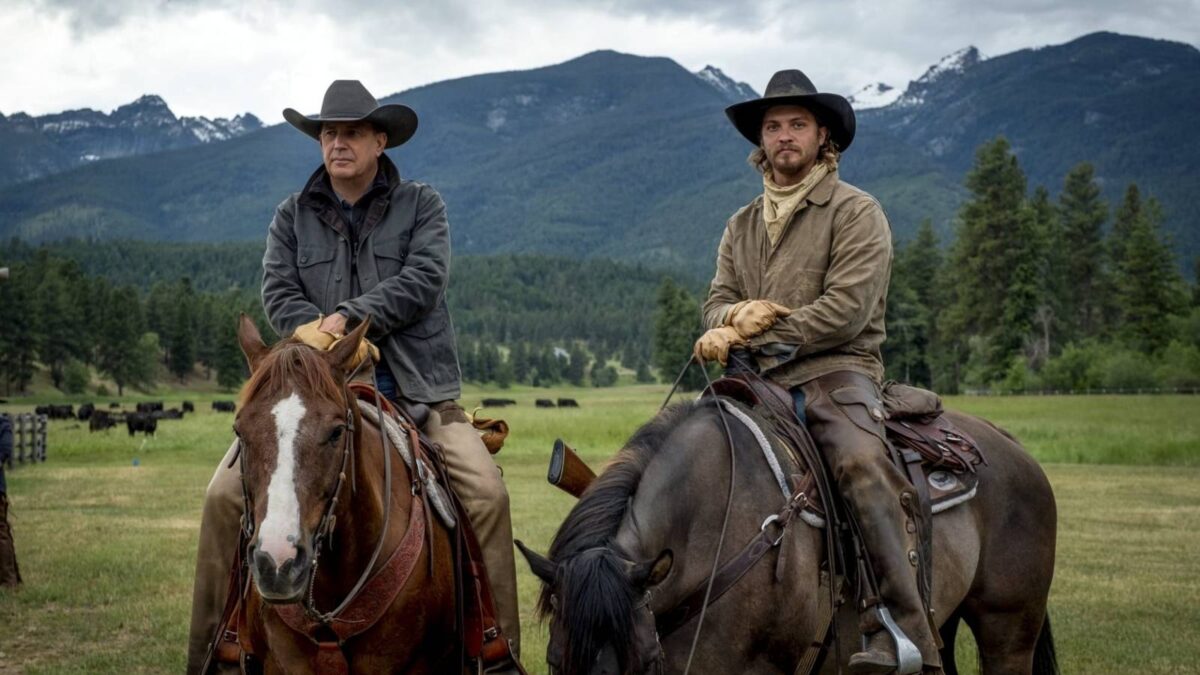
Original ‘Yellowstone’ Dutton Favorite Officially Confirms ‘Marshals’ Return Interest
Yellowstone jump-started a generation-spanning story that has so far spawned four spin-offs that are all interconnected by the Dutton bloodline. While creator Taylor Sheridan has since branched outside that saga with Tulsa King, Landman, Mayor of Kingstown, The Madison, and…
Sep 14, 2026
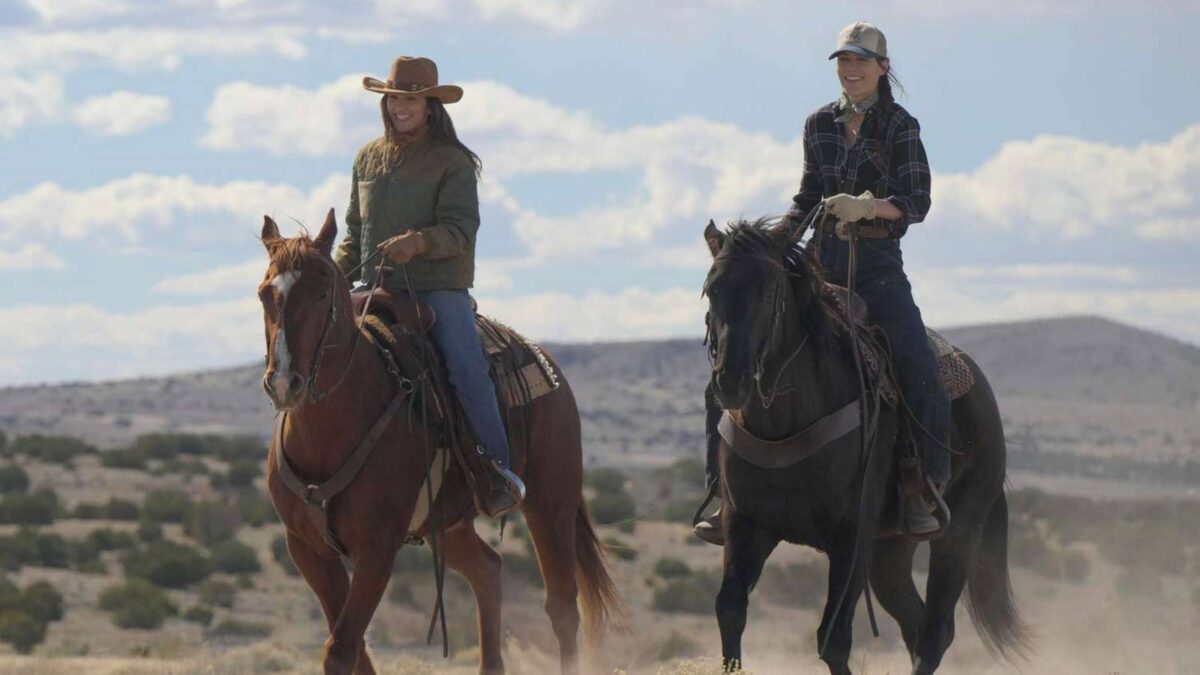
Netflix Officially Cancels Its 2-Part Taylor Sheridan Replacement Western
Netflix Published Sep 12, 2026, 10:30 AM EDT Omar is an experienced editor and writer who sees life and storytelling as one and the same — there’s always a story to tell. He’s helped shape features, headlines, and coverage across movies,…
Sep 13, 2026
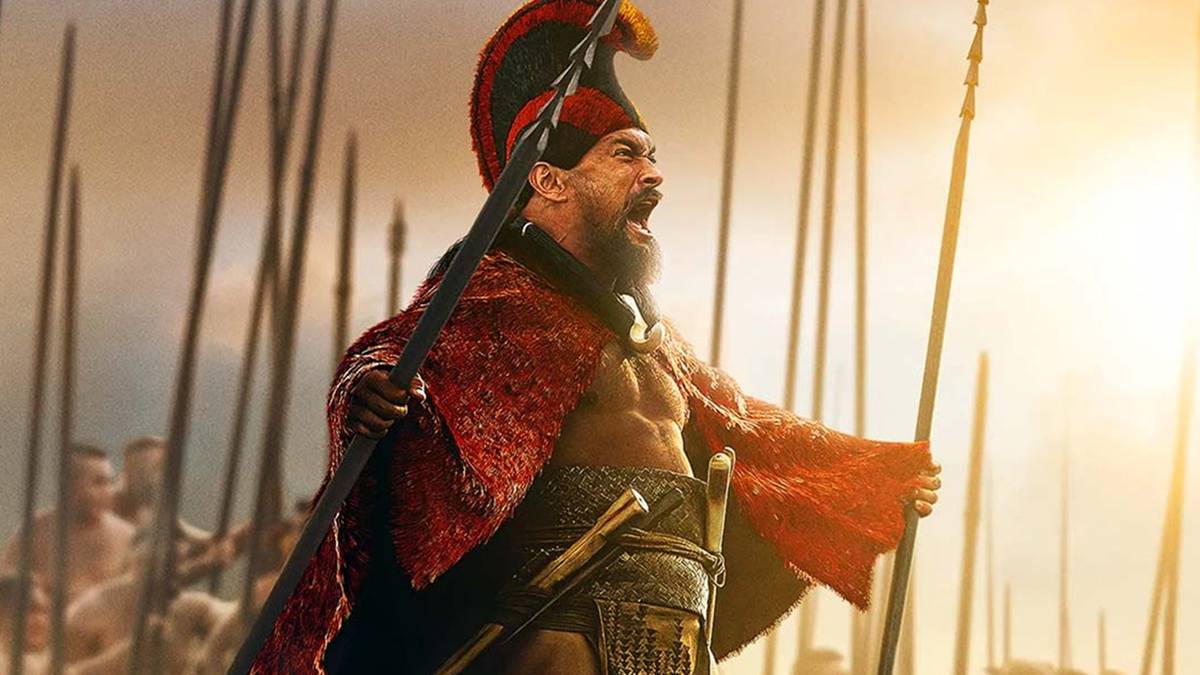
Jason Momoa’s Epic Historical Action Thriller Officially Getting New Release
Apple TV has established itself as a rising force in streaming entertainment. From Silo and Dark Matter to Pluribus and Ted Lasso, there is something for everyone, and not only that, but a ton of huge star power at the…
Sep 12, 2026