
âA Calculated Exercise in Squeezing Blood From a Stoneâ: Director Aidan Zamiri and Composer A.G. Cook on Charli XCXâs The Moment
Feb 12, 2026
The Moment
Brat summer is decidedly over. The mechanics of its disintegration are lampooned in The Moment, a mockumentary cum critical commentary of the hype that propelled Charli XCX’s 2024 album into a full-blown cultural phenomenon. Charli plays an exaggerated version of herself, plagued by funhouse mirror distortions of the anxieties that besieged her during the extended press and stadium tour that ostensibly signaled the peak of her pop stardom.
It’s appropriate that Aidan Zamiri, one of Brat’s key visual collaborators, stepped up to direct The Moment, which marks his feature film debut. Though he previously helmed music videos for Charli (notably the It Girl–laden “360” and The Dare–produced “Guess”), Billie Eilish (“Birds of a Feather”), and FKA Twigs (several from her 2022 Caprisongs mixtape), the Glaswegian imagemaker brings particular insight to the film’s depiction of a promotional campaign of soul-sucking dimensions. He’s been Timothée Chalamet de-facto creative consultant for A Complete Unknown and Marty Supreme, the latter of which broke records as A24’s highest-grossing film in North America. Zamiri was part of the creative team behind the coveted Marty Supreme windbreaker and that viral video of Timmy standing atop The Sphere in Las Vegas—a giant ping-pong ball, if you will. The central question of The Moment, though, is what happens when too much build-up culminates in a massive let-down?
When it came time to choose a composer for the film, there was only one choice: Charli’s longtime collaborator, the English record producer A.G. Cook. He first served as producer on Charli’s 2017 mixtapes No. 1 Angel and Pop 2, and has since collaborated with her in the studio on her albums Charli (2019), How I’m Feeling Now (2020) and, most recently, Brat. Despite being an integral orchestrator of Charli’s sonic evolution, Cook noted that for The Moment’s score—his first cinematic effort—he wanted to use her actual vocals as minimally as possible. “It was going to be about how I can take the strands of Brat and make them quite cold in a sense,” he said, “stretch them out and make them emotional.” In this sense, he hews closely to his own sensibilities as a DJ, producer, and musician—taking disparate sonic samples and anomalies to create something both uncanny and familiar.
While both Zamiri and Cook have been instrumental to Charli’s process in vastly different ways, largely in terms of aesthetic and auditory sensibilities, they are completely united on one front: serving as a mere conduit for Charli XCX’s artistic vision. “It’s about capturing Charli’s very strong, authentic personality,” Cook told me about their collaborative ethos.
I spoke with Zamiri and Cook as The Moment expands nationwide via A24. The resultant conversation finds the two—in their only paired interview—giddily ping-ponging off of each other, the hallmark of collaborators who are genuinely fascinated by the other’s artistic quirks and sensibilities.
Filmmaker: Aidan, this is the first feature film you’ve directed, and AG, this is the first film score you’ve composed. How did you each psych yourselves up for the task?
Zamiri: What was particularly helpful was that we’ve got this squad of creative collaborators that we had an underlying language with. A.G. and I worked together in parallel in some capacities, but we never actually got into a project as connected as this before. I was really stoked. A.G., I hope I don’t make you blush, but I’ve been a fan since I was 16. He’s soundtracked a large chunk of my life, so this felt like a natural progression.
Cook: We technically met when Aidan directed a very cool video for this band, Planet 1999, who were on PC Music [Cook’s record label]. Then obviously you did a bunch of work with Caroline [Polachek] and other collaborators of mine before getting into this really deep partnership with Charli.
I was definitely self-aware of this as my first feature-length score, but at the same time, I couldn’t really say no. As soon as I read the script, I was really insistent on making music. Before the shooting dates were even locked in, I knew what it should sound like. I had my own little rules and ideas and didn’t want to draw from Brat itself. I think Aidan and I spoke a fair bit, but it’s not like we had a very intense conversation about what it should be like. The movie itself is method. It’s been exactly a year between me reading the script, starting the music and being the premiere at Sundance.
Zamiri: A.G.’s right. I think we sent him the second draft of the script—and things changed again since then—but in a couple of days he sent a 12-track album back in response. It was amazing.
Cook: To be honest, half of those pieces are pretty much intact in the final cut. There was another half where I was working to picture some of the big changes that happened later down the line.
Zamiri: The core personality of the film was already there in the first collection of tracks that you sent over. It was a really helpful tool for us not only when filming, but also in the edit. We had this palette of sounds, tones and music that we could try different things with. It was very cool to hear A.G.’s sonic interpretation of what he’d read without any influence of what we’d shot.
Filmmaker: As you said, you’re both close collaborators of Charli’s. Aidan, you became a vital component of the Brat formula. How would you respectively describe your creative relationship with her and how did that come into play while working on this film?
Cook: Outside of chatting a little bit about what was brewing, Charli and I never had a deep dive about what needed to be done [with the score]. How I work with Charli general is that we talk about working quickly, but it’s not purely about speed. It’s really about trying to not overthink things, you know? Of course, Charli will then take things away and enjoy wrestling with them. But when we’re in the studio writing from scratch, something might come together in 20 minutes. If it doesn’t, we might delete it, start again and do something else. It’s about capturing Charli’s very strong, authentic personality.
So even with this, where we have this history of working together and living through the whole Brat campaign, I just wanted to channel her energy without bogging her down with, “Oh what do you think about this thing?” Reading the script, there were already a few big touchstones. There are scenes where she’s rehearsing and hanging from the rafters, singing “I Might Say Something Stupid.” She’s performing as herself and singing in this diegetic, kind of awkward way. Or she might just hear “360” in the background while she’s in the middle of promoting the [Brat-themed credit] card, and the song is used in this very commercial way.
I was very keen to not have any Charli vocals in the score. There are those tiny moments when they’re needed—maybe a tiny tease of “Club Classics” during rehearsal, or “I Love It” at the very end—but that’s obviously completely different. I knew that it wouldn’t be Charli and I getting back in the studio to do some new music for The Moment. It was going to be about how I can take the strands of Brat and make them quite cold in a sense, stretch them out and make them emotional. There’s a very particular emotion that I think runs through this—I was about to use the word “bittersweet,” knowing that in the script “Bittersweet Symphony” was going to be the one big needle drop. It’s obviously got very famous string parts and it has a grandeur to it. That’s pretty much why there are no strings in the movie. It’s all saved for “Bittersweet Symphony.” The rawness of how I’ve done the electronic stuff even pushed you guys on set.
Zamiri: With the sound design, the rules that we set in every department was that nothing could be souped-up. We use mic ruffles or electrical sounds that were coming from the equipment themselves.
Cook: It does basically evolve from a strict documentary-ish thing to something that’s a little bit slicker as Charli uses her pop star persona. It was really cool for us both to instruct all the individual people who are responsible for different parts of the sound mix to come together to emphasize that. There are very detailed edits. In the British Vogue “What’s in My Bag?” scene, the music is constantly jumping between being dialectically on the speakers, then very loudly in Charli’s mind, and then Charli’s watching it on a laptop later.
Zamiri: I’m really glad you touched on that, because the confusion of what is in Charli’s head versus what’s actually happening in real life is something that happens regularly throughout the film. I loved how you explained this loosely as a mockumentary film, but I think it transforms itself quite a lot throughout. It’s been a bit of a bait and switch for audiences, which I think is also part of Charli’s charm—presenting something in a specific package, but then secretly hiding something stranger.
Filmmaker: It’s really interesting to hear that “Bittersweet Symphony” was baked into the script itself. Were there any other songs in consideration?
Zamiri: There was never any other option. In regards to the Brat era, the music video for “Bittersweet Symphony” was one of the only references I had for the “360” music video. If you watch them together, there are parallels. I also would use it as a reference for Sean Price Williams, our DP, because that video captured a really cool version of London that felt tough and grimy and real, even if it was stylized. So I had that as a reference before we’d even spoken about it being a needle drop in this movie. I think it’s spiritually perfect for that moment, just in the fact that it’s this song that has lived so many lives by becoming so massive. It’s both cool and kind of oversaturated, which feels very connected to our film.
For a long time, The Verve couldn’t make any money off of it because they had this string sample from the Rolling Stones that meant that they weren’t able to get any royalties. But it’s even more convoluted, isn’t it?
Cook: They sampled some strings that were [an orchestral version of “The Last Time,” a] Rolling Stones track. I think they finally just gave it back to [The Verve lead singer] Richard Ashcroft a few years ago, which is quite interesting.
Zamiri: That convoluted thing about ownership and credit was thematically perfect for the end of the film. It is both bittersweet and emancipating for Charli. It was also cool that one of the only needledrops we have in the film is a non-Charli track.
Cook: Timeri Duplat, the music editor, and I were stressing over making sure we could jump from the string sections into the full song. It was probably the cue I spent the longest on, just out of the sheer complexity of it. But because that string part is so famous, I have it dissolve out of Charli’s monologue. It hits this point where I’m fading in the “Bittersweet” strings very quietly, but most people’s brains, even when they hear a touch of it, it’s already got that familiarity. There’s this nice 20 or so seconds where you’re sort of half-hearing “Bittersweet,” but you’re not sure yet.
Filmmaker: A.G., I caught a brief cameo of you DJing a party scene in the film. Was there ever a conversation about you appearing as a more pronounced version of yourself in the film?
Cook: We joke about this. I think in the first announcement I was listed as cast along with Shygirl. We’re like, “There’s an epic deleted scene between me, Charli, and Shygirl!” I would love to still retcon [the film] and improv that [laughs]. It’s pretty fun because I’ve cameoed in a fair amount of Charli’s bits and pieces now. I think I am the only guy in the “360” video?
I mean, there’s also the creepier option of someone playing me, which would be kind of incredible. I was thinking a bit about who is and isn’t in this, symbolically. You’ve got the Atlantic management scenes, hair and makeup scenes, but luckily it’s not a one-to-one. I think it’s quite important that a lot of the music-making Charli is left out. I mean, George [Daniel, Charli’s husband] isn’t present at all. It’s really positing Charli as very alone during rehearsal, the campaign, the branding. Any scenes that would touch on Charli writing or making music…it wouldn’t work. It would turn into a completely different kind of music film. I think the fact that she’s so separated from the process and from her enjoyment of the craft is actually really fundamental.
Zamiri: Obviously, there’s so much crossover between reality and fiction. But it would have felt really unreasonable to cast someone in the George role or the A.G. role, especially when you’ve got these real-world figures like Rachel Sennott or Kylie Jenner, who exist in the film on a more thematic level. This part is more divorced from Charli’s interior and more personal life, which is making music. We never see her family, never see her husband, but we get a hint that they exist.
Filmmaker: Aidan, you’ve also been heavily involved in the promotional campaigns for the Timothée Chalamet films A Complete Unknown and, most recently, Marty Supreme. While the latter may not have influenced The Moment—or did it?—I’d like to know if your experience crafting promo buzz bled into the fabric of this film.
Zamiri: That’s actually a great question. Normally when I’m working with musicians or working with someone like Charli, I get to be there for certain chunks of time, like for a music video or for a photo shoot. Being so present through the constant forward momentum was actually very helpful, because we were in the beginning stages of writing the script when I was on tour with Timothée for A Complete Unknown. I really did feel a lot of the emotions that Charli feels throughout the film. I was terrified of [the press tour] ending because I suddenly had this sense of purpose, so that definitely bled in. Also just seeing the mechanics of how it works to travel with someone that’s in the public eye—who is doing a job that may seem glamorous, but is kind of brutal. You’re just in the car or in a waiting room constantly. I understood a lot of the minutia. With Timothée, anything we’ve done together has been really born out of taking authorship and ownership over the output of his work. He’s extremely self-driven, self-motivated, and he’s really driving the way that he wants to spread the word [about his projects], which is something that actors historically haven’t had the space to do. It almost feels like we carved out this weird new niche, which was doing kind of fun, almost stunty videos that felt less like formulaic promotion and more like fun ways for us to play with the form and be disruptive.
In terms of promoting The Moment, it gave us a frame of reference. Even making a music video for “Residue” was something that I couldn’t wait to do, because Timmy and I have made music video-ish things, both for the Dylan movie and Marty Supreme. I don’t know of many films where a music video was made for an instrumental track. In my mind, it’s about the theory of promoting a film where it’s additive rather than formulaic. We’re adding more to the fan experience and building out the storytelling of it.
Cook: It’s just been fun to watch The Moment roll out in the campaign that I’ve been a little bit involved in. It’s such a feedback loop: everyone’s using Brat green again. It’s a calculated exercise in squeezing blood from a stone. I think from Charli’s perspective, it’s quite fascinating because to have the opportunity to say something about that.
Zamiri: It felt correct to do the thing you’re really not supposed to do, which is to keep hawking something that is so recently out of date.
Filmmaker: I’d be interested in hearing what’s on the creative docket for you both.
Zamiri: I really enjoyed making a film. I think Bertie and I are keen to start writing immediately. We’ve got nothing concrete I can really share, but we’ve felt this momentum. I’ll always make music videos and take photos. I’ve never seen it as one graduating to the other. It’s about what medium or format feels like the best way to express an idea.
Cook: I’m just back in album producer mode. I managed to definitely work in between scoring last year. I really do enjoy working on someone’s entire record and even talking about the campaign. I’ve always popped up here and there on projects, but I’ve carved out some time to work on some specific things that can be a bit more of a deep dive.
Publisher: Source link



Netflix’s 10/10 Thriller Series Returns After 3 Year Absence With Explosive New Trailer
Over the last five years, Netflix has expanded heavily into non-English content, with international series taking an even bigger focus for the streaming giant. One of the biggest driving forces in that effort is the French thriller series Lupin, led…
Sep 15, 2026
Original ‘Yellowstone’ Dutton Favorite Officially Confirms ‘Marshals’ Return Interest
Yellowstone jump-started a generation-spanning story that has so far spawned four spin-offs that are all interconnected by the Dutton bloodline. While creator Taylor Sheridan has since branched outside that saga with Tulsa King, Landman, Mayor of Kingstown, The Madison, and…
Sep 14, 2026
Netflix Officially Cancels Its 2-Part Taylor Sheridan Replacement Western
Netflix Published Sep 12, 2026, 10:30 AM EDT Omar is an experienced editor and writer who sees life and storytelling as one and the same — there’s always a story to tell. He’s helped shape features, headlines, and coverage across movies,…
Sep 13, 2026
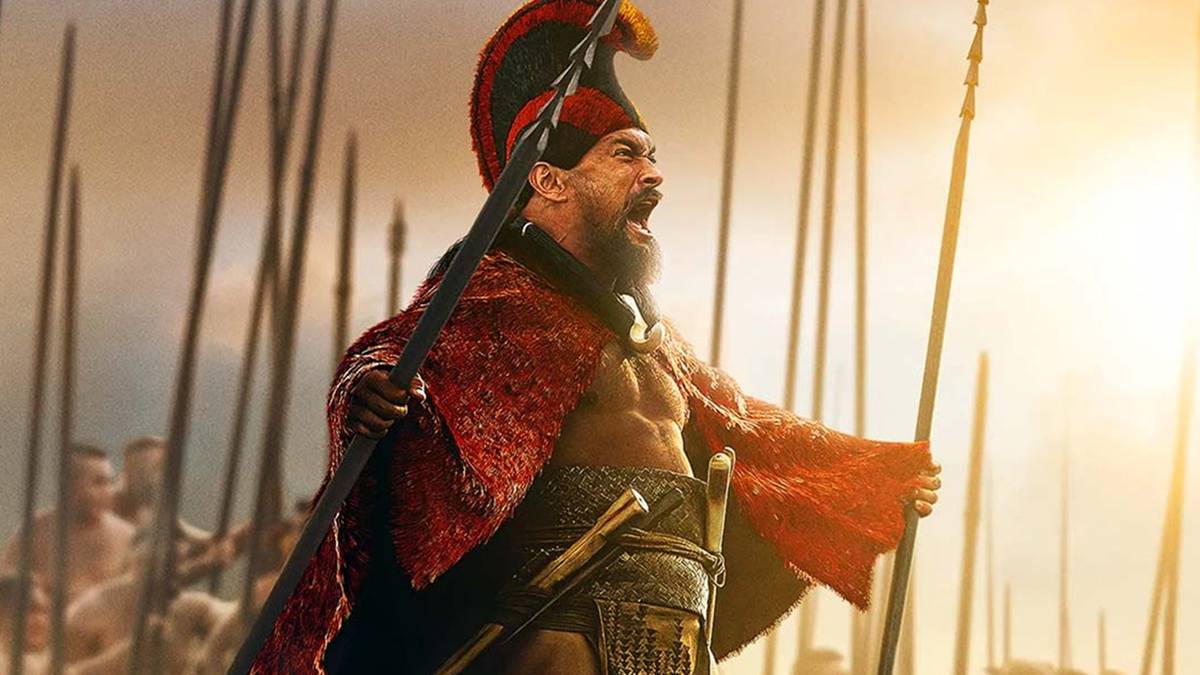
Jason Momoa’s Epic Historical Action Thriller Officially Getting New Release
Apple TV has established itself as a rising force in streaming entertainment. From Silo and Dark Matter to Pluribus and Ted Lasso, there is something for everyone, and not only that, but a ton of huge star power at the…
Sep 12, 2026