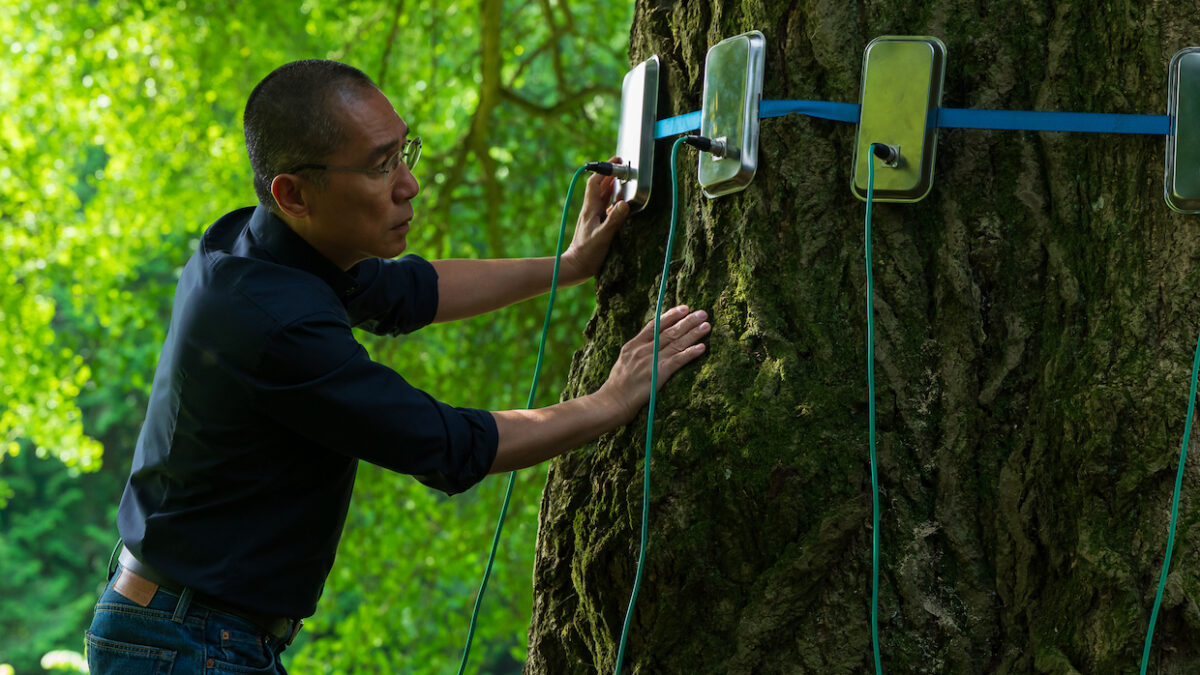
Tony Leung and Ildikó Enyedi on Silent FriendFilmmaker Magazine
May 22, 2026
Silent Friend
The Hong Kong actor Tony Leung Chiu-wai has worked with some of cinema’s most accomplished directors. Known for his collaborations with Wong Kar-wai and John Woo, Leung has also appeared in films by Johnnie To, Hou Hsiao-hsien, Ang Lee, and Zhang Yimou. Most recently, he appeared in Hungarian filmmaker Ildikó Enyedi’s Silent Friend, which finds characters interacting with a single German ginkgo tree in three disparate years: 1908, 1972, and 2020. Leung plays a neuroscientist during the final third, whose research on newborn brain activity is halted by the COVID-19 pandemic. During this professional sojourn, he becomes fond of the nearly 200-year-old tree and tries to find a link between his own neurological activity and the ginkgo’s.
Beginning as the co-host of a children’s TV show back in 1982, Leung worked his way up to leading roles in television and film projects. He has starred in every conceivable genre: romance, comedy, horror, sci-fi, crime, thriller, fantasy, and some of the most memorable dramas of the last forty years, with his roles in A City of Sadness, In the Mood for Love, and Infernal Affairs among his most iconic.
From reporter to policeman, smuggler, informer, real-estate tycoon, photographer, gambler, bounty hunter, neuroscientist, Leung brings a commitment and empathy to all his roles. His penetrating gaze is one of the most distinctive aspects of Leung’s performing style. “People talk about his eyes,” Enyedi noted. “He said it may be due to his childhood, which was painful, difficult. He had to learn to hide his feelings, to isolate himself.”
Leung, who had not been to New York to promote a film in almost 25 years, spent time in the city to support a retrospective of his work at Film at Lincoln Center and to attend screenings of his movie Silent Friend, which hit theaters on May 8 via 1-2 Special. We spoke ahead of the film’s US release and briefly at the Busan International Film Festival last September, both times accompanied by Enyedi.
Filmmaker: In Silent Friend, you play a neuroscientist who is trying to find evidence of consciousness in trees, specifically a ginkgo. Do you believe that plants have consciousness?
Tony Leung: I do, especially after studying books about plant intelligence for this movie. I’ve really changed my entire perspective towards plants. I think they’re just like humans. They are sentient beings. So to some degree they have consciousness.
Filmmaker: Did being a practicing Buddhist affect how you approached this film?
Leung: I’m not sure that Buddhism is what changed my perspective. It’s just that my knowledge about plants changed. Of course, from a Buddhist point of view we all have consciousness.
Filmmaker: In the movie your life is upended by the COVID outbreak. How did you experience the pandemic in real life?
Leung: Very much like what happened in the movie. I was isolated from other people, in a city with no one I really knew. All the hotels and stores closed down. It was in Tokyo. I like to ride my bicycle, but it was strange because there was no one on the streets. So it was very similar to Silent Friend—only in the movie I could be in nature, not in a city.
Filmmaker: Ildikó, you said that you needed the person behind Tony for the role. Who is that person?
Enyedi: It’s weird saying it in front of Tony, but I saw him in an interview before I actually met him. He has a gentle but strong attention to the world, to fellow humans as well. It’s an approach similar to a monk, or to a scientist for that matter.
When I see scientists impersonated by actors in biopics, I have an uneasy feeling. Even if the actor is brilliant, when I see photos of the original scientist, perhaps he is less handsome than the actor. But the scientist’s gaze is much more interesting. There is a passion, a curiosity there.
The interview I saw was for Shang-Chi and the Legend of the Ten Rings, a very strictly scripted situation. What I loved was that Tony wanted to have a real conversation. He really tried to answer the journalist’s questions. Tony was a person who was really curious about the world and who didn’t have ready-made answers. That was the person I wanted.
Filmmaker: Tony, you worked with Ildikó for half a year before the production started. What were you doing?
Leung: I actually didn’t have much information about the character from the script,so I tried to approach him by learning about neuroscience. I started studying early cognitive development, doing my research with real neuroscientists from different universities. I tried to find a way to experience the EEG studies on kids, but there wasn’t much of a chance for that. We didn’t have a baby lab.
At the same time, I was studying plant intelligence and the philosophy of consciousness. My goal was to get into this character of a neuroscientist in an unconscious manner, to convince myself that I was that person. I needed to find this confidence, especially for my lecture scene.
All of that takes time, six months or so. I assumed my character studied at Oxford or Cambridge, so I hired a British teacher to go through the material with me. I wanted the hint of a British accent.
Filmmaker: You were the subject of a retrospective at Film at Lincoln Center. So many fantastic films. I’d like to ask you about Cyclo, the film by Tran Anh Hung that was set in Vietnam. I spoke to the cinematographer, Benoît Delhomme, who said that because of censorship they couldn’t see anything he shot until after they left the country. Did that affect your performance?
Leung: No, because I knew the script so well. I stayed very close with the director and the star, Trần Nữ Yên Khê. We stayed at the same hotel. The director lived next door to me, and we spent almost all of our time together. We’d talk about the movie over lunch.
We went to Vietnam about a month before shooting started. We were very close, and I knew the story very well. The director gave me music to listen to, we went to different art collectors, we had a lot of discussions even during the shoot. We spent a lot of time together just trying to understand each other. He’s trying to get me to understand what he wants to do.
Filmmaker: What are you looking for in a director? What convinces you to collaborate with them for so long and work with them so closely?
Leung: I believe my instinct. I love being with someone I think I can work with. I don’t pick a project because of the script, but because of the director, the person. I need to talk with them, have a meeting to feel them out. If it’s good, then I will work with them.
Filmmaker: But directors work in such different ways. The director of Shang-Chi wants something different from you than the director of Cyclo.
Leung: Yes, of course. In Cyclo, we had more flexibility. We could improvise. But in a Hollywood production, you can’t change a word. You have to do everything just as it was already prepared. So it’s very different. Silent Friend was a lot more flexible.
Filmmaker: In some of your recent films you’ve played villains: Xu Wenwu in Shang-Chi, real estate mogul Henry Ching Yat-yin in The Goldfinger, a corrupt Hong Kong policeman in Where the Wind Blows. What do you find interesting about bad guys?
Leung: It’s something I seldom have a chance to do. I just want to explore that mindset, experience how it feels to be that.
Filmmaker: I think the darkest I’ve ever seen you was Sam, the policeman in The Longest Nite.
Leung: I loved that movie. Its box office wasn’t that great, but I loved working with Johnnie To. You know he wasn’t working with a script, right? I asked him, “How come you don’t have a script?” He said, “That’s the way I’m working now.”
It was really enjoyable. I thought, why not explore that kind of character? Because I wouldn’t get that chance in real life.
Filmmaker: In The Goldfinger, you’re playing a character based on a real person, George Tan.
Leung: I heard of George Tan when I was young, but I had no idea who he was. He’s very mysterious. Felix Chong, the writer and director, gave me this book called The Joker’s Downfall [Carrian: a True Story of Murder, Mystery and Mayhem by Ian Robinson], which was about him. I thought, “Wow, how can something like this happen in Hong Kong?” Someone was even murdered, but there was no follow up.
Filmmaker: Did you try to be true to his character?
Leung: This guy was so mysterious, he never showed up anywhere unless he had to. So I researched the bankers he worked with, but I still had no idea who he was. I just had to go on what I learned from the book. Even now, no one knows who he really was.
Filmmaker: Johnnie To announced that you’re making a film together. Is that still going to happen?
Leung: Yes, we’re working on the script right now. I’ve got two more projects I’m committed to, so the To film will maybe happen in late 2027.
Publisher: Source link


Netflix’s 10/10 Thriller Series Returns After 3 Year Absence With Explosive New Trailer
Over the last five years, Netflix has expanded heavily into non-English content, with international series taking an even bigger focus for the streaming giant. One of the biggest driving forces in that effort is the French thriller series Lupin, led…
Sep 15, 2026
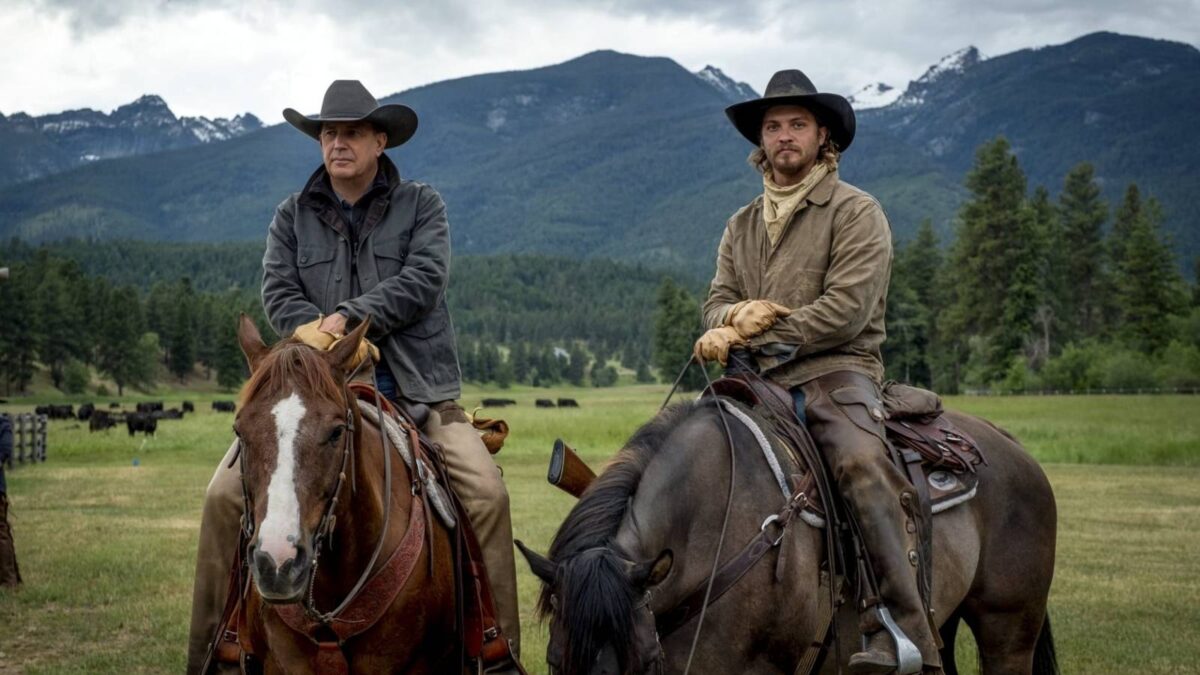
Original ‘Yellowstone’ Dutton Favorite Officially Confirms ‘Marshals’ Return Interest
Yellowstone jump-started a generation-spanning story that has so far spawned four spin-offs that are all interconnected by the Dutton bloodline. While creator Taylor Sheridan has since branched outside that saga with Tulsa King, Landman, Mayor of Kingstown, The Madison, and…
Sep 14, 2026
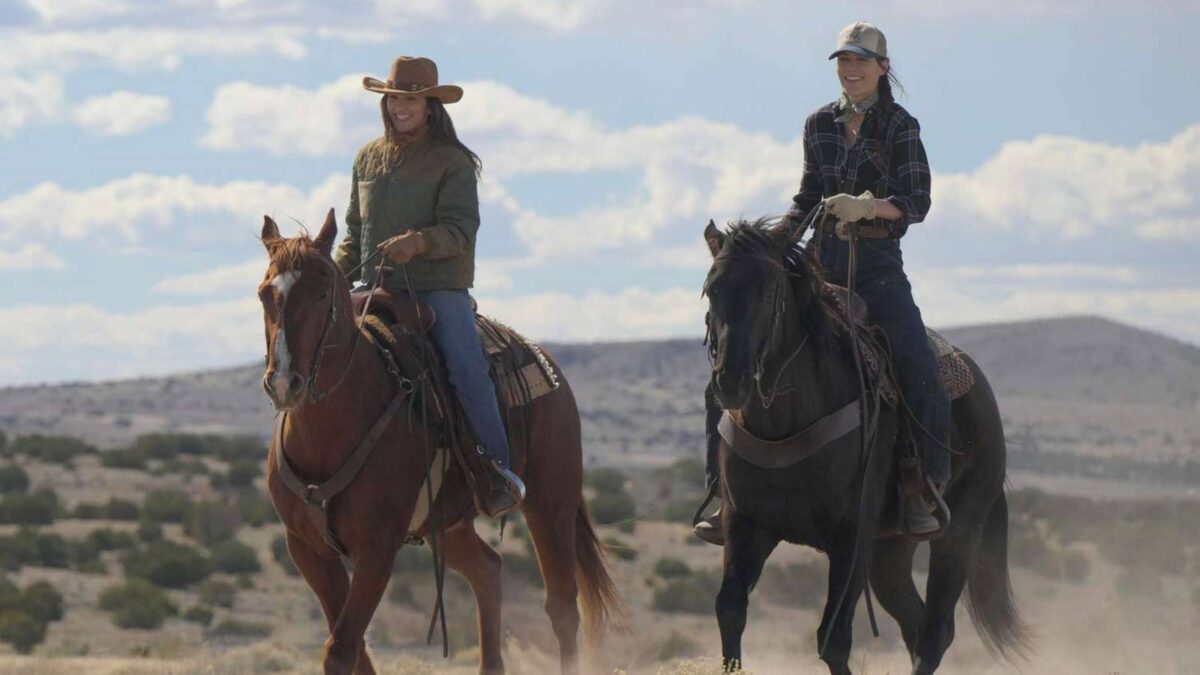
Netflix Officially Cancels Its 2-Part Taylor Sheridan Replacement Western
Netflix Published Sep 12, 2026, 10:30 AM EDT Omar is an experienced editor and writer who sees life and storytelling as one and the same — there’s always a story to tell. He’s helped shape features, headlines, and coverage across movies,…
Sep 13, 2026
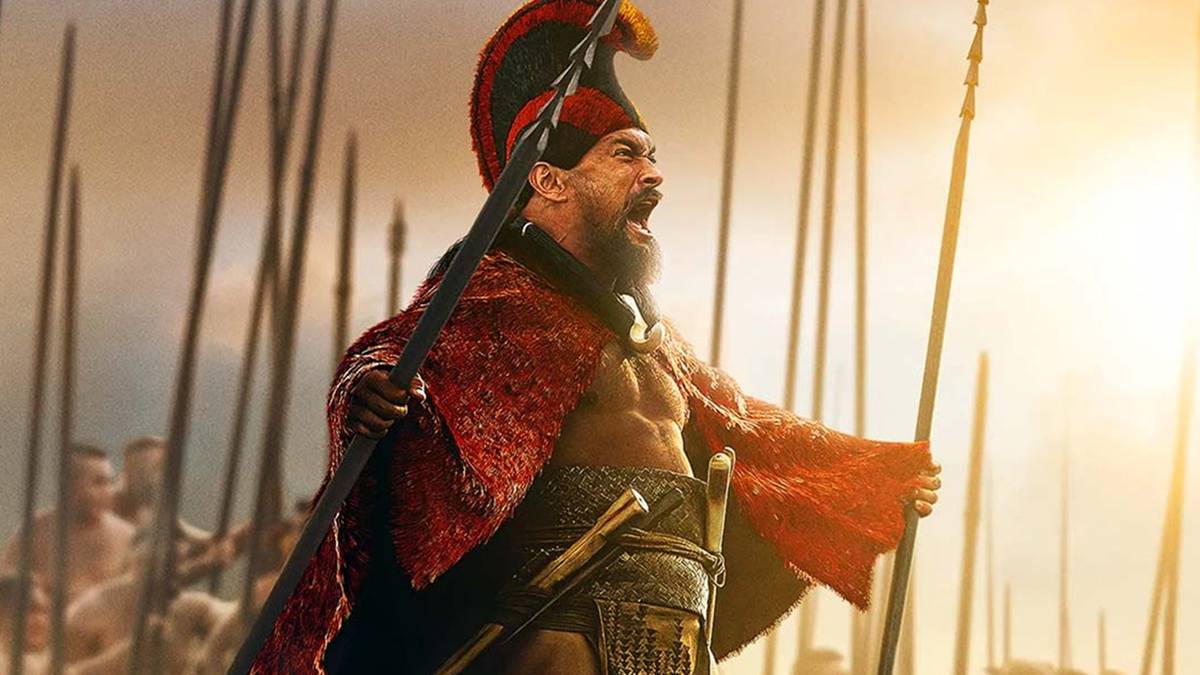
Jason Momoa’s Epic Historical Action Thriller Officially Getting New Release
Apple TV has established itself as a rising force in streaming entertainment. From Silo and Dark Matter to Pluribus and Ted Lasso, there is something for everyone, and not only that, but a ton of huge star power at the…
Sep 12, 2026