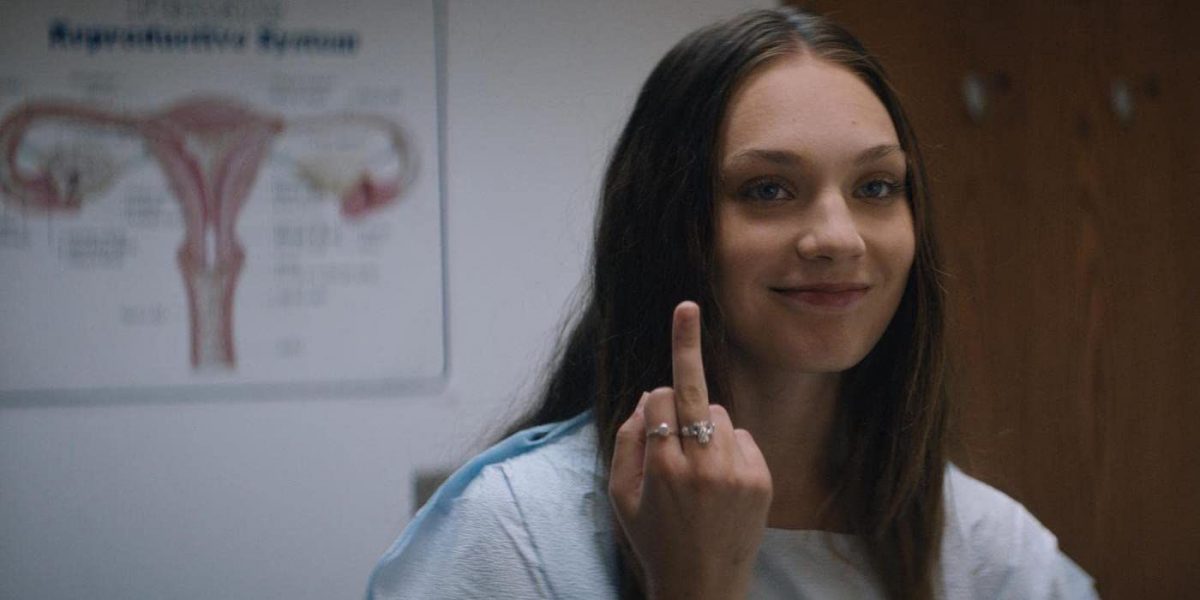
Maddie Ziegler Struggles with Womanhood
Mar 14, 2023
The two quotes used to introduce Molly McGlynn’s Bloody Hell perfectly set the tone for the story the filmmaker is trying to tell. By using a powerful passage from Simone de Beauvoir’s The Second Sex, Bloody Hell sets the stage to dive deep into complicated questions of gender and sexuality, sticking to a female perspective on these matters. In addition, a quote from Jennifer’s Body screenwriter Diablo Cody also sets expectations high for an unusual coming-of-age story set in high school. However, while Bloody Hell is undoubtedly courageous for dealing with many sensitive themes, the film struggles to find its pacing and keep the audience engaged in a story that sometimes feels too predictable.
COLLIDER VIDEO OF THE DAY
Bloody Hell follows Lindy (Maddie Ziegler), a sixteen-year-old girl who’s discovering her own body when she gets a terrifying diagnosis. Lindy suffers from Mayer-Rokitansky-Kuster-Hauser (MRKH) syndrome, a rare birth condition that prevents her body from developing a uterus and a vaginal canal. When she gets her diagnosis, Lindy is contemplating the possibility of becoming a mother in the future, and has just decided to have sex with her boyfriend, Adam (D’Pharaoh Woon-A-Tai), for the first time. Finding out she’s sterile and cannot have vaginal sex without much effort pushes Lindy on a journey of self-discovery while forcing her to confront how much external expectations shape women’s relationships with their bodies.
RELATED: ‘National Anthem’ Review: Luke Gilford’s Queer Rodeo Coming-of-Age Story Is a Promising Debut | SXSW 2023
While the clumsiness of teenagers’ sex life has been overexplored by Hollywood, Bloody Hell keeps things fresh by approaching its subject with new eyes. Through Lindy and her friends, the film explores masturbation, privacy, and sexual desire with tact, never daring to laugh at the chaotic experiences we all go through during puberty. Lindy’s condition also gives Bloody Hell the perfect opportunity to put intersex and intergender people in the spotlight, questioning how much our genitals genuinely define who we are and want to be.
Bloody Hell dares to approach Lindy’s story with realism, exposing the girl’s doubts and feelings of inadequacy. Lindy was raised by her single mother, Rita (Emily Hampshire), a vocal feminist activist, giving the teenager rare insights into discussions of gender. Still, her first impulse is to hide her condition and perform harmful dilation exercises, all in the name of being “normal.” It’s a heartbreaking journey elevated by a strong performance from Ziegler, even if the movie’s pacing can make Bloody Hell a challenging viewing sometimes.
Since McGlyn uses her own experience with an MRKH diagnosis, it’s evident the film is being used as a pedagogical tool to spread awareness about the rare birth condition and fundamental questions about gender and sexuality. That means some scenes can overstay their welcome as Bloody Hell wants to ensure its message gets across. Lindy’s journey also sticks to the expected path regarding teenage coming-of-age stories, never taking detours that could make the script more engaging. So, while it boasts a phenomenal cast and has its heart in the right place, the fact that Lindy’s story unfolds slowly and without surprises might push away some viewers.
There’s much to love about Bloody Hell. McGlynn uses her film to denounce gynecological violence and show how medical tradition helps to reduce women to how their genitals can be used the male pleasure or reproductive functions. The movie also explores how pornography can lead young people to understand sex as a performance when it should be a fun experience where people give each other pleasure. In fact, the film also challenges the conservative vision of sexuality by showing how sexual relationships can exist without any kind of penetration, which should be common knowledge but is still controversial.
Considering the complicated social context in which Bloody Hell premieres, it’s easy to understand why McGlynn focused on instructing the audience, even when the educational aspirations of the movie get in the way of telling a more engaging story. Still, Bloody Hell’s faulty rhythm doesn’t stop it from being a crucial coming-of-age story and a complex investigation of how women and intersex people absorb values that prevent them from exploring their sexuality in a healthy and pleasant way.
Rating: B-
Bloody Hell premiered at the SXSW Film Festival.
Publisher: Source link







HBO’s Harry Potter Reboot Is Officially Ditching the Most Iconic Part of Daniel Radcliffe’s Era
This December, audiences will be transported back to the Wizarding world of Harry Potter. Of course, those born in the mid-to-late '90s will have fond memories of the movie franchise. Starring Daniel Radcliffe, Emma Watson, and Rupert Grint as Harry,…
Sep 20, 2026
‘Tracker’ Season 4 Officially Puts Its Biggest Mystery on Hold Despite Major Cast Comeback
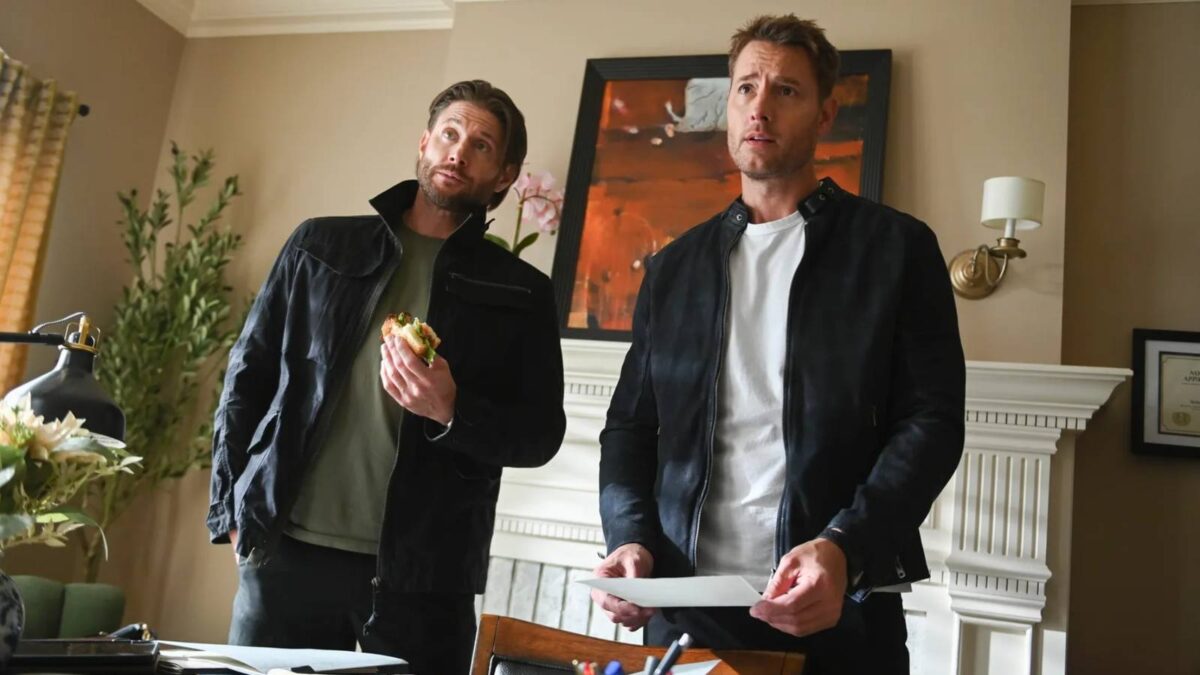
Our fictional missing persons expert, Colter Shaw (Justin Hartley), has kept audiences happily on the edge of their seats ever since Tracker debuted two years ago, and Season 3 in particular left audiences with quite a major cliffhanger — all…
Sep 19, 2026
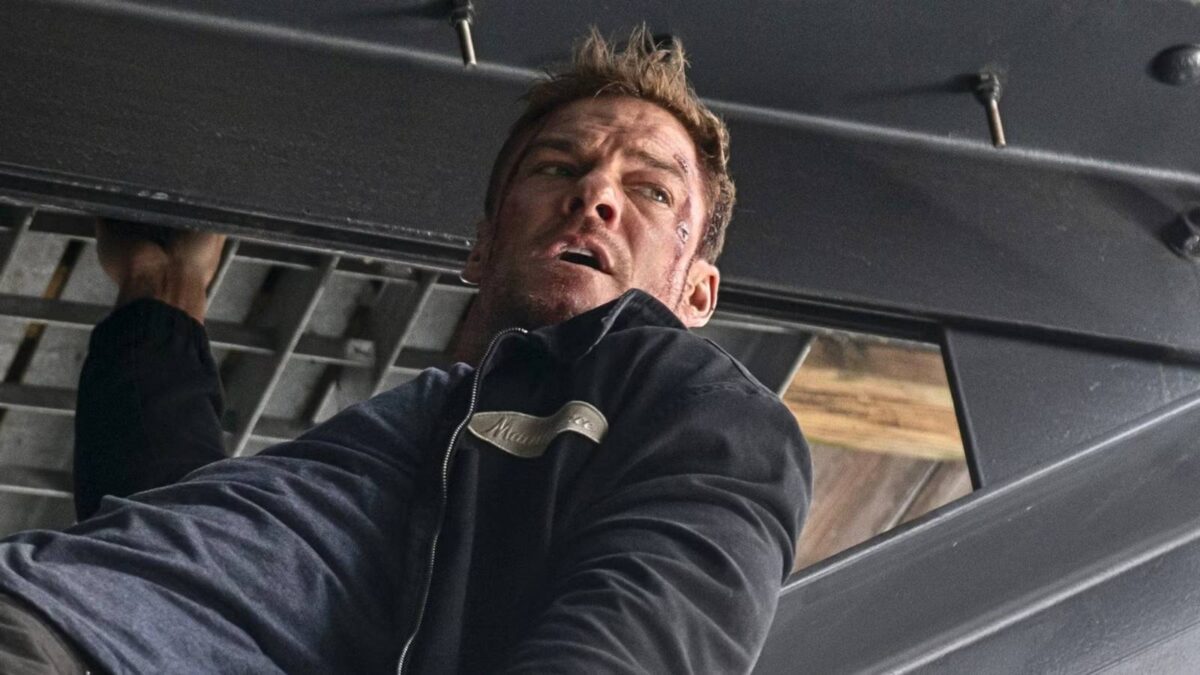
‘Reacher’s Action Thriller Spin-Off Gets Major Season 2 Update Following Premiere
For four seasons, Reacher has been one of the biggest TV shows on Prime Video. Based on the novels by Lee Child, the series follows former military police officer Jack Reacher (Alan Ritchson) as he wanders from place to place,…
Sep 18, 2026

One of CBS’ Longest-Running & Highest Rated TV Shows Is Coming To End After 30 Years
Along with countless scripted dramas, comedies, and action shows, CBS is well known for its impressive run of unscripted programs over the last 50 years. More recent years have included major competition shows like Survivor and The Amazing Race, along…
Sep 17, 2026