
âA Lot of Disabled People Donât Get to Take Big Risksâ: Liz Sargent on Directing Her Sister in Take Me Home
Feb 10, 2026
Take Me Home is a film about a caregiver, and the spirit of caregiving infused the entire production. Writer-director Liz Sargent based the feature, her first, on her short of the same name, which premiered at Sundance in 2023. It stars Anna Sargent, her sister, as a woman with a cognitive disability who is the caregiver for her aging adoptive parents. In fact, this is a family of mutual caregivers whose routines are shattered during a central Florida heatwave. How Anna navigates her new emotional reality forms the story’s core, and in striving to locate her character’s need for autonomy, Sargent delivers a performance of tremendous interiority, vulnerability, pathos and humor, while performing alongside such stalwarts as Marceline Hugot (30 Rock), Victor Slezak (The Bridges of Madison County) and Ali Ahn (The Diplomat).Even though Liz has known Anna all their lives, working with Anna on a feature scale presented new challenges, which the cast and crew readily embraced. It’s heartening to hear her give example after example about how the rhythms and schedules of set were tailored to Anna’s needs and well-being. That was, it turns out, the only approach that would work. Audiences who lean into the spaces between the moments of intimacy will come to appreciate just how much disability and caregiving characterize contemporary American life, and perhaps even be inspired by how rituals of caregiving can become grounds to imagine radiant achievable futures.It’s notable that Take Me Home won a whopping million dollars when Liz Sargent and producer Apoorva Guru Charan pitched it at the AT&T Untold Stories at the Tribeca Festival in 2025. The film, also produced by Minos Papas and executive produced by former AMPAS President Janet Yang, has its world premiere at Sundance on January 26 in the festival’s last go-around at Park City, Utah.
Filmmaker: Take Me Home is such a uniquely intimate endeavor, one whose layers and challenges I feel are hard for many audiences to perceive, and I’d venture probably even for you to anticipate, even though you have already made a short film with your sister Anna. On such an endeavor, how do you separate the personal from the quote unquote “professional,” or do you?
Sargent: I’m glad you asked the question in that way because I would say that I don’t think that there’s a divide. I feel like I went into [the film] so clearly knowing that we were going to work around however Anna performed in the space, whatever she was giving in the day, and we were gonna pivot around her. I think the short really proved that she’s a star and she’s so engaging. We always knew that it was just about holding and preserving that magic. All we had to do was not crush it.
For me, all of my work is super personal. It’s a body of work that’s examining these deep wells and feelings that I have. So in that way, I think I have some distance from it to be critical. But I feel like the process was also made to help Anna have a growth experience. I learned with our partner, Caring Across Generations, this term “dignity of risk.” A lot of disabled people don’t get to take big risks. They’re not allowed to fail, and in that sense, they’re not allowed to succeed, and they can never reach their greatness. I feel like this was such a wild card to have her lead the film, truly lead it, like 99% of the film is her. What’s amazing is our EPs never questioned that. Nobody ever questioned if she should be the lead, you know? So we always knew that that was the whole film. It didn’t matter what happened around it.
Filmmaker: In the press notes, you mentioned that this is an “anti-ableist” production. Could you say more about what that means and what advice would you have for filmmakers who want to recreate a similar environment on their productions?
Sargent: I think that we’ve made a lot of progress talking about physical disability in film. But we haven’t really talked about cognitive disability and what that feels like on set. I would say that it was all very bespoke for Anna and [about] treating her like an individual. What I love about her as a character is that her disability isn’t clear, so people have to really lean in, listen and consider what her needs are. It was a very messy situation where we were doing a lot of learning, but we all had resources around her to do that learning. Yeah, I’m sort of straying off the answer. I can’t give a clear-cut response. I think it’s about being open, having conversations and knowing all of that’s gonna be additive. I think her growth and her agency are alive within the film that we have. So all those support systems were worth it. I think every actor has a different team around them. They have agents and managers and assistants. So why can’t Anna so that she can take on the weight of leading a film?
Filmmaker: Speaking of Anna and her splendid performance, I feel that though I’ve seen her in the short, I was getting to know her so much more through this film. What insights can you share about how you worked with her on the feature scale? How did you talk to her—as a director and as a sister—on challenging days, on regular days?
Sargent: Well, the biggest challenge was that Anna is my sister. We’re sisters, and she drives me nuts and I drive her nuts. But also I know her so well and I know what she’s capable of. I know I can push her. I know that she can just do so much and that I won’t take no for an answer. We also never pushed her too hard. A lot of the flexibility on set was, if she’s done, she’s done. We take what’s in front of us. What’s happening is what’s happening. I always referenced films like The Rider or Sean Baker’s work, or Mike Leigh’s. What they do is they respond to what’s alive on set, and that’s all that matters. That was also how we worked with Anna, is we would pivot to whatever she was giving us and the scene would adjust, because we knew all of that was worth it.
There are a lot of directors who can actually crush a film with too much control. I think audiences are much smarter and they know when something really authentic is happening. We had a team around her: we had an acting coach who explained the film to her, who gave her skills to access different emotions at different points. But sometimes she didn’t want to do it. And we wouldn’t. We would shift the scene. There are so many scenes in there that came out of new improv, or putting a bunch of scenes together. Or it was like a lightning strike, and we had nothing to do. We were trapped in the house, and we had to make up a scene. The narrative is a structure. I think it doesn’t matter what goes in there, if you know what the story is.
Filmmaker: What would you tell Anna’s acting coach who would in turn convey it to Anna? Or was it a collaborative three-way communication?
Sargent: We were absolutely a team. Terra Mackintosh is an actor first, but she’s done a lot of work in the disability community and she’s an amazing human being. I think that’s the most important skill she has, which is loving Anna, listening to her, taking her seriously and also understanding where her boundaries are. They did a lot of rehearsals, they read the script, they practiced scenes. And what’s amazing about Anna is she has trouble with short-term memory, but she sometimes has this amazing long-term memory. So there were some scenes that we did where we would take the scene—it was a structure of it—and we would be prompting her lines. She would repeat them.
The other actors on this set were incredible. They worked with so much chaos around them. They were so tuned-in and they had to give such authentic performances because Anna only responds to the truth. So if they’re faking it, she knows and there’s nothing there. But we would prompt lines for Anna and she would repeat them. Then we’d slowly pull back and just sort of see what was happening in the space.
There was one time where she just remembered the entire scene—all the emotional beats —it just rolled off of her and it was incredible. She had such ownership, but you can’t really predict it.
Filmmaker: Can you share what scene that was?
Sargent: It was the scene where Emily [her sister in the film, played by Ali Ahn] is explaining death to her. And then Anna stomps away. She just ripped Emily a new one [laughs]. She actually was really great at anger, like the scene with the red shirt. She was just really going there, and we were worried about her. She would get deep in the emotion and then we would have to catch her afterwards and give her a hug. Terra had this little stuffed animal named Milo because to bring her back. “This is you, Anna, the person, and that was Anna, the character.” Terra talks about how all actors get like that. When they get so deep into a performance, they will be inconsolable. So it’s the same thing. I look at Anna and she’s a professional and every actor has a different way of working. All the other actors on set had different ways of working and different needs. So did she. If you meet those needs for everyone, they give great performances.
Filmmaker: The scene around the 48-minute mark, when Emily departs, really made an impression on me. Anna’s performance here is so inscrutable yet beautiful. She scratches her chest a little, she touches her nose, she scratches her chin. Was that something that was spontaneous? A result after many takes? Did you give her a certain direction for that?
Sargent: The beautiful part of Anna is that she’s so internal and she’s so expressive. I think there’s so many deep complicated, intelligent things going on inside of her. It’s so subtle and gorgeous. The way that we shot [the film], these scenes were all over the place. And we just had to watch them. We would just shoot and shoot and do repetitions. And I would just have to go off of instinct and say, “There was magic in there, and we’re gonna find it in the edit.” If it’s honest everywhere and I think that we hit all the emotions, then I have to trust that we’ll solve it afterwards.
So, yeah, sometimes I’m not sure where Anna is in some of those beautiful performances. But she’s processing it, I know she is, because sometimes in the car ride home and she’ll say something that’s so profound and reflective on the experience. We were practicing this line of voiceover that never made it in the film—something like, “If you’re invisible, you can disappear and no one will even know you’re gone.” We kept making her say it because the words just weren’t really working in her mouth. She was repeating and repeating, she got tired and we’re like, all right, let’s just have her rest. She was laying down in the room with Terra and she said—this is so sad—“I don’t want to be myself anymore.” Something like that. And it felt that she really knew what the film was about and what that little line of poetry was.
Filmmaker: This film invites so many questions about performance. The other actors are wonderful, and I really enjoyed the casting of Victor Slezak and Marceline Hugot as Dad and Mom. Can you give an example where one of the actors found their own rhythm in working with Anna?
Sargent: This whole film is versions of my life and my family. Marceline and Victor met my parents. As their daughter, I have a certain perspective. When I’m writing, I’m trying to be fair to everyone and understand their perspective and give their characters depth and shape. For them to meet my parents, as peers, and learn about them in different ways and learn different stories, they had their own version of the character. Sometimes I would fight that, but they had their own interpretation. That’s the beauty of it. For Ali [Ahn] as well, she has her own relationship to these sisters and to me, however she interprets me and my relationship to Anna. So they were never trying to play caricatures. For most of the characters, their entire narrative arc changed in the moment. Shane [Harper, who plays the neighbor James], on the very last day, he and Anna just got along so well and she was just so lit up with him. It was so effortless and fun. So we made up two more scenes for our second to last day to put him in, so that his character could have more of an arc.
The scene with Victor and Anna, when they’re cooking together, that came from a day where there were some scheduling problems. I was like, “You know what, we’ve lost three or four scenes. So I think what you’re doing is you’re cooking. Someone knocks at the door, no one’s there, you want to teach her a lesson. Go.” And Victor just hit his zone. He understood Anna and how she was gonna react to the action and it was just playful. We shot it once and we were done. We were like, “That was awesome.”
Filmmaker: A large portion of the film takes place inside Anna’s house, which of course, despite the cliche, really is its own character. How did you work with your DP Farhad Ahmed Dehlvi to find so much dimension? I feel there were many subtle differences in the ways the house feels across the multiple stages of the story. So could you say more about how you and Farhad found different camera angles, camera positions or lighting?
Sargent: You know, it was a very quick prep, but Farhad is excellent at and loves prep. It was pretty intensive and I feel like it was more like he was like interviewing me, asking me a billion questions. That sort of defined a lot of it. We always wanted it to be pretty flexible because we wanted Anna to not be confined. Nobody wanted to shoot in that house. We tried really hard not to. We looked in many other cities in America, in Florida, but there was something about this central Florida location and there was something about this house that is very small. I always said, “We’re just gonna lean into it and that’s gonna define how we shoot.” It was August, it was so hot. There were storms every day. I was like, the rain is a part of this film and we have to lean into it. That’s how the problem solving started.
When we would block it, we would find that Anna would want to be in a certain area or she wouldn’t move from a certain area. We couldn’t get her to do timed blocking. So in that moment, we had to adjust the entire shot list and the treatment. So a lot of it, after all of this prep that we developed together, was off of instinct. Disabled people adapt every single day of their life. So it was interesting to see the crew who was able to adapt, and the crew that had trouble, because there’s a lot of people who have ideas about how a film is supposed to be made. People like Farhad—who could shift within the look that we had developed—are incredible to me.
It was a real puzzle and such a challenging shoot for all of the reasons I just said. Sometimes the time of day would totally change. In the edit, we had to rework it based off of what we got. Farhad is incredible and he always made everything look beautiful. I think everybody—including the costume department, who had to shift and do the math on the continuity—are incredible to me. Just the best. I think it all came out of a lot of love and knowing that this is Anna’s film.
Filmmaker: A quick story question, almost one that a child might ask. Was there any time that you considered that the dad would not be there and the mom would stay on?
Sargent: You know what, I think I’ve just seen that narrative too often. There’s something about a mother with a disabled daughter and a caregiving story that’s woman-centric. I think it’s important to see this man who adopted someone with a disability and still have such a deep love for her. She is his companion, they’re buddies. To me, the story is Anna and her father. That was also the reality in my family, because it’s sort of autobiographical and a meta piece.
Filmmaker: This is a story about many things—adoption, disability—but I also found it to be a very American story and Asian-American story. Do you think about the film in these registers at all?
Sargent: I think it’s an American story. There’s something so specific about Florida and America. To me, [someone who grew up] in the Midwest, Florida is this American dream. There are so many aging and disabled people there, and it has the least amount of resources. For the American Dream to be in this sweltering oppressive heat, without resources, captures the heart of what’s going on in America right now. There’s no other state that has that feeling of the dream, the faded colors and the harshness of how enclosed these communities are. I also think it’s an American story because it’s so specific in the details of how this country forgets people in moments of vulnerability.
The Asian part of it is that there are so many adoptees, and I feel like adoptees live the same life as anyone else, in a way. We’re all unique individuals and there are very specific layers to that, but they love their families the same way anyone else does. There’s a devotion from their parents toward them the same way as anyone else’s. I think it’s so important to see that and to not have to talk about it all the time and surround it with trauma.
Filmmaker: To continue with the idea of the Americanness of it all, I feel like most of the shots are interior, but the two exterior scenes, where the characters spend time as a family watching the cruise ships, really jump out. Those scenes were a breath of fresh air and made for a nice change of tone and place. How did you approach and conceptualize them?
Sargent: You know, my parents actually do that. One of their favorite things is to just drive by the cruise ships and watch them. I’ve never understood it [laughs]. It’s such an American thing to get some fast food and sit in your car. Cruise ships are also this American thing of, like, escape, but you’re all trapped on the same boat. It’s very confusing to me. For Anna too, it’s a place where they are going outside of their lives and they think that there’s a freedom and a joy there. I think it’s funny. People love cruises. To me, this is where they dream. This is where they have an escape from their life. It’s also where Anna starts really thinking about what her future could be as well.
Filmmaker: I don’t want to spoil the ending, but it’s so just so defiant and bold and refreshing and unexpected. If you have anything to say about it, I’ll take it.
Sargent: I’m really inspired by Yoko Ono’s “Imagine” works, and “War is Over.” I’m really inspired by the power of imagination and how if you can imagine something, you can make it happen. I just want people to think deeply about what’s possible and what is available in this world now. Another quote that was guiding this entire film and that used to be in the script is by Jenny Holzer. It goes, “In a dream you saw a way to survive and you were full of joy.” It just does something to me every time. All Anna or anyone else in this world wants is fresh air, good food, community and purpose. We’re not asking for much. It’s not utopian. It should be enough.
Publisher: Source link



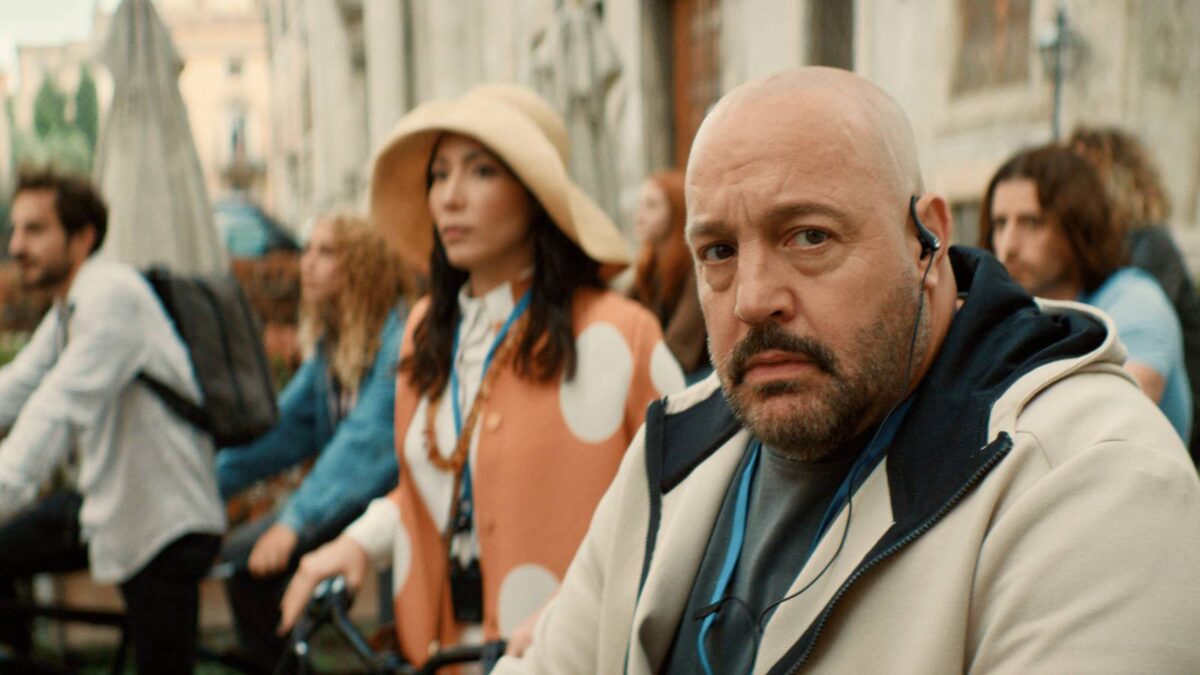
Kevin James’ Romantic Comedy Lacks Depth and Sincerity
Kevin James strikes a new, softer chord in Solo Mio, the romantic comedy from the Christian faith-based Angel Studios. It's an Eat Pray Love riff which sees the usually boisterous comedian moping around Rome after his fiancée leaves him at…
Feb 9, 2026
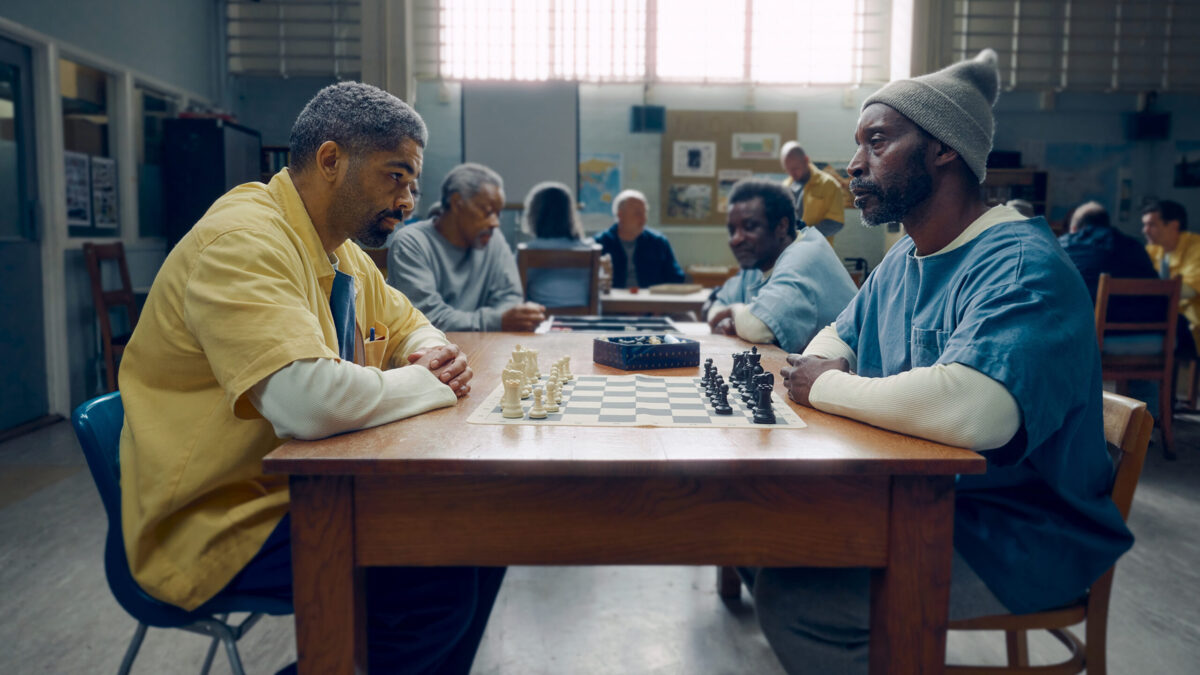
Kingsley Ben-Adir & Rob Morgan Are Solid In An Unremarkable Prison Drama [Sundance]
As if responding to a dare to see if she has the range, Swiss director Pietra Biondina Volpe follows up her heart-stopping emergency room thriller “Late Shift” with about as quiet a film as possible in “Frank & Louis.” This…
Feb 9, 2026
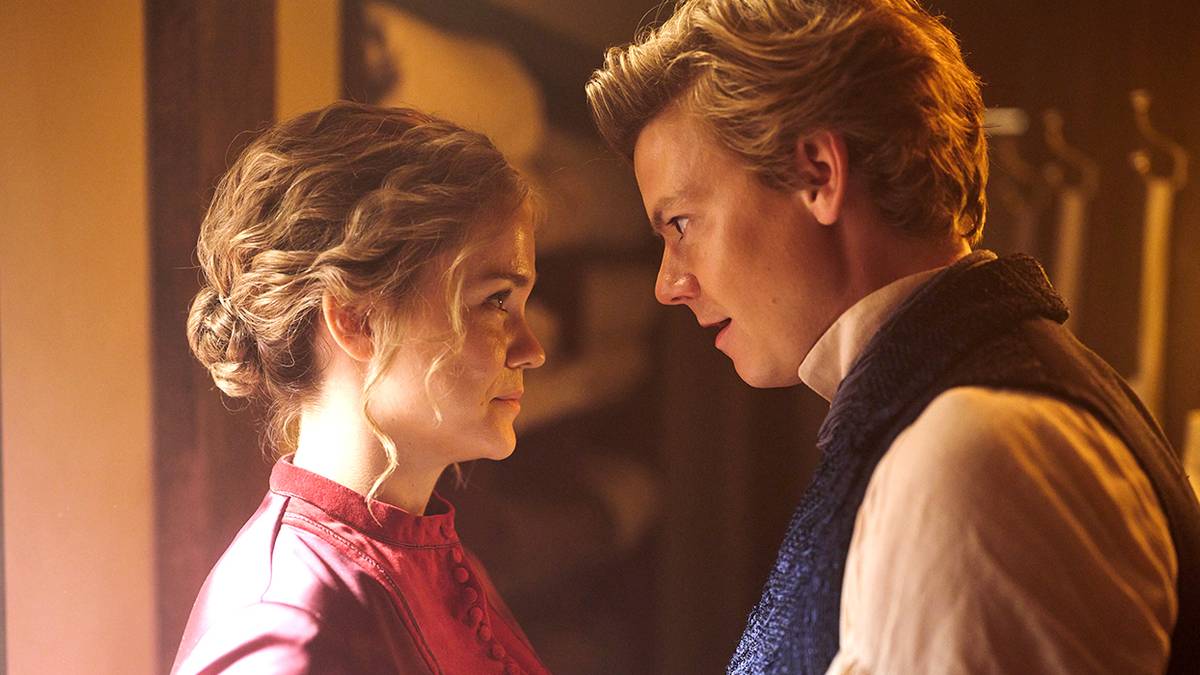
Over 2 Years Later, Hulu’s Historical Romance Feels Like a Completely New Show
In 2023, Hulu quietly released The Artful Dodger over the holiday season. The series presented itself as an inventive twist on Charles Dickens’ Victorian masterpiece, Oliver Twist. But rather than focusing on Dickens’ titular orphan, the series took the eponymous…
Feb 7, 2026
Mickey Haller Faces the Ultimate Test in His Own Murder Trial
There’s an old legal adage that says, “A man who represents himself has a fool for a client,” but not every man is Mickey Haller (Manuel Garcia-Rulfo). If you’ve watched the previous three seasons of the Netflix series The Lincoln…
Feb 7, 2026