
âAbsolutely Not a Genre Filmâ: Julia Ducournau in Conversation with Robert Eggers on Alpha
Mar 24, 2026
Alpha
“To me it’s not really a shift,” French writer-director Julia Ducournau tells filmmaker Robert Eggers on the topic of Alpha, her third feature. “Though I completely understand why it might feel like one.”
Indeed, fans of Ducournau’s previous films—her collegiate cannibal breakout Raw (2016) and Palme d’Or-winning body horror Titane (2021)—will undeniably view Alpha as a major departure. Though physical transformation is still integral to the narrative, Ducournau describes her most recent film as “a very grounded family drama.” Family is a major fascination for the filmmaker—from inheriting a taste for human flesh to birthing a man-machine hybrid—but never has she so clearly mined her own upbringing for a project.
The titular Alpha (Mélissa Boros) is a 13-year-old who, like the now-41-year-old Ducournau, is of French and Algerian descent. She also similarly finds herself coming of age during a public health crisis, meant to mirror the AIDS epidemic that hit France particularly hard throughout the 80s and 90s. Here, a viral outbreak bizarrely replaces people’s organic tissue with marble as their blood slowly morphs into red sand. Alpha’s mother (Golshifteh Farahani) is one of the few compassionate doctors at a hospital that treats many of these patients, their care an afterthought to most other staffers. The stigma seems awfully familiar—meals are often “forgotten” in the hallway, heart rate monitors flatline for hours on end—provoked by a fear of simply touching someone who’s been infected.
The atrophying patients that line the quarantined hospital ward are, unsurprisingly, mostly queer men and addicts, including Alpha’s uncle Amin (Tahar Rahim), a chronic heroin user who’s been living with the disease for years. When Alpha receives a crude stick and poke tattoo during a house party, her mother becomes paranoid that her daughter’s fate might resemble that of her estranged brother. As the three co-exist under one roof, timelines past and present converge to illustrate the mental and emotional toll sustained by repressed grief.
Eggers—whose films The Lighthouse (2019), Nosferatu (2024) and forthcoming Werewulf (2026) meticulously recreate the past to interrogate modern-day matters—interviewed Ducournau ahead of Alpha’s March 27 release via NEON. Their conversation touches upon Ducournau’s fear of saying “I love you,” her resistance to using bodily transformation as a “gimmick,” and the “two percent of ecstasy” that makes the screenwriting process feel worth it.
Eggers: Congratulations. I saw Raw opening weekend when I still lived in New York—at the Angelica—and loved the film. You were there for a Q&A, actually. I’ve been following your work since that evening. I think people are talking about a tonal shift in Alpha compared to your last two films, particularly since Titane. How do you feel about that?
Ducournau: To me it’s not really a shift, though I completely understand why it might feel like one to audiences who’ve seen my previous films. There’s a continuity in what I’m trying to do—I keep digging deeper, in a continuous movement, into the same themes. What I’m always trying to dissect is love: what it means, what shapes it takes, how unconditional love can bond two people who are strangers to each other—as is the case in Alpha, where Alpha and Amin start out as complete strangers. He remembers her, but she doesn’t remember him at all, and everything he represents repels and disgusts her. The film is about trying to break down the walls within ourselves in order to ultimately create a bond that is just a deep understanding of each other’s condition. That was what I was reaching for in Titane too, just in a different form.
Eggers: I even see visual parallels in the filmmaking that mirror the relationships in a way that’s very beautiful. The thematic stuff runs deep in both films and is very powerful.
Ducournau: It feels like film after film, I try to dig into the same obsessions while exposing myself a little more each time. When I finished Titane, the entire film had been built so that the expression of sheer love between my two characters would finally take its shape—its very unique shape—in the last fifteen minutes. That’s really where they express it, in the final scene. Afterward I started questioning myself. Why did it take me an entire buildup to get there? Why did I have such trouble pronouncing the words “I love you”? It’s strange, because with Titane I wrote “I love you,” deleted it, wrote it again, deleted it—on set, without the line, with the line—and the same in the edit room, in out, in out. At some point I thought, “What is my problem? Why can’t I say these words?” They’re the most spoken words in the history of cinema, in every language, since the beginning. I realized there was something in me that was scared of them—not because they’re a cliché exactly, but because they’ve been said so many times that they can become devoid of feeling. So for Alpha, I wanted to confront that wariness in myself and make a film that wasn’t afraid of “I love you” anymore. To be frontal about it.
Eggers: Not everyone is brave enough to confront the things they find most difficult. The cast is phenomenal—you get such nuanced, moving, grounded performances. What was the casting process? I’m not very familiar with the French cinema landscape, but it was a fantastic cast.
Ducournau: Tahar and Sif are both very well known in France and have been building international careers for a few years now. I wrote the parts for both of them—I had no plan B for either, so I was really trying my luck, because I didn’t know them personally. I liked them enormously as actors, I’d seen all their films. But I related very much to the way they project themselves into the world outside of movies—through interviews, through their public presence. Sif is a big advocate for women’s rights and is extremely vocal about her activism for Iranian women. Tahar is also someone who puts himself out there, very brave in the way he engages, and also very physical in the way he works, which speaks directly to what I expect from my actors—a physical approach to character before any intellectualization. So they were both kind enough to say yes, and I was delighted.
For Melissa, I like to mix newcomers with established actors—it’s something that’s been very productive in the past. They feed off each other in remarkable ways. Newcomers want so much to be up to the task that being around established actors helps them get out of their fear of performing. And established actors feed off the genuine, unpredictable energy of newcomers, which pulls them out of their comfort zone. With Melissa specifically, I had a firm casting principle: I did not want to work with an actual minor for this part, even though the character is thirteen. The subject matter felt too dark for that. And because the birth of sexuality is one of the central topics, especially in the context of a pandemic and how the disease is transmitted through blood and fluids, I knew that in casting a thirteen-year-old you’d be making a political statement about fear spreading in society and trickling down to younger generations. So I looked for young women who would read younger than their age—ballerinas, athletes. Melissa was none of that. She’s neither a ballerina nor an actress. She’s actually quite awkward; the way she holds herself is quirky, which is very sweet and endearing. She was nineteen when we shot. That quirkiness really brings you back to being a teenager and not knowing what to do with a body that’s changing so fast—and she could relate to that and run with it completely.
Eggers: What’s your rehearsal process? I do a lot of rehearsals—I like to have actors learn the blocking. It’s not always about finding the scenes so much as locking in the physical grammar and testing the pacing. The Lighthouse had the most rehearsal relative to shooting time of any of my films—it’s so dialogue-oriented that I needed to know if the pacing was working, and we actually cut a great deal of dialogue during the rehearsal process, believe it or not. Does the approach change for you depending on budget scale, or do you have a consistent process?
Ducournau: Actually, my process is nearly the opposite—and I have to say, what you’re describing about the pacing makes a lot of sense. When you watch The Lighthouse you would never expect it to have been rehearsed, it’s so fluid and raw in the way the madness takes hold of these men. But I don’t do formal blocking rehearsals, because all my films are so organic—so much depends on the way characters move when they’re in a room together, and I don’t want to predetermine that. I also don’t want to make bodily transformation—for Tahar in Alpha—into a gimmick. I want the actor to appropriate the new body, to experience the pain and the new feelings that come with it, and to work with it on set in real time.
From one day to the next, depending on how tired the actor is, things shift, and you play with that. When you ask this much of someone physically, you have to be very attuned every day to what they’re going through—how to work with their bodies rather than against them. If I had pre-blocked something very specific, I’d constantly be fighting their bodies, which isn’t healthy. What I do rehearse ahead of time are stunts and any form of choreography—for instance, the sequence in Alpha where the mother enters the room and finds Alpha and Amin sleeping in sync in their beds. That was rehearsed many times, because it’s almost like a dance and you can’t really improvise it on set. But it also gives the actors a sense of their relationship through their bodies before we shoot, which is its own form of rehearsal.
Other than that, we just talk a great deal, about the script and everything surrounding it. Tahar, for example, was very keen to see me throughout prep, which was quite different from Garance Marillier, who is a wild animal in the way she approaches everything. She gives a thousand percent and never comes down in intensity—for that reason she relies on you enormously in the moment, because you’re the one channeling and pacing that intensity. Tahar is different: he’s a meticulous worker who takes extensive notes and wants to understand why you wrote this scene, why you made this film. We developed a very intimate relationship just by meeting every other day and talking about our lives—how they connected through the lens of what I was exploring. So when we arrived on set on the first day, it clicked immediately. Full trust on both sides.
Eggers: Hearing you describe their approaches, I can actually see it in the performances. What inspired the marbleization imagery? When we’re first in the hospital ward and you’re doing that tracking shot, there’s this sensation of, “Wait, what am I looking at?” And then the very close tracking shot across the body—I was mesmerized by the beauty of it, which was clearly your intention. Where did that come from?
Ducournau: The idea of marble bodies came to me almost simultaneously with the idea of making the film—it was never really anything else, it was already there from the beginning. The reason feels obvious to me in retrospect: marble is such a noble material, traditionally used to depict those who are elevated above us—saints, kings, the figures in cathedrals. People who are somehow more than human. I wanted to use that noble material to elevate the lives and deaths of people who have been deemed lesser by this society. To reveal them, to show respect for their journey, and in a way to memorialize them. It goes with the way I want you to apprehend both the patients and their disease.
I was also very aware of the reactions audiences had to my first two films—I’ve had people fainting in screenings. Those reactions would have been actively harmful for this film, given the subject matter. My central concern was always that you be able to relate to the humanity of these patients, see it and never lose touch with it. I didn’t want them to become “other.” That’s where you walk on thin ice with genre—you constantly have to ask yourself whether you’re preserving their humanity or leaning into genre spectacle. To me Alpha is absolutely not a genre film. It’s a very grounded family drama. The iconography I use is unrealistic, and yet within the world of the film it feels completely real. That was the line I was always trying to walk.
Beauty, though, is a real conundrum. I initially thought I wanted the audience to find the marbleized bodies beautiful—but beauty is objective only under false pretenses. What I find beautiful you might find repellent, and vice versa. There are standards of beauty, of course, and every era in human history has had its own, mostly imposed on women. So I was feeding my own naivety in saying I want people to see them as beautiful, because that cannot be controlled. It was weighing on me enormously—I thought, I might be tricking myself into something I can’t pull off, and I can really fail at this. But I arrived at a resolution when I was writing the scene in the waiting room, where Alpha runs into her teacher and his companion. He mentions that his mother called him an Apollo—and Alpha answers: “No, but you’re beautiful. That’s true.” I realized later that was accidentally the lyrics to a James Blunt song, but anyway…
When I wrote that line, I thought about directing Melissa to say it and mean it completely—not as a polite nicety, but with genuine conviction, from the first moment she sees him, when everyone around her has a reaction of self-protection and rejection. She just looks at him with pure curiosity, something quite innocent. I realized my own point of view about what’s beautiful is entirely irrelevant. As long as she finds him beautiful, everyone will. That’s where your POV as a director stops mattering—it becomes your character’s.
Eggers: That’s one of my favorite scenes. I want to ask about influences—not only cinematic, though that’s fine too. Cronenberg gets invoked around you a lot for obvious reasons. What are some deeper influences?
Ducournau: Cronenberg—I’m not going to deny it, it’s so obvious. His cinema gave me an education from my earliest years. Education feels like the right word, more than influence even—it’s whose work shaped my mind at an age when you’re a sponge. But when I talk with my DP, who has been the same since my first feature, we almost never bring up film references. We always talk about paintings and photography. We send each other references constantly, go to museums together, and talk about light. Those are our real touchstones.
For specific images, there are paintings I don’t recreate exactly but make an interpretation of. In Titane, for example, the scene after she tries to rip off her nipple piercing on the beach, there’s a wide shot before we move close to her—a shot where we aimed the light mostly at the water, not at her. There’s no reason the sea should be lit that way. What I was going after was a feeling I found in a Winslow Homer painting—I can’t remember the title, but it’s from around 1890. It’s a beach at night, women dancing on cliffs with the sea behind them, and they’re lit as if there were headlights aimed directly at them. This light is freakishly modern—if you look at it alongside a cinematographer working with neons today, it fits right in. The guy painted it in the 1890s as if he’d taken a time machine. I imagine he was criticized for that use of light, which makes complete sense, because it’s so unapologetic and creates such a strange effect—the main figures are in shadow, and the focus is the sea, which is not the main subject of the painting.
That’s the kind of thing I want to take from paintings: that daring movement of asking what your actual focus is in a shot versus what the viewer expects it to be. More broadly, Francis Bacon and Robert Mapplethorpe are artists I continuously return to. Frida Kahlo, Louise Bourgeois. It’s almost always painters, photographers, or sculptors rather than filmmakers.
Eggers: When you’re in a writing phase, what does a day look like? Does it shift as you move through different periods of the script?
Ducournau: Can I ask you something first? Do you write alone, or do you have a collaborator?
Eggers: Sometimes alone, but I’ve been writing with a partner lately. I’ve experienced the loneliness of the long-distance runner, though.
Ducournau: It’s quite something, isn’t it? I tell students that writing is ninety-eight percent despair and chaos—no hope, no glory—and two percent ecstasy. You have to keep focused on that two percent, which will come eventually, but you have to earn it. And it’s a very lonely process, solitary in every single moment—even when you’re not writing you’re thinking about it, which makes you less available for the people in your life. It’s alienating.
I originally planned to be a screenwriter—I applied to the screenwriting department at film school—and I stumbled into directing while I was there. I started picking up cameras and gathering small crews just to have the experience, and I realized directing was simply an extension of writing. Instead of the computer, it’s the camera; instead of sentences, it’s the choices you make on set. For me, it’s constant writing. Even post-production is writing—it’s sharpening. Every choice you make with the camera, in the shot list, in the storyboard, in every direction you give to your crew and actors—you’re just sharpening your intention with the same story. Personally, if the finished film resembles the script, I’d feel I missed something. Something has to happen between the script and the finished film—something transcended through all those choices. It’s like you start with a rough rock and every decision is sculpting it.
Eggers: Just chiseling your marble.
Ducournau: Exactly.
Eggers: Do you have a favorite stage in the process? I used to say I preferred production. Coming from theater, being with actors is wonderful, and standing in the castle I’ve been building in my head is a remarkable feeling. But I find genuine joy in all three stages for very different reasons.
Ducournau: Writing, for me, is genuinely masochistic. You have this thing where one or two scenes in the script feel so alive, so right, that they give you hope for the rest. You think, “I can’t let down that scene by fucking up everything around it.” But that attachment comes with terror, because I’m always afraid the things I love most are going to be taken from me—by production constraints, by budget, by my own failures. It hasn’t happened yet, thank God. But it requires constant flexibility and precision about your intentions in order not to let them go.
On Alpha, I had this with the lunch scene. Narratively it doesn’t advance the plot—my producers saw it as just a lunch scene, and for a forty-one day shoot it was two days of filming and a significant cost. But I fought hard for it, because I knew it was essential. It gives you such a deep sense of this family—the way they’ve denied parts of their history in order to keep standing and loving each other, the way taboo operates within the family unit. The whole thing with Beethoven playing over the mayhem of it—that was a huge part of my own childhood. The scene is very close to my own life. I come from two cultures: my mother is Algerian, my father is French, and growing up I didn’t share a language with my grandparents—I’d speak French, they’d speak Berber, and we couldn’t understand each other literally. And yet I would know when my grandmother was angry, I understood why she was angry at me, there was something animal in the communication that transcended language.
Alpha in that scene is trying to find her place in a family that is chaotic and matriarchal and full of simultaneous bickering and love and yelling and laughter—all these contradictory signals she can’t quite keep up with. Is everyone angry at each other or are they laughing? How can something as unified as a family be so chaotic at the same time? That comes directly from my own experience. And what it’s really about, for me, is the question of elected family—you decide to do the work of choosing your family every day, or you don’t. It’s blood bonds and elective bonds at once.
Publisher: Source link


‘Dutton Ranch’ Trailer Reveals ‘Yellowstone’ Sequel Release Date
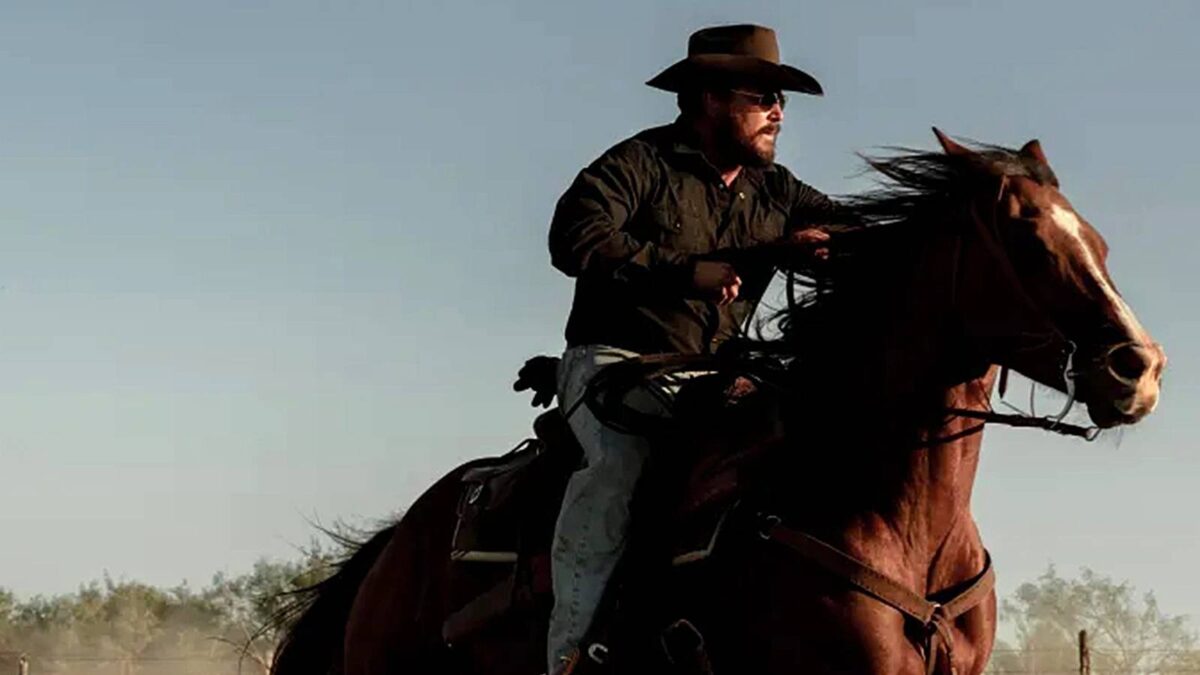
Rip Wheeler and Beth Dutton gamble everything on a new life in South Texas in the first trailer for the Yellowstone spin-off, Dutton Ranch. The footage reveals all manner of gun fights, fist fights, explosions, galloping horses, and even mysterious…
Mar 24, 2026
Born Again’ Showrunners Detail How the Media Ties into Season 2
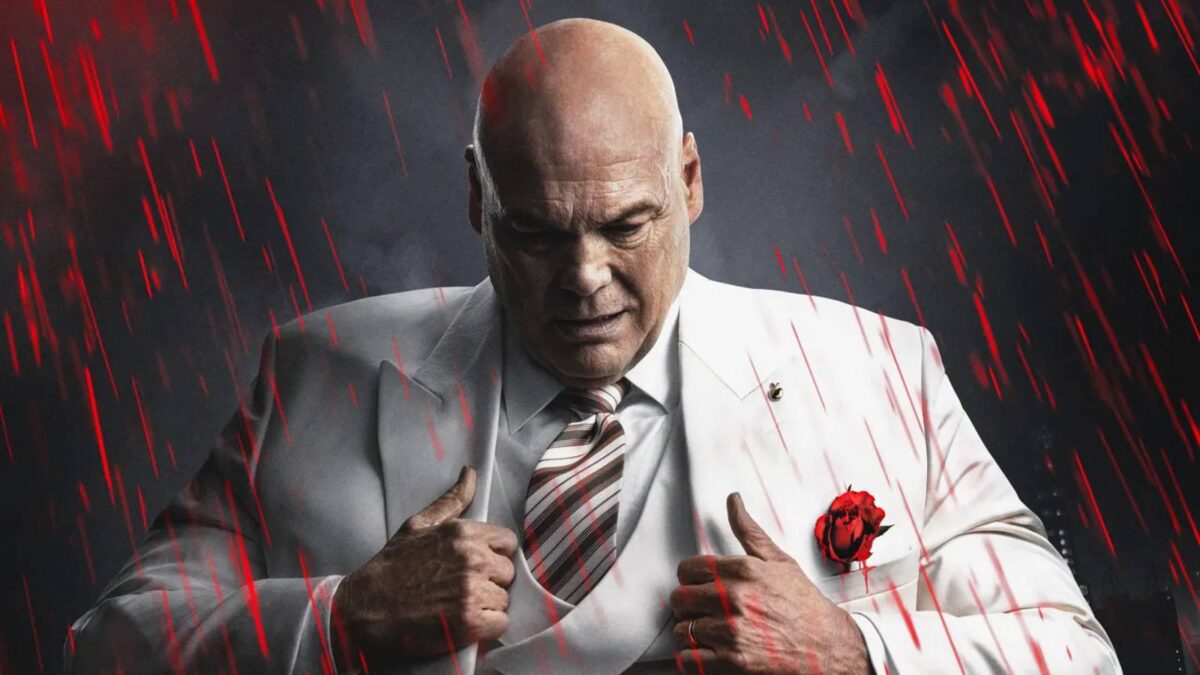
Marvel is fast approaching the release of Daredevil: Born Again Season 2, marking its second live-action Disney+ show of 2026. Bringing back Charlie Cox's Matt Murdock and Vincent D'Onofrio's Wilson Fisk, this season picks up where Season 1 left off,…
Mar 23, 2026
New ‘Wheel of Time’ Animated and Video Game Adaptations Are in the Works
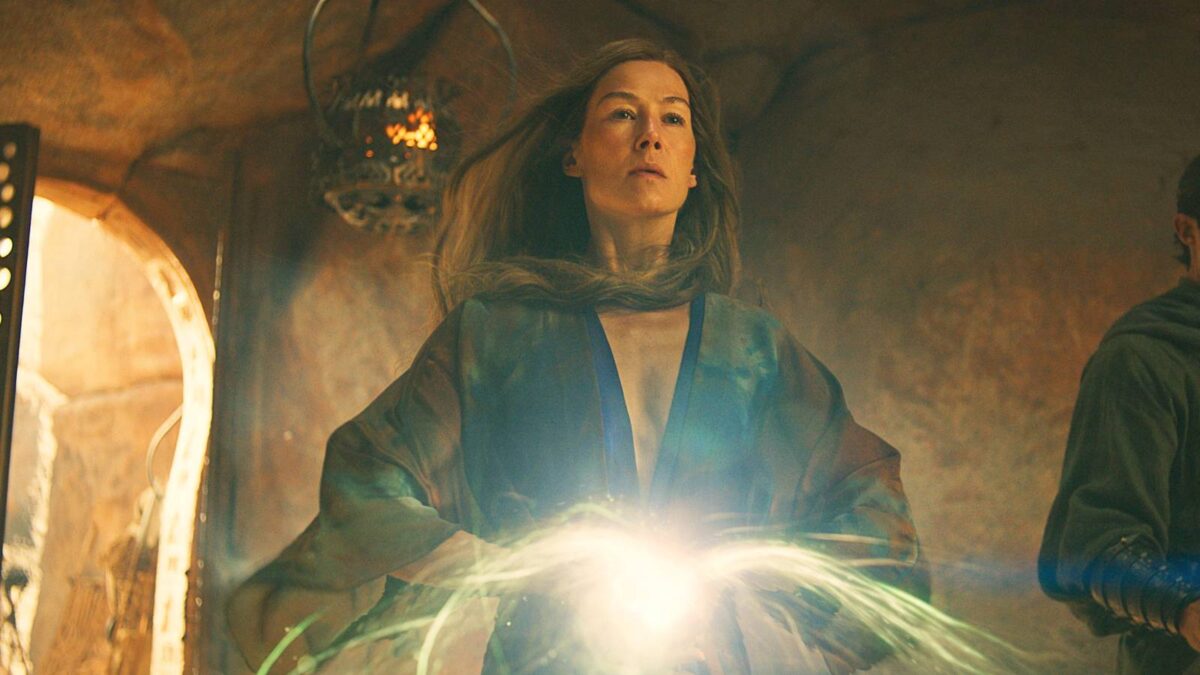
Amazon might be finished with The Wheel of Time, but we haven't seen the end of the story when it comes to adaptations of Robert Jordan's bestselling high fantasy saga. Fans were left blindsided when Amazon abruptly pulled the plug…
Mar 22, 2026
‘Off Campus’ Teaser and Release Date Revealed by Prime Video
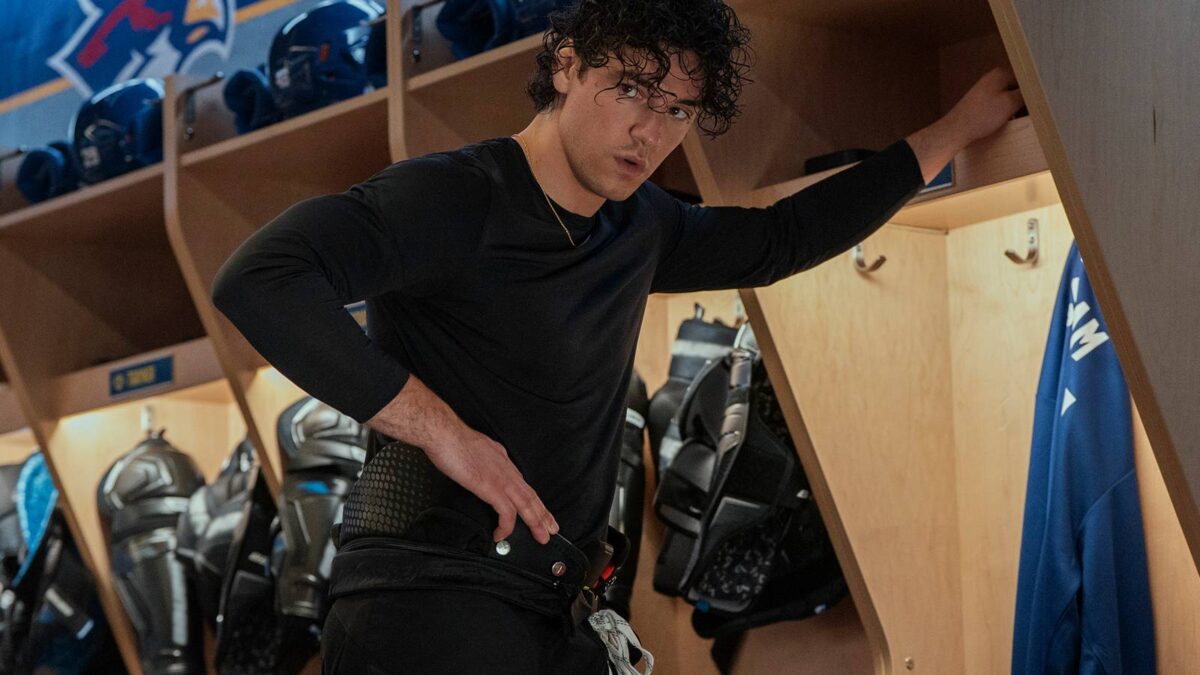
No one expected a love story between rival hockey players to become one of the most talked-about TV shows of 2025, but there's a lot more where Heated Rivalry came from, as a new teaser for Prime Video's foray into…
Mar 21, 2026