
âThese Guys Donât Missâ: Padraic McKinley on Directing Ethan Hawke and Russell Crowe in The Weight
Jan 29, 2026
The Weight, courtesy of Sundance Institute.
When Padraic McKinley first received The Weight screenplay from producers Nathan and Simon Fields, he loved the atmospheric world it summoned forth. Original screenwriter Matthew Booi, along with Leo Scherman and Matthew Chapman, had created something special with this Western-adjacent Depression-era crime-thriller. But as a longtime editor across film and TV (Igby Goes Down, Dexter), as well as a producer with strong instincts about story and pacing, McKinley knew the screenplay still needed work.
Ethan Hawke had a similar feeling about the original script. McKinley asked him to play lead character Samuel Murphy, an incarcerated man desperate to reunite with his young daughter before she disappeared in the court-mandated foster system. “Ethan was doing his Paul Newman documentary at the time and we started dreaming up a new story,” McKinley said prior to the Sundance premiere of The Weight. That’s when Hawke suggested Shelby Gaines, a writer and sound designer he’d worked with, for the rewrites. (Gaines eventually also wrote the film’s tense score with his brother Latham). “And so the three of us got together, and re-dreamed the story of The Weight.”
That reimagination is now complete, and marks McKinley’s feature directorial debut (one he also edited with Matthew Woolley). The film follows Hawke’s Murphy through a treacherous prison system, where he cuts a deal with enigmatic Warden Clancy (Russell Crowe). The agreement requires Murphy to smuggle gold out of a mine that Clancy’s got a stake in before the government seizes it, through a dangerous trek in the wilderness. The reward, of course, is his signed release papers. Murphy accepts the job out of desperation, appointing a group of fellow and equally despairing convicts to join him under the supervision of Clancy’s armed men. The group includes Rankin (Austin Amelio), Singh (Avi Nash), and Letender (George Burgess), as well as Anna (Julia Jones), a strong-willed woman with her own stakes to escape the grounds.
“We approached it from the character standpoint first and foremost,” explains McKinley. “The kind of character Ethan wanted to play. He wanted Samuel Murphy to be quiet, like a throwback character of the Newman sort of archetype.” So references like Cool Hand Luke and Sometimes a Great Notion entered the production’s orbit as influences, as well as The Sorcerer; adventure films that McKinley wanted to harken back to. “You know, very few CG shots, and plot and character-driven action. In the Bible of this project is William Friedkin, Peter Weir—these sort of influences,” he says.
Filmmaker: And when you mention Paul Newman, I want to mention Robert Redford too, being here in Sundance. I was thinking of Jeremiah Johnson.
McKinley: Yes, Jeremiah Johnson was a big one for us. It was the quietness of it. We went back and not only analyzed its style of the zooms and lenses, but the way it was cut too. It’s not very cutty. There’s not a ton of score in it. And we really took our influences from it. This process started a long time ago, but we did say, if we did this correctly, this would be a cool movie for Sundance. And Robert Redford would like it. This was four years ago, and we didn’t know that we wouldn’t be able to show it to him. But since Ethan had a relationship with him, he was excited to hopefully try to get us into Sundance. And here we are.
Filmmaker: Could you talk a little more about the character work that was done in the script? I think it’s remarkable that we spend a real amount of time with the backstory before the trek begins. It almost feels like an investment into upping the stakes of the trek.
McKinley: Formerly, there was little backstory. Samuel’s daughter was in the orphanage, and he needed to get money, and that was it. And I said, “If we’re talking about these 1970s films, why not have a prologue, or an elongated first act? And when we started thinking about that, the end game became Samuel wanting to get Penny’s teddy bear back. That just opened up the floodgates for us. And the film found its rhythm: a prologue, and then the first act that gets us to Russell Crowe’s Clancy and the gold mine, and then finally the road. That was the set up. In adventure films, you need to keep passing the baton and the pace moves nicely. So we go from the Penny story to the Clancy story, to meeting Taggert (Alec Newman) and the gold, to getting on the trek. And then we reverse out of it: we come back to Taggert, Clancy, and Penny on the way back out.
Filmmaker: It must have been a rough shoot, with the outdoors and weather. What was the region you shot in? And how did you navigate the elements?
McKinley: It was rougher for them than me. I had a heater and an umbrella, and I didn’t have to get in the water. [Laughs]. We originally looked at Vancouver Island, but it didn’t work out financially. Then we ended up getting connected with German producers. They sent me a look-book that I thought was my own look-book from Vancouver Island. It was the Bavarian Forest and the Black Forest, parts of lower Bavaria and it looked so similar. There’s a lot of beautiful territory down near the Alps, which is not drastically different from Oregon. So we did two weeks in Munich, one week at a studio, and then we took the movie on the road, staying around lower Bavaria with phenomenally beautiful mountains, trees, and great atmosphere with a lot of mist and fog in the air, which really lent itself to the picture like Oregon.
The shoot was tough. One of the rules we had was, there couldn’t be a path to walk on, or it would seem like they were in civilization or someone had been there before. We’d park our circus, and then it would be traveling 15 minutes by van, to hike another 15 minutes to get to where we were shooting. The water was icy cold. And since we didn’t have a lot of time, the cast had to be in the river two days in a row. There were a lot of bumps, bruises, scratches. There were ticks. It was an adventure film that we made into an adventure.
Filmmaker: How did that adventure inform the equipment you were going to use, especially because you had to trek with them, and protect them from the elements?
McKinley: We used the Alexa 35, which has a pretty small body. And we were using Hawk Vintage ‘74 Anamorphic lenses, which are a bit heavier. The way we were going to be able to do this film in our timeframe, which was 25 days plus one tank day, was having a little splinter crew at all times. Like a little documentary crew. So the cameras would come up as close as possible. And then with our DP Matteo Cocco, and our camera operator, we would hike up into the woods and be this mini documentary crew, a team away from the main team. The video village was often a 10-minute walk. And they were watching on iPads rather than the feed, because we were far away enough. But we could also turn 360. And so we could shoot fast, and we could turn around fast to make the scenes quickly. And we could do multiple passes of them walking or on journeys with campfire.
Filmmaker: And on the note of the campfire, the nighttime scenes are shot so beautifully. The whole film is lit extremely well.
McKinley: One of the things that I didn’t want is a sepia-colored film. I didn’t want it to have this half black-and-white look, or be over-lit. It takes place in the ‘30s, but I didn’t want to make it look like a postcard from the ‘30s. I wanted it to be vibrant and alive. We also use technicolor techniques in the color timing where we’re a bit more into primary colors. And during the nighttime fires, it was important that we saw the faces, and we did our best to have a quick drop-off so that we could shoot at the studio for a couple of them. And we placed the cast up against some beautiful rock faces to add texture. I don’t really like night scenes that are lit. So we had our campfire that we could blaze and see everyone’s faces. We want to see everything and be colorful, rich, and dynamic. And then we did some old-school day-for-night in an homage to the ‘70s films. These days, it’s a bit easier because we can do a little more color separation in the DI and bring skies and skin tones and everything where we want to. We had a lot of night shoots, but we could at least break off a few and make our schedule work a little bit better by having day-for-night.
Filmmaker: The entire cast is terrific, but Julia Jones is a special standout to me.
McKinley: I saw Julia in Taylor Sheridan’s Wind River. Great movie. And I saw her in the new Dexter. We had a five-hour zoom conversation about Anna and The Weight, and there was no single other actress I looked at for Anna after that. There’s something about her physicality, her toughness. You could believe she was part of the gang of these roughneck boys. And that was important because there’s a physicality to all the guys in the film. And we wanted to get that right across the board.
Filmmaker: I also really loved seeing Russell Crowe in this part. I realized I missed him.
McKinley: I felt the same when I asked Russell to do it. I sent him the script after Shelby re-wrote it. And he said, “That’s a great story, a really well-written script. But don’t get used to me not being the quarterback.” As in, he wanted to play Murphy next time. [Laughs.] But he said, “Clancy is a good, pivotal role.” Watching the first week of Ethan and Russell scenes was like watching Djokovich and Federer play tennis. It was like, “These guys don’t miss.” They brought everything to a new size. And every angle brought something new out of these guys. Watching them riff off of each other was incredible. And it was a really cool way to start the film for the entire crew, as we knew we had something quality right off the bat.
Filmmaker: How did the cast meet the physical demands? Did they have to go through any sort of training?
McKinley: In Lower Bavaria when we were shooting, you would see some young handsome boys jogging the streets and running around Pullman City in Western town there in the mornings. Ethan was doing push-ups in his hotel. I think George Burgess [playing Letender] came down about 30 pounds during filming and training. On day one, the boys said (regarding the gold packs they were going to carry), “These are too light. I need something heavier.” One guy said, “I’m going to need 40 lbs” or 50 or 60 lbs. [Laughs.] And after a couple of takes, I think Austin went back to something lighter. And I think Avi bailed after the second take. So in about half an hour, everyone was back to a reasonably-weighted pack when we didn’t really need to slug it around, when we were just hiking. And those were treacherous, especially for Matteo. He was doing the same trek, but backwards with a camera on his shoulder. We really tried to shoot out in the wilderness. We had a bad fire ant situation with Lucas. He got bit by a bunch in the face.
And Julia is tougher than all because she had a six-month-old baby with her. She had to do all they had to do, but with a baby. Talk about tough.
Filmmaker: Could you perhaps reflect on the title, The Weight? It’s layered with meaning—the weight they’re carrying, but there is also something deeper about the desperation to do something for your child.
McKinley: That’s the key that I’m really most proud of, about what a father does for his family and daughter. The title comes in at the 12-minute mark because it’s not just about the weight on their backs, it’s about the weight of losing your child and having to go out and do something, anything to keep the possibility of hope alive in the Depression era. It’s about the integrity of a man to go out there even though he knows it’s kind of a rotten job—but he does it as he has no choice. I think we’ve seen that a lot in America in the last few years where it’s hard to make ends meet. Whether it be driving an Uber at nighttime or taking a second or third job, you’ve got this crushing weight that you put on yourself.
Filmmaker: The contemporary connection you’ve made feels spot-on, too. Doing anything you need to do these days in the gig economy to make ends meet.
McKinley: It’s been such a tough few years in our business especially. Shelby delivered the script before our downturn in the film business and it just became more relevant every single month that went by, with the strikes happening and the contraction and COVID and all. So every time we reread it, it got stronger and more powerful. And also, my daughters are growing up now and I’m more in Murphy’s state of mind. By the time we were ready to shoot, we were all pretty ripe and had an emotional weight ourselves.
Publisher: Source link



Wuthering Heights Review | Flickreel
As far as adaptations go, I’ve never viewed any source material as sacred, including The Bible. While a faithful adaptation is always welcome, I’m open to a filmmaker leaving their signature on a classic story, especially one that’s been told…
Mar 17, 2026
Amy Adams Sinks In Vapid, Misguided Alcoholism Drama By ‘Pieces of a Woman’ Director [Berlin]
For a solid decade, starting in the late 2000s with Disney’s charming fairytale comedy “Enchanted” all the way to Denis Villeneuve’s melancholy sci-fi “Arrival,” it was easy to trust Amy Adams, a six-time Academy Award nominee. Then, somewhere around Ron…
Mar 17, 2026
Mason Gooding & James Van Der Beek’s Bad Night Is Aggressively Dull
Ever since the Scream franchise helped put him on the map, Mason Gooding has been a great talent to watch. The genre-bending slasher Heart Eyes is still his best non-franchise role yet, but he's also branched outside of horror in…
Mar 15, 2026
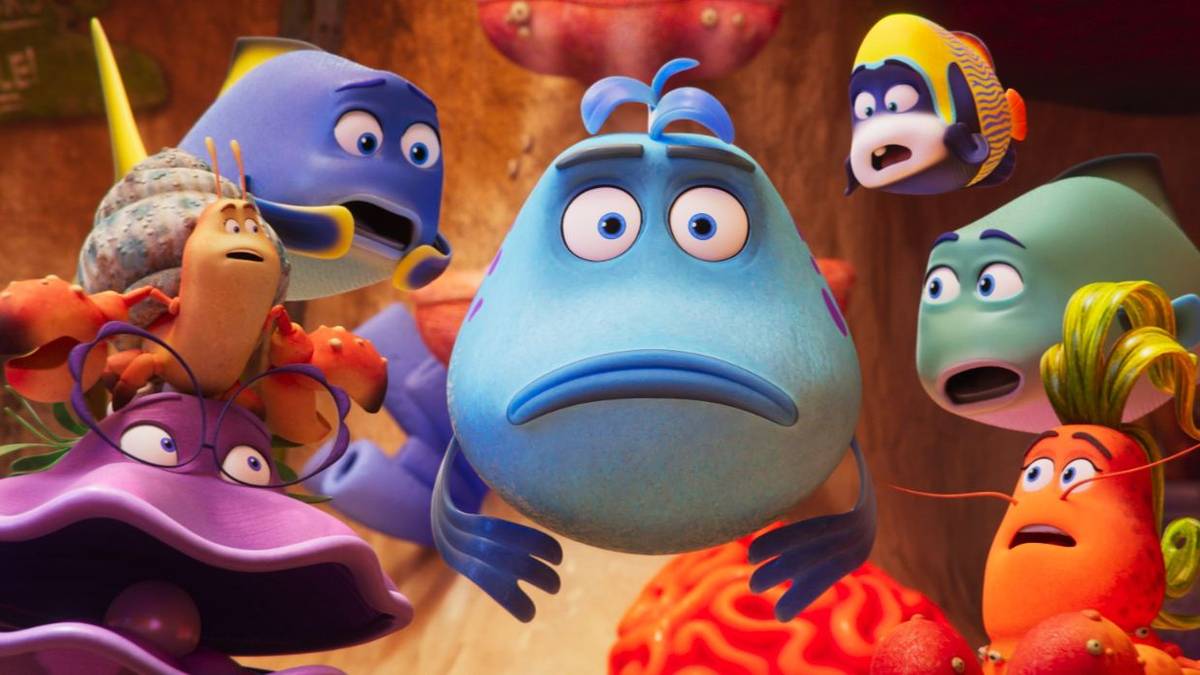
A Grumpy Nick Offerman Keeps This Fish Tale Swimming Along
Animated fish films have been done. Finding Nemo. Shark Tale. Ponyo. So to hear about another doesn't feel like anything new. However, The Pout-Pout Fish, starring Nick Offerman as a grumpy ocean pout named Mr. Fish, is a little different.…
Mar 15, 2026