A Heartwrenching Exploration of Human Connection and Virtual Fantasy
Jan 17, 2025
The societal fear of harm caused by video games is nothing new. Back in the ’90s when gaming at home exploded onto the mainstream, parents, teachers, and politicians everywhere were in a moral panic over the mind-rotting effects of sitting, for hours on end, immersed in fantasies that might skew the player’s ideas of the real world. Games like Grand Theft Auto were considered a bad influence, encouraging people to commit violent crimes for fun, even if only within the framing of make-believe. Now that everyone has some device or other as a pillar of their very existence, this fear is more prevalent than ever. But, many gamers say that this hobby is good for them and their mental health. It provides a sense of escapism, just as books or movies do, that enables them to unwind and disconnect from the frenetic pace of modern life.
What is ‘Eat The Night’ About?
This is an idea explored by writer/directors Caroline Poggi and Jonathan Vinel in their new movie Eat The Night. It is a compelling look at how a video game can provide not only entertainment, but a sense of community for those lacking it in their real lives. Apo (Lila Gueneau) is a fairly average French teenager. She tells us that for almost a decade, she has been playing a game called Darknoon, a fantasy role-playing game that has no real aim, but provides an alternative world in which you can create an ideal version of yourself, and run around fighting battles, slaying monsters and meeting other characters. But it is announced that Darknoon will soon shut down for good, and she is dismayed at the idea of losing the world that she has spent so many years making a central fixture in her life during her most formative years.
Related
Here’s Why Billy’s ‘Agatha All Along’ Relationship Matters
This pairing is a huge step forward for the MCU!
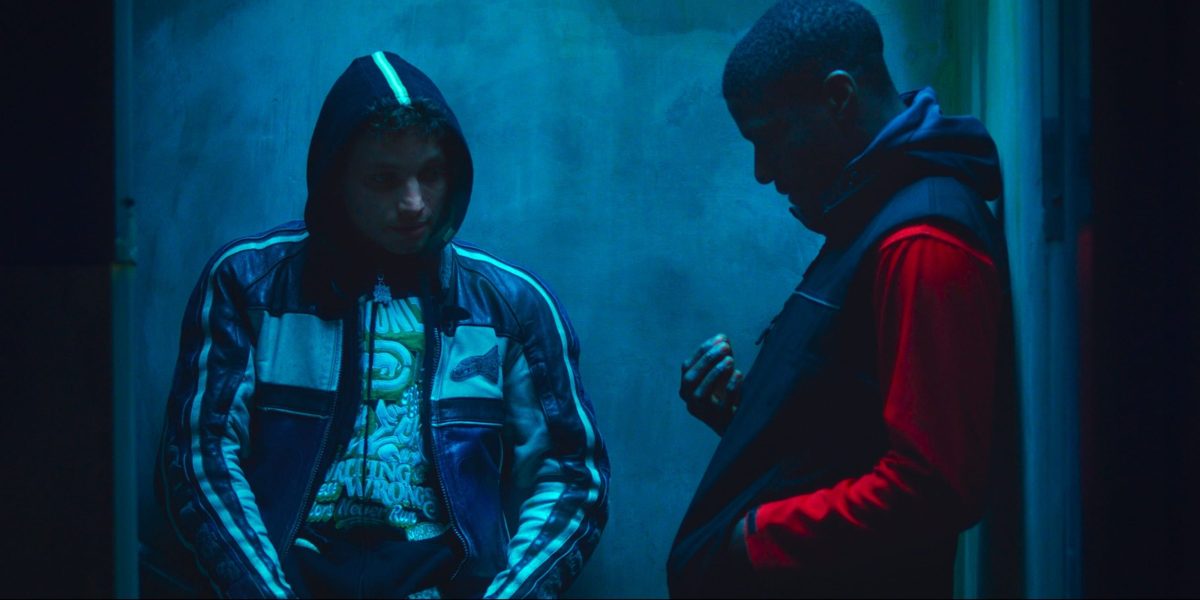
Over the years, she got her older brother Pablo (Théo Cholbi) playing too. The siblings are very close, and seem to live without any parents, so they rely on each other emotionally. Pablo is a drug dealer, who manufactures MDMA from an abandoned cottage in the countryside, and sells it at parties. One day, he is attacked by a rival dealer, and a young man named Night (Erwan Kepoa Falé) helps him. Pablo invites Night to work with him, and teaches him how to press pills. The two soon form a romantic connection, and life is going well for them, but Apo feels neglected. As the guys’ drug operation becomes more prolific, their rivalry with another dealer and his gang is exacerbated, and Pablo is framed and jailed.
Escapism is a Key Theme in ‘Eat the Night’
Image via Atelier de Production
The town in which the characters live is pretty dismal. The buildings are dull concrete structures, the skies are always gray, and the population of rough young hoodlums is prominent. It’s not exactly a war zone, but it is bleak enough to make Apo’s need for escapism understandable. It’s about escaping the mundanity of her existence. There is no talk of her ambitions or dreams; she is focused on the here-and-now and the impending doom of her beloved second home. The world of the movie has a sense of staticism, with no past and no real future. What exactly will happen when Darknoon goes offline? Will it be an unceremonious switch-off, or is the action building to something grander in which the two worlds collide?
Pablo and Night seem to be the only ones considering a better life, and talk of wanting to leave and find somewhere better, rather than “rotting” in this soulless place. This is one of the elements that makes their romance so intriguing. It goes from an arrangement of convenience to a genuine love story, and Pablo’s drive for success ends up costing them dearly. Night is the character that holds it all together, and Erwan Kepoa Falé’s performance is utterly endearing. He has a gentleness to him that seems a strange fit for a drug manufacturer. In his regular life, he lives happily enough with his sister and niece, while stacking shelves in a supermarket during the day. Not only does Pablo offer a romantic outlet he seems in need of, but his own form of escapism. Night is a good man, with a strong sense of friendliness and familial love, and you so desperately want everything to work out for him.
There is a tangible sense of loss about the movie, and the countdown of the days, and eventually minutes, left of Darknoon, reminds us of it. Apo’s only real goal is to be there for the end of the game, along with her brother, but as his problems escalate, she is pulled away from that objective to be there for Pablo and Night. She sacrifices the fantasy for a gritty reality that she doesn’t want or deserve, and it becomes increasingly possible that she won’t be there to see out the end of the game. A more morality-driven narrative might have Apo realize that the real world is more important than the virtual one, and “put away childish things”, but the movie is committed to allowing her this one joy. It’s not about condemning gaming, or framing it as a bad influence that rots minds. It’s about how, even amid painful physical separation, the game offers her a means of communication with and comfort from those who care about her.
‘Eat The Night’ Hinges on Endearing Characters
Image via Atelier de Production
The movie uses game footage as something of a reflection of the character’s inner selves. At first, their avatars are alter-egos who look, dress, and operate in ways totally different to them. But as time goes on, the avatars begin to take on the forms of their real selves, and they talk in their voices, having personal discussions. The fantasy elements of the game are gradually stripped away until it becomes more of a safe haven for them, a place they can retreat to and just be themselves. The footage itself, created by Sara Dibiza and Lucien Krampf, provides the perfect mountainous, elvish warrior type of world in the vein of Skyrim that is such a blessed escape from run-down French suburbia. It’s colorful and just about realistic enough, but always careful to maintain that weightless movement and lack of firm physical interaction that characterizes such games. This enchanting world becomes more of a prominent fixture as the movie goes on, and it’s always a pleasure, for characters and audience alike, to retreat to.
Eat The Night is a difficult movie to define: the categorization of ‘drama’ does it an injustice, but it is not quite fast-paced or immersed enough in the underworld to be a crime thriller. It is an unusual but compelling story of how the real world and a cyber fantasy can eventually converge, and how the bridging of this gap can offer hope to the vulnerable. It ends on a tragic note, with Night beaten into a coma, Pablo on the run having gone on a vengeful spree, and Apo desperate for the comfort of her brother. We watch as the final seconds of Darknoon tick down, and finally, everything freezes, and characters start to disappear, only for their lifeless bodies to cascade from the sky, piling up in the empty streets of the once bustling utopia. The bounty of corpses demands you consider each of the people behind those avatars, and the equally miserable lives they might be leading. Where is their hope now? Where will they turn for that escapism that everybody needs? The cynical — those parents, teachers, and politicians — will coldly suggest they get back to the real world and do something productive. But what is life without enjoyment, and a means of connecting to others?
Earlier in the movie, Pablo introduces Night to his pet snake, who he says he feels bad for. Being locked up in a glass tank is no life, and his beloved reptile needs attention and care. The movie ends with a glance around Pablo’s cottage, now torn apart and covered in graffiti. The vivarium has been smashed, and inside lies the lifeless body of the snake, cold, alone, and forgotten. The suggestion is that each of our main characters has suffered the same fate. They have all physically lost each other, through separation and injury, when what their survival hinged on was human connection and stimulation. The emotional core of the story relies strongly on the performances of Cholbi, Falé, and Gueneau, who turn in wonderful performances that don’t need loud outbursts or explosive arguments. They communicate such a deep sense of dedication and love between them that each of their downfalls feels heartbreaking. If anything, Eat The Night is a tragedy. It’s about the loss of love, safety, and human interaction. The video game is just the catalyst for it all.
Eat the Night is now playing in theaters.
Eat The Night clashes virtual fantasy and crime-ridden romance, as online and real-life worlds implode.
Release Date
July 17, 2024
Director
Caroline Poggi
, Jonathan Vinel
Cast
Théo Cholbi
, Erwan Kepoa Falé
, Lila Gueneau
, Mathieu Perotto
, Eddy Suiveng
, Kevin Bago
, Xavier Maly
, Thierry Hancisse
, Mareme N’Diaye
, Ike Zacsongo-Joseph
, Igor Kovalsky
, Tya Deslauriers
, Thomas Parigi
, Ymanol Perset
, Kamilya Kuspanova Bialas
Runtime
102 minutes
Pros
Great chemistry and strong performances from the three lead actors
Engaging characters and compelling story
Beautiful game footage
Cons
A few holes in the narrative that could do with further explanation
Expand
Release Date
July 17, 2024
Director
Caroline Poggi
, Jonathan Vinel
Cast
Théo Cholbi
, Erwan Kepoa Falé
, Lila Gueneau
, Mathieu Perotto
, Eddy Suiveng
, Kevin Bago
, Xavier Maly
, Thierry Hancisse
, Mareme N’Diaye
, Ike Zacsongo-Joseph
, Igor Kovalsky
, Tya Deslauriers
, Thomas Parigi
, Ymanol Perset
, Kamilya Kuspanova Bialas
Runtime
102 minutes
Expand
Get tickets
Publisher: Source link






‘Dutton Ranch’ Trailer Reveals ‘Yellowstone’ Sequel Release Date
Rip Wheeler and Beth Dutton gamble everything on a new life in South Texas in the first trailer for the Yellowstone spin-off, Dutton Ranch. The footage reveals all manner of gun fights, fist fights, explosions, galloping horses, and even mysterious…
Mar 24, 2026
Born Again’ Showrunners Detail How the Media Ties into Season 2
Marvel is fast approaching the release of Daredevil: Born Again Season 2, marking its second live-action Disney+ show of 2026. Bringing back Charlie Cox's Matt Murdock and Vincent D'Onofrio's Wilson Fisk, this season picks up where Season 1 left off,…
Mar 23, 2026
New ‘Wheel of Time’ Animated and Video Game Adaptations Are in the Works
Amazon might be finished with The Wheel of Time, but we haven't seen the end of the story when it comes to adaptations of Robert Jordan's bestselling high fantasy saga. Fans were left blindsided when Amazon abruptly pulled the plug…
Mar 22, 2026
‘Off Campus’ Teaser and Release Date Revealed by Prime Video
No one expected a love story between rival hockey players to become one of the most talked-about TV shows of 2025, but there's a lot more where Heated Rivalry came from, as a new teaser for Prime Video's foray into…
Mar 21, 2026