A24’s ‘The Legend of Ochi’ Uses 1930’s Lenses, “200 or More” Matte Paintings, Puppets, and the Romanian Wilderness to Create a Magical World
Feb 6, 2025
Summary
Collider’s Steve Weintraub sits down with the writer-director and cast of The Legend of Ochi at the 2025 Sundance Film Festival.
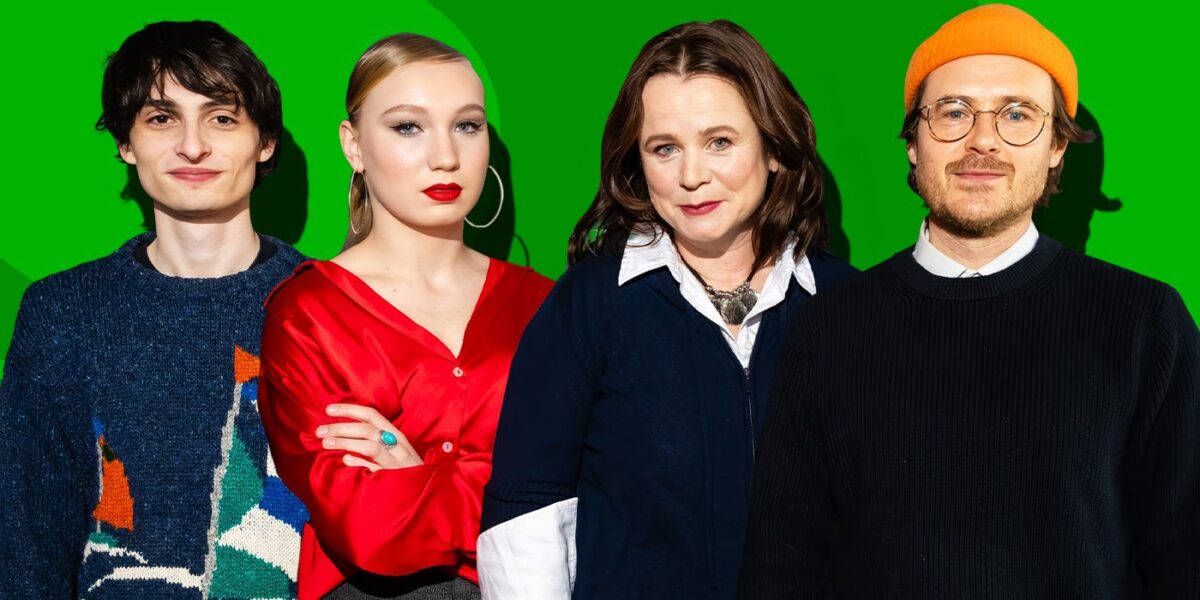
From writer-director Isaiah Saxon, The Legend of Ochi is an ’80s-inspired family adventure starring Helena Zengel, Willem Dafoe, Finn Wolfhard, and Emily Watson.
In this interview, Saxon, Wolfhard, Zengel, and Watson discuss practical effects, Romanian wilderness, vintage camera lenses, matte paintings, and tease upcoming projects like Dune: Prophecy Season 2 and the final season of Stranger Things.
The 2025 Sundance Film Festival crowd was treated to an epic adventure with writer and director Isaiah Saxon’s feature directorial debut, The Legend of Ochi. This A24 fantasy evokes the hues and practical effects of beloved ’80s family films like Gremlins, Willow, and The Princess Bride and does so with painstaking effort on Saxon’s part.
In The Legend of Ochi, Yuri, played by Helena Zengel (News of the World), defies her eccentric father’s (Willem Dafoe) commands when she discovers a wounded baby Ochi—a fabled creature at war with her small island village. Determined to return the young Ochi to its home, Yuri sets off on an adventure across a treacherous terrain. The movie also stars Stranger Things’ Finn Wolfhard and Dune: Prophecy’s Emily Watson.
Ahead of the movie’s theatrical release, Saxon, Zengel, Wolfhard, and Watson stopped by Collider’s media studio at the Rendezvous Cinema Center to speak with editor-in-chief Steve Weintraub. In addition to how each of them prepped themselves to film in the Romanian wilderness, Saxon shares the real-life magic behind the Ochi, their mystical, fictional village, and how to recapture the whimsical spirit of adventure films long gone. Watson also reveals when Dune: Prophecy Season 2 begins filming and Wolfhard teases exciting news for Stranger Things fans ahead of Season 5. You can check out the full conversation in the video above, or you can read the transcript below.
The Ochi Were Created Using Practical Effects
“Have I just not seen the BBC nature documentary on these creatures yet?”
Image via A24
COLLIDER: I love movies that support animals and not being cruel, and you guys do that in this. People watching may have seen the trailer, but how have you been describing the film to friends and family?
ISAIAH SAXON: It’s a fantasy-adventure movie about a girl and her relationship with an animal. It’s a movie about nature and about music, and the power of communication across species and within a family.
For the three of you, what was it like reading the script for the first time? Was it one of these things where you were like, “Oh, I need to be in this movie?”
EMILY WATSON: Totally. I mean, it smelled just so interesting. As soon as you started it, it just had a sort of off-kilter tone to it that was really unusual for a kids’ fantasy.
FINN WOLFHARD: Absolutely.
HELENA ZENGEL: Also, reading it and having the option to play with something that technically doesn’t exist, I don’t think I’ve ever read a script that fast, honestly. It was just great to read and think of us becoming a family, but then me kind of escaping and just going alone with this creature.
I’m very disappointed that the Ochi aren’t real. You’re destroying every illusion that I had.
ZENGEL: They look real!
Let’s talk about making the Ochi feel real and how you decided on puppets versus CGI, and where to do what, because that plays an integral role in the believability of what you’re selling.
SAXON: Even starting with the design of the Ochi and the design of the movie, the idea is to make something that kids might be able to think is real. This is why it’s set in a remote Eastern European location that doesn’t quite exist. It’s a place that maybe a kid in America would be like, “Have I just not seen the BBC nature documentary on these creatures yet?” So, that was the guiding light of making them real, making them feel completely tactile, and of this Earth, and not like a fantasy movie creature. There was never a second thought other than animatronics and puppets. That was just core to what I do and why I wanted it.
‘The Legend of Ochi’ Filmed in the Romanian Wilderness
“This is such an intensely liberating experience.”
I love talking to actors about how they get ready before they step on the set. So you’re getting ready for the first day of filming on something like this, which is unique and different and cool; what are you doing in those weeks before stepping on set to be able to be confident on that first day of filming?
WOLFHARD: I feel like I felt prepared enough. Obviously, nothing could prepare you for being in the wilderness in Romania. It’s such a different place than any of us had ever been to, so you can’t really prepare much for that. But as far as the just actual job of it, Isaiah did a great job in pre-production laying out the world. Even in the initial pitch video that we were sent where he talked about the movie and what it’s about and everything, it laid a lot of groundwork. So, for me, preparing was trusting our great director and filmmaker and being excited to just throw yourself into something that’s not a normal kind of filming experience.
WATSON: When my first day arrived, I went straight for a costume fitting and just stood in front of a mirror, putting on layers and layers of, like, men’s working cargo pants and layers and layers of dirty old jumpers and leather jackets, and then having my hair put into a kind of frizzy perm and having a wooden hand and smoking and my car is full of rubbish and dead birds, and just thinking, “This is such an intensely liberating experience because it’s outside any norm that I’ve played before.” It was permission to be eccentric and have fun.
ZENGEL: It’s almost an interesting question because a lot of people ask how actors prepare, and for me, every time I do a movie, I’m like, “I don’t know how to do this.” I just come on set, and I try something. I think what helped me was also the pitch video, which was great. It was this very mystic place in this very certain world, which we then later created in the movie. Then also, this huge yellow jacket. You had these dirty jumpers, and I had this huge jacket that was very heavy that helped me to get into the character. But I think, really, when you step on set, and you work with Isaiah, it’s like you create a world in that moment. He really knows what he’s going for, and so I feel like there’s not so much you do before. You step into the Romanian mountains, and you’re in the dirt, and then he says, “Now we’re going mystic.”
SAXON: I remember we had one moment before filming together where we just sat at a picnic table, and I just had to do the dinner table scene and see how you wanted to do it, and you did it. And I was like, “Yeah. We’re good.” Then later that day is when you found a dog that had been hit by a car and was bleeding. You hauled it up over your head and carried it back and saved it, and now it’s her dog in Berlin.
ZENGEL: We rescued a dog. I have a dog.
SAXON: She was just the character.
Image via Sundance Institute
You adopted a dog?
ZENGEL: Yes. It was when we were in the Carpathian Mountains at the first stop. We were in this very interesting hotel/hostel kind of place, and there were a lot of dogs running around. Then we went hiking one day, and a dog came by, sort of like a big puppy, and then she had a car accident right next to us, so we decided to bring her to a clinic. We were thinking, “What can we do?” The production helped a lot. They were going to pick up Willem [Dafeo] from the airport and took the dog to a clinic. Then we took her to Bucharest, and I guess that was it. She’s now at my place at home.
What is the dog’s name?
ZENGEL: Her name is Kiwi, like the fruit, because the first thing she ate was a fruit.
As someone who really loves animals, I really want to thank you for doing this. That’s really amazing. Seriously, thank you.
ZENGEL: You’re welcome. I love her a lot. She’s great!
I’m so happy. I’m so sincere.
How ‘The Legend of Ochi’ Creates Its Old-School Fantasy Vibe
From vintage camera lens to over 200 matte paintings, Isaiah Saxon prioritized the magic of moviemaking.
Image by Photagonist
I definitely wanna bring up one of the things I read about, which is that you used these 1930s lenses here. What was the inspiration for that, and what was it like getting those lenses to work with the way you wanted to film the movie?
SAXON: We used the original Baltars from the ’30s. They’re the first commercially produced cinema lens in the United States and shot movies like Casablanca.
You used the lenses that were used?
SAXON: I can’t say that our set was, but that was the first generation of Baltars. They were the first American company to make lenses. And like any director and cinematographer who is passionate, you test 100 lenses. So, we didn’t know where we were going to net out. We tried anamorphic lenses and tested the lenses that shot Indiana Jones—we almost actually broke those lenses because a car had a mishap with those lenses in it.
WOLFHARD: Are those the Panavision ones?
SAXON: Yeah. Thankfully, we didn’t lose those lenses during our test. But yeah, we tested 100 lenses. There are just certain image characteristics with older glass, and the Baltars have a particular swirly, out-of-focus bokeh, and that was important for making something that felt grand and classical and soft all at once. I would never shoot with a modern, hyper-clinical, sharp lens. It just looks weird to me.
I wish more people did what you did on this because the lenses are obviously the eyes of the film, and so many times I’m watching something, and I’m like, “Why? Why did you shoot it like this?”
SAXON: I think a lot of people think of films as on some continuum towards pure virtual reality, as if the more resolution, the more clarity, the more sharpness, the better. I think of films more as a moving painting, and so the more impressionistic the better. The less detailed, the better.
Obviously, if you’re making a documentary about nature, let’s get as real as you can get. But for The Legend of Ochi, I’m very thankful. I read that you did, like, 200 matte paintings or something crazy.
SAXON: Yeah, more than that.
Let’s talk about what your involvement was beyond being a director in terms of stuff like that.
SAXON: I think of myself as a filmmaker more than a director. My practice around that starts with drawing and then sculpting, writing, directing, and editing, and then doing matte paintings, visual effects, CG. I’ve had to learn all these things over the years just to make things I wanted to make with no money. So, I came across each technique kind of out of necessity. I wrote fantasy things in college and then learned how to do stop-motion or puppets or After Effects, etc. So, that was one of the ways to make a $10 million budget look as big as it does.
Image by Photagonist
Has A24 been cool with you saying it only cost $10 million?
SAXON: This is the first time I’ve said it in an interview, but I feel like you have to be honest about these things, and they haven’t mentioned it. Technically, it was $10.4. [Laughs] But yeah, doing 200 or more matte paintings for me on this was about taking what we shot and making all of it look as good as the best of what we shot. A lot of it was just adjusting the weather. We wanted really fogged-in, high-altitude mountain conditions, and sometimes we got sun, so I painted in the fog. Then you do layers of fog VFX at the end so you don’t know what you’re looking at.
That’s one of the reasons why you believe when you’re watching the movie that you’re in a different place is because of what you did.
SAXON: My approach to world-building and really wanting to create an environmental film is that I think the more that the environment says, the less the character needs to do exposition or have lots of dialogue and all that stuff. If the world feels a certain way and that character is a little person walking around, you know what they’re feeling because you’re in that world, too. I just think it allows characters to just be silent and make choices, and I think choices in an environment is what I like in movies.
Related
‘The Legend of Ochi’ Review: A New Endearing Creature Classic With Old-School Fantasy Elements | Sundance 2025
Helena Zengel, Willem Dafoe, and Finn Wolfhard star opposite some adorable primates.
‘Dune: Prophecy’ Season 2 Begins Filming in Late Summer
Watson plays Valya Harkonnen in the Max series.
Image via HBO
I’ve got to ask a few individual questions if you don’t mind. I loved Dune: Prophecy, and I’m so happy that it got renewed. When do you start filming Season 2? What can you tell people?
WATSON: I can tell you very little. Not because I’m hiding anything. I really, literally don’t know, except that the end of summer is when we go back.
That’s not soon enough. I need you to start sooner.
WATSON: There’s a lot of writing to do, I think, between now and then.
It really felt like Dune. What was your takeaway from the whole experience? What are you excited to do in Season 2?
WATSON: I just love getting my boots into that character because it’s a real departure for me playing somebody that cold and calculated, really.
SAXON: It’s not her.
WATSON: [Laughs] That was really fun. But also leading a company of young actresses and people starting out and forming that kind of a team was really special. I mean, it was pretty chaotic because of the strikes and God knows what.
I have a feeling Season 2 will be a bit of an easier shoot.
WATSON: I hope so.
I really want to say if any of you guys haven’t seen Dune: Prophecy yet, it’s really worth watching.
‘Stranger Things’ Final Season Is Giving Us “Movie-Length” Episodes
“It was unbelievably emotional.”
Obviously, everywhere you go, people bring up Stranger Things. I am no different. One of the things I’m wondering about is the shoot was so long for the final season; was each episode like a mini-movie? Are these, like, 90-minute episodes?
WOLFHARD: It’s definitely a long season. Not every episode is like a full-blown movie, but there are definitely some episodes this year that the runtime is definitely movie-length. When all that adds up, I guess they are like little micro-movies. But there are some episodes that are still 40–45 minutes. Then there are some episodes that are full-blown hour and twenty, hour and thirty.
I would imagine that the series finale is probably one of those.
WOLFHARD: Yeah.
It goes without saying.
WOLFHARD: To end a show that people have been watching for a long time, you want every character to have the best kind of ending, and in order to do that, you have to take the time to do that.
Image by Photagonist
What was it actually like for you to read that script for the series finale, and did you read it with a group of people?
WOLFHARD: Yeah. I read it with the cast and it was unbelievably emotional. We cold read it. We’d never read it before, so this was the first time we were all reading everything, and so it was very overwhelming and really special. It was definitely one of those things that was much more emotional than I thought it was going to be. But I’m really happy about it and excited for it to come out.
WATSON: You’ve already said way too much. Shh.
You know what’s really funny? It’s all stuff that anyone with common sense knows because they filmed for like a year or more. You’re not filming eight or 10 episodes for a year unless these episodes are longer.
WOFLHARD: Sure.
Helena Zengel FaceTimes With Tom Hanks After ‘Bloody Tennis’
“He’ll always be there.”
Image via 20th Century Studios
I want to ask an individual question for you. Bloody Tennis, what can you tease about that, and what did you take away from working with Tom Hanks? Were there any lessons you took away from working with him so closely?
ZENGEL: Bloody Tennis is a movie I shot at the end of last year. Actually, I cannot say a lot, also, but it’s a scary sports movie about a tennis academy. It’s going to be cool. Yesterday, Isaiah told me something he noticed, and I guess it’s very true, is that Tom has this very unique way of playing, meaning when it’s action, he’s in a tunnel, and he’s 100% there, and he’ll cry 150 times if he has to. Then, in between the takes, he either takes a nap and he calls it meditation, or he’ll just make jokes all the time, go writing, whatever. So I think that’s something very great. Also, he’s such a gentleman, really. When I first met him, I didn’t even know who he was at first, and then when people told me, I was like, “Oh my god, that’s Tom Hanks.” He became, honestly, like a family member. We FaceTime almost every week and talk a lot. He’s a very wise guy, and you can always call him and say, “Hey, I need advice on this and that,” and he’ll always be there.
Thank you for sharing. Last question for you, if you don’t mind, [Isaiah]. I really enjoyed your work, and it’s clear you have a talent behind the camera. What are you working on now? Are you writing? What can you say?
SAXON: I’m writing a couple of movies just to see which one goes.
I’ve never heard that from any director, ever.
SAXON: [Laughs] Exactly. One is a crime romance dance movie set in Las Vegas that’s more like Jackie Brown, Boogie Nights. So, no VFX, no creatures, no fantasy—a nice reprieve. The other is, like, I’m back on my bullshit, full sci-fi space movie
Listen, I like both of these ideas, but I’m full sci-fi space movie, as you can probably tell. Are you writing these on spec or for people?
SAXON: Right now, I’m writing them to present them to the people I want to make them with.
The Legend of Ochi opens in theaters in the US on April 25.
Special thanks to our 2025 partners at Sundance including presenting partner Rendezvous Capital and supporting partners Sommsation, The Wine Company, Hendrick’s Gin, neaū water, and Roxstar Entertainment.
The Legend of Ochi
Release Date
February 27, 2025
Runtime
96 minutes
Director
Isaiah Saxon
Writers
Isaiah Saxon
Producers
Anthony Russo, Joe Russo, Louise Lovegrove, Mike LaRocca, Richard Peete, Jonathan Wang, Traci Carlson, Angela Russo-Otstot
Publisher: Source link



Olivia Wilde’s Foursome Is an Expertly Crafted, Bitingly Hilarious Game of Marital Jenga
If you've lived in any city, anywhere, you've probably had the experience of hearing your neighbors have sex. Depending on how secure you are in your own relationship, you may end up wondering if you've ever had an orgasm quite…
Feb 3, 2026
Will Poulter Is Sensational In An Addiction Drama That Avoids Sensationalizing [Sundance]
Despite all the movies made about addiction, the topic does not naturally lend itself to tidy cinematic narratives. (At least, when portrayed accurately.) While actors often visualize the condition of substance dependency through expressive physical outbursts, the reality of recovery…
Feb 3, 2026
The Worst Episode Ever Proves It Needs To Course-Correct ASAP
Because my favorite 9-1-1 character is Eddie Diaz ( Ryan Guzman) and he's been getting sidelined all season, I had high hopes going into this week's episode. Season 9, Episode 10, "Handle with Care" sees the return of Abigail (Fallon…
Feb 1, 2026
Mother-Son Road Trip Movie Is Sweet but Overly Familiar
The road trip movie is one of the most beloved film genres of all time. From hilarious, irreverent comedies like We’re the Millers to heartwarming dramedies like Little Mrs. Sunshine, Oscar-winning dramas like Nomadland, to documentaries like Will & Harper,…
Feb 1, 2026