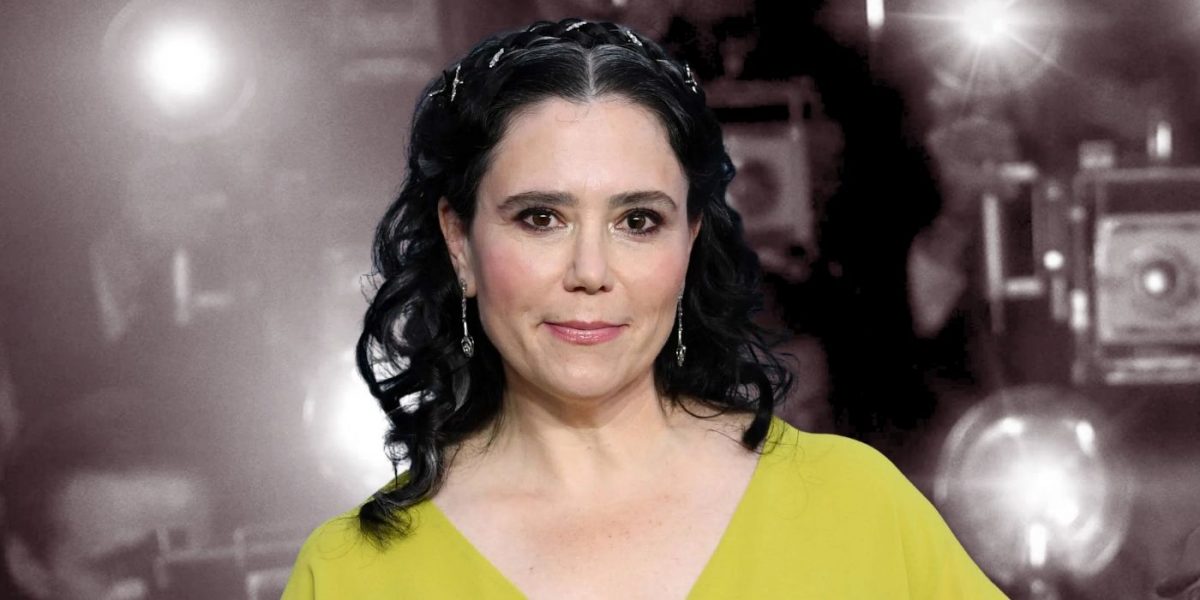
Alex Borstein on Susie Shedding Her Armor in ‘The Marvelous Mrs. Maisel’
Jun 20, 2023
The Marvelous Mrs. Maisel came to an end last month after five seasons of laughs. One of the highlights of the series has always been the relationship between Midge Maisel (Rachel Brosnahan) and her manager-turned-friend Susie Myerson (Alex Borstein). Season 5 had its fair share of ups and downs in its pursuit to explore the future of its beloved characters, but it went out on a high note with its series finale. While there were a few years where Midge and Susie’s professional pursuits got in the way of their friendship, the series ended with the duo thick as thieves once again in the later years. Their relationship was always the emotional anchor of the series, and Brosnahan and Borstein both gave incredible performances as the series explored their dynamic in new ways throughout Season 5.
COLLIDER VIDEO OF THE DAYSCROLL TO CONTINUE WITH CONTENT
Following the finale, Collider had the opportunity to chat with Alex Borstein about her work as Susie Myerson in the critically acclaimed series, how the character evolved between Season 1 and Season 5, how Susie’s series finale wardrobe shows her character growth, what she learned from the Susie-centric episodes like “The Testi-Rostial,” how early on she learned who Hedy Ford (Nina Arianda) was to Susie, and so much more.
COLLIDER: First of all, I just have to say congratulations on five incredible seasons of The Marvelous Mrs Maisel. I have loved all of it, and something I’ve really loved is Susie has obviously played a big part in every episode, but I loved that every season there was this one really big Susie-centric episode, like “Everything is Bellmore” or “The Testi-Roastial.” For you as an actor, what is it like to really get to dive into these meaty character stories?
ALEX BORSTEIN: It’s both exhilarating and terrifying. You know, I always say that Amy Sherman-Palladino knows what I’m capable of before I do. I’ve had the luxury of working with people, before Amy Sherman-Palladino it was Mark Olsen and Will Scheffer on a show called Getting On, [where] people see what you’re capable of before you can and push you to your limits. I feel like that’s what Amy did with, you know, particularly those episodes, but really, the whole series. Every year she kind of peels away something and peels away something, and you’re like that frog in the pot, where normally I would have jumped out and been like, “No fucking way. I can’t do any of that,” but she, little by little, raises the heat and raises the heat, and before you know it, you’re like, “Hey, look what I just did!”
Image via Amazon Prime
And you killed it. Were there any of those episodes that really stood out to you that, kind of going off what you’re saying, made you go, “Wow, I did not know I was capable of doing that?”
BORSTEIN: Yeah, I mean the ability to walk the line between doing comedy and then delivering something really vulnerable, I think Amy helped me realize that that was something that I could do, and within one breath, like within one scene. With this season, there’s a scene at the automat with Rachel and me, Midge and Susie, and Susie is finally kind of saying who she is and that she was completely broken and her heart was broken, and just within that scene, there are lines, that one word is comedic and then the next word is tragic. Trying to be able to deliver that all in one sentence was a real trick.
That’s such a great scene too. I love how over the years, we’ve gotten these snippets of Susie’s backstory, sometimes through weird ways and sometimes through funny ways and emotional ways. I felt like with this introduction of Hedy’s character, we got to learn so much more about Susie and her education. I don’t think I recognized that she’d gone to college and had that kind of background, and then her relationships, how much did you know about Susie from the start, and how much has she just evolved as the character and the show have grown?
BORSTEIN: I mean, honestly, nothing. There was no sit-down ever with Amy where she said, “Here’s this character, and here’s where it’s going, and here’s the arc,” none of that. It was like, I read the pilot, and I auditioned for it [laughs], and then you get a script a week, or however often we would get them, and that’s how you know what’s coming. Rachel would know things. I think Rachel would try to take Amy to drinks and ply her for information — she would know things. She was the one who knew who Hedy was long before I did.
We shot this scene where I turn the corner at the studio, and I see something, and I’m chasing down the hall to try to see who this woman was. I had no idea who she was going to be or what I was chasing, and Rachel was the one saying, “Oh, yes, that’s someone that was your love,” and I was like, “What?” And then I went to Amy, and I said, “Wait, is this true?” And she’s like, “Yeah.” You know, it’s like holy shit, okay, should I have known that? Is it better that I know? Is it worse? And I kind of preferred it that way. I think if I had known too much, I would have altered the way I did things. I think I would have gone into things poorly. It would have appeared that I was hiding things, I think.
That’s so interesting because I was looking through older interviews because there were six years of fantastic conversations about this show, and I noticed there were little differences about what could be the future for Susie. There was one interview, like, “Oh, maybe she’ll settle down and have kids and a husband,” and then Hedy happens, and I’m like, “Oh, this is interesting!” Obviously, it works because it works with the way that you play Susie so well, but how does that change not having the full picture and then looking back at how things connect for you?
BORSTEIN: I mean, like I said, I think it’s great because it’s much more akin to real life. You don’t know what’s coming, and many people don’t even know themselves. I don’t think Susie spent her life hiding and pretending to be anything. I think she just put it to bed. I think she was able to put things in a corner, you know, compartmentalize her needs and her life and her love for many, many years. The only love of her life was the business and was Midge. So I don’t think she was hiding and shoving things down, so to speak, so I think it was the right way for me to attack doing Susie.
Image via Amazon Prime
It did work well. Something else that I liked this season was that we see Susie get an upgrade in clothing, looking to the future when she’s much more established, and her career is thriving, and “The Testi-Roastial,” you know, and [there are] very different vibes in the way that she dresses. How did that change how you carried yourself as Susie, you know, playing the 1960s and then the glimpses into the future?
BORSTEIN: No, it absolutely did, and it’s not an accident. When we talk about how she should be dressing and how it should change, she opened up, she became less dependent upon her armor – the belt and the suit and the vest and the hat and the leather coat, all of that’s armor. She kept herself very pinched, and she would pace. Even when I would get ready to do the scenes, I would be pacing like a bull in a pen with my nuts in a vice, just like, really highly strung and with a lot of neuroses and worry. And as she progressed and as she succeeded, she allowed herself to lose the vest, “Okay, then I’m gonna put a sweater on instead of this. Then I’m gonna get rid of…” In the end, she’s in a kaftan, you know? She’s in a big dress with her hair completely down and has nothing to pinch in anymore or hide. I love that they swapped, too. In that last scene you see Midge in a pantsuit and Susie in a dress, you know? They kind of flop. And at the Testi-Roastial, she moves slowly, she arrives on her own time. She’s late. That would never be Susie before; she would get there early, she’d be waiting outside the door, she’d be pacing.
I love that final scene that you just mentioned with Midge and Susie, the way that their dynamic shifted, but they’re still so vulnerable with each other in a way that they’re not vulnerable with other people. I was wondering, with the way that this final season is structured, with the flash-forwards, we don’t necessarily see the exact moment of reconciliation between the two of them, but did you and Rachel work on kind of filling in those moments for yourselves as actors when you go into that moment?
BORSTEIN: No, we did not. We never got together and talked about that to each other, solely independently. I mean, I think, again, less is more. The moment when we’re at that Testi-Roastial and that video is played, the way that we shot that was, we hadn’t made the video yet. So Rachel was there in the room, and she climbed up on a work ladder and sat on the ladder to where my eyeline would have to be for the video, and she delivered those lines — I think she even posted a picture from it on her Instagram — and she delivered those lines just in person, and that felt like the reconciliation, that felt, you know, there she was in the room, and I think that the reaction that I had was because she was there, because it was live. So, that was enough, it felt like it said it all. We didn’t really need to fill in any of that.
I personally love that it leaves as many questions as it answers. I think that’s great. I love that there are possibilities and there’s room for the audience to say, “What did happen in between, and what was that filling between the two Oreo pieces?” To me, it’s perfect, but I know some people wanted more of that, definitely.
You don’t want to say goodbye, you want to see more of them and what their stories were! Strong feelings are good.
BORSTEIN: When I first read the final season and first get the script, I’m so unsure. It’s different than what I anticipated. It’s different than how I would have ended, so I think that of course, a lot of audience, and especially reviewers, are gonna have [strong] reactions, that it’s not what they anticipated or not what they envisioned, and I like that. These women did not get it all. I think Susie got exactly what she wanted, and I think she achieved success, and that success brought her the peace that she wanted. I think she got what she wanted, but they didn’t get it all. They sacrificed a lot and they made a lot of holes in their lives, and I think the last season portrays that. I think some of what audience members might feel is missing might be what these characters at the end of their lives feel is missing.
Image via Amazon Studios
Yeah, I can see that. I think that’s good insight to have. I used to work in the film industry before I shifted to journalism during the pandemic, but I think a lot of people forget that shows aren’t filmed in chronological order. So, I’m curious for you, what was the last scene that you got to film as Susie?
BORSTEIN: Well, it’s an interesting thing to bring up because a lot of Episode 6 and things like that were tough because it was out of order. Like, we’re filming the reconciliation before we have the fight, and, you know, there was a lot of things like that where you’re so off-kilter and have to figure that out and kind of calibrate.
But the last scene — Amy was so smart, as she always is, which makes you love her and hate her — she insisted, she was very adamant that we shoot the Gordon Ford set, Midge’s last comedy set, and her coming to that couch, last. She wanted that to be the final moment we all had together, A.) because it was an ensemble and it afforded us the ability to all be on the set together, and the moment when he labels her, when he says, “This is the marvelous Mrs. Maisel,” and we’ve come full circle, we understand. All of it kind of pieces together, and then I feel like the other scenes are a little bit like a coda, they’re epilogues, and I loved that Amy insisted on that because it felt so real, it felt like we were watching history in the making. It felt like I was watching Midge get discovered, and Susie’s reaction is like… you know, she holds her heart in that moment because it is just like she’s all at once kind of filling her heart, and it’s breaking. She’s having to let go of this person and sharing this person now with the rest. She’s no longer hers, Midge is not hers. She can’t keep her anymore, she has to share her with the world.
To the idea of letting go, what was it like for you to let go of Susie? I mean, six years is a pretty long time to play a character.
BORSTEIN: Oh, I haven’t. I’m wearing her wardrobe right now. No, it is very hard to let go. In some ways, I don’t think I have. Most of us feel like we’re just on a hiatus because we’ve had so many… you know, it feels like at some point we’ll be back together again. But I think probably after January is my guess that I’m gonna start to really feel like, “Oh this was a death, this is really gone.” You never really let go completely. You kind of keep those people in you. The characters remain in some way, in some corner.
The full series of The Marvelous Mrs. Maisel is streaming now on Prime Video.
Publisher: Source link





New ‘Wheel of Time’ Animated and Video Game Adaptations Are in the Works
Amazon might be finished with The Wheel of Time, but we haven't seen the end of the story when it comes to adaptations of Robert Jordan's bestselling high fantasy saga. Fans were left blindsided when Amazon abruptly pulled the plug…
Mar 22, 2026
‘Off Campus’ Teaser and Release Date Revealed by Prime Video
No one expected a love story between rival hockey players to become one of the most talked-about TV shows of 2025, but there's a lot more where Heated Rivalry came from, as a new teaser for Prime Video's foray into…
Mar 21, 2026

Sarah Michelle Gellar Urges ‘Buffy’ Fans to Avoid Reading Leaked Reboot Scripts
Buffy the Vampire Slayer fans have had a rough few days after Hulu officially pulled the plug on a revival of the series, which would have brought star Sarah Michelle Gellar back as the titular heroine. Described as a continuation…
Mar 20, 2026

Born Again’ Stars Explain Why Bullseye Is So Dangerous in Season 2 [Exclusive]
Along with Charlie Cox's Matt Murdock and Vincent D'Ofnorio's Wilson Fisk, Daredevil: Born Again Season 1 brought back one of The Man Without Fear's most notorious villains: Wilson Bethel's Benjamin Poindexter, better known as Bullseye. Not only was he back…
Mar 19, 2026