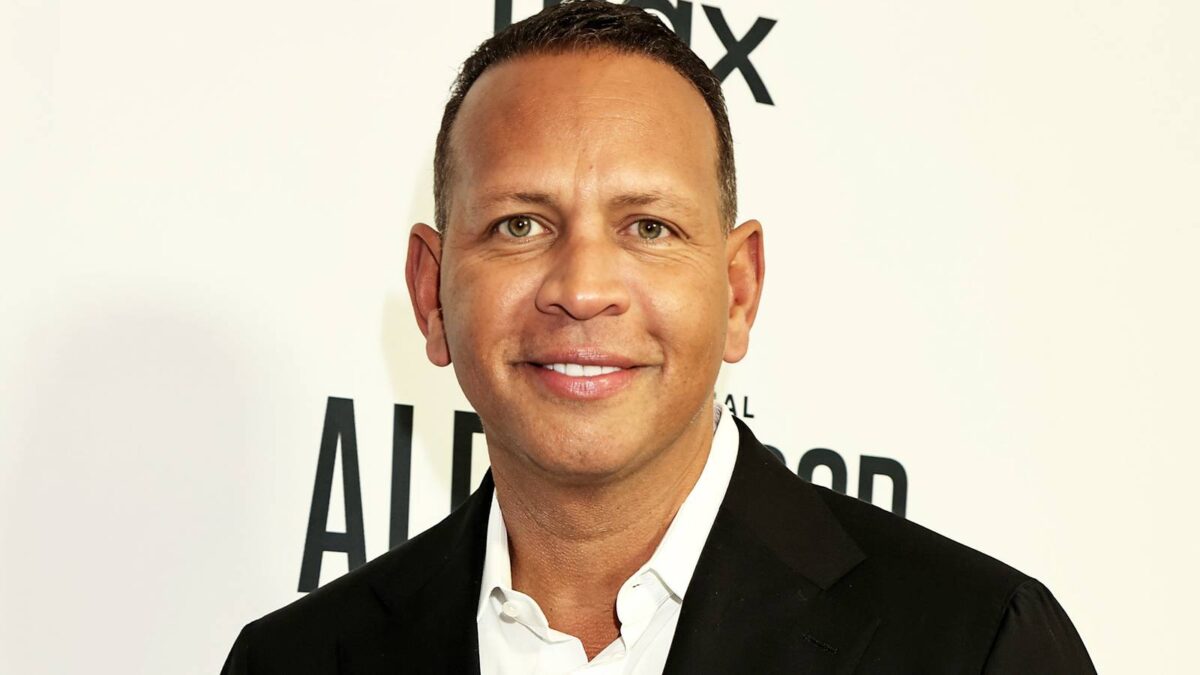
Alex Rodriguez Revisits His Biggest Scandal in HBO’s ‘ALEX vs AROD’
Nov 14, 2025
Summary
In an interview with Collider, Michael Zimmerman spoke with Alex Rodriguez, Gotham Chopra, and Erik LeDrew about ALEX vs AROD.
Rodriguez says sharing his story was “the most rewarding thing I’ve ever done.”
The directors also reveal how trust and honesty shaped Rodriguez’s most personal story yet.
Alex Rodriguez is a lightning rod — a polarizing figure who has reached the pinnacle of sporting achievement, while also falling to the depths of despair. From his record-setting contracts and suspension, to three Most Valuable Player Awards, a World Series Championship, and tainted statistics, he has lived his life under the microscope of public praise and scrutiny. In HBO’s newest sports documentary, ALEX vs AROD, Rodriguez fully opens up about the most difficult time in his life — the 162-game suspension handed to him due to the use of illegal human-grown hormones (HGH). The 14x All-Star explains how the persona of A-Rod pushed him to greatness, while also pushing him to make regrettable decisions. Directors Gotham Chopra and Erik LeDrew navigate through Rodriguez’s life, weaving in stories about his childhood, the upbringing of a single mother, his search for acceptance, and the eventual inward reflection. They speak to family members who knew him before professional baseball, his two daughters, former teammates Derek Jeter and Ken Griffey Jr., as well as media personalities Michael Kay, Mike Francesa, and Katie Couric. Chopra and LeDrew have told the stories of many of the greatest athletes, including Tom Brady, Kobe Bryant, LeBron James, and Steph Curry. ALEX vs. AROD is similar in the way of highlighting the killer instinct of pursuing the ultimate prize, but what sets it apart from their previous projects is that this story is built around the most difficult topic for the main character to talk about. In an exclusive interview with Collider, Rodriguez, Chopra, and LeDrew reveal the emotional threads that were necessary to tell the story of a complicated figure.
Alex Rodriguez Admits and Recognizes His Mistakes and Faults
“I pretty much told a very raw story, and I didn’t hold back much.”
Alex Rodriguez opens up in HBO documentary “ALEX vs AROD”Image via Lucas Gath/HBO
COLLIDER: Do you feel like this series is more of a closing of a chapter for you, or the opening of a new one? ALEX RODRIGUEZ: I’m hoping for an opening of a new one that started post-retirement. In many ways, I think part of what’s compelling here is that I fell on my face in a very public way, and I think everyone’s had some challenges. Most probably not as public as mine. I would say most of them. But we can all relate with going through the challenges and going through the fire and to be able to not be defined by those moments, but be able to learn lessons and persevere and build again. While it’s challenging, it’s also the most rewarding thing I’ve ever been a part of. Were there parts of your story that you felt a little resistant to telling? And how did you decide what to include and what not to focus on too much? RODRIGUEZ: I wanted to focus on the person. And this person. It wasn’t just a baseball story, it was a human story. And I think this person, myself, went through highs and lows and highs and lows, and that makes it more relatable. But even when I go and mentor and give my talks out there, I always lead with my faults and falling from grace. For the people that I mentor, the young folks, I’m hopeful they can avoid some of the mistakes that I made. So I pretty much told a very raw story and I didn’t hold back much. The series features interviews with your family, teammates, broadcasters. Which interview became most unexpected or touching for you, and why? RODRIGUEZ: Well, for sure, my daughters. I was really interested to see what my daughters had to say. I’m going to sound like a dad now, so I hesitate, but they are two spectacular young ladies that are very grounded. They grew up the exact opposite of the way I grew up. One’s a junior in college, one is a senior in high school in Miami. They have big goals and big ambitions, and they want to do it their way, earning it their own way, which I admire. I also think the two Mike’s, right? Michael Kay and Mike Francesa. I think they bring a certain gravitas and authenticity because of their ultimate New York voices. Mike [Francesa] on the radio. Michael Kay, obviously, the soundtrack of the Yankees for the last 35 years. He’s a hero to a lot of Yankee fans. Michael and I are very, very close. And Mike [Francesa], I built a really respectful relationship. And I respect those guys immensely. I think my favorite line, which was very accurate, was told by Mike Francesa as he said, I’m paraphrasing here, but, “A-Rod is a Shakespearean figure and he’s a flawed man.”
Using the A-Rod Persona in a Positive Way
“I also think it applies really good in life and business, and as a parent.”
Alex Rodriguez in deep thought during HBO documentary “ALEX vs AROD”Image via Lucas Gath/HBO
The cliché in baseball, three times out of 10 is considered a success. But I want to dive a little deeper, peel back a layer here, and talk about your approach at the plate. You’ve learned patience. You’ve learned patterns and sequences, anticipation. Learning what you’re given, maybe some warning shots along the way. How has your experience in the batter’s box helped you navigate life in your post-playing career? RODRIGUEZ: That’s a good question. I’ve never been asked that. I think a lot of good hitters have what it takes in the box. If you can apply those tools, those disciplines, that patience in life, pass the baton, do not try to force the issue, take what they give you. I think all that applies really well in the batter’s box. But I also think it applies really good in life and business, and as a parent. When you look back at this documentary, what surprised you most with [everything] packed into about two and a half, three hours, rather than 40 years? RODRIGUEZ: I mean, I’m 50 now. We could have done five episodes, you know, I guess, one a decade. But I got to tell you, Michael, sometimes we have selective amnesia. I like to forget a lot of the stuff that had happened and making an ass out of myself on Mike Francesa, and even the way I handled that. The one thing that I think about is, and I noticed this on FOX when I first started in 2016, was that, and I covered the Mets World Series as an active player in ‘15, I knew the bar was set so low when people said to me, “Oh my gosh, you can talk. Oh my God, you can complete a sentence. Oh my God, you’re really good. You know about baseball.” So that was the first time I said, “Oh my gosh, people have no idea who I am.” They know who I am, but don’t know who I am, which I think was pretty interesting. So I always knew that there was an opportunity at some point to tell my story firsthand. And, well, I would have laughed about it if you asked me to do a documentary 15 years ago. I started warming up to the idea a couple of years ago. I think that’s the contrast between Alex and A-Rod, right? Like what we see on TV, breaking down approaches at the plate is Alex. That’s the person who loves baseball, instead of this persona that we see took you in different directions in your career. Some for good, some for not so good. I think that’s the dichotomy between Alex vs. A-Rod. I love that, especially the title. RODRIGUEZ: I think we started something there with Alex vs. A-Rod because whether I go through airports, this trailer has been out just a few weeks, and as I walk around the streets of Miami, L.A., Toronto, everywhere, fans are like, “Hey A-Rod, it’s nice to meet you! Is it Alex or is it A-Rod? Which one is it?” I enjoyed it when one of your daughters said that when people say, “Oh, your dad’s A-Rod.” No, he’s Alex. That’s who they know. And I thought that was awesome to see you’re just a normal person at home and with your family, and you’re not this persona that people are so used to seeing in the tabloids, on TV. And this story, it’s a lot more personal than your typical sports documentary. RODRIGUEZ: One of the few things beneficial about getting a bit older is that you start seeing patterns, and you have pattern recognition. And, one of the things that I found pretty compelling is this whole A-Rod/Alex thing is, I was never really good about trying to set the record straight. I just kind of did my own thing and kept my head down. And eventually, you end up almost like a wrestling character. You almost become like the heel, right? Some players are really good at being the good guy. And then I was like, well, I was the good guy, but now I’ve become a bit of the heel. And that’s been the narrative. I thought it was really compelling. In 2001, I signed my contract, ten years, $252 million. And at that point, with making no public mistakes, I was 24 years old. The response was incredibly surprising to me. I became a villain overnight. And what I’m so proud of is how far we’ve come in sports, 24 years later. When you have the Ohtani signing for $700 million, or the Juan Soto’s for like almost $800 million, they’re celebrated and they’re heroes. And it’s a good thing. And that makes me really happy and really proud. Do you feel like you were the person who needed to take those bullets from the public for, not necessarily the power of the players to move forward, but big contracts are deserving and should be recognized instead of vilified? RODRIGUEZ: Well, I mean, look, they didn’t rob a bank. They actually worked their butts off to earn it. So I could not be happier for Ohtani and Soto and anyone who’s living out their dream. And in doing really well, I mean, no one is putting a gun to anyone’s head to say you must pay Ohtani. You must pay Soto. In 25 years, we’ve seen the power shift from organization-only to now a lot of the power has been shifted almost 50-50 to the player and to the organization. I think that’s a much healthier environment. I want to finish up with A-Rod Corp. It’s involved with a lot of different ventures. And with this documentary, you’re telling your story. Is there any interest on your end in getting involved in film and TV production? Maybe starting your own production company? Do you see anything in entertainment with you or A-Rod Corp? RODRIGUEZ: I thought about the idea, and I’m really intrigued by storytelling. I think there’s a lot of power in stories. One of the things that was also interesting, at FOX and the reaction of my work, in closing the gap in fans’ understanding a little bit more about who I am and what makes me tick, and my knowledge of baseball, my love for baseball, was a very telling data point. And by the way, this story has been factual for three decades. I mean, almost like a fact. And it could not be further from the truth. Not because I don’t have a healthy ego, but I just don’t have that type of creativity. And I’ve never really tried to correct that, because I think it’s actually a funny narrative. But again, things [and] events like that happen. So I knew there was space out there for me to speak my voice for the first time in real time.
Why ‘ALEX vs AROD’ Is Unlike Any Other Sports Story
“That was a very different starting point that he had to accept and embrace and be willing to go there.”
Alex Rodriguez addresses the media after his 162 game suspension from Major League BaseballImage via The New York Times
You both have tons of experience telling the stories of some of the best athletes in the world. What made ALEX vs AROD different from a storytelling perspective that maybe you haven’t told before? GOTHAM CHOPRA: I keep starting these by shouting out Erik, so part of my answer is referencing him, Erik. At the early stage, one of the things he said to Alex during a lunch we were having or something was like, you know, this isn’t necessarily the story of your life. It’s a story about the most important moment in your life. Baseball wise, at least. The series is about this really difficult moment in time. There’s a lot of great times and obviously, you know, to sort of even arrive at the hard time, the PEDs, you have to sort of build up the guy. But like the premise of this was, hey, we’re coming at you. We’re coming for you. And I think that was a very different starting point that he had to accept and embrace and be willing to go there. Otherwise, there was no project. And, so I think that was different. You don’t usually choose the hardest thing to talk about and build around that. ERIK LEDREW: As Gotham has made a career out, exploring great performances of elite athletes and flow and peak performance — How do we capture and honor all of that in the context of someone whose career off the field or whose personality off the field went as low as he had gone high on the field, and weaving them together in a way that wasn’t bifurcated. Just finding a way to weave together the good with the bad and there’s no sugarcoating it. There’s no avoiding it. It’s public record. And not only that, we can’t just talk about it on public record. We have to talk about what happened. Knowing that he’s a very controversial person, maybe less so today, but certainly in terms of the era in which our story takes place, there was no shortage of infamy and controversy. How did you choose the teammates, coaches, people to talk to when telling these different threads of these stories? CHOPRA: It has to be people who are there. These have to be real characters in his life. Not just commentators, not just pundits. You can find all those people in the archive and you do use them as this outside voice. But who are people there? Some of them are obvious. Some of them come up when you’re talking to him and he’ll reference people in his life that helped him navigate through this time or whatever. And then you’re like, “Okay, well, who is that? Tell me more about that person and can you connect me?” That, for us, is a very big defining thing. We’re looking for people who can recall what it was like to be by your side or helping you navigate. Real characters in your life. LEDREW: And I’ll give you a concrete example too, from this project. I believe it was the very last interview we did, which is almost a year ago now, with Katie Couric and her 60 Minutes interview with Alex. There was a point in the process when, the second episode in particular, we had our beginning and we had our ending. Those were pretty much locked in from the beginning. The first episode came together very quickly. The third took some time. Originally it was split in two. We decided to combine them because it felt like an incomplete story. And it works much better now for it. But originally it ended after his suspension became enacted, and then the sort of back half of episode three with its own episode. It’s better now. But episode two, just narratively, we knew where it would start and knew where it would end, roughly speaking. But the thread by which we wove all that together or the sort of like, you know, the lattice, that kept it together was difficult. It felt, honestly, like a bit of a greatest hits album. It was like, we got to play this music, we got to play that music. And everyone knows this song. So we got to do that, you know? And it kind of sucked, to be honest. Like, it was not. And when we added Katie, she’s the one who unifies that episode because she connects the person off the field to the person on the field. And it really has to do with that 60 Minutes interview that she did with him in 2007, I believe. We played it twice. Once, when he does the interview, it’s sort of more centered on his [contract] opt-out and his controversies as a player. And then we reprise it, of course, when the news breaks that his name was leaked as a part of the PEDs investigation in 2009. And once we had her side of that story, the whole episode just came together in a satisfying way.
How Alex Rodriguez Learned to Live Between the Lines of Alex and A-Rod
“We all present different versions of ourselves to different people depending on the context. We just don’t usually have such a disparity…”
Alex Rodriguez poses for HBO documentary “ALEX vs AROD”Image via HBO
Did you feel that Alex opened up more as the process progressed? Or was he open right from the beginning? CHOPRA: It’s a process. And we expected it. So this is three years in the making, and getting him to talk about these difficult times, talk about it again, now you’ve got to talk about it openly, authentically, honestly. I think that took time. That took more than time on camera. That took time off-camera relationship building and lunches, meeting the family, and getting to know Alex, because that was the person we were really in pursuit of and getting him comfortable with us, knowing that we’re not here just, you know, trying to work you or we’re not like, trying to put this on YouTube tomorrow or anything like that. It’s really just building that relationship, building that trust, and there’s no cheat code for that. There’s no shortcut. So that takes meaningful time. LEDREW: And it was non-linear. There were times there were early shoots where he was totally real and authentic. And then there were later shoots where the armor’s back on a little bit. Unfolding in parallel to this whole process was his ownership bid to buy the Timberwolves. And that was bringing up like a lot of stuff for him that made it difficult to revisit. There were times when “A-Rod” came back, and it was like, “Wait, I thought we moved past this, I thought we were good. We had trust and, as filmmaker and subject, you know”, and then it’s like, “Oh, no, we’re back on the outside again. We got to start over there.” What’s one thing that you learned about Alex, the person that you maybe assumed was just A-Rod? CHOPRA: Look, we were just talking about this, separately. Alex, the person, is still like, he’s taken a lot of the good parts of A-Rod, and sort of applied them. And you see how successful he is, not just in his public life with all the stuff that he’s doing, but we got to see a lot of him at home with his two girls. And he’s a real father. But he works at it, he works at it, and he’s prepared and he doesn’t take anything for granted. We joked like he shows up everywhere, like business meetings, personal meetings, everything with a pad of paper. And he’s taking notes and he’s asking questions. You certainly see it on the FOX broadcast. And I thought that was something you can see. That’s why he’s having so much success in everything beyond baseball. LEDREW: It’s kind of a false distinction. We all contain multitudes. We all present different versions of ourselves to different people depending on the context. We just don’t usually have such a disparity between the biggest stage in the world, with thousands if not millions of eyes on us, and then two people in a quiet room in the dead of night. And so those sorts of masks become more exaggerated, I think. But he’s both people. And the overlap is, there’s gray, you know, in the middle. And then there are the extremes. And that’s just the value of these human beings. Alex vs ARod is available to stream on HBO Max.
Release Date
2025 – 2025-00-00
Network
HBO
Directors
Gotham Chopra
Publisher: Source link



Wuthering Heights Review | Flickreel
As far as adaptations go, I’ve never viewed any source material as sacred, including The Bible. While a faithful adaptation is always welcome, I’m open to a filmmaker leaving their signature on a classic story, especially one that’s been told…
Mar 17, 2026

Amy Adams Sinks In Vapid, Misguided Alcoholism Drama By ‘Pieces of a Woman’ Director [Berlin]
For a solid decade, starting in the late 2000s with Disney’s charming fairytale comedy “Enchanted” all the way to Denis Villeneuve’s melancholy sci-fi “Arrival,” it was easy to trust Amy Adams, a six-time Academy Award nominee. Then, somewhere around Ron…
Mar 17, 2026
Mason Gooding & James Van Der Beek’s Bad Night Is Aggressively Dull
Ever since the Scream franchise helped put him on the map, Mason Gooding has been a great talent to watch. The genre-bending slasher Heart Eyes is still his best non-franchise role yet, but he's also branched outside of horror in…
Mar 15, 2026
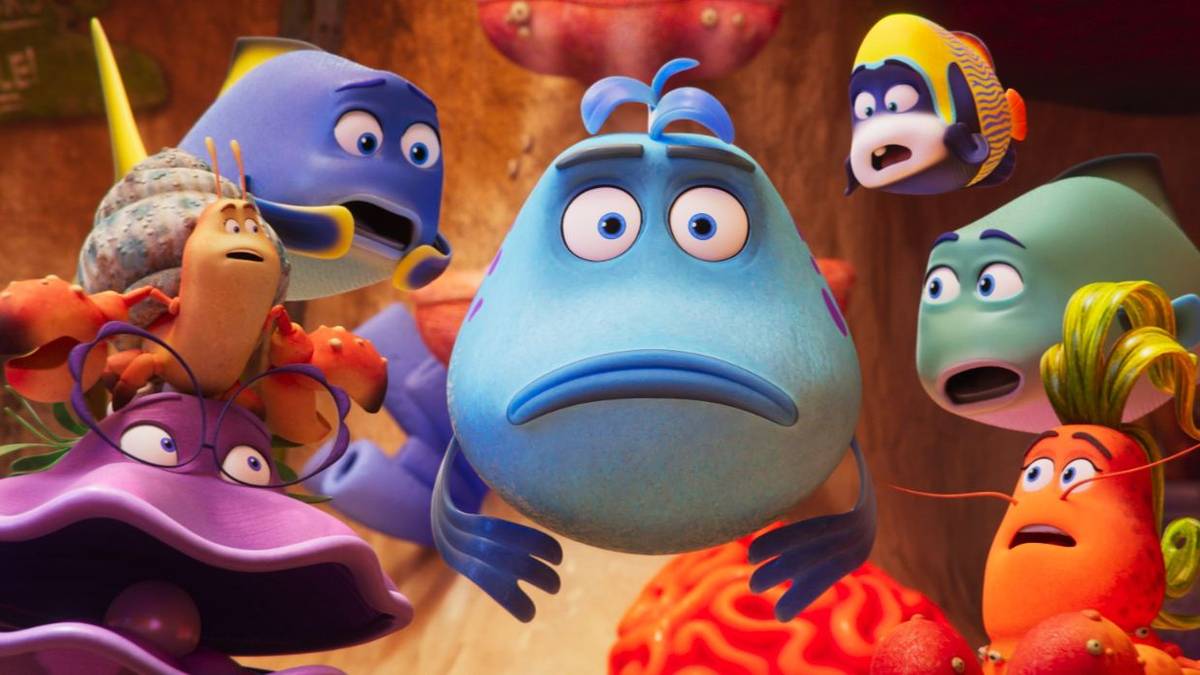
A Grumpy Nick Offerman Keeps This Fish Tale Swimming Along
Animated fish films have been done. Finding Nemo. Shark Tale. Ponyo. So to hear about another doesn't feel like anything new. However, The Pout-Pout Fish, starring Nick Offerman as a grumpy ocean pout named Mr. Fish, is a little different.…
Mar 15, 2026