Amanda Seyfried On Her Moving Crime Drama, Messy Characters, Acting As Therapy & More [Interview]
Mar 15, 2025
Premiering on Peacock this week, the police crime drama “Long Bright River” is a layered, complex and gripping series that, frankly, cannot simply be encapsulated by the description of “police crime drama.”
Perhaps most akin to “Mare Of Easttown”—only superficially, of course, insofar as they both prioritize family, emotion and drama, just as much as they do the intrigue of genre—this limited series is arguably very much on par: a show with a crime mystery running through its spine, but supported by much bruising family trauma, emotional baggage and fraught history.
READ MORE: The 75 Most Anticipated TV Shows Of 2025
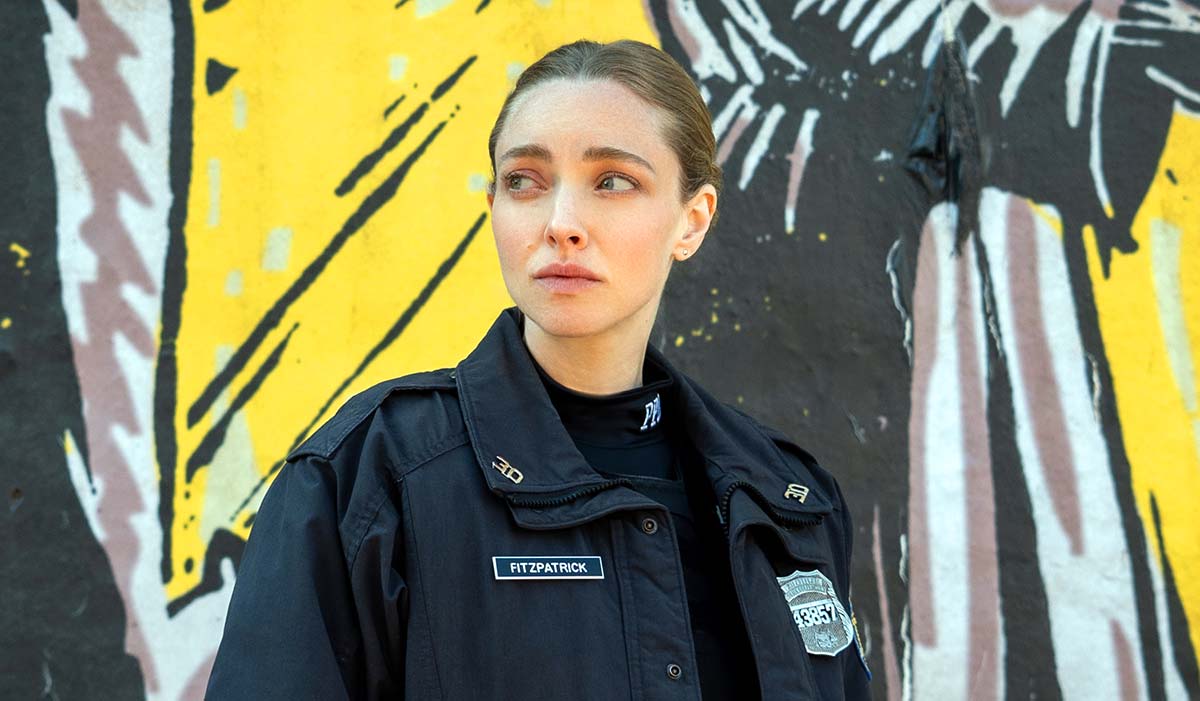
Adapted from the book by Liz Moore with Moore and showrunner Nikki Toscano, “Long Bright River” centers on a young Philadelphia beat cop played by Oscar-nominated actress Amanda Seyfried (“Mank,” “The Dropout”). In the drama, which also touches upon the opioid crisis and sex worker exploitation, Mickey, Seyfried’s character, also a single mom, is assigned to watch a high-crime neighborhood with a new, inexperienced partner in tow (Dash Mihok).
When her drug-addicted street worker sister Casey (an excellent Ashleigh Cummings) goes missing, right around the time that three sex worker women are mysteriously murdered under dubious circumstances, she panics and takes it upon herself to investigate the murder herself (though done so with the help of her ex-partner on leave Truman Dawes, played by supporting standout Nicholas Pinnock).
Complicated, messy and very human in this regard—a lot of good people making many chaotic mistakes thanks to all the trauma that has triggered self-preserving fight or flight behavior—“Long Bright River” is arguably the best dramatic series that Peacock has produced thus far and should enter the Emmy race later this year.
Of course, what makes this poignant and compelling drama so terrific, first and foremost, is Amanda Seyfried, who delivers yet another tremendous performance as a woman just doing her best to survive in challenging circumstances, overwhelmed by the dismissive dynamics of her patriarchal job, struggling with her day-to-day duties as a solo parent, grappling with her many personal demons and past. It’s a lot, but Seyfried carries its many human complexities with such nuanced emotional sophistication that you cannot take your eyes off her, and the show only further shines with the Emmy-winning instrument at its center.
With “Long Bright River” premiering this week on Peacock, we spoke to Seyfried all about the show this week.
I stayed up til 3 am watching the show. I hadn’t intended that, but I could not stop and needed to know how it ended.Good TV will suck you in, right? I’m glad you continued to watch because it’s a dark place to exist. But it’s also, like, when you really understand it, and you really want to continue on the journey of these characters, it takes you all different ways, but it also gives a lot of hope, which is intended and essential.
I’m assuming it’s the rich script and material, it’s layerd, complex, human, but tell me more; what drew you to this project?I know, it was. I love the way you’re talking about it. I had never played a cop because it didn’t seem like it was ever something that people would see me as, as that character, and that’s okay. I really didn’t think I could pull that off either, to be honest. But then, in reading or listening to the book— so I listened to it— I saw more of a human being who happens to be a cop, and I could wrap my head around it more easily when looking at it from that perspective.
Because she has a lot of balls in the air, like most of us—she’s a mom, and she’s trying to provide for her kid, trying to be present, and she really, physically, can’t be so much. And it’s all the complexities of this time in someone’s life and then all very, very connected and tied to addiction and trauma, sisterhood and all the things that hit close to home for me and a lot of people.
But yeah, the material is represented and portrayed in a way that really pulls people in, which is hard to do. Beautifully in the book, and then Nikki Toscano, who was the creator of the show, she and Liz worked together for years to get this right and translate it properly.
Yeah, you touch upon what I loved about it; it’s about the opioid crisis and police on the surface, but as you said, it’s about motherhood, sisterhood, community, and family; it’s so layered. One of the things I really loved about it is how messy it is and how messy the characters are. Like your character, she’s full of such conviction, but she lies to loved ones, hides things, and withholds information that could help her. She’s contradictory in many ways, but she’s human.She’s human, yeah. She, like everyone, is trying to survive and do the best they can under all their circumstances. Sometimes, we manipulate to feel safe, get what we want, get what we need, or protect ourselves. There are so many reasons people make the decisions that they make, and everything is multifaceted, and it’s really easy for other people. It’s easier just to write someone off, and you’re looking at people who just can’t be written off because there’s too much about them.
Was there anything specific that helped you unlock the key to this character? Another element that I loved is that she almost, I stress almost, is defined by the things she shouldn’t be doing, like being a police officer, not attending school for music, or her mistakes like her ex-husband, being so blind to him or what she does to her sister. She’s more than just that, but all that nearly defines her.Yeah, all these things, all these poor choices she’s made, have been out of fear or out of perceived responsibility, out of what she thinks is best, and it might not be.
There aren’t many people she can turn to or trust, so this person’s making decisions based on how she’s feeling in the moment. But I think everything is nuanced. She’s living in the gray area full time and doing things the wrong way all the time because she’s not perfect, and that’s one of the things about her.
Yeah, for sure.When I got to know this character, Mickey, I initially attacked what makes us similar: we’re parents, and we’re always trying to balance so many things at once and trying to face the guilt of not being around all the time, but wanting to be there and wanting to impart your own experiences and wisdom and perspective onto your kids. There are all these elements of being responsible for somebody else, loving them, and having them be a priority, but also having to make money and put food on the table. That dynamic, and she wants to serve people.
And then, I looked at all the differences and all the qualities that separate us completely as human beings, and there’s a lot there because she doesn’t give a shit about how people perceive her. She has to get shit done like she doesn’t have a good bedside manner, and that doesn’t bother her. For me, it’s one of my failings. I spend too much energy trying to make people comfortable, and hopefully, Mickey rubs off on me a little bit. But she’s a real person, this character, and I need to honor this character in all of her failings, too, because that’s what people really relate to: the imperfectness of everything.
I suppose this may be obvious to you, actors, but it all sounds like great therapy and self-reflection. When examining characters and behaviors, it all sounds very illuminating. Do you learn more about yourself as you play other people?Oh, yeah. Acting could be the best therapy there. It’s very cathartic in some ways. I will say there have been a lot of circumstances and experiences of how playing certain scenes on set felt cathartic and even indulgent.
And I’m grateful for that because, unlike many people, I always wear different shoes. I get to really flex and stretch in somebody else’s world for a while, and I really get to try different things emotionally. And how lucky that is! I feel like a kid who plays dress-up.
And actually, there are no consequences to what I do. Because it’s for the screen, it’s for when the cameras are rolling. It’s lucky, but it makes me really question a lot of things all the time. Like every new story—especially when the characters are so realistic, and the material is so authentic, it’s impossible to avoid rethinking and reshifting perspective and really looking inward. It’s impossible. So it’s great. Even though they’re not actors, I hope audiences can feel as close to Mickey, Casey and all the characters as I did.
Support independent movie journalism to keep it alive. Sign up for The Playlist Newsletter. All the content you want and, oh, right, it’s free.
I should think so, I mean, I was weeping throughout that whole final episode, it’s so moving and poignant, but dark and—I imagine much of this had to be scary for you to play? Like that one scene on the peer, it’s wordless mainly; you’re just crying on your sister’s lap. God, that wrecked me.Yeah, it’s very scary because there’s so much pressure on these scenes. Those are the scenes that bookend everything. Every first day on set, I’m always terrified because I don’t know who I am. And then, by the end, you have that pressure for the last scene.
I remember the last scene on “The Dropout,” it was so much pressure because that’s what you leave the audience with—you’ve got to get it right. There’s only so much editing one can do. And that scene was just me by myself with the dog. And then with this, I remember that core relationship of the series, and you needed to see some catharsis, some kind of understanding, and you needed to feel like the dynamic had shifted completely.
And, oh, it was scary. I’d been working with Ashley [Cummings] all season, and I love her and trust her, but I guess we’re always so hard on ourselves. And also, it was 100 degrees that day, so [laughs].
Movie and TV magic, yeah. Speaking of “The Dropout,” you’re working with that same showrunner, Liz Merriwether, again, and I hear you’re doing something with Rebecca Hall, who I also love [more on each of those stories here and here].The whole show hasn’t been written yet, but it’s definitely a different genre [from ‘The Dropout’], and that’s part of the reason that we wanted to do it.
All right, it’s time to let you go, but this series is terrific, and I can’t wait till it’s out in the world for other people to see. I hope the Emmys come knocking again, too.Thank you so much. You’re exhausted. I’m exhausted. It’s nice when I can tell and truly feel like you really liked it.
Absolutely. I don’t stay up til 3 am for nothing [laughs].
All eight “Long Bright River” episodes are available to binge now on Peacock.
Publisher: Source link



A Flame The Colour of Air – Film Threat
SLAMDANCE FILM FESTIVAL 2026 REVIEW! You will shimmer and shake, like you’re riding the snake while being wowed by the dynamite animated short A Flame The Colour of Air, written and directed by talented Canadian filmmaker Emily Pelstring. Jessica Mensch’s…
Mar 3, 2026
‘9-1-1’ Can’t Decide What It Wants To Focus On in a Lackluster Season 9
Editor's Note: The following contains spoilers for 9-1-1 Season 9, Episode 11.I was hoping that 9-1-1 would take advantage of its month-long hiatus and course-correct after its most recent episode, but while this week is certainly an improvement from last…
Mar 3, 2026
Good Luck, Have Fun, Don’t Die Review
Mercy was a film about AI that AI could’ve written. Good Luck, Have Fun, Don’t Die also tackles AI, although it could only come from the mind of Gore Verbinski. As he did with his Pirates of the Caribbean trilogy…
Mar 1, 2026
Investigative Screenplay Review: Suspenseful but Weak Antagonist
Vadh 2 (2026): When Murder Is Justified — Starring Sanjay Mishra as prison guard Shambhunath Mishra When evil tries to take control, its destruction becomes necessary. With this theme, Bollywood brings you a spiritual sequel to its 2022 crime-thriller “Vadh”.…
Mar 1, 2026