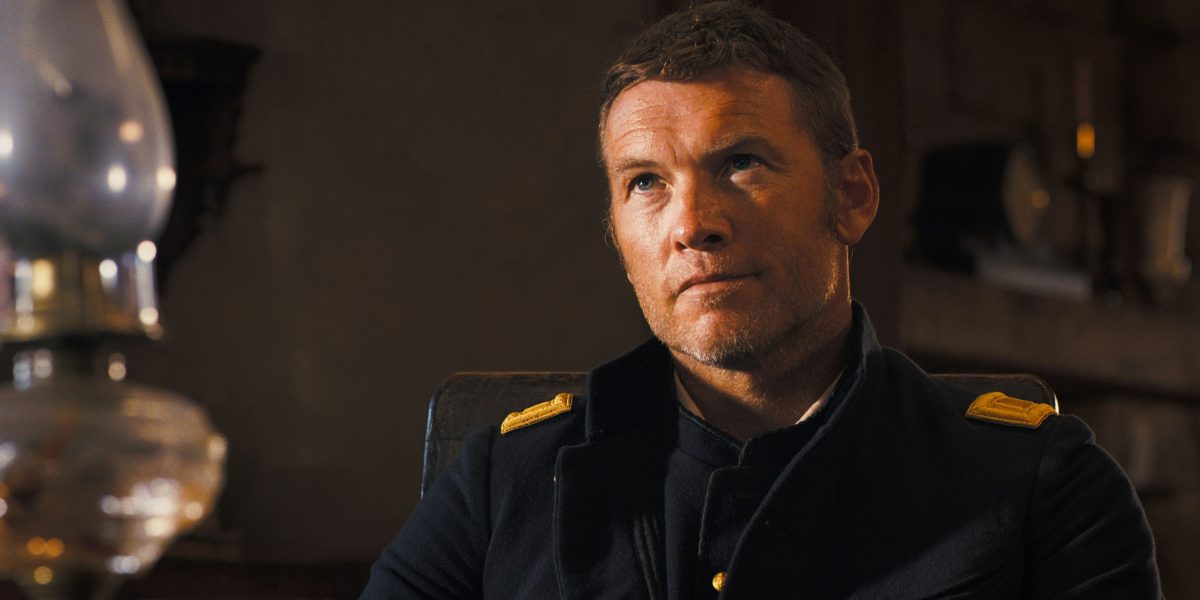
An American Saga Chapter 2 Review – 6 Hours In & Costner’s Western Still Seems Like TV [Venice]
Sep 10, 2024
I’ll be honest, I don’t entirely understand Kevin Costner’s Horizon project. I’m not really one to judge whether it makes business sense to make a multi-part Western saga for theatrical release in 2024; as a critic, my stake isn’t in the world of profits and losses. When Costner used all his pull to put a project like this on the big screen, I should be able to applaud him, purely out of my love for the cinematic experience. Instead, after seeing Horizon: Chapter 2, I’m still scratching my head and wondering why this wasn’t television.
If you’ve seen the first movie, Chapter 2 is more of the same.Horizon’s cast is sprawling, bouncing between a few different groups of characters as their stories chug along. All are (or conceivably will be) connected by Horizon, a frontier town in the Arizona Territory that, in truth, has yet to really exist. Pamphlets advertising it are found all across the US, encouraging many to chase the dream it promises. Along the way, they find varying degrees of hardship and violence.
Horizon Tries To Balance The Personal & The Representative
And Leaves The Movies Nothing But Engines For Story
In an attempt to capture a full snapshot of this period in American expansion, the characters represent different types familiar to us from history and the popular imagination. Homesteaders, wagon trains, feuding families, Civil War soldiers, a prostitute with a heart of gold, a reluctant gunslinger hero, and so on. The film also aims for more nuance in its depictions of Native Americans than its genre forebears, emphasizing tribal distinctions and the two-way nature of violence. Costner tries to keep the prejudices of Horizon’s characters distinct from the perspective of the movie itself.
So far, six hours in, I’ve found no great insight into this period of American life, in either the personal or historical spheres.
Whether you believe he succeeds depends on how you feel about the somewhat romantic lens through which everything is filmed. Chapter 2 continues the first movie’s desire to separate the larger movements of history from the individuals caught up in them. Everyone, regardless of race, is set up by the evils inherent in western expansion without being guilty of them. The cruelty and slaughter they commit is on them, but even then, not everyone enters into violence willingly, or without cause. This way, any person in any part of the story can be worthy of Horizon’s admiration.
So far, six hours in, I’ve found no great insight into this period of American life, in either the personal or historical spheres. The primary function of Costner’s film is to depict, not to explore or interrogate. A few choice lines introduce broad themes that perhaps speak to the essential qualities he’s trying to capture (Chapter 2’s focus is on the nature of suffering), but these are flourishes. Horizon just wants to tell its story, which it trusts to be interesting in and of itself.
Horizon Would’ve Benefited From Being A TV Series
After Two Movies, Costner’s Vision Just Isn’t Cinematic Enough
This is where I struggle, so far, with this enterprise. I don’t think these stories are uninteresting – I’ve enjoyed watching both films. But I don’t think they’re well-served by this multi-film format. Some criticisms of Chapter 1 compared it to the introductory episodes of a miniseries, a sentiment I shared, and I’d hoped Chapter 2 would kick into gear. When it felt exactly the same, I realized describing either film as episodic wasn’t quite accurate. Episodes are discreet, carved pieces that build into a larger whole. These are more like narrative chunks, chopped up and crosscut almost arbitrarily.
Being halfway between film and TV gives it the weaknesses of both and strengths of neither…
Horizon would benefit from the shape of longform storytelling that TV allows; a bit of sculpting wouldn’t take away from the expanse. Especially since, visually, Costner’s films aren’t particularly cinematic. The landscape is beautiful, and lovely to look at on a big screen, but he doesn’t go out of his way to make images that take full advantage of the scope available to him. Considering the history of Westerns, this is disappointing.
Ultimately, Horizon: Chapter 2 offers a diverting experience to those who want to be immersed in this genre. But it suffers from its lack of focus. Being halfway between film and TV gives it the weaknesses of both and strengths of neither; trying to straddle the real with the mythic gives us characters that mostly feel too representative to connect with as individuals, and too individual to make compelling representatives. Likewise, I’m left stuck between engaged and disengaged. If Horizon 3 is completed, I’ll probably watch it. If it isn’t, I probably won’t miss it.
Horizon: An American Saga Chapter 2 premiered at the Venice Film Festival Out of Competition. The film is 190 minutes long and is not yet rated. After having been removed from its original theatrical release date on August 16, plans for US distribution have yet to be confirmed.
Publisher: Source link





Paramount+ Renews ‘Criminal Minds: Evolution’ for Season 19
The start of its new season is still weeks away, but fans of Criminal Minds: Evolution won't have to wait that long to learn the fate of the long-running hit crime procedural. Execs at Paramount+ have already decided what the…
Mar 27, 2026

‘A Tale of Two Cities’ First Look Reveals Kit Harington in MGM+ Series
The BBC and MGM+ are teaming up with a new four-part limited series adaptation of Charles Dickens' classic 1859 novel A Tale of Two Cities. Game of Thrones veteran Kit Harington will play Sydney Carton, a cynical English lawyer who…
Mar 26, 2026
HBO ‘Harry Potter’ Series Image Reveals Dominic McLaughlin in Title Role
The first official look at HBO's upcoming reboot of Harry Potter has finally arrived, and it is already teasing a magical trailer release. As we inch closer to the show's expected 2027 release, the network has begun to reveal more…
Mar 25, 2026
‘Dutton Ranch’ Trailer Reveals ‘Yellowstone’ Sequel Release Date
Rip Wheeler and Beth Dutton gamble everything on a new life in South Texas in the first trailer for the Yellowstone spin-off, Dutton Ranch. The footage reveals all manner of gun fights, fist fights, explosions, galloping horses, and even mysterious…
Mar 24, 2026