Another Precious Pearl In Richard Linklater’s Chronicles Of The Human Condition [Berlin]
Feb 19, 2025
The best line in “Casablanca”? If you had asked Broadway lyricist Lorenz Hart that question on the evening of March 31, 1943, he would have recited back to you the following confession: “Nobody’s loved me that much.” This phrase makes at least three appearances in director Richard Linklater’s “Blue Moon,” setting a tone of yearning and compliance on behalf of the film’s main character, Hart, portrayed by usual suspect Ethan Hawke, this time full of tenderness and contradictions. It’s a night like any other for most people, but the dialogue-heavy script by writer Robert Kaplow (“Me and Orson Welles”) manages to sketch out many of Hart’s internal battles and aspirations as an aging artist bidding farewell to the heyday of his career. Following the Venice premiere of his spy romp “Hit Man,” Linklater premiered his newest offering as a Golden Bear competitor at the 75th Berlinale.
READ MORE: ‘Mickey 17’ Review: Robert Pattinson & Ensemble Shine In Bong Joon-Ho Sci-Fi Late-Stage Capitalism Riff [Berlin]
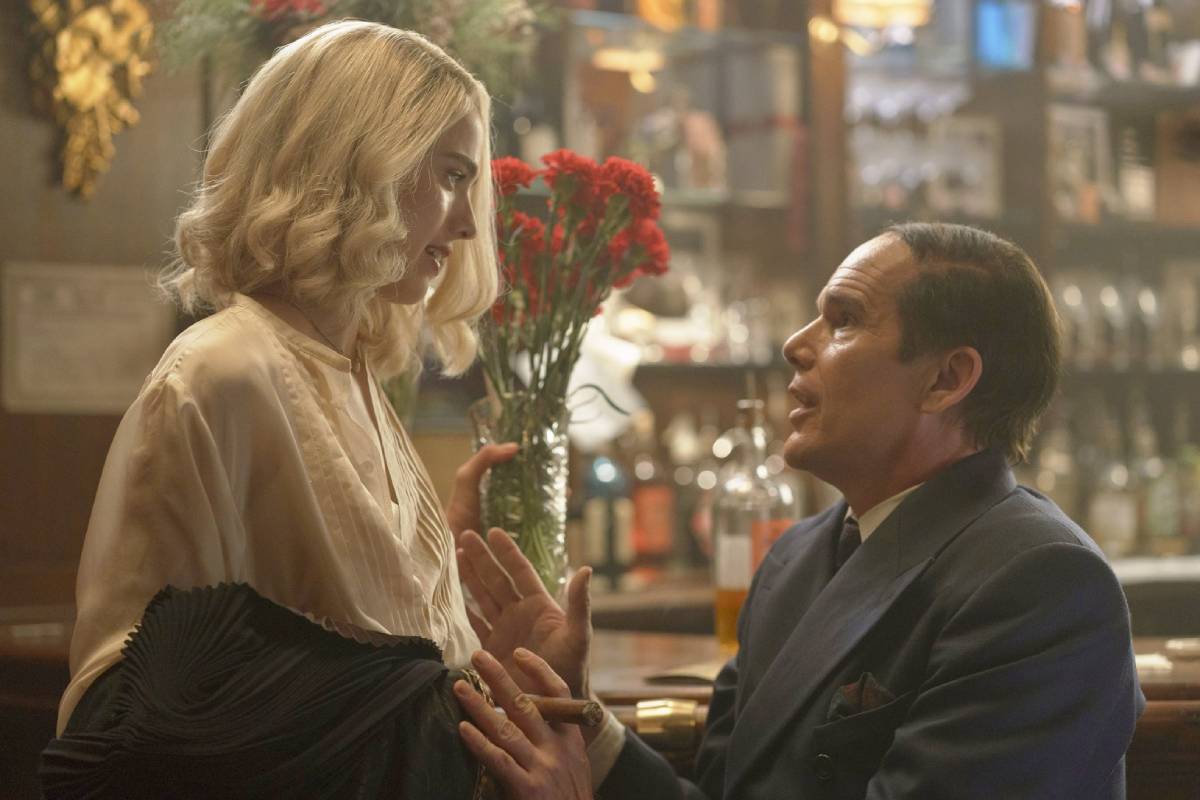
“Blue Moon,” very tellingly named after the popular ballad, is set more or less in real-time: during less than two hours on the night of the premiere of “Oklahoma!,” the future hit musical by Hart’s former collaborator Richard Rodgers (Andrew Scott). The film begins as Hart leaves the performance for the bar where his old pal Eddie the bartender (Bobby Cannavale) awaits, gun in hand. Don’t fret; this is no thriller, but two guys re-enacting a scene from “Casablanca” as a skit; the title will return as a reference both in dialogue and visuals as a well-measured nod to film history and the period. From then on, Lorenz (Larry) takes over as his hefty monologues occasionally diffuse into dialogues: with Eddie, with the army boy-pianist, with the flower-delivery guy, with a famous contemporary essayist; there is always a triangulation of questions and retorts going on, yet somehow Larry is always the sole center of it all. Or, more precisely, his stories.
With a deep, soft timbre, Hawke delivers a performance of poignancy and poeticism; the pathos of a true dreamer tints all of Hart’s digressions as he jumps from topic to topic: the weight of words, the lyrics of Oklahoma!, or the young woman he is madly and irrevocably in love with. Long before the famed Elizabeth Weiland (Margaret Qualley) appeared on screen, he painted an ideal portrait comparable to what a troubadour would do. “Irrational adoration” is what they share, he says, glowing with an ambiguous kind of pride. In a less serious way, the bartender teases his friend about his homosexual tendencies, and Hart exclaims that “a writer should be omnisexual.” Surely, our protagonist is a man who has a solid, lyrical explanation for everything.
Hawke wears a double-breasted navy suit that clasps at his body so tightly that it almost seems uncomfortable. In order to match Hart’s height (under five feet), the actor doesn’t rely only on the high camera angles (which are perfectly calibrated in scale and frequency by cinematographer Shane F. Kelly and editor Sandra Adair), but as always, he makes the physical presence of his characters mirror their interior, even when they themselves resist. Hawke’s face, in particular, is expressive to an almost farcical point – his eyes glisten more and more with every secretly downed shot of bourbon (Hart is an alcoholic who tries not to drink). Yet, the film’s emotional trajectory allows him enough dignity not to show the protagonist in a fit or a binge but in the in-between state where he is beginning to unravel. That said, while Kaplow’s script does place Hart in a vulnerable position by default—being left out and hung to dry, celebrating the success of his former artistic partner without him—the gravitas is still there.
Perhaps the presence of love or the prospect of a being as ethereal as Elizabeth, who literally has Hart at her feet, incites him to manifest the strength he obviously lacks. “Blue Moon” is based on the correspondence between Elizabeth and Lorenz, and in typical romantic epistolary fashion, their story within the film seems excitingly surreal. Visually, the film style is sparse with camera movements, but the dynamism always underscores how much taller (younger, slimmer, blooming) Elizabeth is, with copious amounts of endearment rather than ridicule pulsating through the screen.
Support independent movie journalism to keep it alive. Sign up for The Playlist Newsletter. All the content you want and, oh, right, it’s free.
“Blue Moon” would taste like a praline dipped in melancholy—in a way, it is the opposite of a Proustian madeleine, the taste of which brings back a long-forgotten memory; it works as a (very careful) vivisection of nostalgia as it forms a thicker crust around the idealized version of one’s memory. Yes, the film is a heartfelt homage to Lorenz Hart, but also to the strength necessary to say goodbye to the world as you knew it, so even the occasional bitterness Hart speaks with has a balmy quality to it.
Linklater, who is indisputably a connoisseur of the human condition and its many facets, was inspired by this script for years until he got the opportunity to make “Blue Moon.” Maybe the gestation process also informed the film’s profound observations about (male) aging by showing how difficult it is to relinquish the idea of who you think you are (appeal, attractiveness, what you’re used to). Man’s biggest fear is becoming irrelevant; it seems, “Without a dream in [his] heart, without a love of [his] own,” to quote the titular song. [B+]
Follow along for all our coverage of the 2025 Berlin Film Festival.
Publisher: Source link




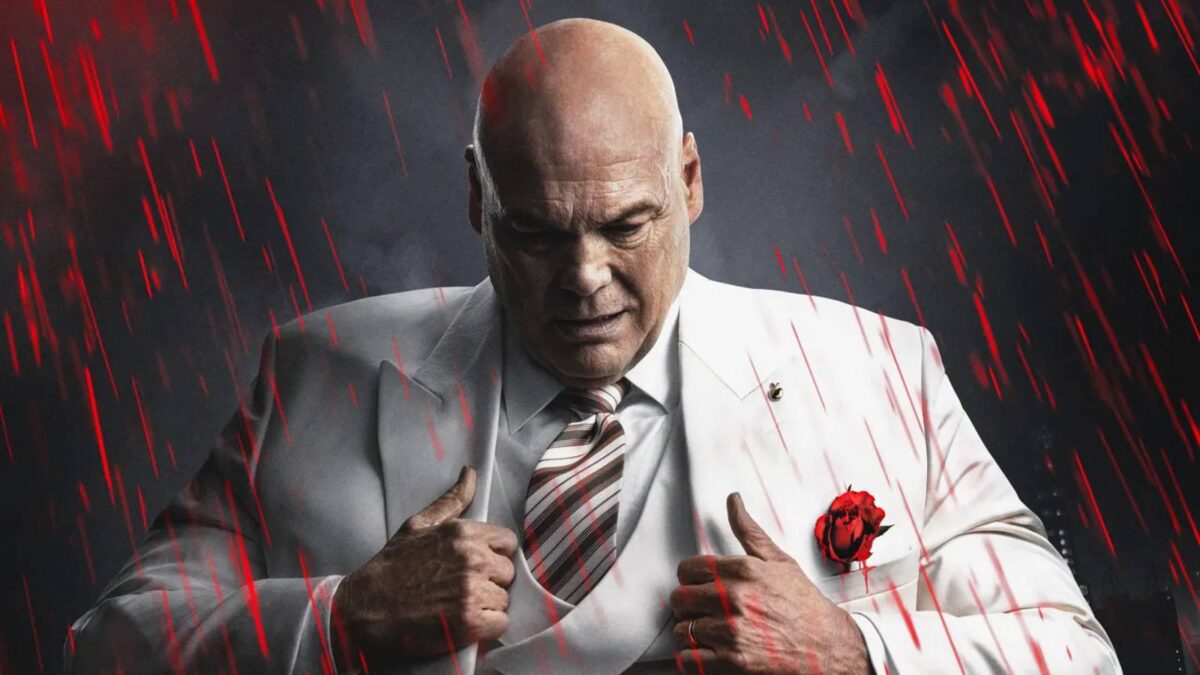
Born Again’ Showrunners Detail How the Media Ties into Season 2
Marvel is fast approaching the release of Daredevil: Born Again Season 2, marking its second live-action Disney+ show of 2026. Bringing back Charlie Cox's Matt Murdock and Vincent D'Onofrio's Wilson Fisk, this season picks up where Season 1 left off,…
Mar 23, 2026
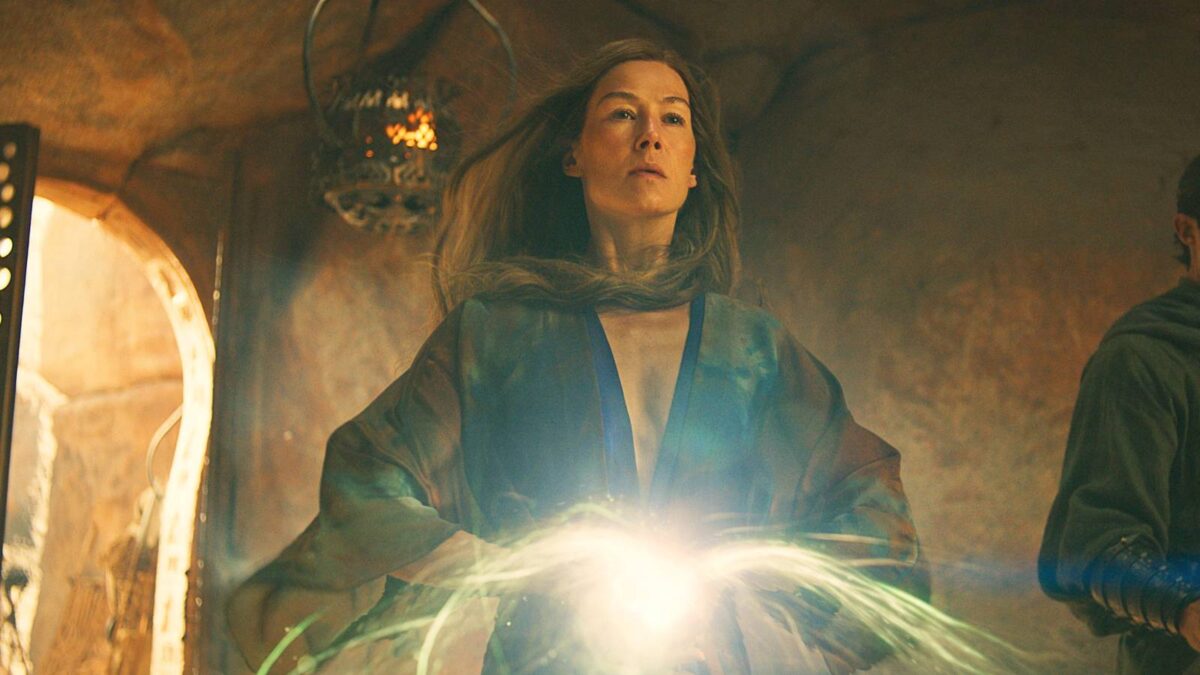
New ‘Wheel of Time’ Animated and Video Game Adaptations Are in the Works
Amazon might be finished with The Wheel of Time, but we haven't seen the end of the story when it comes to adaptations of Robert Jordan's bestselling high fantasy saga. Fans were left blindsided when Amazon abruptly pulled the plug…
Mar 22, 2026
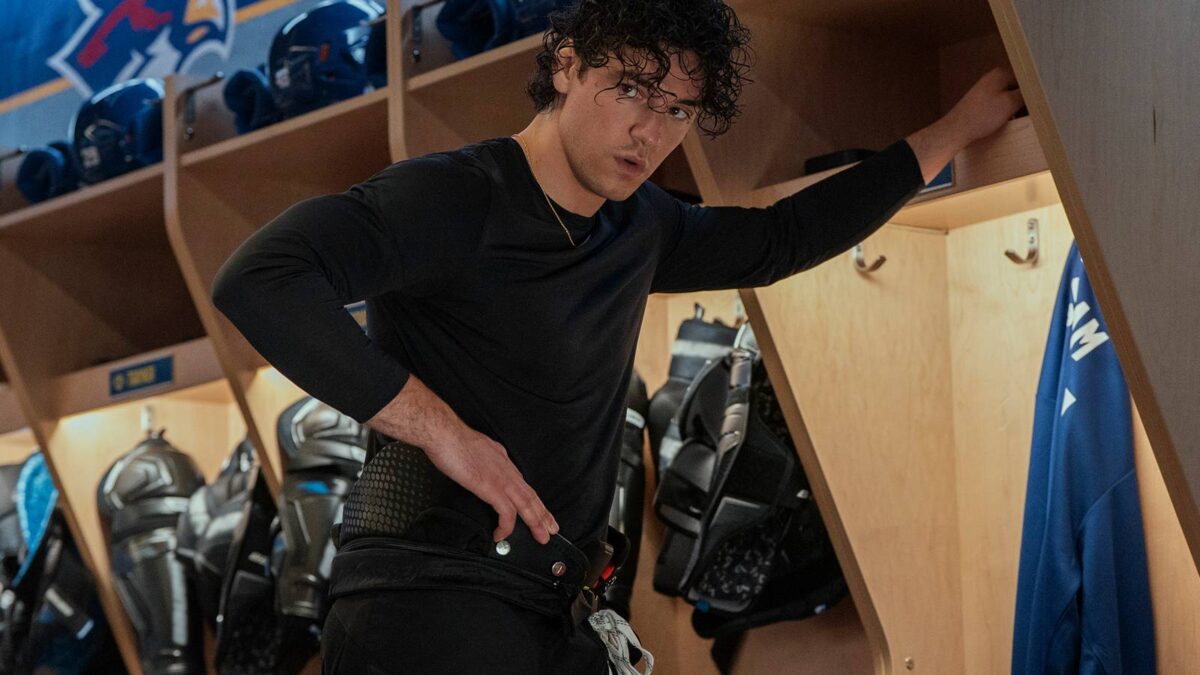
‘Off Campus’ Teaser and Release Date Revealed by Prime Video
No one expected a love story between rival hockey players to become one of the most talked-about TV shows of 2025, but there's a lot more where Heated Rivalry came from, as a new teaser for Prime Video's foray into…
Mar 21, 2026
Sarah Michelle Gellar Urges ‘Buffy’ Fans to Avoid Reading Leaked Reboot Scripts
Buffy the Vampire Slayer fans have had a rough few days after Hulu officially pulled the plug on a revival of the series, which would have brought star Sarah Michelle Gellar back as the titular heroine. Described as a continuation…
Mar 20, 2026