Argentinian Sports Drama Delivers A Confounding Journey Worth Taking
Sep 1, 2024
It feels almost unfair to review Kill the Jockey (El Jockey) after having only seen it once. It’s stylistically deceptive – the opening section plays its absurdity for laughs, but at some point, without telling the audience, the movie decides it wants to be interpreted and not just experienced. I felt ill-equipped to make sense of the journey it took me on at the time, and I’m hardly more equipped now. But that might be the best position from which to capture its charms.
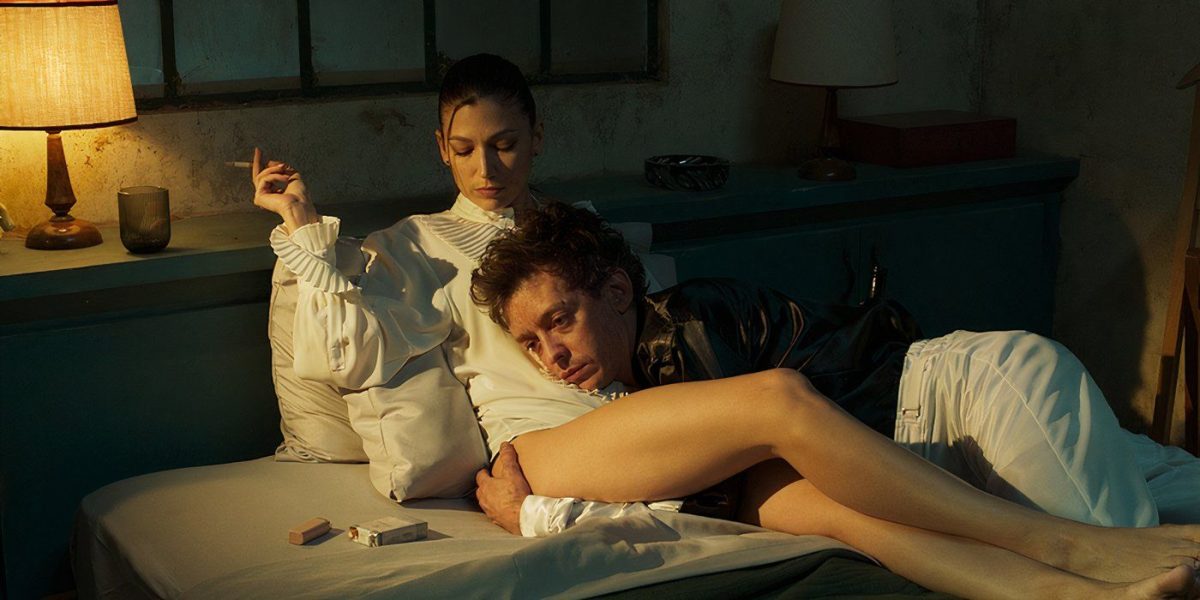
The titular jockey is Remo (Nahuel Pérez Biscayart), who we meet as an unmitigated mess. He races for a mob boss named Sirena (Daniel Giménez Cacho), and despite a tortured past and prolific substance abuse, he’s made a name for himself as a top-tier talent. But he’s started to crack, while Abril (Úrsula Corberó), his fellow mob-jockey who happens to be pregnant with his child, is climbing the ranks.
Úrsula Corberó is best known for playing Tokyo in the Spanish crime drama
Money Heist
.
These first few minutes border on virtuosic. Director Luis Ortega is in total control of the tone, each cut and camera move building a rhythm that immediately puts us on the wavelength of this weird world. And the cast are all on the same page. For a while, I wondered if I was already watching what would be my favorite film of this year’s Venice lineup.
We are witnessing some kind of fundamental change, though the full scope of that change – and whether “change” is even the right word – takes time to come into full view.
Remo is tapped to ride the new, expensive horse his bosses just bought from Japan, and they aren’t about to let him do it inebriated. Despite Abril’s warnings, they dry him out. On the day of the race, one thing leads to another, and Remo lands himself at the hospital with a potentially life-altering head injury.
Kill The Jockey Eventually Becomes A Completely Different Movie
And getting on board with it is an Adjustment
Then the story begins in earnest, and everything changes. Remo wakes up and wanders off into Buenos Aires, forcing the gangsters to hunt him down. But he might not be quite the same as he was. His journey is punctuated by absurdity that gradually feels less funny and more mystical. We are witnessing some kind of fundamental change, though the full scope of that change — and whether “change” is even the right word — takes time to come into full view.
His physical expressiveness is truly extraordinary, and without his performance to transition us to the final act,
Kill the Jockey
doesn’t succeed.
I knew going in that Kill the Jockey was just over 90 minutes long, but during it, I would’ve guessed an hour longer. Part of that was surely frustration; I couldn’t help but miss the movie I started with, once I realized it wasn’t coming back. The way Ortega goes about showing us his cards is certainly another part. But even if I couldn’t make easy work of the film and my feelings about it, I was still mesmerized by it.
The cast deserves real credit for that, Biscayart especially. His physical expressiveness is truly extraordinary, and without his performance to transition us to the final act, Kill the Jockey doesn’t succeed. But before then, too, my engagement often hinged on his Keatonesque eyes trying to tell me something important about all this strangeness.
In a conversation here at Venice with another critic who liked Kill the Jockey less than I did, he argued that it does too much. If everything is so strange, he said, then nothing is. The moment he said it, something clicked into place for me. I replied that, given the film’s ultimate themes, that might just be the point.
Kill the Jockey premiered at the Venice Film Festival. The film is 96 minutes long and is not yet rated.
Publisher: Source link





Paramount+ Renews ‘Criminal Minds: Evolution’ for Season 19
The start of its new season is still weeks away, but fans of Criminal Minds: Evolution won't have to wait that long to learn the fate of the long-running hit crime procedural. Execs at Paramount+ have already decided what the…
Mar 27, 2026
‘A Tale of Two Cities’ First Look Reveals Kit Harington in MGM+ Series
The BBC and MGM+ are teaming up with a new four-part limited series adaptation of Charles Dickens' classic 1859 novel A Tale of Two Cities. Game of Thrones veteran Kit Harington will play Sydney Carton, a cynical English lawyer who…
Mar 26, 2026

HBO ‘Harry Potter’ Series Image Reveals Dominic McLaughlin in Title Role
The first official look at HBO's upcoming reboot of Harry Potter has finally arrived, and it is already teasing a magical trailer release. As we inch closer to the show's expected 2027 release, the network has begun to reveal more…
Mar 25, 2026
‘Dutton Ranch’ Trailer Reveals ‘Yellowstone’ Sequel Release Date
Rip Wheeler and Beth Dutton gamble everything on a new life in South Texas in the first trailer for the Yellowstone spin-off, Dutton Ranch. The footage reveals all manner of gun fights, fist fights, explosions, galloping horses, and even mysterious…
Mar 24, 2026