Avalon Fast on Her Witchy Sophomore Feature CAMPFilmmaker Magazine
Nov 11, 2025
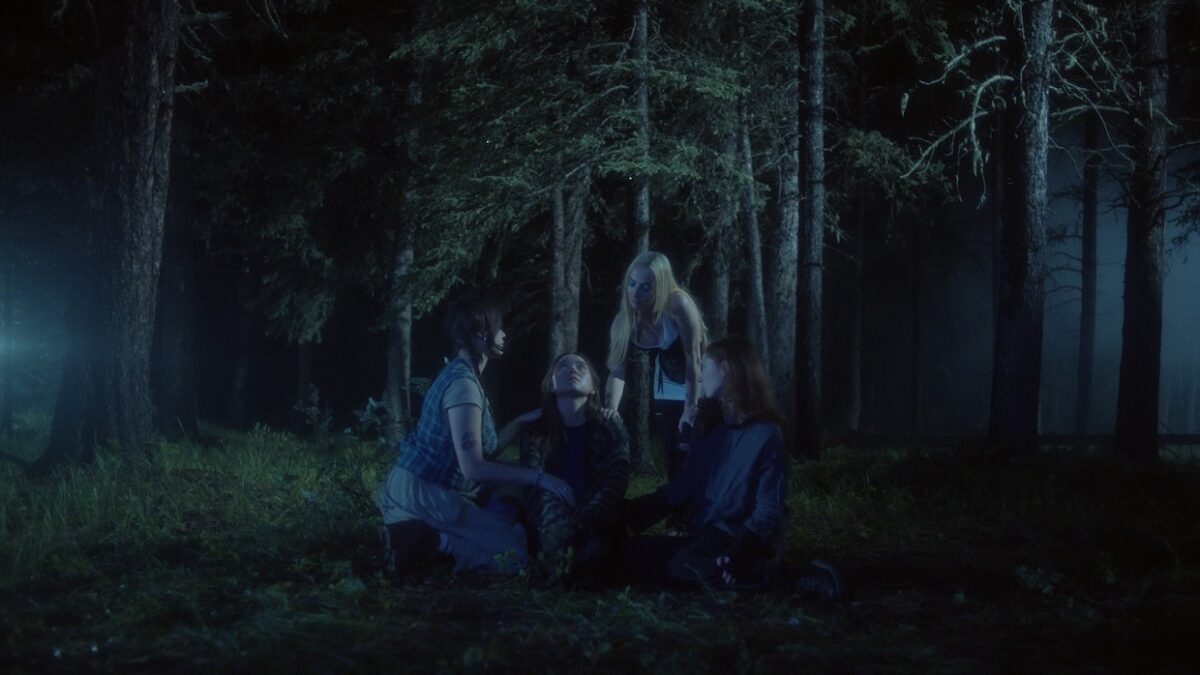
After a tragic loss, college dropout Emily (Zola Grimmer) is desperate for some distance in CAMP, the sophomore feature from 25-year-old writer-director Avalon Fast. While her father (Michael Tan) is patient and supportive, the comfort of returning home only seems to make Emily regress into a volatile depression. On a lark of sorts, he suggests that she apply to work as a counselor at a summer camp deep in the Canadian wilderness. Though skeptical of the overt Christian slant espoused on the promotional pamphlet, something draws her in. When she arrives after a long journey, she is surprised to see that among her co-workers are several goth girl misfits. They eagerly absorb Emily into their tight-knit dynamic, immediately declaring her as “another gorgeous weirdo just like the rest of us.”
As it turns out, the women’s witchy-ness extends well past their wardrobe. As Emily grows closer to them, she begins to identify peculiarities: they’re never hungover despite binge drinking nightly; they possess strange power over men, including charismatic (and devout) lead counselor Dan (Austyn Van de Kamp); they also have a strange symbiosis with their verdant surroundings, as if being back at the camp has physically reinvigorated them. Emily had been seeking a fresh start, but the transformation that lies ahead of her will encompass much more than a straightforward personal reckoning.
Fast’s sophomore feature feels both like an extension of Honeycomb—her ultra lo-fi 2022 debut she helmed as a teenager with a group of friends—yet it is also a major evolution for the filmmaker herself. While thematic interests in femme friendships and the strange natural splendor of her native Vancouver Island are carried over in CAMP, it is also visually distinct. She traded in a home movie vibe for sumptuous cinematography, all the more impressive considering that this is DP Eily Springman’s first time helming a feature. The highly collaborative and staunch DIY ethos of Fast’s filmmaking practice is preserved here, but the results are enchanting and, frankly, astounding.
The impressive clarity of Fast’s vision might have something to do with the cohort of filmmakers she’s associated with. (“My coven,” she jokes below.) She’s appeared in and facilitated shoots of Louise Weard’s ongoing transgressive epic Castration Movie; she also acts in prolific young genre filmmaker Alice Maio Mackay’s most recent film, The Serpent’s Skin; Fast also reveals an exciting forthcoming project centering on friend and champion Jane Schoenbrun. Though Fast admits that there is a “doomy” vibe to the industry at the moment, she feels that working alongside these filmmakers and others has her feeling like she’s “in the right place at the right time.” Indeed, CAMP is both a response to a devastating recent loss experienced by Fast, but it is also evocative of the
CAMP has been recently programmed at Fantastic Fest, Brooklyn Horror Film Festival and Sitges. It screens tonight at LA’s Outfest as the festival’s Platinum Spotlight. Below, Fast recounts spooky stories from set, shooting at a Tim Horton’s summer camp and how she came to cast excellent newcomer Zola Grimmer.
Filmmaker: I heard that this project is loosely inspired by a traumatic loss you experienced. Can you elaborate on how that came to influence CAMP, and perhaps your overarching filmmaking practice, on a narrative level?
Fast: I started writing CAMP mostly because Peter [Kuplowsky, one of the film’s producers] asked me to [laughs]. There was a Sundance screenplay lab, and he was like, “Do you have a horror script that we could submit?” And I’d always had a vision for a horror movie at a summer camp.
A couple months prior, I lost a friend so close to me that we considered each other sisters. It was such a weird time because it was also during the time of Honeycomb‘s rise. I didn’t take my career seriously up until that month, so that was mixed with grief and processing all of those feelings. There’s an understanding once you’ve lost somebody that I didn’t know existed before. All of those things combined started what CAMP was and then it took three years to fully complete that story. Through each draft, it was something else entirely. It was only in the edit where it came to be this kind of spiritual thing.
Filmmaker: In terms of the drafts, what were some significant changes?
Fast: Well, the character of [camp counselor] J.B. was so much more integral to the story in that first draft. Which is too bad for him, because [Aiden Laudersmith] was a great actor and he could have killed that. But he was supposed to die and that was supposed to be the sacrifice, not to spoil too much. I remember I was having some beers with friends—all my friends are involved in the process of making my movies—and I was just kind of ranting about how we’ve got all these super strong feminine power movies but they all kind of revolve around the killing of men, as if that can give us power. It just felt off to me. As I was ranting about it. I realized I’d written exactly that. I was like “Fuck.” I think that was the biggest change because it ends up being so much of the story.
Filmmaker: Did you grow up with Christian influences? What felt apt about juxtaposing these goth, occultist camp counselors with conservative religious doctrine?
Fast: I wasn’t raised that way. I don’t have a religious family, but my family was very open to any faith. I had a lot of friends that were religious, a lot of families in the town we grew up in were, and every summer camp that I went to—and I went to quite a few of them—were bible camps. We ended up shooting in Alberta at a Tim Horton summer camp for soccer kids. That was the only camp that wasn’t religious, which is wild.
Filmmaker: That’s so Canadian.
Fast: Yeah, totally. But every camp on Vancouver Island or in B.C. that I went and checked out [while location scouting], and the ones I went to as a kid, were all very religious at their core.
It was sometimes a really big part of the camp structure and sometimes it wasn’t, where they just were getting their funding [from Christian organizations]. It was an off vibe when you’re trying to have a fun summer camp experience.
Filmmaker: So was this dynamic inspired by your history with these camps, maybe in how the camp counselors or the campers act?
Fast: When I went to summer camp, I didn’t like going at all. It was a traumatizing event for me. I wanted to keep trying to go because I thought in theory it sounded fun, but I always had this experience of watching the camp counselors and just being like, “God damn it, I wish I was you.” The kids are supposed to be the ones having fun, but it always just felt like, “I don’t know any of you. I’m not happy. I’m not comfortable. That kid’s crying. I’m crying.” And the counselors were best friends and clearly had crushes and were closing their doors and going out for the rest of the night. It was so depressing.
Filmmaker: Going back to what you said about working on these films with all of your friends, you obviously re-team with so many collaborators from Honeycomb. But this is the first role for Zola Grimmer, who’s the film’s protagonist. I’m really curious how you cast her.
Fast: She’s such an important part of what CAMP became. I found her online through an open casting call. She sent her audition and right away I was just like, “Yeah, that’s exactly who it is.” At the time she was living in New York, but she had spent time like an hour away from where I grew up on Vancouver Island. In the window of the room she [taped her] auditioned in, it was just evergreen trees. It was like she was auditioning from the place I had in mind, you know? We were supposed to start production two months after I cast her, but we lost some funding last minute. We ended up having a whole year and a half to build together, which was really cool.
Filmmaker: A follow-up, but what was it like integrating her into this team that you already have such an extensive collaborative history with? Maybe bringing in this outsider was an intentional move to mimic the dynamic that’s happening with her character in the film?
Fast: We talked about how it might be a bit intimidating for someone to be entering that world, especially somebody who’s so present in the film. Zola met all of my close people. We actually got to do this cool thing where we shot the opening party scene six months before we shot the rest of the movie. It was a weekend on Vancouver Island where I got to get all of those people together and shoot what felt like a short film. That was super helpful because it gave Zola a chance to meet my people. But almost all of those girls that are acting in the movie are not people I knew well at all. Lea [Rose Sebastianis] and Cherry [Moore], who play Nev and Rosie, were people that I knew, but never had spent time with. So I do feel like it was us all getting to know each other and then in the background I always had my film family.
Filmmaker: A handful of horror classics take place at summer camp: Friday the 13th, Sleepaway Camp, The Burning. Obviously there is no slasher element here, but I’m curious if you looked to any of these genre staples, or others completely, when developing your film?
Fast: I watched Sleepaway Camp because I hadn’t seen it. I’ve never watched films as research for the film that I’m making. Naturally, I just have never thought to do that, and I didn’t do it with CAMP. I watched Sleepaway Camp because I knew it would be nuts if I haven’t seen this and I don’t wanna copy something unintentionally.
For the story I have in my head now, I’ve been watching a lot of fairy tale movies as research, just because I feel like I don’t understand the landscape enough for what I’m trying to do. I actually do want to get inspiration and ideas. But with CAMP, no. I also think that I watched Friday the 13th for the first time consciously. I’m sure it was like on [the TV] when I was younger. But I watched it again, kind of for a similar reason. I love the aesthetic and I wanted to see more of it, but I also just wanted to make sure I wasn’t pulling things from it.
Filmmaker: I’ve been reading reviews for the film and so many have cited The Craft as a legible influence here, nowhere more pronounced than the design of the young witches outfits, accessories and lair. Tell me about how these items were sourced and what aesthetic touchstones you may have looked to.
Fast: It’s been referenced so much. I agree, it’s so much more of an aesthetic thing and the amount of women in the story. When you really look at these stories, they’re so deeply different. That’s my own opinion, though [laughs]. I worked with Jillian Frank on costuming, who was in Honeycomb. Together we came up with a lot of these looks very early. We would just do it on Pinterest. When it came to the making of the movie, we hired Ghyslaine Leroy and she and Jillian worked together off of that blueprint. Ghyslaine ended up pulling a lot of really cool things. She would just go vintage stores and stuff. It was so crazy to be making a movie where I don’t really know exactly how everything happened, you know? At some point I was like, “Okay, hands off.” Clara’s little red velvet cape that she wears in the end was Ghyslaine’s idea and I love how that turned out. Something really important to me was that all of these characters have a costume. They’re wearing the same thing like a character in a comic or something. It was the same with Honeycomb.
Filmmaker: Your cinematographer Eily Sprungman does amazing work here. Take me through collaborating on this vision; it feels so different from Honeycomb in style, but retains a palpable DIY ethos despite the fact that you’re clearly scaling up here.
Fast: Eily is somebody that grew up alongside me as well. We went to high school together. She was older than me, old enough where we didn’t acknowledge each other in the halls. It wasn’t until four or five years ago where we got in touch through a roommate of mine whose brother was friends with her. We got together and right away I mentioned this project. I was like, “I’m looking for a director of photography.” And she was like, “Well, me.” She definitely hadn’t done that job before on any features, but I don’t think she’d done any shorts yet either. But this is what her goal was forever. We did a couple of short films together, just kind of as practice. We were dreaming up this vision together for years. I was drawn to work with her for a couple of reasons. One, because I knew her and I recognized that she understood the story so deeply; she knows the people in my life that I lost. That started to feel really important. And her lack of experience, I felt, lended itself to mine where we were working together to learn how to make a movie on this scale. Which is to say that was something I fought really hard for. I had producers telling me over and over how big of a mistake it was to work with somebody who had the same level of experience as me. In theory, two inexperienced people working together would maybe not be able to create something like this. That’s what I wanted, I guess, was to have somebody that I could learn with rather than somebody who was teaching me l how you do it.
It’s been really, really special to be able to travel with her [on the festival circuit]. We got to go to Spain when we went to Sitges together and we got to go to New York [for the Brooklyn Horror Film Festival]. We won best screenplay and best cinematography. That felt very, “Fuck yeah, we did it.” It was such a joint effort.
Filmmaker: This is more of a conceptual question, but do the woods ever make you feel unsettled? I’m kind of nature-averse, but it’s odd, because even nature enthusiasts and avid campers usually have a creepy story or two to share. Did any of you feel anything while you were shooting out there?
Fast: Yeah, there was actually a feeling on set multiple times. We had to do quite a long walk from holding, where actors and catering were, to where we were shooting. Actually, somebody had an experience. I think it was my producer [Taylor Nodrick], who I’m very close with and who also co-edited the movie with me. He said he heard me calling his name, looked around and I was not there. He heard it again in this field between set and holding. We had another person experience a calling, It wasn’t necessarily my voice that time. I had actually forgotten about that. There’s one more thing that’s spooky, but it’s also so beautiful. One of our gaffers was a medium and he told us after the fact—he actually told Eily, because they had created a friendship—that my friend was there every single day. He didn’t know anything about me. Through his eyes, she was there with Eily and I oftentimes looking over the monitor, like when we would shoot in the woods at night.
Filmmaker: The name calling thing is a common encounter people have. It’s something that you’re supposed to be very, very wary of. But it’s also good that you had that benevolent presence too. It’s not just a beautiful symbol, but probably a protective one as well.
Fast: Yes, it did feel very protective. I think any time you get a group of people focused on a vision together, they are conjuring. With a story like this with these themes, it did feel like a conjuring. Even if it’s from your own mind, you start to hear things. We were creating that kind of space. To hear that there was like this overseeing presence was also a conjuring of the story and the script. It was so special for me.
Filmmaker: I think that in the U.S., we are pretty obsessed with witches as folkloric subjects, historical martyrs and modern feminist rebels. As a Canadian, what about witchcraft resonates from a national perspective?
Fast: When I was a kid, I was [into] witchcraft, though I would say wizardry moreso. You know, spells and stuff like that. I wasn’t as comfortable using the word “witch,” or maybe I hadn’t been exposed to it enough to grasp it. As a teenager and in high school, [witches were] so Tumblr-coded, and I was like, “I don’t do that.” It’s only been as a young adult that there’s something deeply personal to me about having powers and an understanding of spells and conjuring. I’m just starting this exploration of it.
Filmmaker: I’d be remiss not to bring up that you’ve been closely collaborating with some other incredible rising filmmakers. You were working with Louise Weard on her latest installation of Castration Movie; Jane Schoenbrun, who’s making a kind of camp horror movie, has also been shouting you out; and you’ve been involved with Alice Maio Mackay, who’s great. What might these collaborations signal for the future of this independently-minded, genre-adjacent filmmaking?
Fast: Yeah, they’re like my coven [laughs]. I’ve been friends with Louise for a long time. I met Alice independently, but I knew that Louise and Alice were friends before. I met Jane independently and then introduced Jane to Louise and Alice. I’m just starting to become friends with Vera Drew, as well.
I felt really lonely in my career as a filmmaker up until this last year because I’ve just started meeting these people who have a similar understanding of what we’re doing art-wise. That’s such a validating feeling—to meet other artists that are kind of in this for the same reasons. I’d met other filmmakers before but it just wasn’t that same feeling. I’m obviously so connected to the way that Louise is making Castration Movie; it’s totally DIY and not annoying. It’s so fun to make those movies. And I can’t stand being on set; Louise feels the same and it’s this kindred understanding of filmmaking. I’ll say this here, I think it’s fine: I actually did a documentary about the most recent movie Jane made, Teenage Sex and Death at Camp Miasma, which was crazy. It’s full circle to come off of CAMP and then to be making a movie about a filmmaker making a movie about a filmmaker making a movie.
And then getting to [appear in] The Serpent’s Skin with Alice and Alexandra McVicker, who’s my co-star, and has become a soul connection. I’m overwhelmed with new friendships and new understanding. It really does make me feel so happy to be in this generation of filmmakers.
I kind of felt like, “I don’t know if I’m doing this at the right time.” There are a lot of things that are very doomy about the industry right now, but to be able to look around and see these people that I’m so connected to working on this level and creating what they’re creating, it just makes me feel like I’m in the right place at the right time, which is cool.
Publisher: Source link



Wuthering Heights Review | Flickreel
As far as adaptations go, I’ve never viewed any source material as sacred, including The Bible. While a faithful adaptation is always welcome, I’m open to a filmmaker leaving their signature on a classic story, especially one that’s been told…
Mar 17, 2026
Amy Adams Sinks In Vapid, Misguided Alcoholism Drama By ‘Pieces of a Woman’ Director [Berlin]
For a solid decade, starting in the late 2000s with Disney’s charming fairytale comedy “Enchanted” all the way to Denis Villeneuve’s melancholy sci-fi “Arrival,” it was easy to trust Amy Adams, a six-time Academy Award nominee. Then, somewhere around Ron…
Mar 17, 2026
Mason Gooding & James Van Der Beek’s Bad Night Is Aggressively Dull
Ever since the Scream franchise helped put him on the map, Mason Gooding has been a great talent to watch. The genre-bending slasher Heart Eyes is still his best non-franchise role yet, but he's also branched outside of horror in…
Mar 15, 2026
A Grumpy Nick Offerman Keeps This Fish Tale Swimming Along
Animated fish films have been done. Finding Nemo. Shark Tale. Ponyo. So to hear about another doesn't feel like anything new. However, The Pout-Pout Fish, starring Nick Offerman as a grumpy ocean pout named Mr. Fish, is a little different.…
Mar 15, 2026