
Ben Whishaw And Rebecca Hall Get Lost In Ira Sachs’ Cinematic Exercise [Sundance]
Jan 29, 2025
PARK CITY – Sometimes, despite the best efforts of those involved, a movie isn’t really a movie. Maybe it’s really a short subject extended beyond its means. Maybe it’s more of an experiment or a well-intentioned exercise. In that context, it gives us no pleasure to inform you that Ira Sachs‘ latest dramatic endeavor, “Peter Hujar’s Day,” falls into a number of those unflattering categories.
READ MORE: “Jimpa” Review: Olivia Colman and John Lithgow in a queer family drama with the best intentions [Sundance]
A world premiere at the 2025 Sundance Film Festival, Sachs’ follow-up to 2023’s “Passages,” his ambitious exploration of a gay marriage unexpectedly torn asunder, reunites him with one of the stars of that film, Ben Whishaw. This time around, Whishaw is playing the title character, Hujar, a New York City-based photographer whose work became more celebrated after he passed away from AIDS in 1987 at the age of 53. This collaboration is a reenactment of a long interview between Hujar and writer Linda Rosenkrantz, portrayed by Rebecca Hall.
That conversation, recorded on December 19, 1974, was lost until the late 2010s when a transcript of the audio recording was found. That transcript was compiled into a 36-page novel, credited to Rosenkrantz, which was released in 2021. It, like Sachs’ film, finds Hujar recounting the events of the previous day from morning till night. In theory, this could be compelling, even for a film set almost completely in one apartment (granted, a pretty captivating one). And yet – big exhale – it’s not.
With almost zero pretext, the movie begins with Hujar recalling moments with notable figures of the time, such as visiting Allen Ginsberg and his lover or interacting with another famous author, Susan Sontag. He reveals how he found out his work was published in Italian Vogue – with a credit, mind you – without compensating him. If true, Hujar had quite a busy day. These recollections might be captivating on paper, but they become somewhat monotonous and uninteresting on screen.
As Hujar recounts his day, he and Rosenkrantz move throughout her apartment. They relax on the couch. They nibble and smoke at the dining room table. They hang out in her kitchen and lie on her bed. And, every so often, Sachs makes sure to throw them on the roof of her building in an attempt to let the proceedings breathe.
Then again, it’s still a lot of talking. That’s the point of the movie, but it’s almost entirely Whishaw talking and it borders on rambling. Rosenkrantz interacts with him every so often, mostly just as a supportive sounding board, though. The film’s production notes reveal that 55 pages of the film’s 58-page screenplay are completely Whishaw’s dialogue. And in that context, the real-life Hujar sort of fails him? His musings are simply less interesting than you’d hope. Moreover, if you’re not familiar with the art and literary scene of early 1970s New York, you’re going to find it even less compelling. We’re not even sure some of the most charismatic and talented actors of our time – Meryl Streep, Cate Blanchett, or Denzel Washington – could hold your attention with these anecdotes. And certainly not over 76 minutes with credits.
At times, you completely zone out in regards to what Whishaw is even saying and just start paying attention to Rebecca Hall’s changing wardrobe and hairstyles. Hujar’s appearance mostly stays consistent, but Rosenkrantz’s hairstyle takes several dramatic turns, and her wardrobe absolutely changes. We became so uninterested in Hujar’s discourse that we began to speculate how often the duo had moved throughout the apartment since Rosenkrantz removed her tights. That may sound flippant, but maybe that’s Sachs’ larger ambition.
Perhaps Sachs wants to say something about time passing and how we process it. How our memories play tricks with us, and how something we recall, like the events of the previous 24 hours, may have already been warped in our consciousness. It’s a worthy thesis to explore, but if that’s the case, Sachs doesn’t commit to it enough. His execution is simply too subtle for it to matter in the end. Because, by the time the final title card appears on screen, “Peter Hujar’s Day” fades from your memory like a pleasant walk in the park (which couldn’t have hurt) And, frankly, that’s fine. [C]
Check out the latest reviews from the 2025 Sundance Film Festival and The Playlist’s complete coverage from Park City here.
Publisher: Source link






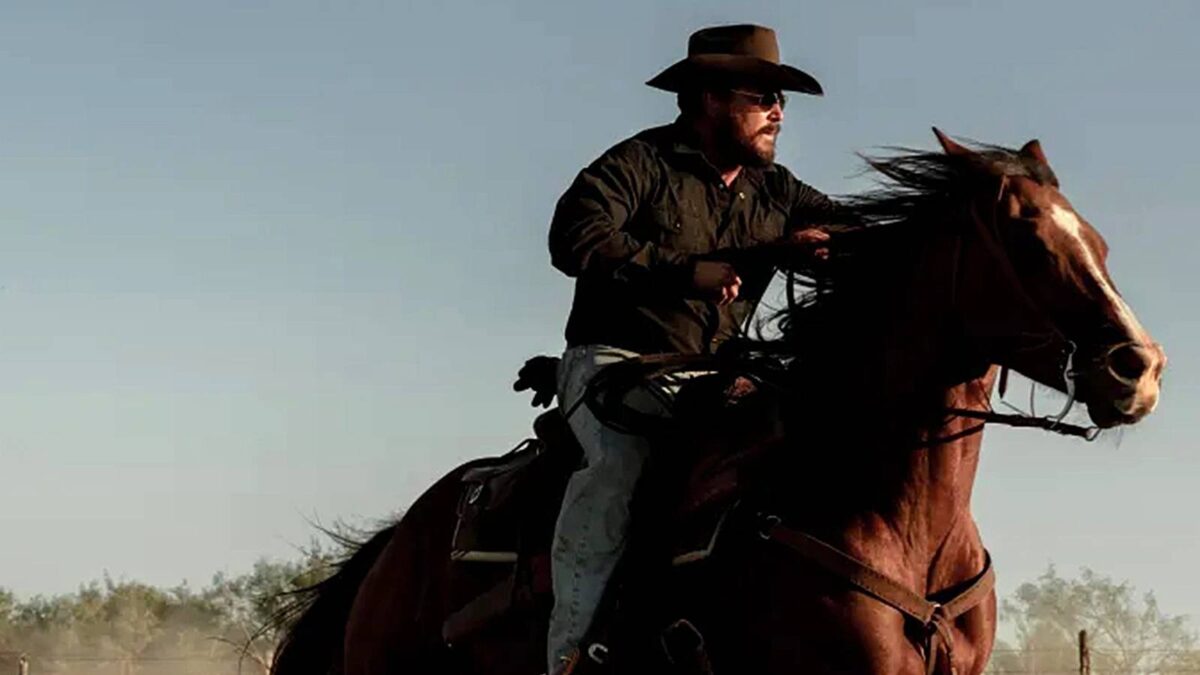
‘Dutton Ranch’ Trailer Reveals ‘Yellowstone’ Sequel Release Date
Rip Wheeler and Beth Dutton gamble everything on a new life in South Texas in the first trailer for the Yellowstone spin-off, Dutton Ranch. The footage reveals all manner of gun fights, fist fights, explosions, galloping horses, and even mysterious…
Mar 24, 2026
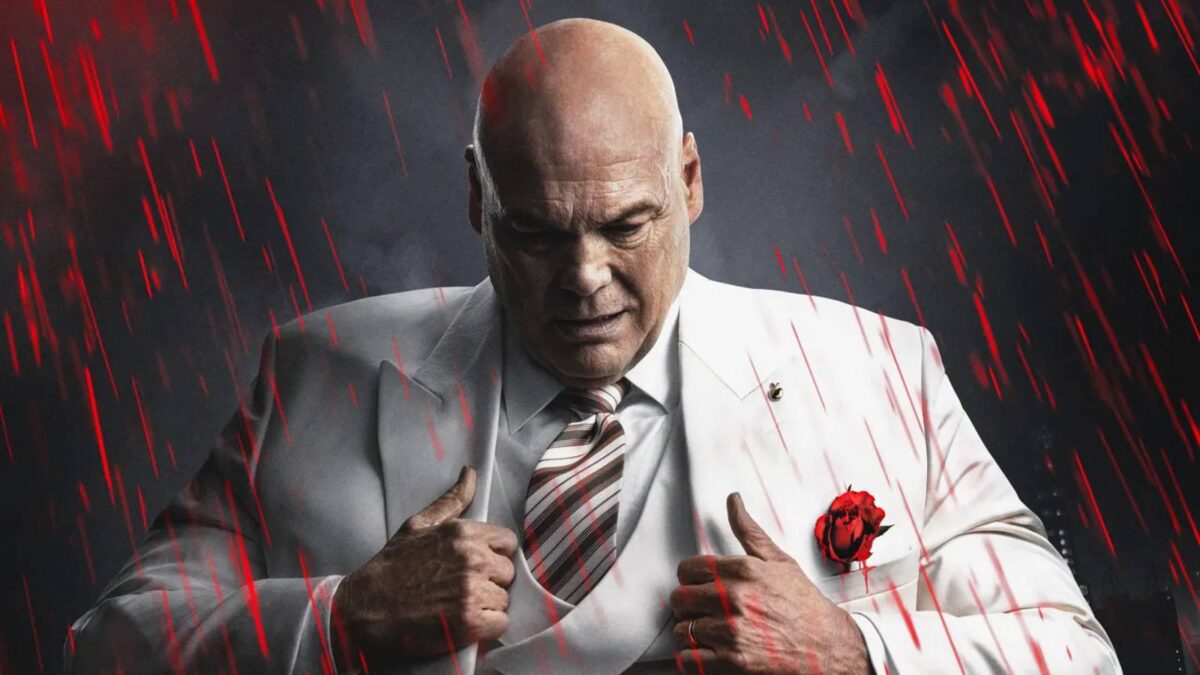
Born Again’ Showrunners Detail How the Media Ties into Season 2
Marvel is fast approaching the release of Daredevil: Born Again Season 2, marking its second live-action Disney+ show of 2026. Bringing back Charlie Cox's Matt Murdock and Vincent D'Onofrio's Wilson Fisk, this season picks up where Season 1 left off,…
Mar 23, 2026
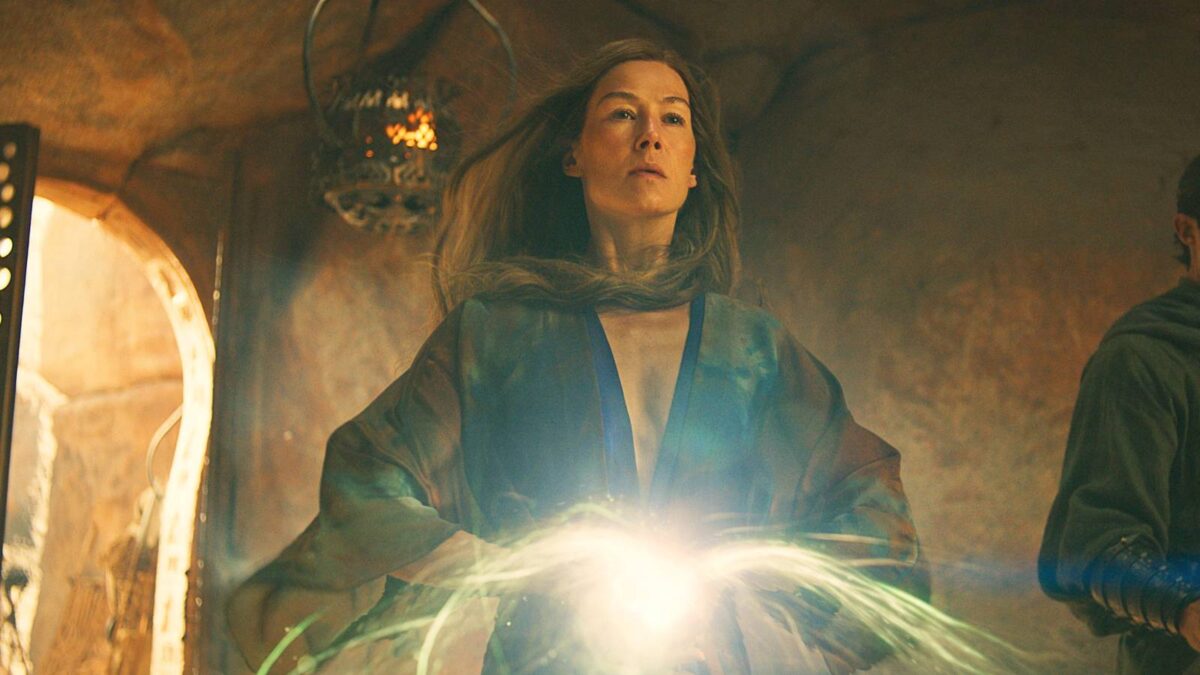
New ‘Wheel of Time’ Animated and Video Game Adaptations Are in the Works
Amazon might be finished with The Wheel of Time, but we haven't seen the end of the story when it comes to adaptations of Robert Jordan's bestselling high fantasy saga. Fans were left blindsided when Amazon abruptly pulled the plug…
Mar 22, 2026

‘Off Campus’ Teaser and Release Date Revealed by Prime Video
No one expected a love story between rival hockey players to become one of the most talked-about TV shows of 2025, but there's a lot more where Heated Rivalry came from, as a new teaser for Prime Video's foray into…
Mar 21, 2026