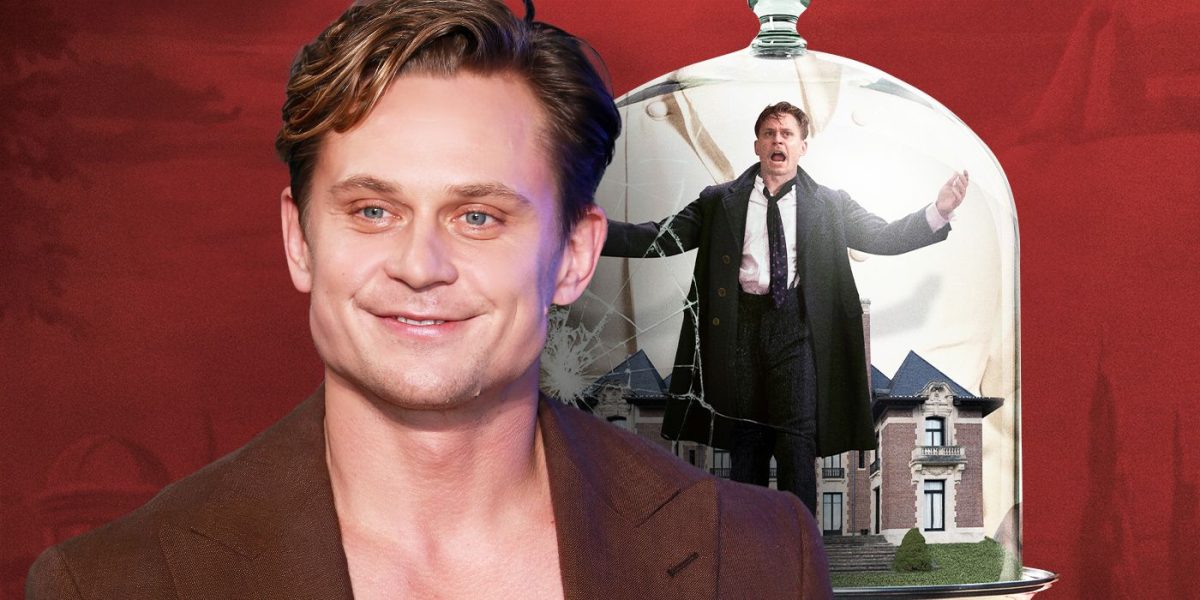
Billy Magnussen Discusses ‘Coup!’ and How His Upcoming ‘The Franchise’ Will Explore “Superhero Fatigue” Head-On
Sep 5, 2024
The Big Picture
Collider’s Steve Weintraub interviews Billy Magnussen for the VOD release of
Coup!
co-starring Peter Sarsgaard.
In addition to
Coup!
, Magnussen discusses his career from Disney prince to blockbuster bad guys, off-Broadway, and everything in between.
Magnussen also talks about his role in
Lilo & Stitch
, his directorial debut,
The Ridge
, a project with Margot Robbie, and the upcoming HBO series
The Franchise
.
Technically, Billy Magnussen got his big break in an off-Broadway production when his performance prompted Academy Award-winner Meryl Streep to vouch for his first big role. From that point on, it was Into the Woods and across some of Hollywood’s biggest box office hits, from Disney to James Bond, though Magnussen holds a special place for independent filmmaking. In fact, the actor is so passionate about the moviemaking process he launched his own production company, HappyBad Bungalow, and is currently planning on filming his directorial debut, The Ridge, soon.
For his most recently released feature, Coup!, co-starring himself and Peter Sarsgaard, Magnussen spoke with Collider’s Steve Weintraub in an exclusive interview spanning his variety of character roles and passion projects. In addition to the timely thriller (an eat-the-rich indie that takes place during the Spanish flu of 1918), Magnussen discusses the artistic freedom working independently allows, as well as the thrill of big-budget blockbusters like Disney’s live-action Lilo & Stitch and working on a “monster” like No Time to Die opposite Daniel Craig.
Check out their full conversation below for more on his role in the upcoming Disney remake, getting his start on the stage and Law & Order, the state of streaming, working with Sarsgaard, his project with Margot Robbie, his directorial debut and divisive thriller with Chace Crawford, and what viewers can expect from the forthcoming HBO superhero spoof series, The Franchise.
Billy Magnussen Has a Unique Hollywood Gift
From Disney prince to villain, “it always comes down to the character.”
Image via Walt Disney Pictures
COLLIDER: There aren’t too many people who have played two Disney princes, and you’re one of them with Into the Woods and Aladdin . What the hell is that like?
BILLY MAGNUSSEN: An honor, first of all, that someone would think I could be a prince because I came from a blue-collar family, working with wood my whole life — I’m actually renovating my house here in Georgia at the moment. It’s really cool. I love wearing the tights and all the fancy clothes and getting prepped. Honestly, for me, working with Disney the majority of the time has been about sharing the experience, the love and joy of acting, with the audience. The idea of having parents and their children sitting through a film together and sharing an experience brings me such joy. That’s actually where it all stems from for me, playing those wild characters. Anytime it’s a four-quadrant kids’ movie, like even Spy Kids [Armageddon] I did, and Lilo & Stitch is coming out. I love that because I could just imagine a child sharing a moment with their parents and being like, “I have this memory about the guy, Billy, playing a weird character in one of these movies.” That they get to share it with their family means a lot.
You have also played the villain a few times, or the bad guy, if you will. What is it about your face that directors see, that’s not only a Disney prince but someone you might want to punch in the face?
MAGNUSSEN: What is with the punch-in-the-face thing? I can’t choose my face! [Laughs] There are probably people that are from my demographic that have treated people very poorly and they just have revenge issues that they’re dealing with, some traumas, and for some reason, I get the opportunity to play those characters. It’s all just a character. That’s the truth.
You’re in a very unique boat because a lot of times, people who play villains play villains all the time, and a lot of times, people who play the good guy, play the good guy all the time. You’ve been able to go and play the antagonist and the protagonist.
MAGNUSSEN: I think it always comes down to the character itself. When I was in my late 20s and early 30s, trying to go into the leading man situation, those characters were always boring. I was always looking for this character that has a unique perspective on life, or they have their own personal challenges. Even a villain is not the bad guy in their own story; they’re just doing what’s right for them. That’s what makes a successful villain is that they’re doing the best they can in their life and they’re trying to get out of it, because they’re not the bad guy in their story.
Early in your career, you were one of about a million actors who got to do Law & Order . What did it mean to you to do an episode back then when that was a really good gig?
MAGNUSSEN: [Laughs] I heard it was the initiation into the acting industry to be on Law & Order. You did not cut your teeth until you were on one of those shows. I remember I played “Sweetie Ness.” I was a male prostitute giving out BJs at a traffic stop and getting arrested for it. I was on a soap opera when I first started and stuff, but having that as prime time television and being like, “Mom, dad, look what I’m doing,” and then it being that, it was funny. But it’s funny, it’s a machine, those shows, and it employs a lot of actors. I wish the industry was still that way, where you can be a guest star and make a living as an actor, but the industry has changed so much. They don’t provide the means to live anymore, those kind of jobs. The industry is crazy, and it’s flux.
100%. I have friends who do some of the convention circuits, like a Fan Expo or Comic-Cons around the country, and they will make more at those conventions than they do acting.
MAGNUSSEN: Yeah, there are some Marvel people I know that go to those things, and they’re like, “It’s cash.” They just show, and that’s how they make their living.
By the way, it’s good for all parties because fans like meeting people, meeting actors, directors, whoever, and people like paying their rent.
MAGNUSSEN: I think of Mark Hamill. He goes and does all of them all the time, and I get it. He loves it. I think it’s really wonderful. Him being the Joker… But seeing that, like, why not? Again, going back to the first thing, if I could bring joy to people sharing an experience together, that is so rewarding for me.
Completely. You have done so many different roles, but there’s gonna be people out there who have never seen anything you’ve done. If someone’s never seen your work, what’s the first thing you’d like them watching and why?
MAGNUSSEN: That’s a big question. It’s so funny, getting stopped in the street, it’s never the same thing. I’ll get stopped for The Big Short all the time, and I’m like, “Really? I was in that for, like, a minute.” At this point, probably with my production company, HappyBad Bungalow, I have this film Coup! coming out on Video on Demand on September 3rd, and I would love to share that. In this industry, a lot of times, you’re hired as an actor to show up, do your job, and go away. With Coup!, it was building the whole project with the creative team. It was carrying lights, carrying camera equipment, acting in it, and setting all the locations up. It was really more exciting. So now, as an older man, I would say Coup! would be really the thing I would want people to see. But when I was young: Game Night. That was a fun, fun film.
Image via Warner Bros.
I love Game Night . John [Francis Daley] and Jonathan [Goldstein] did such a good job with that movie.
MAGNUSSEN: They’re doing fantastic. Even Dungeons & Dragons [Honor Among Thieves] was still a fun movie. It was so fun. Those guys know how to have a good time.
We did an event for that with Dungeons & Dragons in LA. They are really, really talented behind the camera. I could just spend 30 minutes talking about how much I love their work.
MAGNUSSEN: And they’re nice guys. You don’t understand, that’s worth its weight in gold in this industry just to be a nice guy or woman. That’s awesome.
I completely agree. How did your production company, HappyBad Bungalow, get off the ground? What do you want to tell people about the company?
MAGNUSSEN: Through my 20s and 30s, I realized acting sometimes is a selfish thing. I was always going places and having great trips and seeing the world and doing amazing jobs, which is awesome, but you’re alone, and you’re isolated. It’s a one-off, and you’re done. I wanted a community in my life, and I was seeing more and more that the industry was going to algorithms and not supporting artists anymore. With HappyBad Bungalow, our mantra and how we feel is, we’re artists helping artists tell great stories so global audiences can experience the extraordinary power and healing power of entertainment. It’s important to me to get the artist back into the driver’s seat of the entertainment. With The Franchise coming up, we touch through the series that you just have execs making crazy calls for super franchise kinds of movies where they don’t know the lineage or the story, and you’re like, “Give it back to the artist that knows the story and let them tell it properly.”
How the Streaming Model Is Changing – “We’re Just Going Back to Basic Cable”
Image by Collider Staff
You were part of Road House , which was the most successful movie on Prime Video. What was that like when all of a sudden everybody and their brother was watching this movie?
MAGNUSSEN: Working with Doug Liman, first of all, is a dream. He is fantastic. Edge of Tomorrow, Swingers, he’s the man making film, and as a creative and director, I was blown away to work with him. But then for it to be on such a big platform and get out and let the world see it, it was really exciting to feel like a real piece in it, and to be an artist and express myself through that work was really cool. I think the shared pool afterward is not fun anymore, like the way people who worked on the film do not get to see any of the benefits of it being a success. That’s a problem with our industry nowadays, I think.
I have a friend who’s producing something at Netflix and they just changed their contracts. He was saying it to me on stage at Comic-Con during our producer panel that they are paying less upfront and more reward in the backend. This is a bigger conversation, but the problem with the streamers is that they would pay everyone a certain set rate like it’s a hit, not a huge hit but a hit, and that was your compensation, and there was no backend. Now what they’re trying to do is more of a studio model where you are getting paid less upfront and more participation if it is a hit down the road.
MAGNUSSEN: I think that’s what art should have always been. Share the pie! If we all put this together, shouldn’t we all get a piece of it? Should not we all be basking in the rewards, as you could say? I think that’s a cool idea that it might pan out. Hopefully, it will. I’m a little novice in what you’re trying to explain, but I just feel like if it’s gonna be a success, let everyone who made it be a part of it.
First of all, I completely agree that everyone who works on a piece of art should be compensated. At the same time, I also understand if they pay a little less upfront and then you get more on the backend. But it’s also hard to pay people extra upfront. Do you see what I mean?
MAGNUSSEN: No, I totally agree. But that’s the format that exists now. They’re putting commercials on these streamers now, they’re doing all this stuff, and you’re like, “Well, we’re just going back to basic cable, mainly. Why was that model working all of a sudden? But now it can’t?”
They broke the model, and now they’re trying to put it back together.
MAGNUSSEN: Literally. I understand. I mean, you do buy a product, and if it’s a success, I understand. I understand paying for the project, but it should be contractually in there if it’s a success, there should be compensation for everyone that was a part of it. Everyone. I’m talking crew members, I’m talking Teamsters, anyone. It’s a machine that had to be built.
I’m in full agreement with you. And also, I believe that if everyone is invested in something, you work harder to make sure it’s awesome.
MAGNUSSEN: Have you heard about this pay parity model now that exists kind of?
Maybe?
MAGNUSSEN: It’s basically — and this might be a very dumbed down version of it — there’s X amount of days on a project and how many days you work is taken, and now your percentage of that whole pie is all those chunks you do. So now once it makes money, you get that percentage, no matter if you’re the lighting guy, a PA, actor, director — you get your percentage of that cut. But you do not take money up front.
Oh, that’s interesting. I did hear, and I could be wrong about this, but I think Sing Sing…
MAGNUSSEN: Those guys started that whole thing.
They were telling me about it and I thought it was so interesting. But look, anything that gets people more money in success, obviously , I am 100% behind. We could spend an hour just talking about contracts and compensation.
Billy Magnussen Recalls Joining ‘No Time to Die’
“The whole world and everything, it’s unbelievable.”
Image via MGM
Are you still in disbelief that you were in a James Bond movie?
MAGNUSSEN: [Laughs] Yeah, sure! Disbelief but belief. I became friends with Cary Fukunaga after doing a TV show called Maniac, and we just creatively got along and stuff. He gave me the call, and he was like, “Would you be interested in this?” And I’m like, “Hell yes! Of course I want to be in a James Bond movie. Can I fight him? Let me get one punch in.” [Laughs] Those are monsters. Working with [Barbara] Broccoli and Michael [Wilson] as producers and seeing how they build the whole world and everything, it’s unbelievable. It really is.
It’s funny, I look back on those moments, and it’s happened on a few career projects, and I just wish I was present more in the moment. I look back on it so fondly, but at the same time, when you’re there doing it, you’re trying to do your job, you’re doing the work. So, just basking in it at the moment is challenging because you’re trying to do your job the best you can. But what a treat. Being part of such a legacy, it’s a gift. I feel very lucky. Again, it all can disappear, and I can’t believe I got to be a part of some things like this. It’s really crazy, man.
I try explaining to people. I’m doing a studio at TIFF in a week or two, and we have, like, 45 films coming in and everyone is like, “What is that like? You have all these different people coming in.” I’m just trying to survive it. It’s very hard to prep and watch all these movies. It’s very hard when you’re there to enjoy it, even though I am so grateful to be there and I want to enjoy it, but it’s like you’re in the middle of the whirlwind.
MAGNUSSEN: And you’re just trying to keep your head above water, even though it’s fun. I think we’re addicted to the — and correct me if I’m wrong, Steve — rush of it, the getting it done, being in the hurricane of it. I think we have an addiction problem to it.
Oh, you’re 100% right.
What Is ‘Coup!’ About?
Jumping into Coup! First of all, congrats on the movie. I really enjoyed it, and you were great in it. You and Peter [Sarsgaard] together are great. What was it about the material that said, “I need to be a part of this, and I wanna be involved as an executive producer?”
MAGNUSSEN: First of all, for me when I’ve read the script, it feels like an older film. Not because it’s set in 1918, but it had that component of two characters really fighting for their needs. It’s the human element that I craved in that conflict between the two characters. Also, the hypocrisy of what people say and what they do was really intriguing to me. It wasn’t trying to be a big, flashy movie. It had a poignant thing to compromise. We have social media now, we have the internet, and having a film set talking about the hypocrisy of people writing something, how they act, and then what they do in real life are two different things, and it’s the same way with social media. Now you have people putting photos up telling stories, like, “My life is so great,” but once that camera goes down, it’s all bullshit. So, what a great platform or stage to have that conversation, bring that to the forefront, the hypocrisy of what people do and say.
A lot of the impetus for the idea, the genesis of the idea from the writers was Chris Cuomo in the Hamptons being like, “Oh, we’re stuck during COVID and fighting for this,” but he wasn’t anywhere near it. He was in his palace, far away, reporting on the horrible things happening in the city. So it’s like, “Let’s expose that. Let’s say something about that.”
Yes, 100% . T he fact is, even though it takes place in 1918 and uses the Spanish flu, it’s just as accurate as 2020.
MAGNUSSEN: 100%, yeah.
Peter is such a gifted actor. What is it like actually working with him and sharing scenes with him because he’s so good?
MAGNUSSEN: He is a talent. I remember seeing him when I was in college, and I saw Garden State for the first time. I was like, “This guy operates in a different world and has an ease and a smoothness to him.” I love to work with actors such as himself because when you work with them, you’re playing jazz. You know the scale that you’re playing on, the note structure that you’re in, but then you get to riff all inside of it. He just picks it up and moves, and he’s malleable, and that’s jazz. Acting, to me, should be like jazz. It should feel natural. We’re moving through the scene and pick up and throw moments back and forth through each other.
He’s just a fun guy, man. My favorite times was we would shoot all day, we’d pack up the lights, and then go grab a beer and hang out and just talk about the fun stuff for the day, and then maybe what’s coming tomorrow. He was such a wonderful collaborator to work with.
I could watch him read the phone book.
Image Via Greenwich Entertainment
What was it like actually getting to film mostly in New Jersey, mostly in one location? What was the actual making of the movie like?
MAGNUSSEN: We don’t have a Deadpool & Wolverine [budget], and first, I want to say thank you for taking the time to do this. This means a lot for films like this that do not have those budgets for PR and press. Anytime someone like you can offer the time to promote something like this, it means the world. It really does because there are giants out there that were fighting and trying to put entertainment out into the universe.
It was actually set in three different locations, and it’s a small-budget film. We’re carrying camera equipment and lights — the crew’s maybe 25 people. We got all the exterior scenes first because it was in one setting. The exterior of the house was one thing, and we were shooting completely out of order, everything outside in the freezing cold. Then we went into the house to fill in all the gaps. The pool was its own location, as well. So you’re just putting these pieces together, hopefully constructing a film that will turn out well. But it was fun. It was like summer camp in a way.
How much fun did you actually have playing Jay Horton? The thing about him is that he’s — and you said this earlier — basically this wannabe progressive living in a mansion with servants. It’s crazy.
MAGNUSSEN: Having a period piece using that veil, we could have the conversation of someone who’s a social justice warrior being like, “Yeah, follow my rules. Follow my lead. We’ll do it this way, as long as you’re following my rules. It has to be under my thing.” And we have that today. We have people screaming, we have politicians nowadays going, “We know what’s right for the people.” You haven’t been in touch with the people for years, or maybe decades. How can you make a decision for the working class man when you don’t even know what it is to work as a working class man?
Image Via Greenwich Entertainment
How did the film possibly change in the editing room in ways no one expected going in?
MAGNUSSEN: I was blown away by the seamlessness of the interiors to exteriors, and making sure the plot lines, the story, and the character arcs really connected. There were only seven characters in the piece, but even those smaller characters came together, and seeing a full human being, I can only commend the actors that played those parts to see them come together and feel the life and feel the tension.
I just love the tension that slowly builds in this film. It’s not devastating, but it hits so deep for some reason, where you’re like, “Oh, I know that feeling, and I’m angry and upset.” There’s no villain in this story — they’re both bad people — and you’re like, “I’m rooting for this character for some of the film, and then I’m rooting for this character. But whose side am I really on?” Because no one’s perfect.
That’s actually one of the things I really liked about it is that you do root for different people at different times, which means you’re providing three-dimensional characters. I don’t want to talk about the ending to ruin it for anyone, but it does have a great ending.
MAGNUSSEN: Oh man, I think it pays off every time, still. And I love being in theaters. I’ve been screening it around the country a little bit, and you can feel the palpable tingliness in the room when it happens. It’s cool.
What Is Billy Magnussen’s Directorial Debut, ‘The Ridge’?
Magnussen will co-star with Chace Crawford, Lamorne Morris, and Jordan Firstman.
Image via Netflix
What’s the status of The Ridge ?
MAGNUSSEN: We were in some legal battles because a company that was helping produce had some issues, and then it was the scripts were locked for a little bit. But right now, we’re hopefully gonna be shooting by [2025] into next, because it has to be during the winter when we shoot it.
And this is your feature directorial debut?
MAGNUSSEN: Yes, sir. It is. It’s funny, when I’m contracted, I have other opportunities and jobs that come up, and contractually I am prioritized in some locations that I don’t have a window to do it. So, it’s like finding the right place to put it in that I could actually pull it off. Doing a film like that, it’s a six-month commitment, especially directing, because it’s pre-production, getting everything ready, shooting it, and then just editing. It’s a lot of time to put these things together. So, carving out six months a year, it’s a lot to ask.
That’s the thing that a lot of people don’t realize. For some directors on a bigger project, it’s two years. That’s all you do for two years.
MAGNUSSEN: It’s quite crazy. And the fact that those bigger-budget films have reshoots, too, they’ll scrap half the script and reshoot the whole thing again. That blows my mind.
Not to mention Marvel, but the new Captain America movie has gone through, like, four rounds of reshoots. I don’t understand. I mean, that movie must cost…
MAGNUSSEN: Gazillions. Yeah. But again, in the independent space, you have just a group of artists really trying to put something together that they all believe in. There’s something magical about independent cinema because you have every department head showing up, everyone working towards the same idea with a passion. There’s actually a love with it. It’s not just hired to do a job; they’re doing it because they believe in the project, not just showing up for the paycheck.
I’ve been watching TIFF movies, and one of the things I love about TIFF is that there are a lot of character films where the actors clearly care about the script and the people who care about these characters. The festival also has some bigger movies, but you get what I mean.
MAGNUSSEN: That’s what I miss about cinema so much, is like, you could take a simple story and just follow one character, and the extraordinary in the ordinary, and that’s what cinema could be. Or any type of art — music, painting, television. You’re just following a character, and as long as this character’s arc is there and you can follow it, it could be a magical, magical thing without special effects. I think of Good Will Hunting. There are no special effects, there’s no anything. It’s just following this one character’s desire to escape, in a sense.
I love that movie and Elliott Smith’s soundtrack. His music in that was awesome.
For people who don’t know, what is The Ridge about?
MAGNUSSEN: The Ridge is about three friends heading out to the Wyoming mountains for a bachelor party. Secretly, the man getting married is meeting his brother-in-law for the first time, and it’s a confrontation of blue-state versus red-state types of living. What is it to “be a man?” Am I more manly having a car, having an apartment in a big city, paying my bills, going to the grocery store, buying my chicken, or the guy out in the wilderness hunting his own food, cutting down his own trees to build his own house? Who’s more of a man? Are they still the same? Is there a scale there? So, it’s a confrontation about what it is to be a man, especially in these these days. I don’t know anymore. I think that that conversation has been lost a little bit.
No, Billy Magnussen Isn’t in This ’90s Samara Weaving Thriller
“It’s just stuck on my IMDb.”
Image via LuckyChap Entertainment
I am so curious about Borderline . I’m a fan of Samara [Weaving], and…
MAGNUSSEN: Oh, I am not part of that film.
Really?
MAGNUSSEN: It’s just stuck on my IMDb. [Laughs] I don’t know how to get it off!
Are you in Violent Ends ?
MAGNUSSEN: Yes. Violent Ends is the second film HappyBad Bungalow has been a part of. John-Michael [Powell] directed it with Midnight Road. It’s basically a redneck Godfather .
When is it coming out?
MAGNUSSEN: We’re gonna start putting it into the festival circuit very soon. We just finished the edit, so now we’re gonna start submitting it to the festival circuit and try to get it out there.
Are you going for Sundance or SXSW?
MAGNUSSEN: Maybe South by Southwest, maybe Sundance, maybe Cannes. We don’t know.
Oh, so it could do anything?
MAGNUSSEN: It could do anything. But it is a beautiful, again, small independent film. We love the story and the arc of the character. The revenge story is just unhinged once it starts. Once it kicks off, it just doesn’t stop.
Is it like R-rated, Hard R?
MAGNUSSEN: No, not a Hard R, no. But it probably will be an R-rated film.
When It Comes to ‘Lilo & Stich,’ There’s No Competition
“It’s honestly just celebrating.”
Image via Walt Disney Pictures.
I definitely want to touch on the fact that you are part of Disney’s Lilo & Stitch . What was that like?
MAGNUSSEN: I mean, being an alien with Zach Galifianakis in Hawaii, I’m not upset. I’m not upset at all about that. It’s a film dear to my heart. “Ohana means family,” and there’s so much love and passion behind this film. The opportunity to play such a character as Pleakley and just be crazy, which I love doing, was a gift. I don’t know even what I can say or really do. It was a treat. I can’t express it. I’ve been finally doing some ADR stuff for the film, and I’m like, “Oh, it’s gonna be good.” It’s gonna be good.
Is that one of those things where you’re really tapping into your eight-year-old or your five-year-old self when you’re performing?
MAGNUSSEN: 100%! I’m an alien who loves Earth and is excited about everything it has to offer, even the grim things. And just to go play with Zach and the young actress that played Lilo, [Maia Kealoha], was a treat. Playing with an imaginary Stitch, it was so good. There was puppeteer work, too. If I can make the little girl laugh, I was like, “I’m doing it right!” That was the key.
I don’t want to get you in trouble because I don’t know how much you can say, but how would you compare it to the animated film? For fans of that, are they gonna be super happy? Is it very similar?
MAGNUSSEN: I hope they embrace it as its own story. When they make these live-action films, sometimes I think people hold on to what the other one was, and they’re not in competition. That’s what I want to clarify. There’s no competition here. It’s honestly just celebrating. This is a story about finding family and friends, being an outcast, and finding your community and your family. I would hope you wouldn’t fight that, and embrace that. That’s the story we want to share. That’s what we want to put out in the world. I just hope people don’t compare it. You shouldn’t.
I completely agree. I do think that there’s too much emphasis on how the movie compares to the book or how the movie compares to the animated movie or whatever it may be. Each thing should just be judged on its own. There’s always this thing about competition.
MAGNUSSEN: When award season comes up, it’s like “Best Actor” — you can’t tangibly put those things there. It’s just a subjective opinion, which, that’s what art is. I think you should celebrate all of it. Your opinion is the currency of it. You’re allowed to, but I just can’t see a competition. It doesn’t make sense to me.
I personally agree with you. How is one performance better than another? I’ve always said — and this is, of course, just my opinion — that the nomination is everything. If you are one of the people nominated at the end of the year for Best Picture, Best Editing, Best Whatever-It-Is, that is basically saying you were one of the best of the year. It doesn’t matter who wins.
MAGNUSSEN: I totally agree. I couldn’t agree more. A lot of people agree that this brought something out and you touched something very specific and deep within the audience.
You just got to work with Margot Robbie and Colin [Farrell] on A Big Bold Beautiful Journey , which is a little bit of a cast. What can you tease people about it?
MAGNUSSEN: It’s a big, bold, beautiful journey. I don’t know if they’ll like me for saying it this way, but for me, it is almost like an Alice in Wonderland kind of film where you slowly go into the rabbit hole, and you rediscover your life and what you did and your choices, and the confrontation with the choices you’ve made in your past and where you can go into the future. It’s an examination of who you are and what are your values. It’s a really big, bold, beautiful journey. [Laughs]
Working with Margot and Colin, and Sarah Gadon was in it with me, as well, from Coup!, it was a great few days of shooting with them. They’re great, talented people. [Kogonada] was unbelievable as a director. I really enjoyed him so much.
Image via Walt Disney Studios Motion Pictures
One of the cool things about being a part of a project like that is, you know, a shit ton of people are gonna see it.
MAGNUSSEN: I guess, yeah! It’s so funny, I’ve had such a big year shooting The Franchise, some other TV show that I don’t know if I can say, and then that all at the same time. It was three projects. The time commitment to that one was so different from these other projects that I was putting together. I’m excited to see what it is. I don’t know what it’s gonna become.
‘The Franchise’ Confronts “Superhero Fatigue” Head-On
Image by Federico Napoli
Speaking of The Franchise , the people that are behind the show make it a must-watch show. But number two, for what’s going on in Hollywood, and especially the last decade of the popularity of the superhero genre, it seems very, very timely. What can you tell people about The Franchise and why you want to be a part of it?
MAGNUSSEN: First thing, it’s nice to see a show that celebrates and exploits the people who actually make movies, not movie stars. It’s actually the crew members, the producers, the writers, the people putting these things together. And to poke fun at it all is the greatest gift because sometimes we take this shit too seriously, and our show is just popping all the holes, being like, “You’re not off limits. You can make fun of it!”
And it was nice to make fun of myself through the whole process. My character specifically, Adam, is the face of the franchise, this character “Techto,” and he’s the superhero. But through that character of playing Adam, who plays Techto, I got to explore — which is really prevalent in our industry — the insecurity of actors and the not feeling good about who you are as you’re the biggest star in the world, and you’re still isolated and alone and insecure and think everything you do is shit. So, it was fun to make fun of myself and other actors I know while making this TV show. [Laughs]
I think it’s six episodes. How long did it actually take to film?
MAGNUSSEN: We actually did old-school style where we shot the pilot first, and then we had a green light or red light from HBO. So we shot the pilot over maybe two and a half years ago, and then we shot the seven remaining episodes at the beginning of this year. The pilot was, I think, 15 days and then the rest of the series was about four months, so two to three weeks an episode. So, it was great.
But I have to say, the ensemble — I mean, you’ve got Daniel Brühl, Richard E. Grant, you have Aya Cash, you have Lolly [Adefope], you have Himesh Patel. It was a fantastic group of people to work on this project with. Sam Mendes, Jon Brown, Armando Iannucci…
No, I saw the IMDb list. It’s crazy. You look at Deadpool & Wolverine and, obviously, it’s still very popular. I mean, it made over a billion dollars. But I do think that there is some burnout with the superhero genre in Hollywood.
MAGNUSSEN: “Superhero fatigue,” they call it.
How does The Franchise get into the superheroes of it, or how much is it like that’s just part of it, but it’s really about the making of these things?
MAGNUSSEN: No, it confronts those issues a lot. We have characters in it, Darren Goldstein plays a great producer that is a high-up person in, let’s say, “the maximum studio system” that we have for our show, and how productions can be ripped apart, torn up, put back together Frankenstein’d. We cover those boxes that these studio heads need to check, and confront those issues. Because they are, at the same time, I think, scared that it’s feeling like the gas is running out here. So, we do confront that.
Do you have a favorite episode?
MAGNUSSEN: They all bleed together. My favorite thing about it was the ensemble. You didn’t know if you were acting or just hanging out with your friends sometimes because it is very Office-y-feeling, like The Office, but set on a film stage. Basically, I’m in a superhero outfit the whole show, but I’m never doing superhero stuff. I’m just in the tights and the uniform, talking like the camera’s off. It’s really funny.
When you’re playing a character like that in that kind of costume, how much do you want to leave set and just go to Starbucks or a supermarket and just walk around?
MAGNUSSEN: I wanna take it off, bro! [Laughs] We got the job, we got greenlit, and I was like, “Oh, god, I gotta get in shape. I gotta get, like, superhero-sized and do the whole thing.” I put on 25 pounds to play the character, I showed up to the fitting, and I couldn’t fit in the suit because they tapered it to the other way. They’re like, “Why did you do that? We have a muscle suit for you. You could have just worn that.” And I was like, “Oh, god, that needs to be in the show.” Yeah, I wanted to be out of that suit as soon as possible, to tell you the truth. [Laughs] It is so uncomfortable, so tight. But it’s funny, it becomes one with you.
What else is coming up for you? Do you know what you’re shooting this year?
MAGNUSSEN: I’m about to do a play on Off-Broadway called Shit. Meet. Fan. It’s a great cast of people in it, Robert O’Hara wrote it and is directing it. I’m looking forward to do that for the fall.
That’s awesome . I could never do stage work like that. Any actor that I know who can do Broadway, Off-Broadway, stage work, I bow down. I could never do it.
MAGNUSSEN: It’s fun. With cinema, it lacks the third party you need, the audience. With theater, 50% of the show is the audience agreeing to go on the journey with you and sharing that back and forth with them. It’s a thing I think as an actor you crave, is to have that play, that back and forth with them. So, I’m looking forward to it. I started in theater, and I kind of miss it. I made a promise to myself that I would only do contemporary playwrights. I’ll never do a revival because I think we have artists now who need their voice expressed and put out into the world, so why don’t we champion them? I’m done watching a Shakespeare thing. I don’t need to see another revival of that shit. [Laughs] It’s not shit! I’m not saying that.
I know what you mean.
MAGNUSSEN: Why aren’t we celebrating this? It’s the same thing with remakes. Let’s celebrate new artists, let’s celebrate new ideas.
Coup! is available to rent or purchase on VOD.
Watch on Amazon
Publisher: Source link





Eggs – Film Threat
In writer-director-star James Clair’s short drama Eggs, a man struggling to rebuild his life finds his quiet mornings turning into strange conversations with the very eggs he is meant to cook. I mean, they want him to eat them. So…
Mar 11, 2026
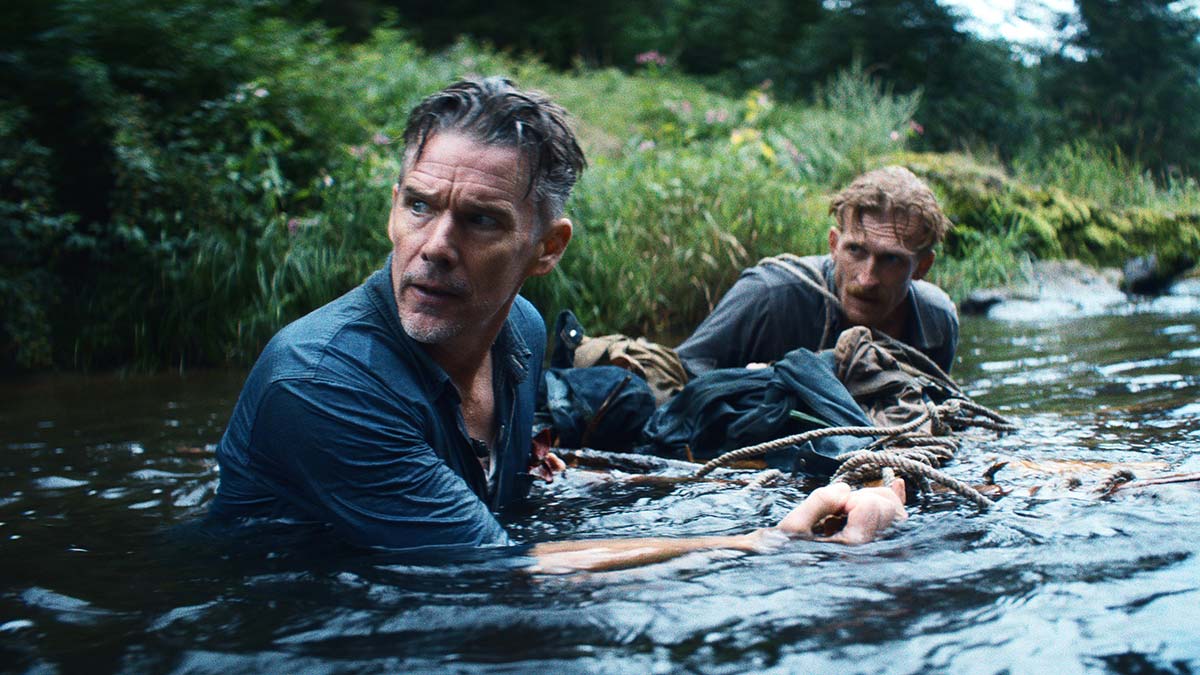
Ethan Hawke Elevates A Rugged, Predictable Gold-Run Survivalist Western[Sundance]
As far as one can tell, Murphy (Ethan Hawke), a father, WWI veteran, and avid car mechanic, has never encountered an insurmountable challenge. Living in Eugene, Oregon, in 1933, four years into the Great Depression, Murphy and his young daughter,…
Mar 11, 2026

The Moment Review | Flickreel
Brat Summer was a cultural phenomenon that I didn’t understand at all. I knew that it was connected to an album that Charli XCX had released. Whenever I asked what Brat is, though, nobody could seem to give a straight…
Mar 9, 2026
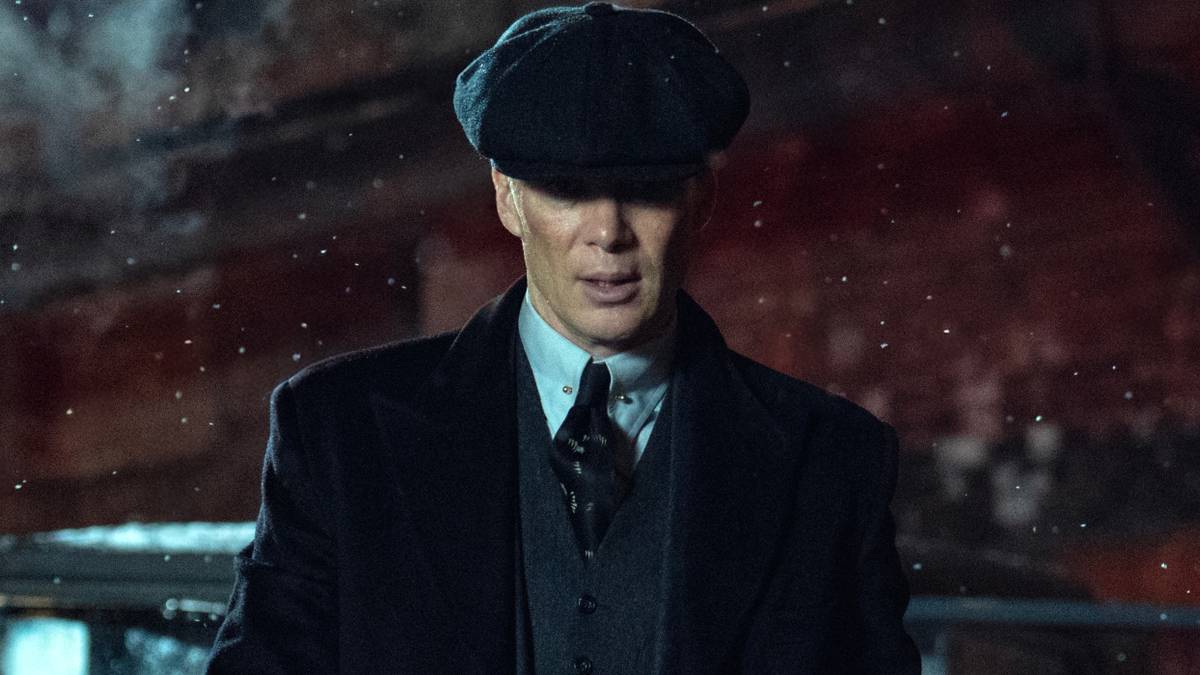
Cillian Murphy’s Netflix Crime Hit Delivers a Brutal, Bleak Finale
It’s been four years since we last saw Cillian Murphy play Tommy Shelby, but seven have passed in the world of Peaky Blinders, with The Immortal Man taking place in 1940, in the middle of World War II. Tommy’s gone…
Mar 9, 2026