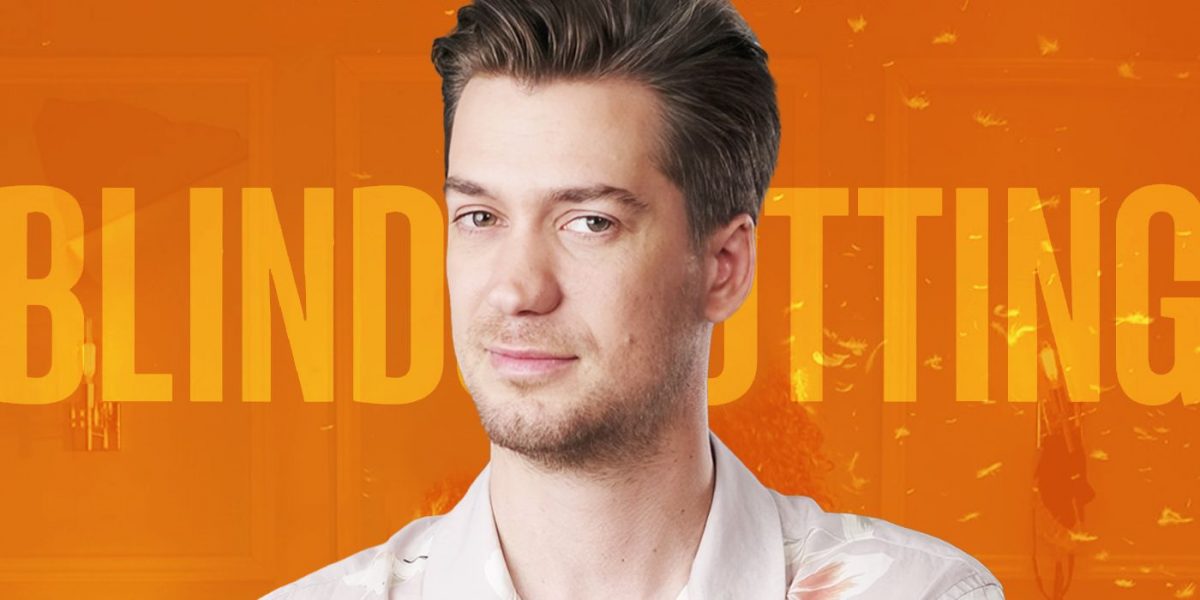
‘Blindspotting’s Rafael Casal on Pushing Artistic Boundaries in Season 2
May 10, 2023
From co-creators Rafael Casal (who’s also the showrunner) and Daveed Diggs, Season 2 of the Starz series Blindspotting continues to follow Ashley (Jasmine Cephas Jones) on her journey through life while her partner of 12 years and the father of their son, Miles (Casal), is incarcerated. There is nothing easy about the toll that takes, on the individual and their loved ones, and even if you think you’re handling it, sometimes it gets overwhelming to the point of having an existential crisis, and then you need your family for support.
During this 1-on-1 interview with Collider, Casal talked about making a show that’s artistically challenging, pushing Season 2 even further, collaborating with the Henson Company on a very special character, making a Western episode, explaining the history of the N word through movement and dance, and whether they see a future for this series.
COLLIDER VIDEO OF THE DAYSCROLL TO CONTINUE WITH CONTENT
Collider: I love how this TV show is so much more than just a TV show. It really is very much an incredible piece of art. Thank you for having the guts to do some of the crazy things that you do in this.
RAFAEL CASAL: Thanks. We’ll see if anyone ever gives us another show again. We have a good time.
Image via Starz
After going through the process of making the first season, what did you learn you could do with this that maybe you didn’t realize until you did a season, that you could then do with the second season? Did it feel like there were specific ways you could push things even more, now that you knew what you could actually do?
CASAL: Yeah. What we learned in Season 1 was that our crew and our department heads were really excited about the artistic challenge of the show. Because Daveed [Diggs] and I are new to television, we don’t know what we don’t know. If you don’t know how to direct, then no one can tell you what you can’t do. And so, I did everything wrong and right, simultaneously. During our Season 1, our head of props would come up and go, “Do you want this kind of bag, or what about this?” There was a Russian doll gag in Season 1 that wasn’t in the script. It was gonna be something different, like cutting up a fish or something, and they came in and were like, “What about a thousand Russian dolls that just keep getting smaller and smaller and smaller?” I was like, “That’s absurd. I love it. Get me the biggest Russian doll you can find.”
Once we realized our crew was excited for the gag of the show, we got into Season 2 and Fizzly Bear became a big part of the show. In episode one, we were gonna have this moment with this stuffed animal coming to life. It started with a mascot costume that was relatively cheap, like something you’d see at a baseball game. And then, we were like, “Well, we do know the Henson company. Are we not even gonna ask?” The audacity is calling the Henson family and going, “I don’t know if you’ve seen our show, but if you have anything laying around that would work for this, let us know.” And they were like, “Actually we do have something. We have a big seven-foot creature that we can adapt for you. We love you guys and wanna work with you.” So, they got on board and worked within our budget. We had three Henson puppeteers on set, working that creature. It was an absolute dream come true. For me, the sheer audacity of our lack of experience really worked for our benefit. We got to have a make believe character whose eyes, mouth, ears and eyebrows moved. It’s this beautifully endearing, symbolic version of his absent father. As long as we attach our absurdity to a sense of purpose for the show, it always feels worth doing.
The existence of that puppet this season was absolutely everything for me. I just loved it.
CASAL: Oh, good.
Image via Starz
Have you always known that this is a show where you really can just throw in things that would be completely unexpected, but they also just work?
CASAL: I think we figured it out, along the way. We knew that with the movie, the verse at the end was the big earn, and we got there. Every time you make a show a little bit less traditional, you lose some people. That’s just the nature of TV. Some people like their art down the middle. And if you want to appeal to just those people, there’s that show. But there are also a lot of shows like that. I’m really excited to make one of those shows. I would love to make a big mass hit show that goes on for 10 seasons and does all that. But some of the most impactful shows that have stuck with me the longest are not those shows. We knew, going into it, that Blindspotting was the type of thing where, if someone was gonna let us do a weird, artsy show, we wanted to take full advantage of the fact, and that’s what they’re letting us do. We actually are being afforded the creative freedom. As long as it’s always grounded in the point of the show, and it has to do with the prison industrial complex and the effects that it has on a parent, and we can always tie it back to that in an intuitive way, it totally works.
The Western episode works because it’s about a child’s imagination, freeing his father who’s been absent. Fizzly, just symbolically, is there because Sean doesn’t have a protector. He’s pulling away from his mother, and he also thinks he’s grown, but he’s not. He’s still a kid. So, a monster is perfect, and a sweet monster at that. In the third episode, movement is used to explain the history of the N word to a kid from a biracial Black and white parent. We can’t do it with words. We just can’t. We don’t have the time. That’d be a five-hour special, and we still wouldn’t get into all of it. Dance can get us there because it’s about an emotion being evoked. Whether or not people, 20 years from now, go back and watch any part of this show, there are pieces of it that I’m excited to see in other people’s work. I’m excited because our show feels like it’s in conversation with a lot of my contemporary TV artist friends. It’s always exciting to me when they’re like, “You did this, in this episode. I wish I could do something like that in this show that I’m working on.” And I’m like, “You can.”
That whole dance segment really was truly beautiful and emotional to watch.
CASAL: What’s really tricky about our show is that it’s not like we had something to reference for that piece. The only dancers that we know who’ve done anything close to it are our choreographers. We saw them do something along the lines of trying to capture something as complicated as that in their dance show. There’s Missy Copeland doing it with contemporary ballet. There are people in the hip-hop theater world that have tried to not only do this subject, but have tried to tackle complicated things through movement. That’s what dance is, since the beginning of time. People who know the world of dance, know that movement is about expressing the thing that we can’t articulate, that can only be expressed through the body. It’s another element of the show that’s divisive with the audience. Some people are like, “Why the fuck are they dancing?” For other people, movement has played a huge part in their lives and they’re like, “Oh, my God, no one’s ever given me this in a show before,” and that’s really exciting.
Art presents people with a thing that they have to contend with, and it invites a new audience into a space that they’re not used to. Between Season 1 and Season 2, what we really had to do was just tune out the minority of people who were like, “I don’t get the dance thing,” and be like, “That’s okay. You’ll get there.” If you take a kid to a dance performance and they don’t get it the first time, and then you take them too a dance class, they’ll wanna go back to that show and they’ll idolize the dancers, and they’ll wanna go to school for dance. There’s not a lot of dance on television, and we have a deep love for movement, so for us, it was great. The prison industrial complex is reflected through movement on this show. When language fails, that’s our convention. We’re gonna use it when we think it’s important. So for us, that episode had no other way to end. They had to tell him, but he wasn’t gonna understand it. But the writers’ room doesn’t have the words. There were parents in the room that didn’t have the words. It had to be a movement thing because we don’t know how else to do it.
Image via Starz
I love that this is a show where you can offset a moment like that by doing scenes in a strip club.
CASAL: Pole dancers aren’t sex workers, in that way. We wanted to actually hire people who dance in those clubs because they know how to do it. We’re not mimicking it. It’s not the bougie gentrified version. These are professional stage dancers, who dance in these venues for these audiences, and these are the moves that happen. Seeing it in its authenticity was really important to us. We hired a lot of the dancers that dance at the club we shot it. We were like, “This is your home turf. Why would we bring people into your house? You do it, and we’ll shoot it as beautifully as possible.” And they were so great about it. When you’re on your fifth take and you’re like, “We need you to get back up there,” and they’re like, “Sure, no problem,” these are tremendous athletes. The skill and strength it takes to be as good as they are, for as long as they are, I was completely floored.
What’s it like, from a production standpoint, to shoot something like that, where you’re in the strip club and you have all these things going on in the background, you’re trying to get scenes done and you have fights happening? How is it to have to shoot that and make sense of it?
CASAL: It’s chaos. We would yell, “Money, bees, background, action!” I had to yell it, over and over again. The money guns would go off, you’d have to start pretending there were bees, and then the background would start freaking out and run. The dancers would have to get eight feet up in the air, and Too Short had to run out, and there was this big camera move, and the money guns had to go off in a particular order, and everyone had to run. There’s a slo-mo running shot that’s sideways, and we didn’t want them to block each other, so they had to spread out. It was fast. We slowed that shot so much, but they were running so fast through that shot. It was five seconds, and they were out the door. In those environments, the biggest thing for us is that we had to have fun and we had to get as much time as we possibly could. You’ve gotta have a sense of humor about what the scene is because it’s ridiculous. Ashley’s drunk. Trish and Jacque are fighting people. They’re beating up a bachelorette party. The dancers are unbothered. It’s just a regular night for them. Nothing is absurd about it, at all. And Too Short is having an identity crisis. All you can do is laugh and just keep rolling.
Image via Starz
Is there a plan for how many seasons you want to do this?
CASAL: I think every season is the last season, to us. We like to close the door, but keep a window open. That feels like what you should do with every piece of art. If you make a movie, end it and complete the story, but also make people want more. If the timing is right and we have a great idea and the network wants it, and all those things line up, we’ll do more. Or that’s it, and it’s beautiful and contained. I’ve loved shows that go for 10 seasons, and Fleabag was great with two seasons. Could I have watched another season of Fleabag? Yes. It was genius. But also, it was genius to stop. I’m always torn about it. You make art when everything lines up well, and you’re excited and everyone’s excited to do it. The only way I’ll ever know if that’s right, is when that time comes or doesn’t come. But for now, we tried to bring a nice resolution to the end of Season 2 that felt satisfying for the audience, and also, there’s a nice little window at the end, that brings it back to the film and brings it back to the larger world. Should we want to come back, there’s a great place to start.
Blindspotting airs on Friday nights on Starz.
Publisher: Source link


New ‘Wheel of Time’ Animated and Video Game Adaptations Are in the Works
Amazon might be finished with The Wheel of Time, but we haven't seen the end of the story when it comes to adaptations of Robert Jordan's bestselling high fantasy saga. Fans were left blindsided when Amazon abruptly pulled the plug…
Mar 22, 2026
‘Off Campus’ Teaser and Release Date Revealed by Prime Video
No one expected a love story between rival hockey players to become one of the most talked-about TV shows of 2025, but there's a lot more where Heated Rivalry came from, as a new teaser for Prime Video's foray into…
Mar 21, 2026
Sarah Michelle Gellar Urges ‘Buffy’ Fans to Avoid Reading Leaked Reboot Scripts
Buffy the Vampire Slayer fans have had a rough few days after Hulu officially pulled the plug on a revival of the series, which would have brought star Sarah Michelle Gellar back as the titular heroine. Described as a continuation…
Mar 20, 2026
Born Again’ Stars Explain Why Bullseye Is So Dangerous in Season 2 [Exclusive]
Along with Charlie Cox's Matt Murdock and Vincent D'Ofnorio's Wilson Fisk, Daredevil: Born Again Season 1 brought back one of The Man Without Fear's most notorious villains: Wilson Bethel's Benjamin Poindexter, better known as Bullseye. Not only was he back…
Mar 19, 2026