
CCR (Claustrophobic Control Rooms): DP Barry Ackroyd on âA House of Dynamiteâ
Dec 19, 2025
Anthony Ramos and Abubakr Ali in A House of Dynamite. (Photo by Eros Hoagland/courtesy of Netflix)
In Netflix’s A House of Dynamite, the United States’ government and military chain of commands scramble to respond as a ballistic missile of unknown origin speeds toward the Midwest.
The non-linear narrative replays the final 20 minutes before impact from different perspectives, taking the viewer into the White House Situation Room, the Presidential Emergency Operations Center, U.S. Strategic Command and an Alaskan missile defense battalion. It’s certainly not cinematographer Barry Ackroyd’s first time lensing a room full of analysts staring worriedly into a bank of monitors. “Someone actually said to me once, ‘Is that the only thing you do? You’re always in a control center surrounded by screens.’” laughs Ackroyd. “But I keep doing them because the films are good, the stories are good and the directors are good.”
In this case that director is Kathryn Bigelow, who Ackroyd previously collaborated with on Detroit and The Hurt Locker. The British DP has also worked extensively in the control center-heavy world of Paul Greengrass (United 93, Captain Phillips and Jason Bourne) and the decidedly monitor-free world of Ken Loach (Riff Raff, The Wind That Shakes the Barley).
With A House of Dynamite now streaming on Netflix, Ackroyd spoke to Filmmaker about his observational vérité style and Idris Elba’s questionable jump shot.
Filmmaker: A House of Dynamite is set largely in spaces that I imagine are difficult to get access to or even find visual references for. Were you able to get into any of those rooms during prep?
Ackroyd: I didn’t get to see some of the earlier scouts because being a cinematographer you often come on a little bit later. I did go into the White House and some of the rooms there, so that we could see the lighting, mood and scale, which we copied back on our stages in New Jersey. We were given a very intense lecture [by] the real people who do the real jobs, telling us what would be happening [in this scenario]. Kathryn and writer Noah Oppenheim had already researched a lot of that, but I was there for some of those meetings. For a lot of the spaces, our [frame of reference] was through photography, usually a photo with George [W.] Bush meeting with somebody or that famous photo in the White House Situation Room when Bin Laden was killed.
Filmmaker: I was watching some of your old interviews and you shared this great quote about handheld camerawork from Chris Menges, who was Ken Loach’s regular cinematographer before you. To paraphrase, he said handheld is not about chasing the subject around with the camera, it’s about putting the camera in the right spot so that the subject comes to you. In a movie like A House of Dynamite, where so much of the action takes place in claustrophobic control rooms, how do you determine the right spot for each of the three cameras you shot with? When do you make that determination? Is it in prep or during a blocking rehearsal on the day?
Ackroyd: Ssome of those camera positions just feel like they’re a given. It’s not magical. We’re in huge rooms and could be all over the place—and we do eventually get into many different positions—but I don’t know, I think it’s just experience. I’ve been working this way a long time and thinking about the best point of observation for the camera, because it is observational, and it always leaves you outside of the circle. It’s as if you are an observer who’s arrived in the room, and I think this is what gives it tension. You don’t have the ability to roam around everybody because you are just a mere observer. If you are in the right place, you can cover just about everything knowing that there’s two other observers in the room as well [with my other two camera operators]. We also typically have the cameras on sliders, so they have the ability to move and reposition during the shot. We tend to do long takes, but we don’t do the same shot over and over again. We get it, then we move. I always operate a camera and myself and [B Cam operator] Gregor Tavenner would be capturing what we know is the essential coverage. Then I’d tell [C Cam operator] Katherine Castro something like, “Now let’s move your camera over here behind the background people and shoot through them.” She would come up with beautiful shots all the time.
But I think your question is, do we have like a drawing that shows where this camera is, and that camera is? We don’t and the rehearsal is minimal, if at all. We have an idea of where the actors are going to be, but they can change that and we will just follow them. The zoom lens is a very important part of that process. With a 12-to-1 ratio zoom, you can start seeing the whole room but then zoom in when you find interesting things and those become obvious when we’re shooting it. It sounds lazy in a way when I talk about it because we don’t prep too much. We like to not know too much beforehand. I like to be surprised by what’s happening and we capture it as genuinely as we feel we can. When it works really well, it’s brilliant. If it’s wrong, we can do it again. That’s the difference between a documentary [and a narrative feature], but in both of them capturing the moment is the thing.
Filmmaker: You’re shooting on big 12-to-1 zooms? Everything feels handheld.
Ackroyd: It’s the illusion of handheld. We’re actually on a slider mostly. That type of lens is not something you’re going to be able to handhold for 18 minutes (at a time). You may do it occasionally or maybe with a monopod, with gives you a little bit more fluidity. Typically, it’s just a very loose OConnor head and you’re cradling the camera literally like it is handled with my eye to the eyepiece and my left hand on the zoom.
Filmmaker: You’re doing all those zooms by hand?
Ackroyd: Yeah, because by the time you think and move a zoom control, for the zoom to react it’s already much too late. That 24-to-290 zoom is so beautifully organized. The zoom [ring] is in easy reach of your left hand and you’re just playing it like jazz, living in that moment.
Filmmaker: How does that approach extend to lighting? You and Kathryn don’t use marks. Are you essentially lighting the spaces because you’re never quite sure where an actor is going to land?
Ackroyd: On this particular film, so much of it takes place in interiors with no particular sense of windows or daylight coming in, because there often was none. So, we tried to build all the lighting [into the sets] the way they would be in the real locations. You can imagine government buildings don’t always have the most beautiful lighting. They’re maybe slightly practical, but sometimes they’re not even practical. We made all our bulbs so that they were all controllable and ran them all back through a mixing board. When we moved a camera and wanted some contrast in a room that didn’t have a lot, we could then alter some of the lights. It was very difficult to bring in lights on stands on the stage because they would be reflected in these endless rows of glass walls that tended to surround us or in all the monitor screens. So, we did light from the ceiling. It wasn’t easy and I was constantly working with my gaffer to be like, “For this shot, let’s take those six lights out there, then bring these four up maybe 10 or 15 percent.”
Filmmaker: The list of VFX vendors and crew in the credits is pretty sparse compared to most new movies. What types of things require VFX in a project like this?
Ackroyd: We had to replace quite a few things. Most of the exteriors were pretty real except things like the rooftop of the Pentagon. The location we had to do that scene in was like a concrete tank for water. It had a circular base that we could land a Blackhawk helicopter on. We put some greenscreen up, but it was very little. It’s not a visual effects film, but they do add up. Occasionally a [monitor] screen would need to be readjusted. You sometimes think “Well, we can get away with that” on set and then you realize later, “No, we can’t. We’ve got to make it look right [with some VFX help in post].” Sometimes it’s things like trees not being right. We shot from summer into the fall, so the trees were changing colors. We shot that Presidential motorcade [which takes place in the course of a few hours in the story] from the middle of July in the heat in Washington until maybe the end of October. So, we were going through all the seasons in that scene, picking up little bits and pieces in different parts of New Jersey, Washington and New York. We had to make very subtle changes to scenes like that.
Filmmaker: To avoid spoilers, let’s just the say the final shot of the film starts at street level and then booms up into a drone shot. How did you pull that off? Does the drone take off from some other camera platform or is it a stitch?
Ackroyd: We weren’t allowed to use a drone because, as you might imagine, we had so many people in that shot. So, it starts as a crane shot and the rest is a very beautifully executed visual effects shot. Everything beyond the fence—the woodlands, the forests, the mountain—is reproduced by visual effects.
Filmmaker: Any good stories from the scene where Idris Elba’s president stops by an Angel Reese basketball camp?
Ackroyd: We had one day to shoot that. We had to move in, light it, shoot it and get out of there. That was a frustrating day for me. It wasn’t like shooting on one of our big sets. We had much less [control]. We had talked about all these lighting changes [to the arena’s practical fixtures] on the scout and then when we got there the one guy [the venue] had left in charge was like, “Well, you can’t change the lights.” It was a little frustrating. The great thing was Idris, who is not a great basketball player…
Filmmaker: You can tell from that jump shot.
Ackroyd: [laughs] He hit his shot, though. So did both of those girls from the camp. Those were not visual effects. It really was a joyous moment, and it was nice to go shoot that after all that time with characters sitting at desks.
Filmmaker: If I watched two of your back-to-back takes as an operator, how similar would they be? Is every take completely spontaneous or are you, for example, generally zooming at the same points in a scene?
Ackroyd: It could be similar, but often not. That first take gives you an idea of what to do and you might say, “I really liked that moment when I zoomed, so I’ll try and remember it.” I often walk away from the camera after a take counting on my fingers, “Okay, number one, I need to shift that light. I’ve got to move that. We could bring this in here. I think I should move Gregor’s camera. Maybe I should move my camera another three fee this way.” During the takes, our grips were also free to slide us across [on those sliders] if on their small monitor they could see we were getting trapped because maybe an actor had moved slightly differently. It’s a nice play between all the different departments. I like to think that everybody feels like they contributed, because they have, and they’ve created something, because they do. Hopefully we have a very happy crew and a happy set where everyone feels creative, because film is a beautiful art form.
Publisher: Source link



Wuthering Heights Review | Flickreel
As far as adaptations go, I’ve never viewed any source material as sacred, including The Bible. While a faithful adaptation is always welcome, I’m open to a filmmaker leaving their signature on a classic story, especially one that’s been told…
Mar 17, 2026
Amy Adams Sinks In Vapid, Misguided Alcoholism Drama By ‘Pieces of a Woman’ Director [Berlin]
For a solid decade, starting in the late 2000s with Disney’s charming fairytale comedy “Enchanted” all the way to Denis Villeneuve’s melancholy sci-fi “Arrival,” it was easy to trust Amy Adams, a six-time Academy Award nominee. Then, somewhere around Ron…
Mar 17, 2026
Mason Gooding & James Van Der Beek’s Bad Night Is Aggressively Dull
Ever since the Scream franchise helped put him on the map, Mason Gooding has been a great talent to watch. The genre-bending slasher Heart Eyes is still his best non-franchise role yet, but he's also branched outside of horror in…
Mar 15, 2026
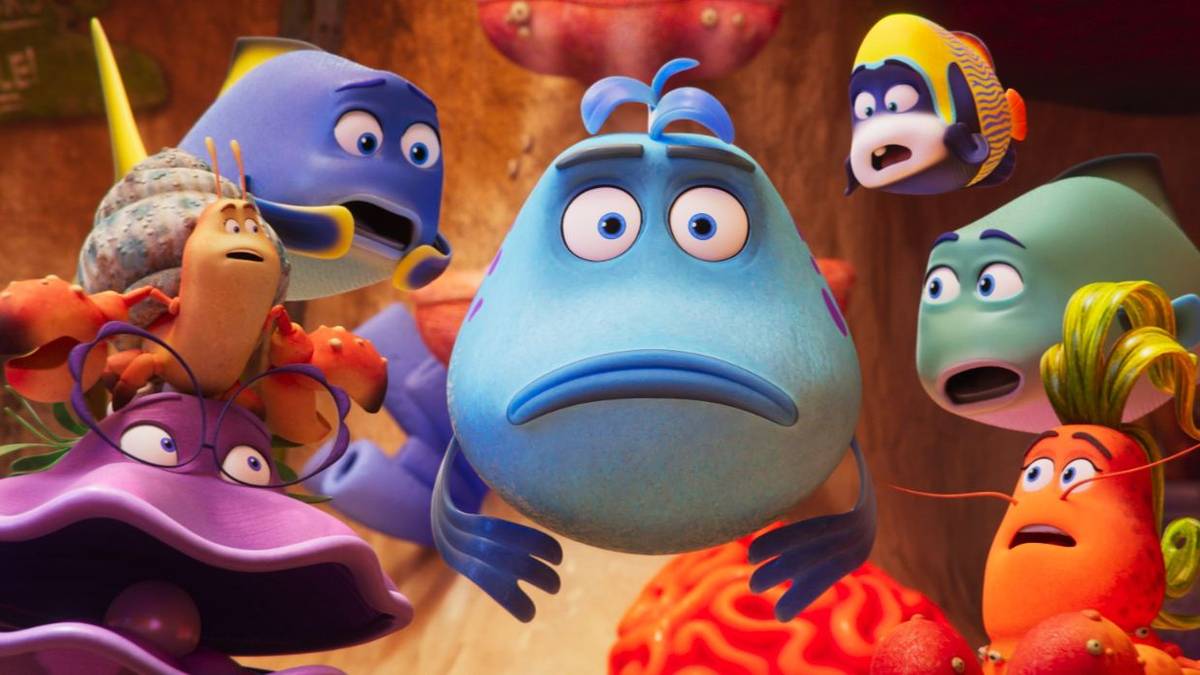
A Grumpy Nick Offerman Keeps This Fish Tale Swimming Along
Animated fish films have been done. Finding Nemo. Shark Tale. Ponyo. So to hear about another doesn't feel like anything new. However, The Pout-Pout Fish, starring Nick Offerman as a grumpy ocean pout named Mr. Fish, is a little different.…
Mar 15, 2026