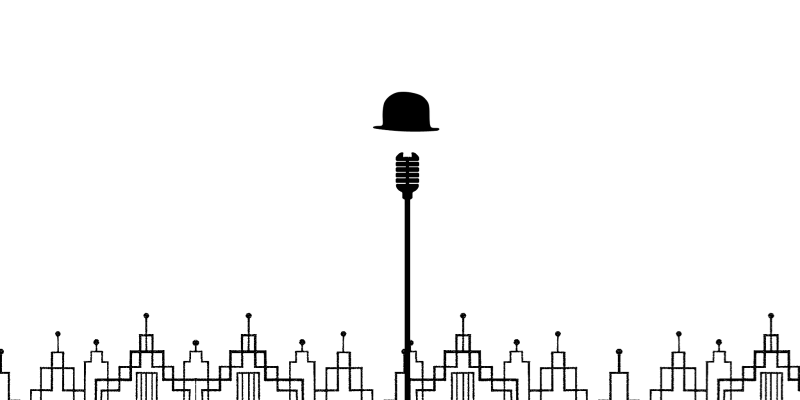
City Lights is a *Silent* Film
Apr 22, 2023
Sometimes a masterpiece is so colossal that reviewing it in its totality is insurmountable. But when you look to a single element, its brilliance radiates outwards. Let’s try this with the most minor element possible in the silent 1931 film City Lights; its sound.
Sound had begun to take over completely by the time the most recognisable face on earth, Charlie Chaplin, had started to make City Lights, rewriting occurring throughout the two year shoot as was typical for the auteur director. Embroiled in this context, authored and received in response to its medium’s sudden retirement, the film has a specified relationship with sound and the audience’s elevated relationship with the absence of sound, baked into the conceit of its silent-ness.
The first, nearly dashed off response to sync-sound arrives early to avert distracted impatience, like an upfront Hitchcock cameo, in the opening scene. A gag pokes fun at the practice by overdubbing a pompously broadcasted series of commemorative speeches with foghorn-esque gobbledygook, as if to dismiss whatever they could have to say as inconsequential. Similarly, Chaplin would go on to dismantle curiosity over the Tramp’s speaking voice in Modern Times, by having the character’s audible dialogue be constrained to a single, faux-Italian musical performance.
With a casual putdown to satisfy the need for an immediate reckoning, Chaplin dexterously tampers with the non-existent soundscape of the film’s reality. As the Tramp clambers from out of an upmarket cab, the sound of its door slamming shut alerts the character of the blind flower girl for her introduction. She presumes because he has exited a vehicle she knows by ear to usually carry high-priced clientele, that he must be wealthy, and is delighted when he takes a liking to her, beginning to provide for her when he can hardly get by himself (she, happily accepting all in her naivete). This false identity grants the Tramp immediate acceptance, where he is not accepted in any manner elsewhere in the film; a nuisance and failure to everyone except the drunk millionaire, who himself is blinded to the Tramp’s fundamental class stratification until he’s regained sobriety, when he is suitably and cruelly indifferent and even disdainful.
There is also a minor comic interlude in the sound play during one of the millionaire’s drunken parties, where, after some antics, the Tramp swallows a whistle. This sends him into a hiccup fit, each hiccup accompanied by the echo of the whistle’s tune. Good stuff, but here the sound follows a more traditional purpose as in the mise-en-scene or scenario: it imparts the Tramp’s outsider status, since his piercing hiccups distract from the party around him. The rest of City Lights’ forays into sound dubbing involve minor effects, like gunshots or ringing bells.
The powerful ending of City Lights, once the flower girl has had her blindness cured, is so utterly emotionally affirming because it at last gives the Tramp the recognition we have given him for as long as we’ve known him. She realises that her kind-hearted benefactor is in fact a tramp, and this revelation allows her to accept him. Since the Tramp is too frightened to pipe up, the revelation comes non-verbally, when she feels and recognises his hands, an important point. We as the audience never hear the voice he’s spoken to her with before now, since we have always seen the Tramp with total clarity in cinematic-empathetic lockstep. His voice, instead, is her private gift. More cynically, the voice is also implicitly the instrument of a false projection of the Tramp’s identity, and is made obsolete by non-verbal affirmations, a sublime, very movie-ish sort of love. Their silent performances, glances and beating thoughts speak for them. She loves him, and they spell this with smiles.
Publisher: Source link




A Flame The Colour of Air – Film Threat
SLAMDANCE FILM FESTIVAL 2026 REVIEW! You will shimmer and shake, like you’re riding the snake while being wowed by the dynamite animated short A Flame The Colour of Air, written and directed by talented Canadian filmmaker Emily Pelstring. Jessica Mensch’s…
Mar 3, 2026

‘9-1-1’ Can’t Decide What It Wants To Focus On in a Lackluster Season 9
Editor's Note: The following contains spoilers for 9-1-1 Season 9, Episode 11.I was hoping that 9-1-1 would take advantage of its month-long hiatus and course-correct after its most recent episode, but while this week is certainly an improvement from last…
Mar 3, 2026
Good Luck, Have Fun, Don’t Die Review
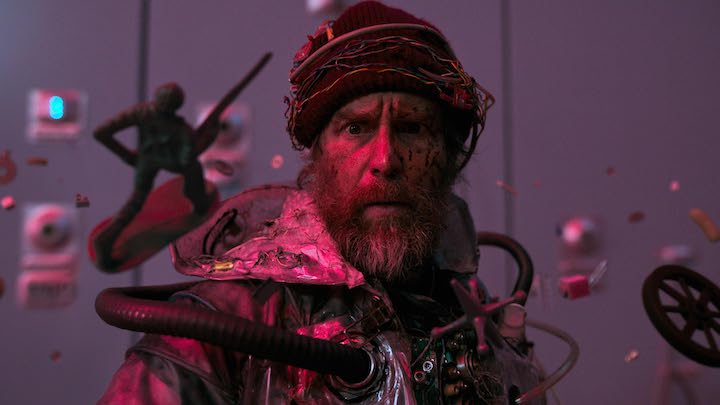
Mercy was a film about AI that AI could’ve written. Good Luck, Have Fun, Don’t Die also tackles AI, although it could only come from the mind of Gore Verbinski. As he did with his Pirates of the Caribbean trilogy…
Mar 1, 2026

Investigative Screenplay Review: Suspenseful but Weak Antagonist
Vadh 2 (2026): When Murder Is Justified — Starring Sanjay Mishra as prison guard Shambhunath Mishra When evil tries to take control, its destruction becomes necessary. With this theme, Bollywood brings you a spiritual sequel to its 2022 crime-thriller “Vadh”.…
Mar 1, 2026