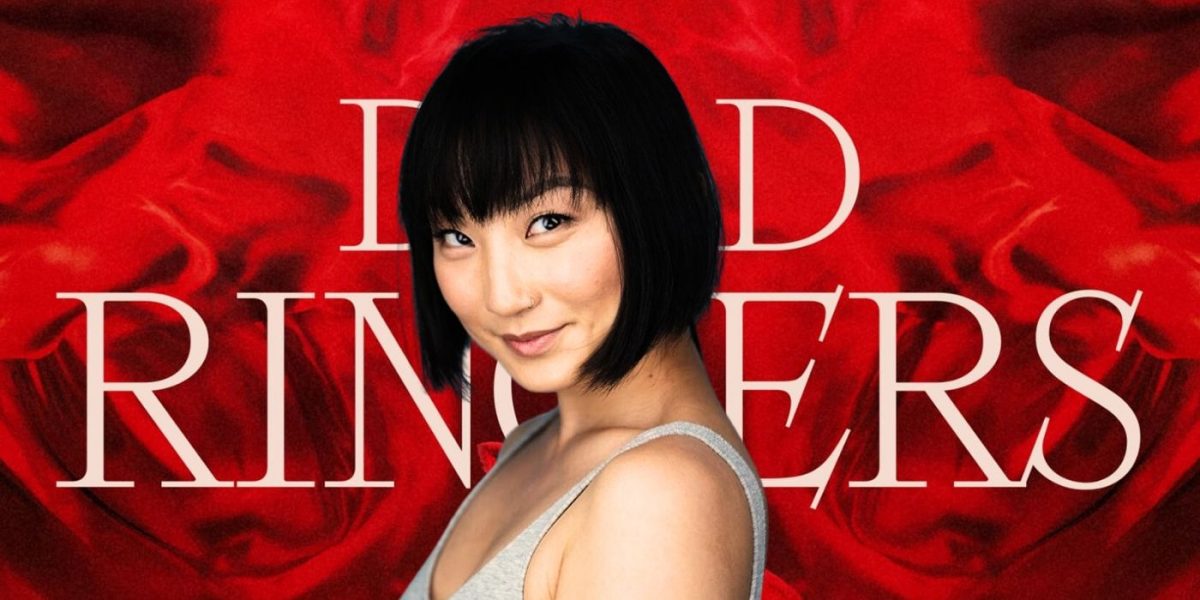
‘Dead Ringers’ Star Poppy Liu Shares Why Rachel Weisz is a Queer Icon
Apr 24, 2023
Editor’s Note: This interview contains spoilers for Dead Ringers.
Poppy Liu is, to put it simply, killing it right now. In addition to their memorable performance as Kiki on the Emmy-winning comedy series Hacks, they can also be seen on History of the World: Part II as well as the upcoming Disney+ show American Born Chinese alongside Oscar winners Michelle Yeoh and Ke Huy Quan.
But luckily, you can catch them before that in Prime Video’s Dead Ringers. Based on the 1988 David Cronenberg film, the series stars Rachel Weisz as both Beverly and Elliot Mantle: twins who are determined to revolutionalize the birthing industry. Liu plays Greta, the codependent duo’s mysterious house manager who has some hidden agendas and secrets you won’t see coming. I got a chance to speak with Liu about their enigmatic character’s backstory. Liu also shared what’s on Greta’s playlist (that you can listen to on Spotify here!), the thing about Greta that stresses them out most, why Rachel Weisz is the perfect queer icon, and more.
COLLIDER: Rachel obviously acted with herself a lot in this series, but you actually acted alone quite a bit as well, mainly interacting with props and things. Can you tell me what that experience was like?
POPPY LIU: Yes, it’s true — I was alone with a bunch of creepy props a lot, and I don’t actually talk very much until the last episode. The voiceover monologue that I have is the most talking I do in the entire show and the only talking I ever do about myself actually. So yeah, it’s interesting. To prep for this character, it was really a lot of filling in my own inner world because she’s an enigma and meant to be quite elusive. There are so many spaces intentionally not filled in. It was almost like working backward. I knew where I ended up, and I had my backstory about my own stuff with my mother and losing her and this obsession with mother figures — projecting mother figures onto the twins but also wanting to mother them. But also being obsessed with the business of birth.
I’ve talked with [showrunner] Alice [Birch] about this, and I don’t think they intended this when they wrote it, but I asked if we could make one change in the monologue at the very end. Greta says, “Now, I look for the doctor who delivered me all over in the streets. I think I see him all the time.” And I asked if we could change it from “him” to “her” to just leave open the possibility that maybe it was the Mantel twins that delivered me, and I’m, like, obsessed [with them]. It’s such a tangential thing, but I think, for myself, it was really important to have something like that to hold onto. Like, I’m obviously not coping with the trauma of losing my mom. I should be going to therapy. But instead, I’m gonna make this creepy art project.
So yeah, I think it really was working backward and knowing that was my end goal. It felt like the other things were more justified. The way that it’s placed in the story feels sort of mysterious or elusive, and I kind of relied on the script to do that part. I know what I’m doing the whole time because I know where I’m meant to end up. This is a character that’s very in her head a lot and this fly-on-the-wall observational being, which I think is actually kind of interesting in a world that is as bizarre as the Mantle twins’. To have, like, a witness.
Image via Prime Video
RELATED: ‘Dead Ringers’ Review: Give Rachel Weisz Two Emmys
You said that you made sort of a backstory in your head. In your mind, how do you think Greta initially got involved with the Mantle twins? Because we don’t really know their history. Do you think she sought them out? Or how do you think that came to be?
I think Greta orchestrated all of that. Social laddered her way into knowing someone who knew someone who could refer her to the Mantle twins as their house manager, etcetera. I think the Mantle twins are so in their own world, and they’re brilliant, but they’re also quite narcissistic. They don’t notice their surroundings other than what their obsessions are. And I think that’s very much an elitism and class thing, which I feel the world of Dead Ringers does a really interesting job satirizing. For them, I think it was just like, “Oh, we need our life managed and our house ran, and someone referred this person.”
And I think Greta is such an artist. She loves the performance of it all. Even when she’s just washing dishes, she’s wearing a full human hair ponytail and leather Versace pants, full beat on her face — all of that. She’s like, “I’m playing dress up. I’m cosplaying to be in your world. I’m something visually interesting for you all to kind of be like, ‘Oh. Huh,’ and then sort of move on with your lives.”
So yeah, in my mind, I think she orchestrated everything. Again, starting from the end goal of, “I want to do this thing, and in order to do that, I need them. I need access to their personal life. I’m gonna find a way to get there.” I think she’s smart.
Speaking of the looks, there are so many different, amazing ones you get to wear. Is there a personal favorite that you had?
There were [some] scenes that were cut in the editing process. Some of my favorites were in those, and I have them memorialized in my own archives, but unfortunately, they’re not in the final show. There was one dress that was a nod to Michelle Pfeiffer’s green dress in Scarface, but it was metallic silver. The makeup had body jewels all over my face randomly, and it was for a dinner party scene. I’d say that was actually a favorite, but you don’t see it.
Image via Prime Video
Aw, man. We need some extra behind-the-scenes things.
Right? Or just, like, the looks. Like a lookbook.
Yes, a coffee table book. I would absolutely display that in my house. You’ve also said that you made a playlist for Greta. Can you share a few songs off of that?
Oh my god. Thank you for asking. I’m so proud of this playlist. It’s really good. Okay, it’s on my Spotify, so anyone can find it. It’s called “Greta” with a little white heart emoji. Here are the first four songs: “Zombie” by The Cranberries, “Cage” by Dir En Grey, “Beautiful Boyz” by CocoRosie, and “Clair de Lune” by Claude Debussy. There’s also some Björk, Nancy Sinatra, Ethel Cain, Type O Negative, Placebo, Pixies, Patti Smith.
Patti Smith was actually at the tastemakers’ dinner like the week before the premiere and sat a table away from me. And it’s not even that I was nervous, but I felt emotionally raw. And I was like, “It is really special to be in the same space with you, but I don’t even know if I can talk to you right now.” Like, I would break down in tears in like a really uncontrollable way, and I would just be like, “When I was 22, I read Just Kids when I first moved to New York.” Blah, blah, blah, blah, like, all of this stuff. Like, “Me and my friend dressed up as you and Robert Mapplethorpe and went to Coney Island for like a week.” It’s just so much, which, one day, I will say to her, but that was not the right day. I was too vulnerable.
That’s amazing, though. That’s such a full-circle moment. That playlist is about to be in my Spotify Wrapped.
Oh, hell yeah. It’s a 3-hour, 23-minute playlist.
I need a road trip to just listen all the way through.
It’s really good. I would say, of my character playlists I’ve made, it’s one of the best.
Image via Prime Video
I’m so excited to listen. Okay, so this is a bit of a deep cut, but it’s something that’s stuck with me for years now. So, in an Instagram post from 2021, you were talking about shooting Dead Ringers, and you said that Rachel Weisz told you that your being nonbinary was like you were “Adam, Eve, and also the snake” and that it was the most gender-affirming thing you’d ever heard. Can you elaborate on that? I have not been able to stop thinking about that.
Wait, what is the post? Now I want to see it.
It’s from so long ago.
But wait, that’s hilarious. Okay, I feel like I remember saying that in the context of I thought she was Adam, Eve, and the snake because she is everything and was playing twins. I think, in my memory, I was saying that about her. And also, I feel Rachel is a very identity-affirming person. I think that’s also why she’s a queer icon. I feel like she just has such a genuine curiosity, openness, expansive love, and fluidity in terms of her understanding of people and identities and whatever. She is very appropriately a queer icon.
As a queer person myself, I completely agree with you on all fronts there.
Like, thank god for Rachel Weisz.
Truly. You’re in sort of a unique position in that you actually had a child between filming and promoting this — which, congratulations, by the way.
Thank you!
I’m so curious if that personal experience changed your perspective on anything in the show or influenced how you viewed it at all.
I think it influenced so many aspects of my life. I feel like the birthing part of the show I actually felt quite familiar with already just from being a doula before. Even some of the very up close and personal body stuff — how graphically they depict birth at times. I was like, “Oh, I’ve really been up close and personal with it.” It’s something that I’ve thought about a lot with birth and the injustices of maternal mortality in this country — the whole industrialization of everything, the lack of agency. I think it’s a combination of my own interests in reproductive justice and also some of the themes in the show and my own work as a doula [that influenced me] when it came to my own birth.
I literally help other people create birth plans — like, “You can craft the ideal birth that you want. And let’s have a contingency plan.” How do you know what areas you have agency over and the choices you’re gonna make along the way? It’s not like now I’m like, “I’m a pregnant person, and now I’ll just throw it up to like the system.” Which, I think a lot of people think that way because we don’t get a lot of information about it.
But anyways, I thought a lot about meeting myself where I was at in terms of what I wanted out of my birth. I think, at an earlier phase of my life, I would have been like, “Yes, I really would love a home birth and this holistic experience and a sound bath during” and whatever. But then I was actually meeting myself in the reality of now, and I really struggled with anxiety. I went off antidepressants during my pregnancy, and that was really, really hard. I was like, “I actually think something that would benefit my birth would be knowing that I have many, many layers of support and possibility.” I wanted the epidural to be a possible choice, which I ended up saying yes to. I was like, “I do actually want a labor, and I want to avoid a c-section, but I do actually want to be at a hospital because I think that would give me a certain kind of peace of mind that I otherwise might have anxiety about.”
In the show, Beverly is in contrast with Parkers and the whole monetization of health and medicine, and she’s sort of seen as this idealistic fairy. But also, a lot of things she says are actually really on point, too. Birth should be…I don’t know — I feel like the word “bespoke” feels very Goop. [Laughs] But I also think there’s a social justice version of it — meeting everyone and their access and resource needs where they are and customizing the experience so that everyone has agency and choice regardless of where they’re coming from and stuff.
So anyways, I think all those themes I think about a lot and I thought about a lot during my birth. I ended up having a really great birthing experience and ended up using my sort of plan B because I was at a point where I’d crossed the threshold from pain to suffering with labor. And I was like, “Give me the epidural.” I was like, “My priorities are to get the baby out healthily and to not suffer.” And yeah, that’s a really long-winded answer.
Image via Prime Video
That’s so much great insight, and I appreciate you sharing your experiences with that. To end on a lighter note, you described Greta as a creative collector. I’m curious: Do you collect anything?
I feel like, in some ways, I’m maybe a little bit of the opposite where like I have this need to constantly be doing a version of spring cleaning. I need to declutter; I need to minimize; I need to simplify. I don’t want to hold on to things for too long that I feel like I’ve grown out of. I think that helps me with my own mental clarity if my surroundings can be like that. It’s maybe a control thing where if I can’t totally figure it out in my own brain, if I can do it with my surroundings, then I’m good. Like, “I feel weird today, but if I really clean the eff out of my closet and get rid of two giant bags of clothes, everything will be fine.”
I think also being a queer person, too — my friends and I joke we’ve all gone through, like, three or four names each. Poppy wasn’t my previous government name nor was it the name that was on my birth certificate. I’ve gone through many names already in my life where like, among all of us, we have like 15 names each and 15 identities that we’ve tried on and taken off and tried on and taken off.
Even right now, post-birth, I feel like I’m entering another kind of self-discovery phase. It does feel like I’m always adjusting what my surroundings are also. I’ll be a little sentimental and keep a couple of little things of me from a certain era or a nice memory. But in terms of a larger collection — even just thinking about my closet, my relationship to my body changes so often that I’m literally like, “I can’t. These clothes speak nothing to me.” I feel horrendous in this, or I can’t envision myself in it.
I tend to cycle through things quickly. Greta’s basement, with all of that stuff, for Poppy — thinking about it makes me break out in hives. Not even that it’s creepy objects or body thingies — just the amount of stuff in it. Ahh.
A true actor that you’re able to pretend to be comfortable in that environment.
Yeah, it’s Greta’s safe space. Meanwhile, for Poppy, I’m like, “Gah.” [Laughs]
Dead Ringers is available to stream on Prime Video.
Publisher: Source link


‘Off Campus’ Teaser and Release Date Revealed by Prime Video
No one expected a love story between rival hockey players to become one of the most talked-about TV shows of 2025, but there's a lot more where Heated Rivalry came from, as a new teaser for Prime Video's foray into…
Mar 21, 2026
Sarah Michelle Gellar Urges ‘Buffy’ Fans to Avoid Reading Leaked Reboot Scripts
Buffy the Vampire Slayer fans have had a rough few days after Hulu officially pulled the plug on a revival of the series, which would have brought star Sarah Michelle Gellar back as the titular heroine. Described as a continuation…
Mar 20, 2026
![Born Again’ Stars Explain Why Bullseye Is So Dangerous in Season 2 [Exclusive]](https://www.filmibee.com/wp-content/uploads/2026/03/Born-Again-Stars-Explain-Why-Bullseye-Is-So-Dangerous-in-1200x675.jpg)
Born Again’ Stars Explain Why Bullseye Is So Dangerous in Season 2 [Exclusive]
Along with Charlie Cox's Matt Murdock and Vincent D'Ofnorio's Wilson Fisk, Daredevil: Born Again Season 1 brought back one of The Man Without Fear's most notorious villains: Wilson Bethel's Benjamin Poindexter, better known as Bullseye. Not only was he back…
Mar 19, 2026
Born Again’ Showrunner Confirms ‘Avengers’ Character Is Key to Street Level MCU [Exclusive]
Ahead of the Avengers' return to the big screen later this year, Marvel Studios will return to street-level storytelling with the second season of Daredevil: Born Again on Disney+. Along with making the show canon to everything that happened in…
Mar 18, 2026