Denis Villeneuve Claimed This Underrated 2000s Benicio del Toro Drama Is One of The Greatest War Movies Ever Made
Jun 5, 2025
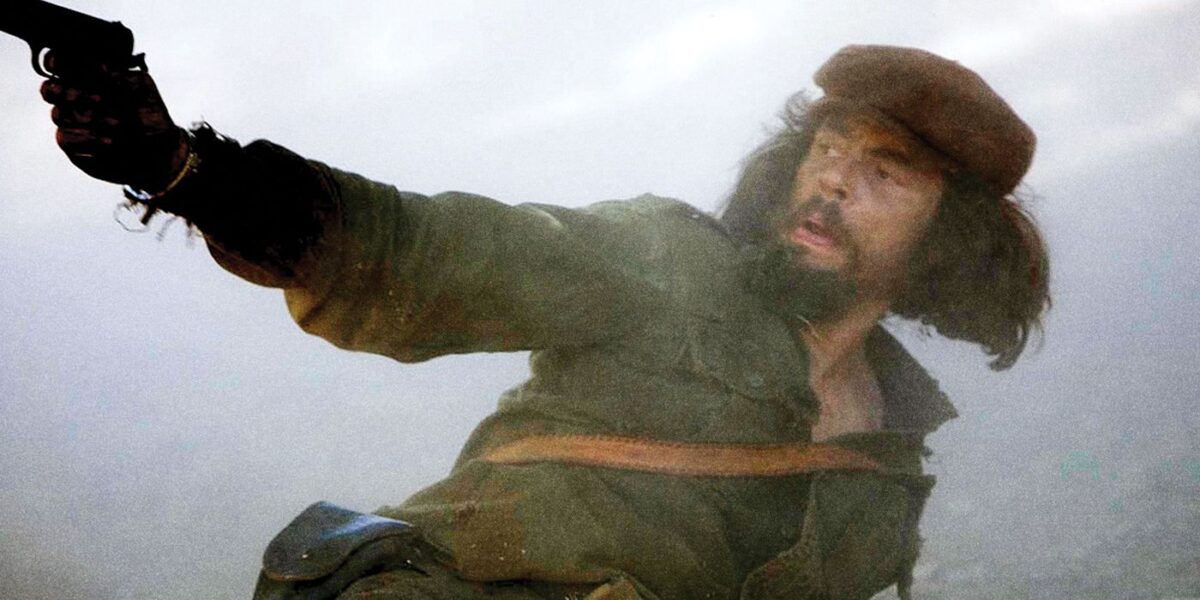
Even the most expansive biopics can only hope to cover a portion of their subjects’ lives, as the journey from birth to death could never fit into two hours. That’s perhaps why Steven Soderbergh decided to divide his Che Guevara biopic, Che, into two parts, resulting in a four-and-a-half-hour opus that’s among the most ambitious projects he ever made. Anchored by a career-best performance from Benicio del Toro, the two halves of Che jump back and forth through time to chart the brief life and tragic death of the Marxist revolutionary, creating a kaleidoscopic portrait of a complex figure. Soderbergh’s unconventional approach has had a lasting impact on a variety of filmmakers, including Denis Villeneuve, who has called it “one of the best movies about war.”
‘Che’ Is Both a Traditional and Non-Traditional Biopic
Part One of Che, dubbed The Argentine, recounts the Cuban Revolution, which begins with a meeting between Ernesto “Che” Guevara (del Toro) and Fidel Castro (Demián Bichir) in Mexico City. Guevara travels to the jungles of Cuba, battling through his debilitating asthma to turn rural farmers into guerrilla fighters. His successful overthrow of the Batista dictatorship is intercut with his 1964 address to the United Nations, where he defends the violent tactics his regime has taken as a necessary part of war. Part Two, Guerrilla, follows Guevara’s unsuccessful campaign to bring his revolution to the rest of Latin America. He arrives in Bolivia in 1966 to begin training recruits, and over the course of a year, his militia is debilitated by lack of food, an unforgiving jungle, and a Bolivian army working in tandem with the American CIA, not to mention their own leader’s unrealistic expectations. By 1967, Guevara was captured and killed.
Related
Steven Soderbergh Went Full Post-War Noir in This George Clooney, Cate Blanchett, and Tobey Maguire Thriller
A trip back to the shadowy allure of the 1940s.
Both parts of Che premiered in official competition at the 2008 Cannes Film Festival, where del Toro won the best actor prize. Although intended to be shown back-to-back, The Argentine and Guerrilla function as individual films in their own right, and Soderbergh directs each differently in order to show the dramatic arc of Guevara’s life. Shot in the 2:35:1 widescreen aspect ratio, The Argentine jumps through time to watch Guevara transform from Castro’s follower to a leader of men. The scenes charting his campaign in the jungle are shot in color, with mostly static shots or very controlled camera movements, while the scenes of his 1964 address to the U.N. adopt a shaky, black-and-white aesthetic. One section has the feel of a classic Hollywood epic, the other of a cinema-verite docudrama. Although told non-linearly, it still functions in a traditional three-act structure because Guevara has fundamentally changed. By contrast, Guerrilla is a mostly straightforward narrative, organized by the 340 days Guevara spent in Bolivia. Shot in the 1:85 aspect ratio, it takes on a colder visual palette than The Argentine, with more blues and dark greens instead of reds and oranges. Whereas The Argentine feels expansive and epic, Guerrilla is an intimate character study, as Guevara reckons with his newfound power and the limitations that come with it. In The Argentine, we witness the rise of a great man, and in Guerrilla, we witness his fall. The Argentine is a story of triumph; Guerrilla, one of tragedy.
‘Che’s Fingerprints Are All Over Villeneuve’s ‘Dune’
“For me, it’s by far one of the best movies about war, about what it is to be a leader of men,” Villeneuve said of Che while making picks in the Criterion Closet. “The research behind this movie is astonishing, and I absolutely adore the directing. I think it’s a movie that is underrated. Honestly, it’s a masterful work by Soderbergh. My favorite movie from Soderbergh.” He pointed to the double-disc set and slyly joked, “Part one, part two. Maybe there’s an influence there. I don’t know.” Certainly, Villeneuve’s decision to split his Dune adaptation into two halves makes sense when we learn about his affinity for Che, and indeed, he follows a very similar structure to the one Soderbergh employed. Like Che, Dune bifurcates its hero’s journey into a first half that explores his origins and a second half that finds him grappling with his power. Like Guevara, Paul Atreides (Timothée Chalamet) must overcome his limitations when faced with growing responsibilities. And like Guevara, he sacrifices a part of his humanity in order to lead an oppressed populace towards freedom, becoming an oppressor himself in turn. As both Soderbergh and Villeneuve well understand, no one man can achieve greatness without great personal loss.
Publisher: Source link








A Flame The Colour of Air – Film Threat
SLAMDANCE FILM FESTIVAL 2026 REVIEW! You will shimmer and shake, like you’re riding the snake while being wowed by the dynamite animated short A Flame The Colour of Air, written and directed by talented Canadian filmmaker Emily Pelstring. Jessica Mensch’s…
Mar 3, 2026

‘9-1-1’ Can’t Decide What It Wants To Focus On in a Lackluster Season 9
Editor's Note: The following contains spoilers for 9-1-1 Season 9, Episode 11.I was hoping that 9-1-1 would take advantage of its month-long hiatus and course-correct after its most recent episode, but while this week is certainly an improvement from last…
Mar 3, 2026
Good Luck, Have Fun, Don’t Die Review
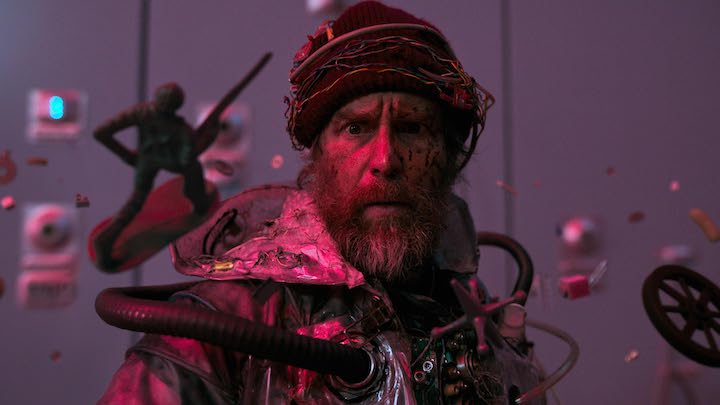
Mercy was a film about AI that AI could’ve written. Good Luck, Have Fun, Don’t Die also tackles AI, although it could only come from the mind of Gore Verbinski. As he did with his Pirates of the Caribbean trilogy…
Mar 1, 2026
Investigative Screenplay Review: Suspenseful but Weak Antagonist
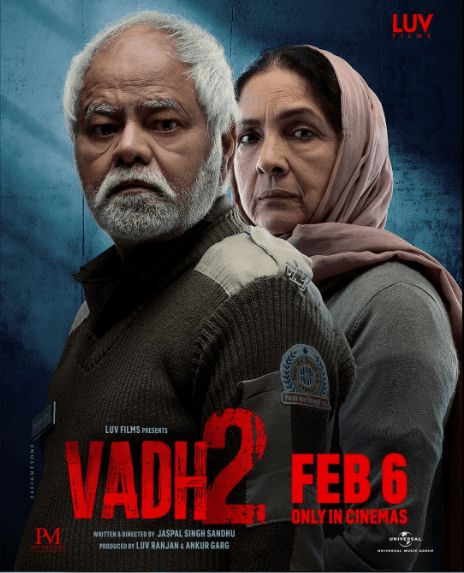
Vadh 2 (2026): When Murder Is Justified — Starring Sanjay Mishra as prison guard Shambhunath Mishra When evil tries to take control, its destruction becomes necessary. With this theme, Bollywood brings you a spiritual sequel to its 2022 crime-thriller “Vadh”.…
Mar 1, 2026